Best Reverse Osmosis Systems 2026: Every Budget, Ranked on the Specs
The best reverse osmosis system is the Aquasana SmartFlow: five named certifications and a remineralizer included. Five picks compared on dated prices.
By Home Water Lab TeamUpdated Prices verified Oct 7, 2026
This page contains affiliate links; buying through them costs you nothing extra.
The best reverse osmosis system for most kitchens is the Aquasana SmartFlow, and the reason is boring: it is the cheapest system on this page whose certifications are all named, numbered and third-party. It read $224.99 on Oct 5, 2026 under a 50%-off banner that lists it at $449.99.
The short answer
as of Sep 28, 2026Which reverse osmosis system should you buy?
The Aquasana SmartFlow at $224.99 on sale ($449.99 list, Oct 5, 2026), because it is certified by the WQA to NSF/ANSI 42, 53 (including the P473 PFAS protocol), 58, 401 and CSA B483.1 and includes a remineralizer, which competitors sell as an upgrade. If the budget is the constraint, the iSpring RCC7AK at $241.99 is NSF/ANSI 58 certified and runs near $100 a year in cartridges. If you cannot drill a counter, the AquaTru Classic at $475 is the only countertop unit here that names its certifying body. The Waterdrop G3P800 at $999 is the efficiency and flow benchmark, not the value one.
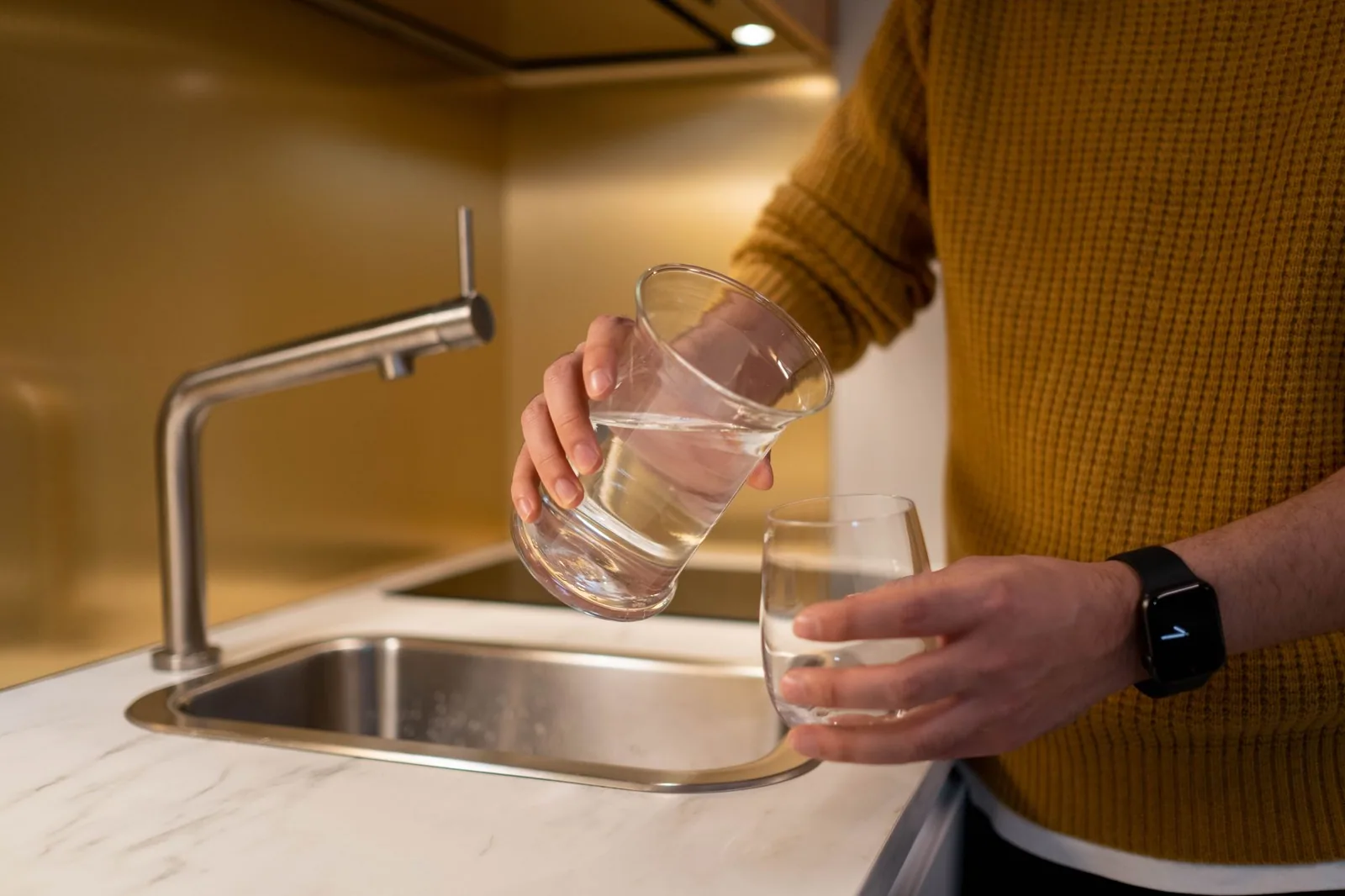
Reverse osmosis is drinking-water treatment, and that framing decides most of the purchase. If your complaint is chlorine smell in the shower or scale on the kettle, you are on the wrong page and the reverse osmosis hub explains where to go instead. If your complaint is what is dissolved in the water you drink, read on.
| Rank | System | Price (Sep 2026) | Wins at |
|---|---|---|---|
| 1 | Aquasana SmartFlow | $224.99 on sale, $449.99 list | Best overall: five named certifications |
| 2 | iSpring RCC7AK | $241.99 | Best budget, cheapest to run |
| 3 | Waterdrop G3P800 | $999 | Best tankless: 3:1 efficiency, 800 GPD |
| 4 | AquaTru Classic | $475 | Best without plumbing |
| 5 | Moen RO (via SpringWell) | $363.80 | Best for existing SpringWell owners |
Key takeaways
- Certification beats contaminant counts. NSF/ANSI 58 covers the RO claim itself; a 99.99% headline with no standard behind it covers nothing.
- The SmartFlow carries five named certifications at $224.99 on sale (Oct 5, 2026), which no rival on this page matches per dollar.
- Cartridges decide the five-year total: about $100 a year on the iSpring against $159.97 on the Waterdrop G3P800.
- Tank systems drain roughly 3 gallons per gallon produced. The G3P800 reverses that to 3 produced per 1 drained.
- Every system here treats one tap. None of them touches hardness, and none of them protects a water heater.
How Does a Reverse Osmosis System Work?#
Pressure pushes tap water against a film whose pores are measured in ten-thousandths of a micron. Water molecules cross; most dissolved solids do not, and they leave through a second pipe. That split is the whole technology, and it is also the source of every trade-off on this page.
Where the water goes
- Pre-filters6 to 12 monthsSediment then carbon, in that order. They exist to protect the membrane: grit would tear it and chlorine would dissolve it, so the cheap cartridges spend themselves first.
- RO membrane2 to 5 yearsThe stage that does the work the others cannot. Pressure pushes water through a film whose pores stop dissolved solids, which is why RO reaches lead, fluoride, nitrate and PFAS where carbon alone does not.
- Post carbon12 monthsA taste polish on the way out, and on remineralizing systems the stage that puts calcium and magnesium back so the water does not taste flat.
- The drain lineconcentrateEverything the membrane refuses leaves here. This pipe is why an RO system has a water bill attached to it, and why the pure-to-drain ratio belongs in any honest comparison.
Structure only. The 1:3 ratio shown is the classic tank-system figure, the same design as the iSpring RCC7AK; the Waterdrop G3P800 publishes 3:1 in the other direction. Stage intervals come from each manufacturer's own page, dated in the tables below.
Three consequences follow, and they are the three questions worth asking before you compare prices.
The membrane needs protecting. Chlorine dissolves the film and grit tears it, so every system puts sediment and carbon cartridges in front. Those cartridges are cheap and they are the ones you change twice a year.
The membrane strips the good with the bad. Calcium and magnesium go out with the lead, which is why RO water tastes flat and why remineralization stages exist. The SmartFlow includes one. On most rivals it is an upgrade.
The drain line never goes away. A system that produces a gallon and drains three is normal. A system that produces three and drains one is an engineering achievement, and the Waterdrop G3P800 charges accordingly.
Which Certifications Actually Matter?#
Four numbers, and a system that carries none of them is selling you a claim rather than a result.
The AquaTru Carafe makes the point better than any argument. It is certified to 42, 53 and 401 but not to 58, on a page selling reverse osmosis, and that gap is exactly what a certification list is for.
Best Overall: Aquasana SmartFlow#
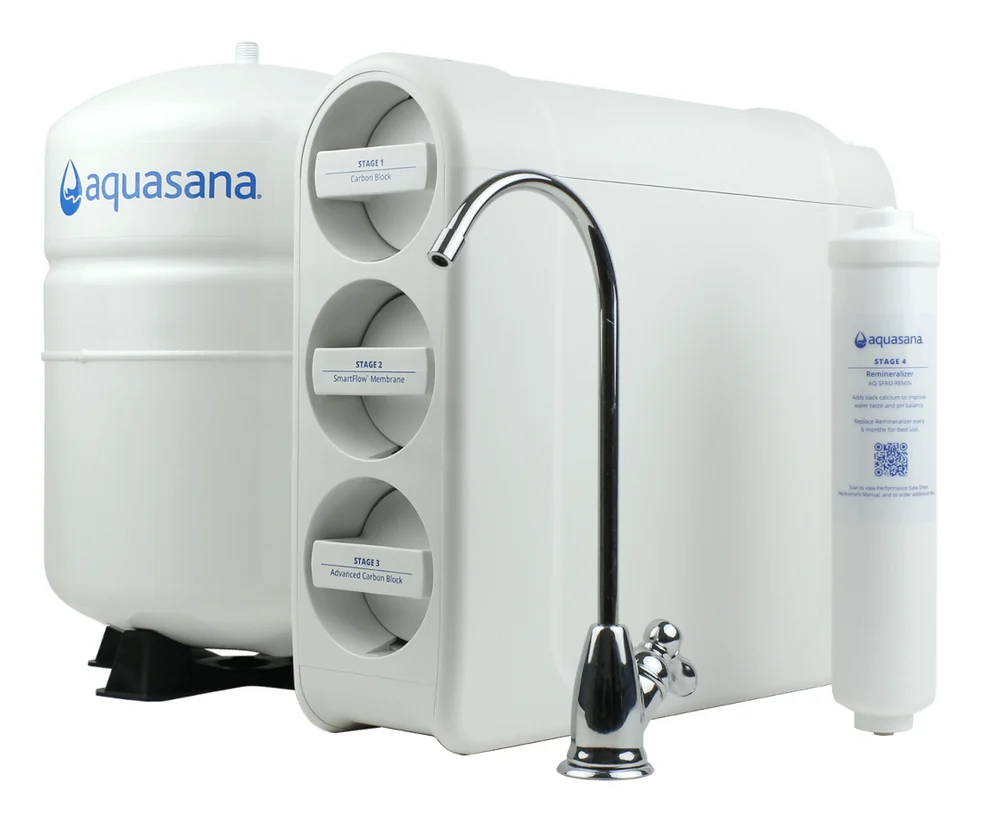
Aquasana
Aquasana SmartFlow Reverse Osmosis System
Best for: Drinking-water protection (PFAS, fluoride, lead) at the best certifications-per-dollar ratio on the market
- Contaminants reduced
- 99.99% of 90 contaminants
- PFAS / fluoride / arsenic
- 96% PFAS (P473), 90% fluoride, 96% arsenic
- Production
- 25.7 gallons/day
- Faucet flow
- 0.7 GPM
- Design
- Compact holding tank (3.2 gallons total, 1.4 to 3.2 usable), remineralizer included
- Filter schedule
- Cartridges 6 months, membrane 12 months
Five named certifications, a remineralizer in the box, and a compact holding tank: 3.2 gallons in total, of which 1.4 to 3.2 are available at any moment depending on your water pressure, per Aquasana. On paper it reduces 99.99% of 90 contaminants, with 96% PFAS under P473, 90% fluoride and 96% arsenic, and the reason those figures are worth quoting is that a third party signed them.
What we like
- WQA certified to NSF/ANSI 42, 53 (incl. P473/PFAS), 58, 401 and CSA B483.1, the strongest certification story in its class
- Remineralizer included (competitors charge extra for pH/alkalinity polish)
- Compact tank (13.74 x 9.06 in) and slim manifold, sized by Aquasana to take less cabinet room than a standard RO tank
- $224.99 on Oct 5, 2026 under a 50%-off banner ($449.99 list), and nothing near that price carries the same certification list
What to watch
- 0.7 GPM faucet flow, filling pots is slow
- 25.7 gallons/day production is modest for large households
- Replacement filters are generally non-commissionable and proprietary
- Brand customer-service reputation (Trustpilot 1.5/5, Aug 28, 2026)
The flaws are specific and you will meet them daily. Faucet flow is 0.7 GPM with a full tank and slows as the tank empties, so filling a pasta pot is a wait rather than a task, and production is 25.7 gallons a day, which is fine for a family that drinks and cooks with it and not for one filling a cooler every weekend. Cartridges run 6 months, the membrane 12.
Then there is the price, which is not a price but a banner state. Aquasana ran a standing half-off promotion all summer, withdrew it on Sep 12, 2026, restored it by Sep 21 at $224.99, deepened it to $199.99 by Sep 28, and was back at $224.99 on Oct 5. On sale the SmartFlow is the best value in the category by a distance. At the $449.99 list it charges when that banner drops, the iSpring and the Moen become genuine alternatives. The same pattern across Aquasana's range is documented in our Aquasana Rhino review.
Best Budget: iSpring RCC7AK#
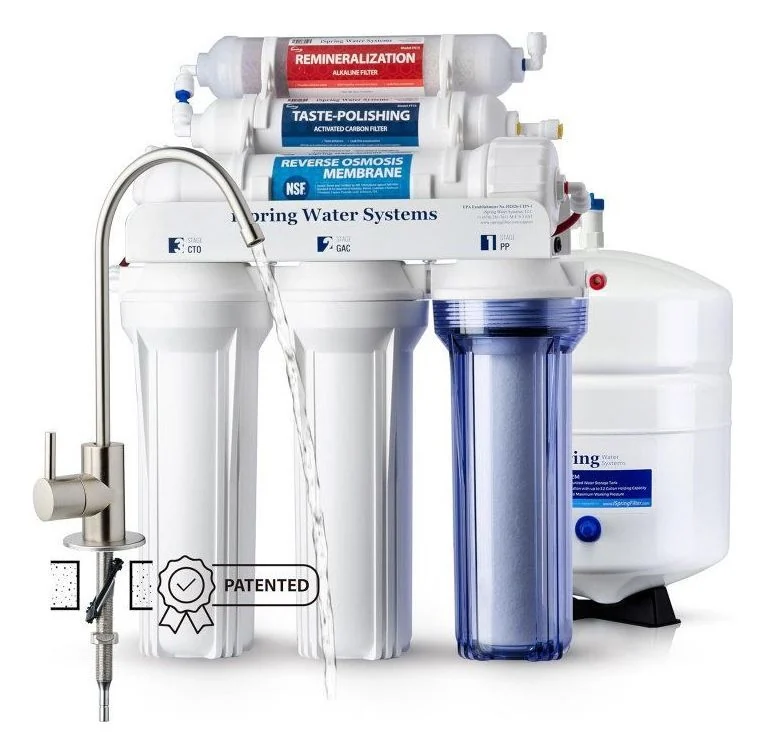
iSpring
iSpring RCC7AK 6-Stage Reverse Osmosis System
Best for: A proven, cheap-to-run 6-stage under-sink RO with a very large owner base
- Stages
- 6 (with alkaline remineralization)
- Certification
- NSF/ANSI 58
- Waste ratio
- ~1:3 (classic tank design)
- Annual filter cost
- ~$100 to 110
Six stages including alkaline remineralization, NSF/ANSI 58 certified, $241.99 on Sep 14, 2026. What makes it the budget pick is not the sticker, which sits about $40 above the SmartFlow on a sale day, but the running cost: generic-compatible cartridges keep it near $100 a year where proprietary systems charge $130 to $160.
It is a classic tank design, so it drains about three gallons per gallon produced and it stores treated water in a bladder tank that eats the space under your sink. Owners report leaks at the compression fittings often enough that it is worth budgeting an hour to check every joint after the first day.
Best Tankless: Waterdrop G3P800#
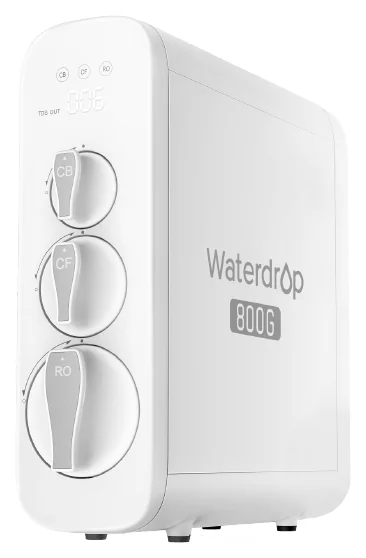
Waterdrop
Waterdrop G3P800 Tankless Reverse Osmosis System
Best for: The premium tankless RO reference: high flow, UV, and a 3:1 efficiency ratio that flips the classic RO waste math
- Production
- 800 GPD, tankless
- Extras
- Smart TDS faucet; UV is claimed on some Waterdrop pages for this model and denied on others
- Pure-to-drain ratio
- 3:1
- Annual filter cost
- $159.97
The efficiency argument, made properly. 800 GPD of tankless production means no storage tank and no waiting; a 3:1 pure-to-drain ratio reverses the classic waste equation; a faucet with a live TDS readout tells you whether any of it is working. If you are on a water meter and RO waste is the thing stopping you, this is the system that answers it.
What you are buying alongside it: proprietary cartridges at $159.97 a year, a dependency on mains power, and real flow that drops when the incoming water is cold or the pressure is low. Its certification record is also messier than the marketing suggests: Waterdrop's own pages publish three different lists for this one model, and only NSF/ANSI 58 and 372 appear on all of them. The full breakdown, including what the Reddit lab-test threads found, is in our Waterdrop G3P800 review.
Best Without Plumbing: AquaTru Classic#
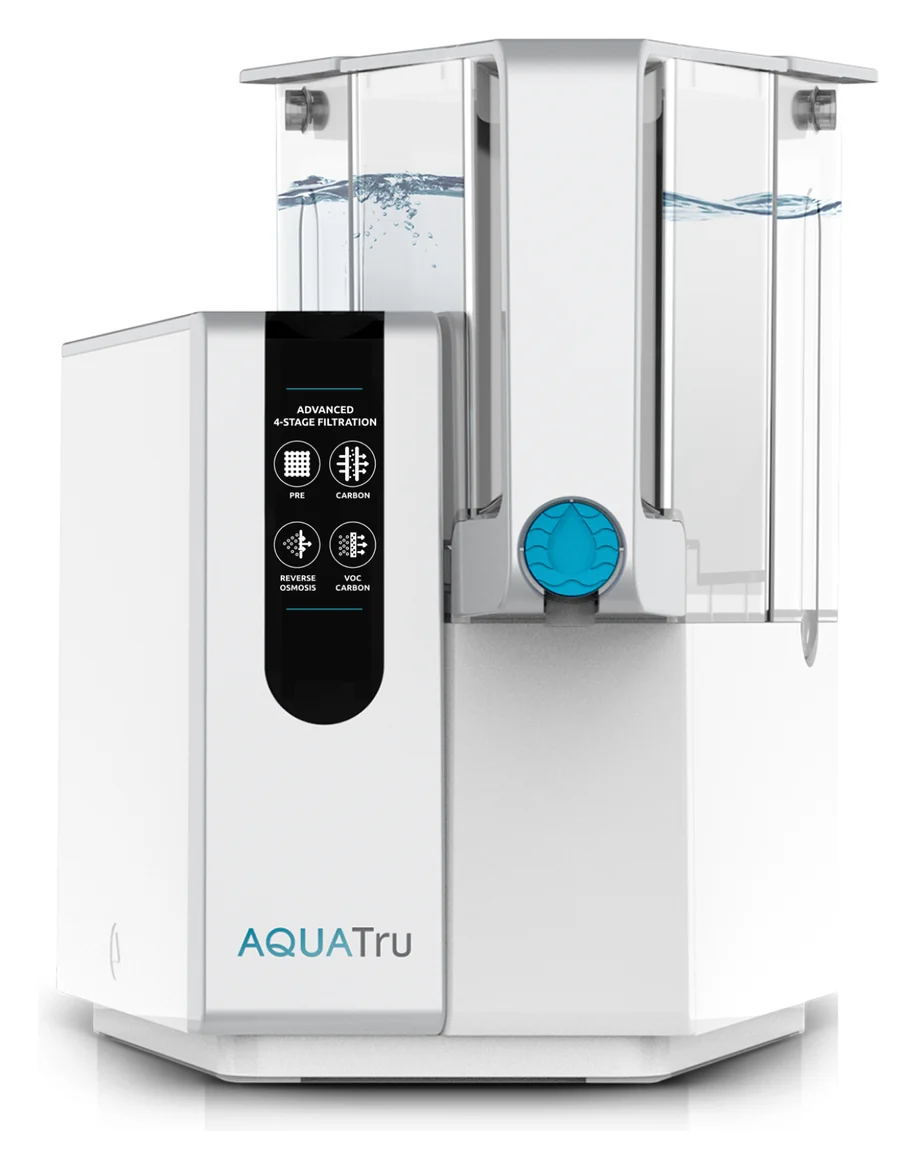
AquaTru
AquaTru Classic Countertop Reverse Osmosis Purifier
Best for: Renters and anyone who wants named, third-party RO certification without touching a pipe
- Install
- None, 120V plug and a countertop
- Stages
- 4 (pre/carbon, RO membrane, VOC carbon)
- Clean tank
- 0.75 gallon
- Certification
- Tested and certified by IAPMO to NSF 42, 53, 58 and 401
- Filter life
- 6 months (pre/carbon), up to 2 years (RO)
- Replacement filters
- $59.95 RO, $39.95 VOC carbon, $49.95 Mineral Boost
A countertop RO purifier that needs a socket and nothing else: no drain, no hole in the counter, no landlord conversation. It is tested and certified by IAPMO to NSF 42, 53, 58 and 401, and naming the certifying body is rarer in this segment than it should be.
The compromises are physical. The clean tank holds 0.75 gallon, so it suits two to four people rather than a household of six, and it occupies real counter space next to the kettle. It also costs more than a plumbed-in system that does the same job permanently, which is the trade every renter makes. If the countertop route is what you actually need, the best countertop water filters covers the segment properly, including the units whose certification claims do not survive reading.
Best for SpringWell Owners: Moen RO#
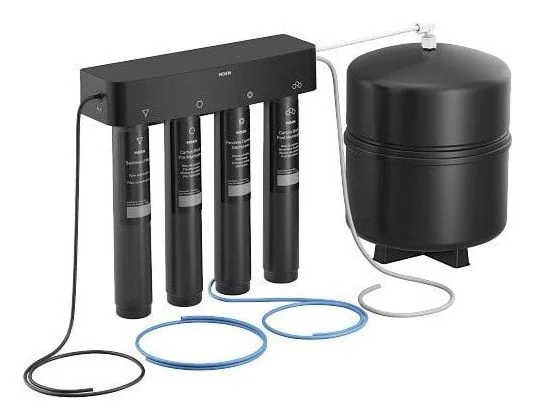
Moen
Moen Reverse Osmosis System (sold by SpringWell)
Best for: Drinking-water polish for SpringWell whole-house owners who want one supplier for everything
- Stages
- 4
- Contaminants reduced
- 86 (incl. arsenic, fluoride, chlorine, lead, mercury, bacteria, viruses)
- Bundle option
- Moen RO + Sip Faucet from $520
- Replacement filters
- $55.11 (stages 1 to 2) to $132.60 (membrane)
Four stages, 86 contaminants reduced including arsenic, fluoride and lead, sold by SpringWell as part of the Moen partnership. Its case is a support case rather than a spec case: if your whole-house system is already a SpringWell, this puts every filter you own behind one phone number.
Against it: four proprietary cartridges, with the membrane alone at $132.60, and thin social proof, with only seven site reviews at reading time. On certifications per dollar the SmartFlow beats it on a banner day.
Tank or Tankless: Which Design Fits Your Kitchen?#
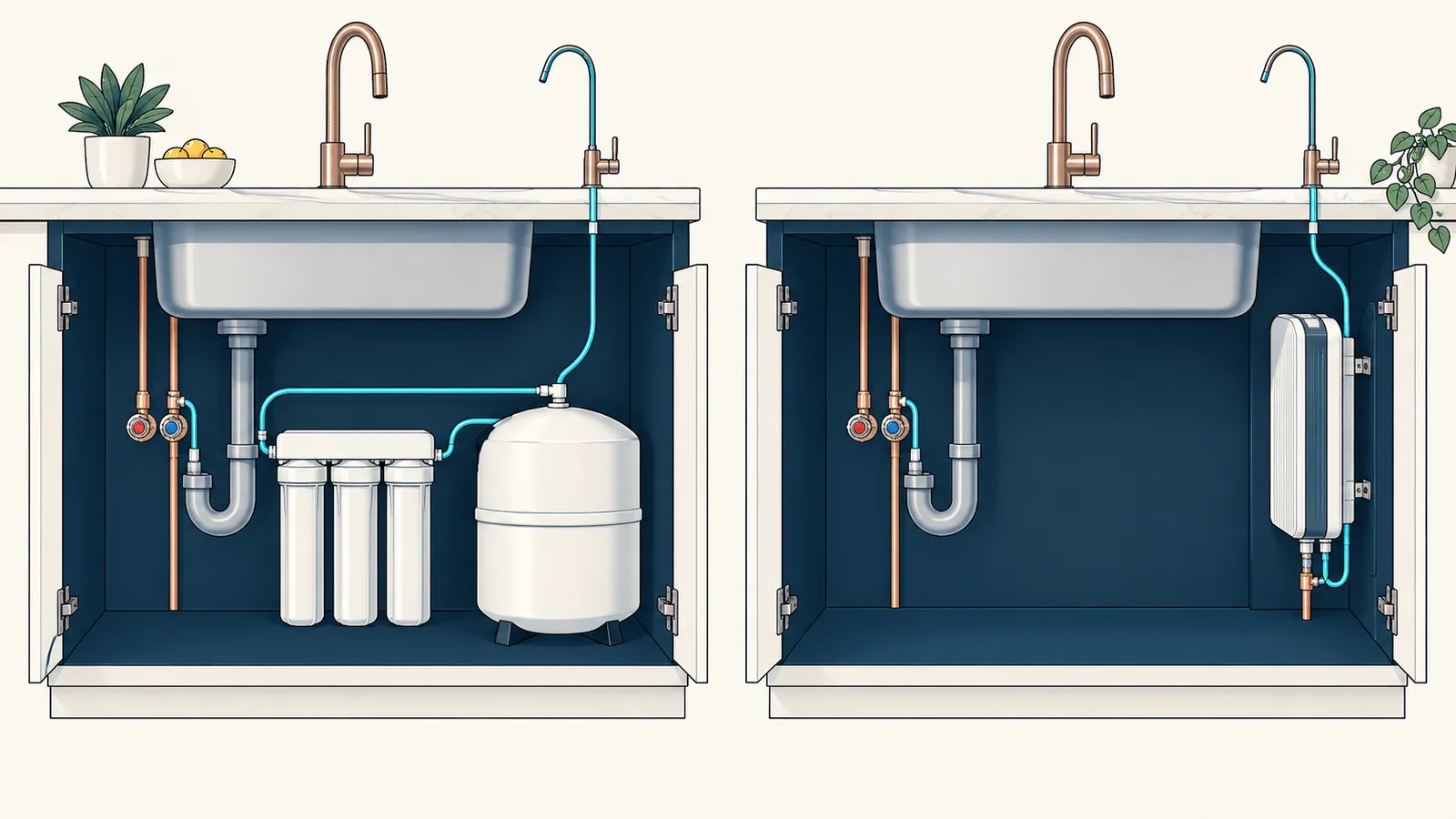
Tank system (SmartFlow, iSpring, Moen)
- Works with no electricity at all
- Drains about 3 gallons per gallon produced
- A storage tank shares the cupboard, compact on the SmartFlow
- Cheapest to buy and cheapest to run
Tankless (Waterdrop G3P800)
- Nothing stored, nothing standing in a tank
- 3:1 in your favour on the G3P800
- Frees the space under the sink
- No power, no filtered water
Bottom line
Tankless if the cupboard is full or the water bill is the objection; tank if the budget is tight and the power flickers. Neither choice changes what the membrane removes.
What Reverse Osmosis Will Not Do for You#
It will not soften your water. Hardness minerals reaching one tap under the sink does nothing for the water heater, the shower or the dishwasher, and this is the single most common misunderstanding in the category. If scale is the problem, the answer is a water softener or, where the water is only moderately hard, one of the approaches in our guide to fixing hard water.
It will not treat the house either. Whole-house RO exists and is a specialist purchase with a specialist price, covered in our whole house reverse osmosis guide. For chlorine and chloramine at every tap, a carbon tank is the right tool and our whole house water filter rankings rank them.
And it will not make a well safe on its own. A membrane fed with untreated well water fouls quickly; sediment and iron come out first, which is what the well water treatment guide is for.
What you hear
Reverse osmosis water is dangerous because it has no minerals.
What the numbers say
It has fewer, and every system on this page except the Moen either includes or offers a remineralization stage that puts calcium and magnesium back. The nutritional contribution of drinking water is small next to food; the taste difference is what remineralization is really fixing.
How We Ranked These Systems#
Four criteria, in this order: named certifications from a named body, five-year cost including cartridges rather than the sticker, published efficiency, and what the manufacturer admits about flow. We did not lab-test these units. Every figure on this page is a dated reading from a manufacturer's own page or spec sheet, and where a brand publishes a claim without a standard behind it, we say so rather than repeating it.
Prices read on the dates shown. Aquasana alternates between a list price and a standing half-off banner, so its figures are given in both states. Verify the live page before buying.
Reverse osmosis questions people actually search
Is there a better system than reverse osmosis?
For dissolved solids, no: nothing else in a residential kitchen reaches lead, fluoride, nitrate and PFAS the way a membrane does. For chlorine, taste and odour, a carbon block is cheaper, faster at the tap and wastes no water, which is why a carbon under-sink filter beats RO for a lot of city-water homes.
How much does Costco reverse osmosis cost?
We do not track warehouse-club pricing, because it changes by region and week and cannot be dated reliably. What we can say is the manufacturer-direct range: $224.99 to $999 for the under-sink systems on this page, read Sep 14 to Oct 5, 2026. Compare any club price against those, and against the annual cartridge cost, which clubs rarely display.
How long do reverse osmosis filters last?
Pre-filters and post-filters run 6 to 12 months, membranes 2 to 5 years depending on the system and your feed water. The AquaTru Classic publishes up to 2 years on its RO filter; the SmartFlow puts its membrane on a 12-month schedule. Hard or sediment-heavy water shortens all of these.
Do I need a permit or a plumber to install one?
Not usually for an under-sink unit: it taps the cold line, needs a drain saddle and often a hole in the counter or sink for the dedicated faucet. That last part is what sends most people to a plumber. A countertop unit needs neither, which is its entire value proposition.
What is the best reverse osmosis system for well water?
None of these, on their own. A well needs sediment and iron removed before a membrane ever sees the water, or the membrane fouls within months. Build the pretreatment first, using our well water guide, and then add whichever of these systems fits the kitchen.
Frequently asked questions
What is the best reverse osmosis system overall?
The Aquasana SmartFlow, on certifications per dollar. It is certified by the WQA to NSF/ANSI 42, 53 including the P473 PFAS protocol, 58, 401 and CSA B483.1, it includes a remineralizer, and it read $224.99 on sale on Oct 5, 2026 against a $449.99 list price. Nothing near that price carries the same certification list. Its limits are real: 0.7 GPM at the faucet and 25.7 gallons a day.
Is there a downside to drinking reverse osmosis water?
Two, and neither is a health scare. RO strips calcium and magnesium along with the contaminants, which is why most systems now add a remineralization stage to restore taste and alkalinity. And every membrane sends rejected solids to a drain line, so you pay for water you never drink: about three gallons drained per gallon produced on a classic tank system, against roughly one on the tankless Waterdrop G3P800.
How much does a good reverse osmosis system cost?
The under-sink systems we track ran $224.99 to $999 on readings dated Sep 14 to Oct 5, 2026, and countertop units that need no plumbing ran $375 to $475. Budget another $100 to $160 a year in cartridges, which over five years matters more than the sticker on every system on this page.
Is a tankless RO system better than one with a tank?
It is better at two specific things and worse at one. Tankless designs like the Waterdrop G3P800 drain roughly one gallon for every three produced instead of the classic three-to-one, and there is no storage tank sitting under your sink holding treated water. In exchange they need electricity, so a power cut means no filtered water, and they cost three to four times a tank system.
Do reverse osmosis systems remove PFAS?
The certified ones do, and the certification is the part that matters. The Aquasana SmartFlow is certified against the NSF/ANSI 53 P473 protocol, which is the specific PFOA and PFOS test, and reports 96% reduction. A system that claims 99.99% of contaminants without naming a standard has told you nothing testable.
Which brand of RO water purifier is best?
There is no best brand, only best certification record per dollar, and it changes by model within a single brand. Aquasana leads on named certifications, iSpring leads on cost of ownership, Waterdrop leads on efficiency and flow, AquaTru leads for anyone who cannot drill a counter. Check which NSF/ANSI standards each specific model carries, not what the brand claims in general.
Keep reading
Not sure what you need?
Answer 5 questions, get the right system for your water.
City or well, budget, household size, our quiz matches your answers against every system we track.