Whole House Reverse Osmosis Systems: Do You Actually Need One?
Whole house reverse osmosis starts near $2,227 and runs past $9,695 before a plumber. What it fixes, what it wastes, and the cheaper setup that solves most homes.
By Home Water Lab TeamUpdated Prices verified Sep 12, 2026
This page contains affiliate links; buying through them costs you nothing extra.
A whole house reverse osmosis system treats every gallon entering the building, not just the one you drink. It is the most thorough residential treatment sold, and for the large majority of American homes it is also the wrong purchase. This guide is the honest version of that answer: what the equipment is, what it costs at the source today, what it wastes, and the setup that solves the same complaints for around a fifth of the money.
If you landed here from a lab report with a high TDS number, stay. If you landed here because the water tastes like a swimming pool or leaves spots on the glassware, our reverse osmosis hub points at the under sink answer, and the whole house filter hub covers chlorine at the main line. Those are cheaper problems.
The short answer
as of Sep 14, 2026Do you need whole house reverse osmosis?
Almost certainly not. Reverse osmosis exists to pull dissolved solids out of water, and the only taps where dissolved solids matter are the ones you drink and cook from. Equipment read at the source on Sep 14, 2026 starts at $2,227 (Crystal Quest, 300 GPD, no storage tank) and reaches $9,695 and up for the US Water Systems Defender, before a plumber, a drain and a pump. A softener plus an under sink RO covers the same household complaints for roughly $1,850 in equipment, and the under-sink half of that pair is ranked in best reverse osmosis systems. Whole house RO is for water that fails a lab test everywhere, not for water that tastes bad in a glass.
Key takeaways
- Crystal Quest whole house RO starts at $2,227 for 300 GPD with no tank, $3,967 with the 165-gallon tank kit (Sep 14, 2026).
- The US Water Systems Defender starts at $9,695 and its configured builds run $10,895 to $16,295 (Sep 14, 2026).
- A 300 GPD system averages 0.21 GPM, and one shower asks for about 2 GPM, which is why storage tanks and booster pumps are part of the design rather than accessories.
- At a 50% recovery rate, two gallons in become one gallon of treated water and one gallon down the drain, our arithmetic on that ratio.
- The cheaper answer for most homes: SpringWell SS1 at $1,606.50 for hardness plus an under sink RO from $241.99, both read Sep 14, 2026.
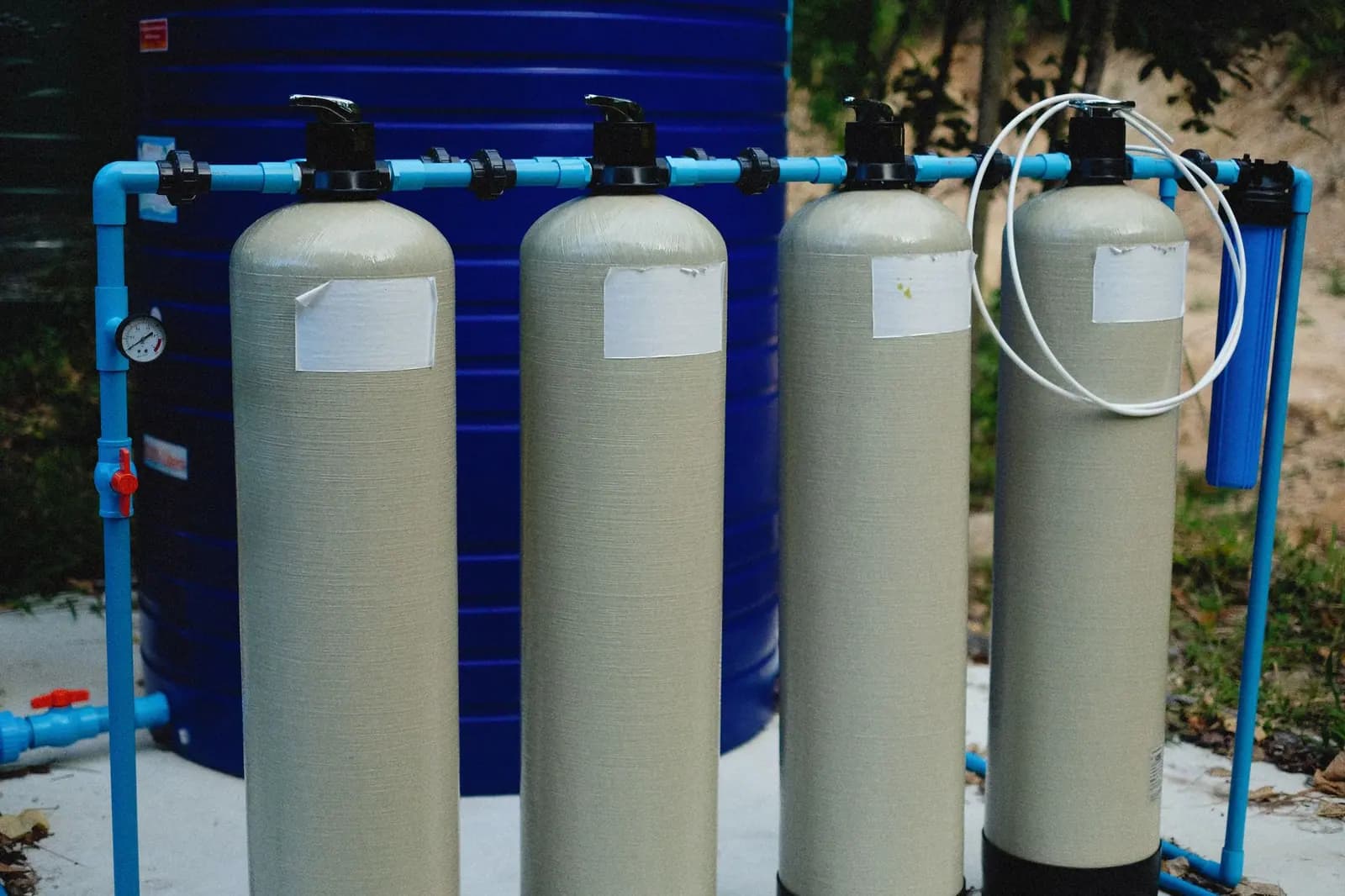
What Is a Whole House Reverse Osmosis System?#
It is a membrane plant sized for a building. Water is pushed against a semi permeable membrane that passes water molecules and rejects most dissolved salts, and what gets rejected leaves as concentrate down a drain line. Because the membrane cannot deliver at household flow rates, treated water lands in an atmospheric storage tank and a separate pump pressurizes it back into the house.
That is four pieces of equipment where a softener is one: pretreatment, membrane rack, tank, pump. The EPA's own consumer guidance on reverse osmosis is written around point of use systems, the under sink kind, which tells you where this technology normally lives in a house.
Do You Actually Need One?#
You need it when your water is bad in ways that a softener and a carbon filter cannot touch, and when that badness reaches taps other than the drinking one. In practice that is a short list:
- Brackish or very high TDS well water, where the total dissolved solids make the water unpleasant at every outlet and hard on appliances.
- Nitrate or arsenic above the EPA limit, on a well, where treating a single tap leaves the rest of the house in play for cooking and rinsing.
- Sodium restricted households on already salty source water, where ion exchange is off the table and the dissolved load is the actual complaint.
Outside those cases, the household symptoms people describe (scale, spotting, chlorine smell, dry skin, flat tasting drinking water) come from hardness and disinfectant, and both have their own cheaper cures. Our hard water explainer has the gpg and ppm numbers that tell those problems apart, and the hard water hub settles the specific confusion between filtering and softening.
What you hear
If reverse osmosis is the most thorough filtration, it must be the best choice for the whole house.
What the numbers say
Thoroughness is not the goal, matching treatment to the tested problem is. The CDC's guidance on home treatment starts with the test result, not with the technology. Hardness responds to ion exchange, chlorine responds to carbon, and neither needs a membrane, a drain line or a pump.
How Much Does a Whole House Reverse Osmosis System Cost?#
Equipment, read at the two manufacturers we track on Sep 14, 2026:
| Build | Equipment price | What it is |
|---|---|---|
| Crystal Quest whole house RO, 300 GPD, standalone | $2,227 | Brass rotary valve, no storage tank |
| Crystal Quest 300 GPD plus 165-gallon tank kit | $3,967 | The configuration that can actually feed a house |
| US Water Systems Defender, entry price | $9,695 | Before choosing production, tank and pump |
| Defender 4,000 GPD, 140-gallon tank, SCALA 1 pump | $10,895 | The cheapest configured build on the page |
| Defender 8,000 GPD, two 140-gallon tanks, CMBE5-62 pump | $16,295 | The top of the same page |
Installation is on top of every line above. A whole house RO install means cutting the main line, adding a drain for the concentrate, powering a pump and finding floor space for a tank, so it is a bigger job than the $300 to $1,500 range plumbers quote for a softener installation.
Now the alternative, same reading day:
What most homes buy instead
as of Sep 14, 2026- SpringWell SS1 softenerHardness, whole house, no membrane and no drain for concentrate
- $1,606.50
- iSpring RCC7AK under sink RODissolved solids, at the tap you actually drink from
- $241.99
Equipment for the pair
$1,848.49
Manufacturer prices read on Sep 14, 2026. Installation extra. The same two jobs, done where each technology is cheapest, for less than the entry price of any whole house RO we track.
Compare that with the setup this site recommends for a hard water home on city supply: a softener at $1,606.50 and an under sink RO from $241.99, both read on Sep 14, 2026. Equipment for the pair lands under $1,900. The gap between that and a Defender build is not a refinement, it is a different order of spending.
Every figure above is the price the maker charged on the day we read it. Our methodology explains why each price on this site carries a date and what we do when a page changes.
GPD, GPM, and Why a 300 GPD System Cannot Feed a House#
Membrane systems are rated in gallons per day. Plumbing is sized in gallons per minute. Those two units describe the same water and behave nothing alike.
This is the detail that turns a $2,227 price tag into a $3,967 one the moment you configure a system that could serve a home, and it is the single most common misunderstanding in whole house RO shopping. The tank stores the slow output; the pump gives it back at the flow your fixtures expect. Our sizing calculator does the equivalent arithmetic for softeners, where capacity rather than flow is the constraint.
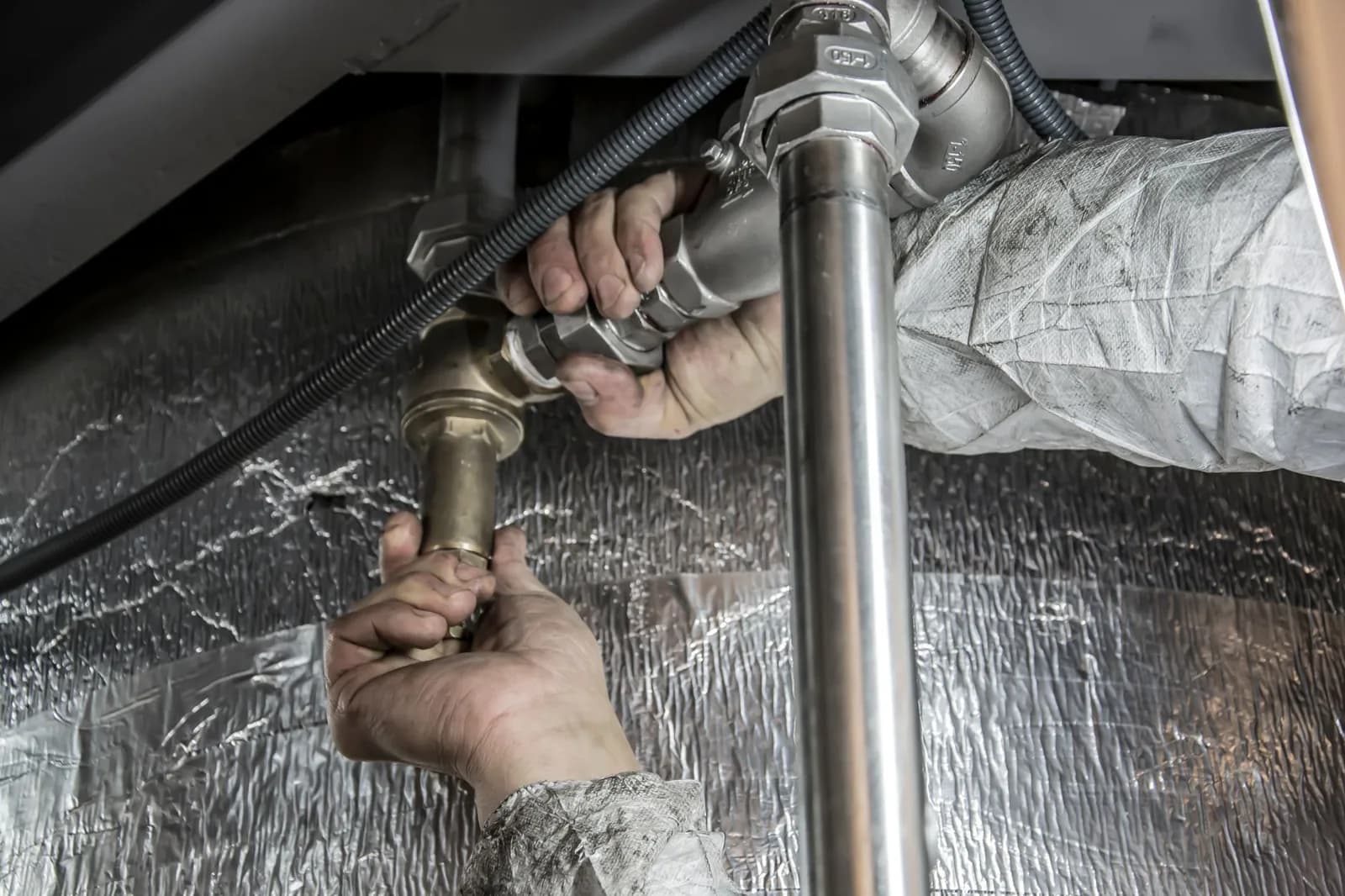
What Is the Downside of Reverse Osmosis?#
Three real ones, and any seller who skips them is selling rather than advising.
It sends water down the drain. Membranes split the feed into permeate and concentrate. At a 50% recovery design, two gallons in produce one gallon of treated water and one gallon of concentrate, our arithmetic on that ratio rather than a rating of any particular machine. On a whole house scale, that is a household's worth of water leaving through a drain line every day.
It removes the minerals too. Low mineral water is aggressive to metal plumbing, which is why whole house designs add remineralization or blend treated water back with untreated water before it reaches the pipes. Under sink systems handle the same issue with a remineralization cartridge: the Aquasana SmartFlow ships with one, and the iSpring RCC7AK is a six stage unit for the same reason.
It has more to maintain. Pretreatment cartridges, a membrane, a tank, a pump, a drain. A softener has resin and salt. A whole house carbon tank has media and a pre filter. The maintenance list scales with the equipment list.
Whole house RO
- Treats every tap, including showers and laundry
- $2,227 to $16,295 in equipment (Sep 14, 2026)
- Storage tank, booster pump, drain line, floor space
- Sends concentrate down the drain every day
Softener plus under sink RO
- Treats hardness everywhere, dissolved solids at the drinking tap
- About $1,850 in equipment (Sep 14, 2026)
- One tank in the utility space, one cartridge stack under the sink
- Wastes far less water, and only while the small membrane runs
The call
Unless a lab report says the problem reaches every tap, the pair on the right wins on money, water and maintenance.
The Setup That Solves Most Homes#
Hardness at the main line, dissolved solids at the drinking tap. That split is the whole recommendation, and it is what the reverse osmosis hub and the best water softeners list are built around.
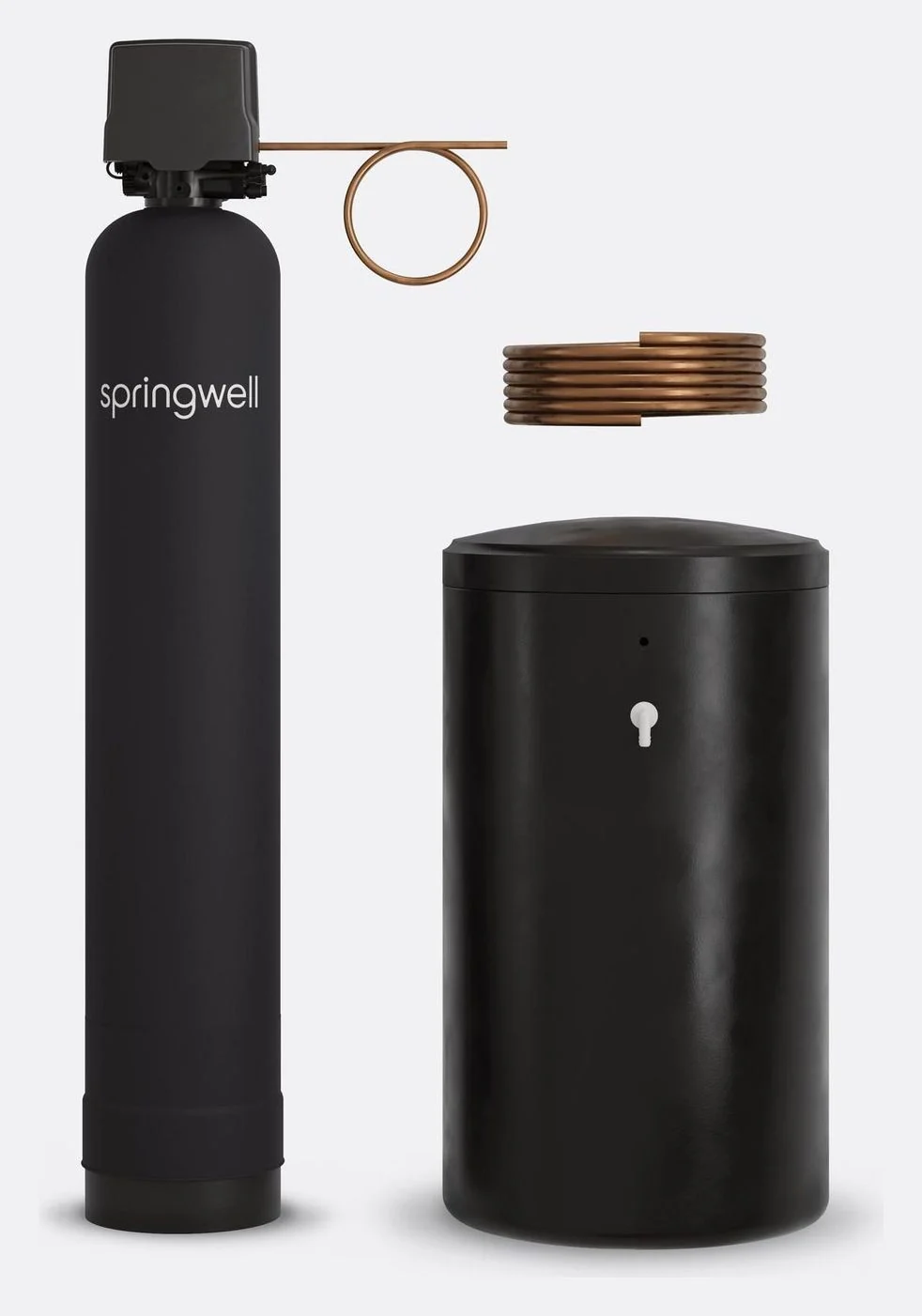
SpringWell
SpringWell SS1 Salt Based Water Softener
Best for: Homes with 1 to 3 bathrooms on hard city water that want true ion-exchange softening at a factory-direct price
- Grain capacity
- 32,000
- Service flow
- 11 GPM
- Bathrooms
- 1 to 3
- Tank
- 9" × 48" (57" with head)
- Connection
- 1"
- Brine tank
- 18" × 33" round (~200 lb salt)
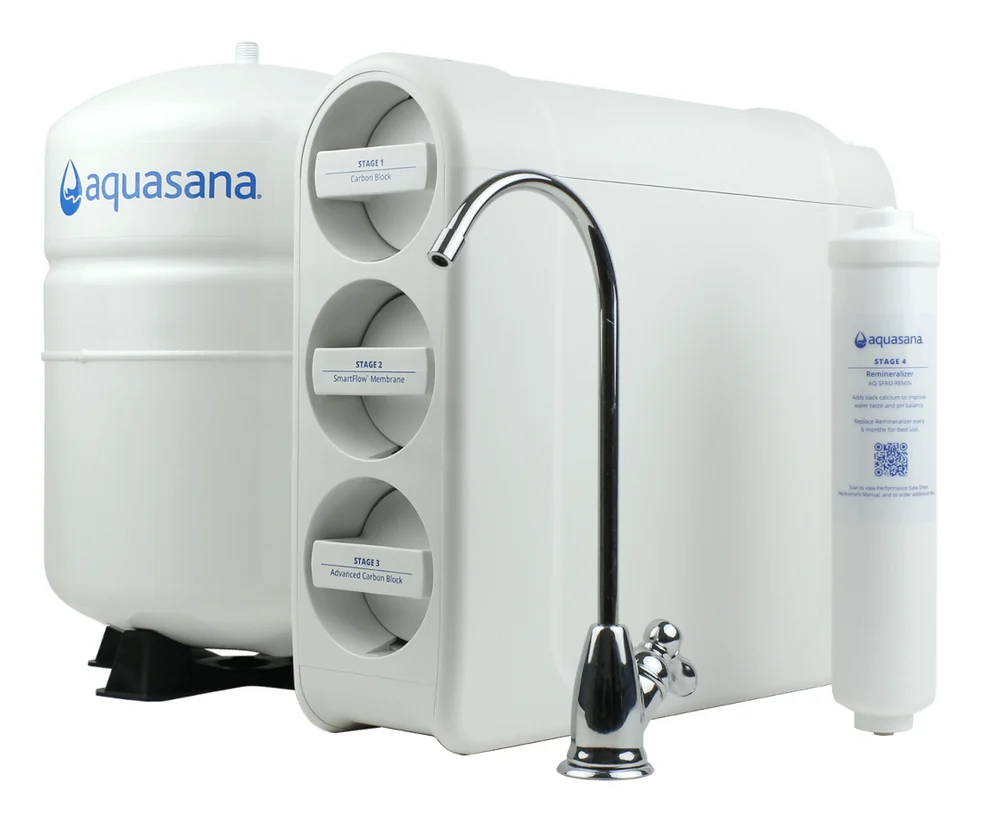
Aquasana
Aquasana SmartFlow Reverse Osmosis System
Best for: Drinking-water protection (PFAS, fluoride, lead) at the best certifications-per-dollar ratio on the market
- Contaminants reduced
- 99.99% of 90 contaminants
- PFAS / fluoride / arsenic
- 96% PFAS (P473), 90% fluoride, 96% arsenic
- Production
- 25.7 gallons/day
- Faucet flow
- 0.7 GPM
- Design
- Compact holding tank (3.2 gallons total, 1.4 to 3.2 usable), remineralizer included
- Filter schedule
- Cartridges 6 months, membrane 12 months
If chlorine or chloramine is also in the picture, the third piece is a carbon tank rather than a membrane, and the whole house water filter hub compares those. A whole house carbon filter and a whole house RO get confused constantly in shopping searches, and they do not do the same job at all: carbon handles what the utility adds, RO handles what the ground dissolved.
When Whole House RO Is the Right Call#
Buy it only if you can tick at least two
5 itemsIf your list is one tick long, treat the tap, not the house. Our well water hub is the better starting point for a private well, since iron, sulfur and bacteria each have cheaper answers than a membrane, and the quiz sorts source, household size and budget into a concrete shortlist.

Crystal Quest
Crystal Quest SMART Whole House Filter
Best for: Specific-contaminant problems (arsenic, fluoride, nitrates, PFAS…), the only brand with a dedicated system for almost every one
- Flow rate
- 9 to 13 GPM
- Household size
- 4 to 6 people
- Claimed capacity
- 1,000,000 gallons (manufacturer figure, 1.5 cu ft SMART bed, not third-party certified)
Video coming soon
We cover this topic on the Home Water Lab channel.
Whole house reverse osmosis, answered
Is a whole house reverse osmosis system worth it?
For most homes, no. Reverse osmosis is built to strip dissolved solids, and the only taps where that matters are the ones you drink and cook from. A softener for the hardness plus an under sink RO for the drinking tap covers the same complaints for a fraction of the price. Whole house RO earns its money on water that is bad everywhere: very high TDS, brackish well water, nitrate or arsenic above the EPA limit.
How much does a whole house reverse osmosis system cost?
Equipment alone, read at the manufacturers on Sep 14, 2026: Crystal Quest starts at $2,227 for a 300 GPD unit with no storage, $3,967 once you add the 165-gallon tank kit. The US Water Systems Defender starts at $9,695 and its configured builds run from $10,895 to $16,295 depending on production, tank and pump. Plumbing, drain and electrical are extra.
What is the downside of reverse osmosis?
It sends water down the drain as concentrate, it removes the minerals along with the contaminants, which is why whole house builds add remineralization or blending, and it needs a storage tank plus a repressurization pump because no membrane produces water at household flow rates.
Does a whole house RO system soften water?
It removes hardness minerals along with the rest of the dissolved solids, so the water arrives soft. That is an expensive way to get there. A softener does the hardness job for a fraction of the price and wastes far less water.
How many gallons per day does a house need?
Production ratings are daily averages, not flow. A 300 GPD system makes 0.21 gallons per minute on our arithmetic, and a single shower asks for about 2 GPM. That gap is why whole house RO is built around a storage tank and a booster pump.
Is there anything better than reverse osmosis?
Better at what. Carbon beats RO on chlorine and taste for a tenth of the cost and no wastewater. Ion exchange beats it on hardness. RO is the only one of the three that reduces dissolved solids across the board, which is why it wins on well water with a bad lab report.
Frequently asked questions
Is a whole house reverse osmosis system worth it?
For most homes, no. Reverse osmosis is built to strip dissolved solids, and the only taps where that matters are the ones you drink and cook from. A softener for the hardness plus a under sink RO for the drinking tap covers the same complaints for a fraction of the price. Whole house RO earns its money on water that is bad everywhere, not just in the glass: very high TDS, brackish well water, nitrate or arsenic above the EPA limit.
How much does a whole house reverse osmosis system cost?
Equipment alone, read at the manufacturers on Sep 14, 2026: Crystal Quest starts at $2,227 for a 300 GPD unit with no storage, $3,967 once you add the 165-gallon tank kit. The US Water Systems Defender starts at $9,695 and its configured builds run from $10,895 to $16,295 depending on production, tank and pump. Plumbing, drain and electrical are extra and are not small.
What is the downside of reverse osmosis?
Three things. It sends water down the drain as concentrate, so a 50% recovery design turns two gallons in into one gallon out and one gallon wasted. It removes the minerals along with everything else, which is why whole house builds add remineralization or blending to keep the water from being aggressive to metal pipes. And it needs a storage tank plus a repressurization pump, because no membrane produces water at household flow rates.
Does a whole house RO system soften water?
It removes hardness minerals along with the rest of the dissolved solids, so the water arrives soft. That is an expensive way to get there. A softener does the hardness job for a fraction of the price and wastes far less water, which is why RO belongs on the drinking tap and ion exchange on the whole house.
How many gallons per day does a house need?
Production ratings are daily averages, not flow. A 300 GPD system makes 0.21 gallons per minute on our arithmetic, and a single shower asks for 2 GPM. That gap is the entire reason whole house RO is built around an atmospheric storage tank and a booster pump rather than plumbed straight into the main line.
Is there anything better than reverse osmosis?
Better at what. Carbon beats RO on chlorine and taste for a tenth of the cost and no wastewater. Ion exchange beats it on hardness. RO is the only one of the three that reduces dissolved solids across the board, which is why it wins on well water with a bad lab report and loses everywhere else.
Keep reading
Not sure what you need?
Answer 5 questions, get the right system for your water.
City or well, budget, household size, our quiz matches your answers against every system we track.