How to Fix Hard Water: 6 Solutions Compared (From $20 to $1,785)
Six ways to treat hard water compared by price and honesty: cleaning, shower filters, descalers, salt-free conditioners, and the softener that removes minerals.
By Home Water Lab TeamUpdated Prices verified Sep 12, 2026
This page contains affiliate links; buying through them costs you nothing extra.
Six fixes, one honest ranking, and only the last one changes what your water tests at. An ion-exchange softener runs from $489 for a big-box unit to about $1,600 factory direct (Rheem read Aug 28, 2026, SpringWell Sep 12, 2026), plus $300 to $1,500 for professional installation per Angi, HomeGuide and Fixr 2026 data. Everything cheaper on this list manages symptoms, which can be exactly the right call, especially if you rent. Here they are from cheapest to most complete, each with the line the marketing leaves out. The background on units and testing is in our hard water hub.
The short answer
as of Aug 28, 2026How do you fix hard water?
There is one permanent fix: a salt-based ion-exchange softener, which removes the calcium and magnesium instead of managing them. Everything below it treats a symptom: vinegar descaling removes deposits already formed, a shower filter handles chlorine rather than hardness, and salt-free conditioners stop most scale from sticking while leaving the water testing just as hard. Expect $489 to about $1,600 for the machine and $300 to $1,500 to have it installed.
Key takeaways
- Only ion exchange removes hardness. The other five fixes manage what hardness does.
- Electronic descalers measured around 50% scale reduction against more than 88% for TAC media in the same federal evaluation.
- Salt-free conditioners start at $879 on sale, so the technology with real data is no longer the expensive option.
- Renters have three workable moves: vinegar, a shower filter, and a portable single-connection softener.
- Dealer quotes of $5,000 to $10,000 buy the same ion exchange as a system in the low thousands.
Which Fix Fits Your Situation?#
Your situation narrows six options to one or two before price enters the conversation. Work down these four questions in order.
Choosing before shopping
Do you own the plumbing?
If you rent, fixes 1, 2 and 4 are yours: descale what you can, filter the shower, and consider a portable softener at a single connection. A whole-house system is plumbed into a loop and a drain that belong to the landlord.Do you know your hardness number?
Below about 3.5 gpg the cleaning routine is the whole answer. Above 7 gpg the equipment case starts working. If you have no figure yet, get one from your utility report, a strip, or the state ranges in our hardness map before spending anything.Is salt allowed and acceptable?
Some California and Texas districts restrict brine discharge, and some households simply refuse the monthly bag. That rules out fix 6 and points at fix 5, which asks nothing of you after installation.City water or a private well?
On a well, test first. Iron fouls softener resin and disqualifies most conditioners outright, so it gets treated upstream. Our well water softener guide covers the correct order of equipment.
USGS hardness bands
- Soft, 0 to 60 ppm0 to 3.5 gpg. No scale problem. A softener solves nothing here.
- Moderately hard, 61 to 120 ppm3.6 to 7.0 gpg. Spotting and light scale. Treatment is optional, not urgent.
- Hard, 121 to 180 ppm7.1 to 10.5 gpg. Scale in the water heater, soap that will not lather, film on the glassware.
- Very hard, over 180 ppmOver 10.5 gpg. Appliance territory: scale builds fast in anything that heats water, and it shortens the life of the thing doing the heating.
USGS classification of hardness as calcium carbonate, where 1 grain per gallon = 17.1 mg/L. A statewide or citywide figure is a wide typical range, never a reading at your address: the USGS says its national map is not built for decisions at the scale of one property. A test strip settles it in two minutes.
Still confirming the problem? Run through the 10 signs of hard water first, then come back with a number. If the units mean nothing to you yet, hard water explained covers gpg, ppm and what those milligrams weigh over a year, and the state hardness map gives you a starting range. On a private well, read the best water softeners for well water before ordering anything, because the order of equipment matters more than the brand.
What Are the 6 Ways to Fix Hard Water?#
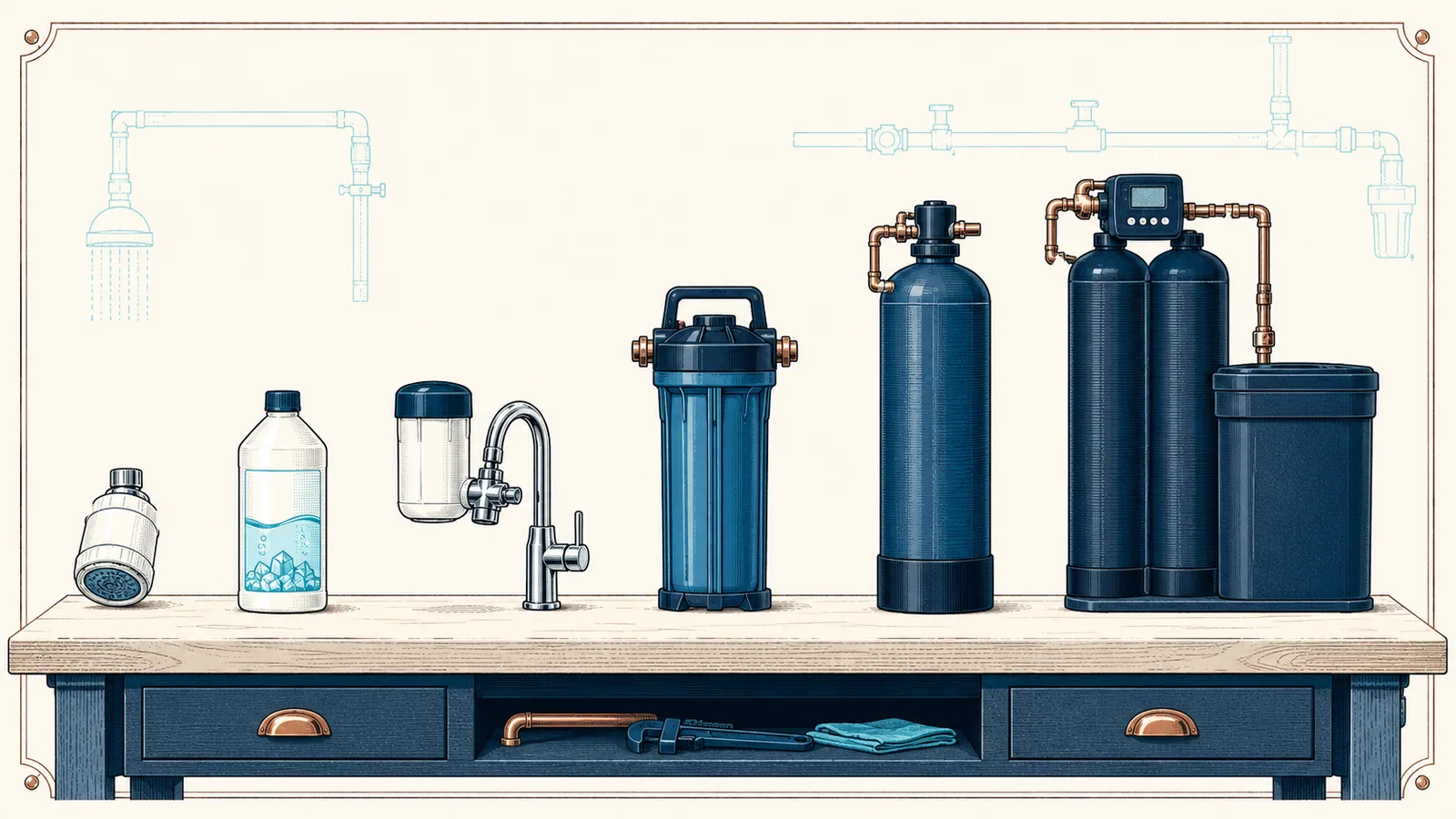
| # | Fix | Upfront cost | What it really does |
|---|---|---|---|
| 1 | Vinegar descaling routine | About $20 in supplies | Removes existing scale, prevents nothing |
| 2 | Shower filter | $119.99 (Sep 12, 2026) | Cuts chlorine at one fixture, not hardness |
| 3 | Electronic descaler | Varies | Around 50% scale reduction in independent testing, removes nothing |
| 4 | Portable ion-exchange softener | See our RV and rental guide | True softening at one connection |
| 5 | Salt-free conditioner (TAC or scale-control media) | $879 to $1,785 (Sep 21, 2026) | Prevents most scale, water still tests hard |
| 6 | Salt-based water softener | $489 to $1,606.50 unit only (Aug 28 and Sep 12, 2026) | Removes the minerals. The only complete fix |
1. The $20 fix: descale what you already own#
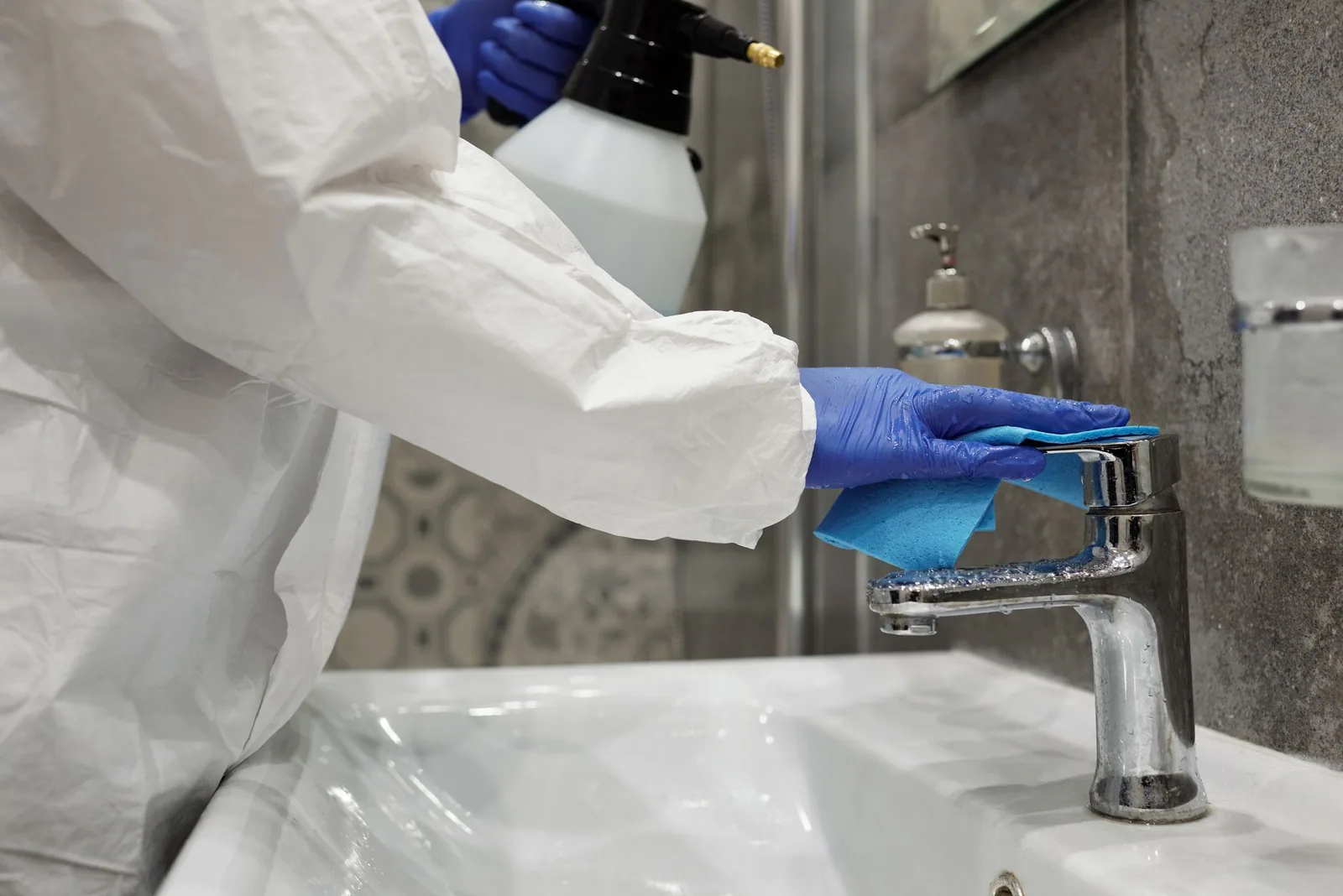
White vinegar or citric acid dissolves calcium carbonate on contact. Soak aerators and shower heads, run a vinegar cycle through the coffee maker and dishwasher, and wipe fixtures dry after use to slow redeposition. The honest line: this is maintenance, not treatment. Every deposit you remove starts rebuilding the same day, so budget the effort weekly for as long as the water stays hard.
2. The renter fix: a shower filter#
A KDF and carbon shower filter meaningfully cuts chlorine, which is what most people actually feel as harsh shower water. It does not soften anything: water crosses the cartridge in a fraction of a second, far too fast for any hardness removal, so scale and spotting continue. Buy it for chlorine and comfort, and know what you are buying.
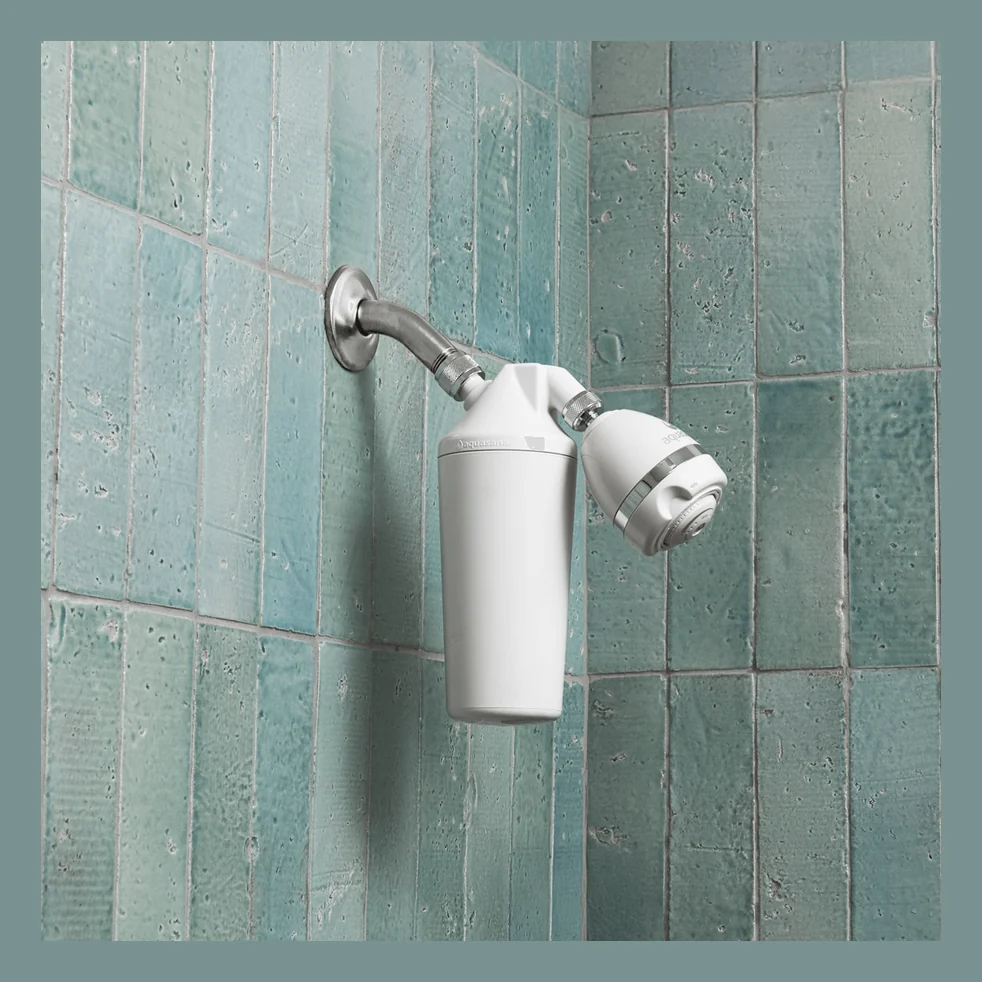
Aquasana
Aquasana AQ-4100 Shower Filter
Best for: Renters and first-time buyers who want chlorine out of their shower without touching the plumbing
- Capacity
- 10,000 gallons / ~6 months
- Media
- KDF copper-zinc + coconut shell carbon
- Chlorine reduction
- 90%+
- Version
- Without shower head (best seller)
3. The tempting shortcut: electronic descalers#
Clip-on electronic and magnetic descalers promise softener results for a fraction of the price. The best independent data says otherwise.
What you hear
This little box clips onto the pipe and softens your whole house for $200.
What the numbers say
In the WateReuse Research Foundation evaluation led by Arizona State University, electromagnetic treatment measured around 50% scale reduction, against more than 88% for template-assisted crystallization media. No descaler removes a single grain of hardness from the water.
With salt-free conditioners starting at $879 (as of Sep 21, 2026), the technology with real evidence behind it is no longer the expensive option. We rate this tier skip-it money.
4. The single-connection fix: a portable softener#
Portable ion-exchange softeners, the kind built for RVs, do genuine softening at one water connection and regenerate manually with ordinary plain salt. For renters with an accessible connection, or anyone who wants soft water at a single point without touching the home's plumbing, they are the workaround that actually works. Our portable and RV water softener guide ranks the current picks.
5. The no-salt fix: a scale conditioner#
Salt-free conditioners convert dissolved hardness into microscopic crystals that flow through instead of sticking. Template-assisted crystallization, the version with federal test data behind it, achieved better than 88% scale reduction in the WateReuse testing. What it does not do is soften: SpringWell's own FutureSoft page says it "won't make water feel slick or stop spotting the way salt does", and that candor is why we still recommend the category for the right buyer.
It fits homes under California-style brine restrictions (state law AB 1366 lets districts ban salt softener discharge, and Santa Clarita went as far as requiring existing units removed under its 2008 Measure S), septic concerns, or owners who want zero upkeep. Aquasana's SimplySoft, which runs on its own scale control media rather than TAC, is the budget route at $879 under the half-off banner running on Sep 21, 2026, or $1,758 when that banner comes down. The FutureSoft below is the TAC reference unit, with strict feed-water limits (0 ppm iron, 0 ppm manganese) that rule out most wells.
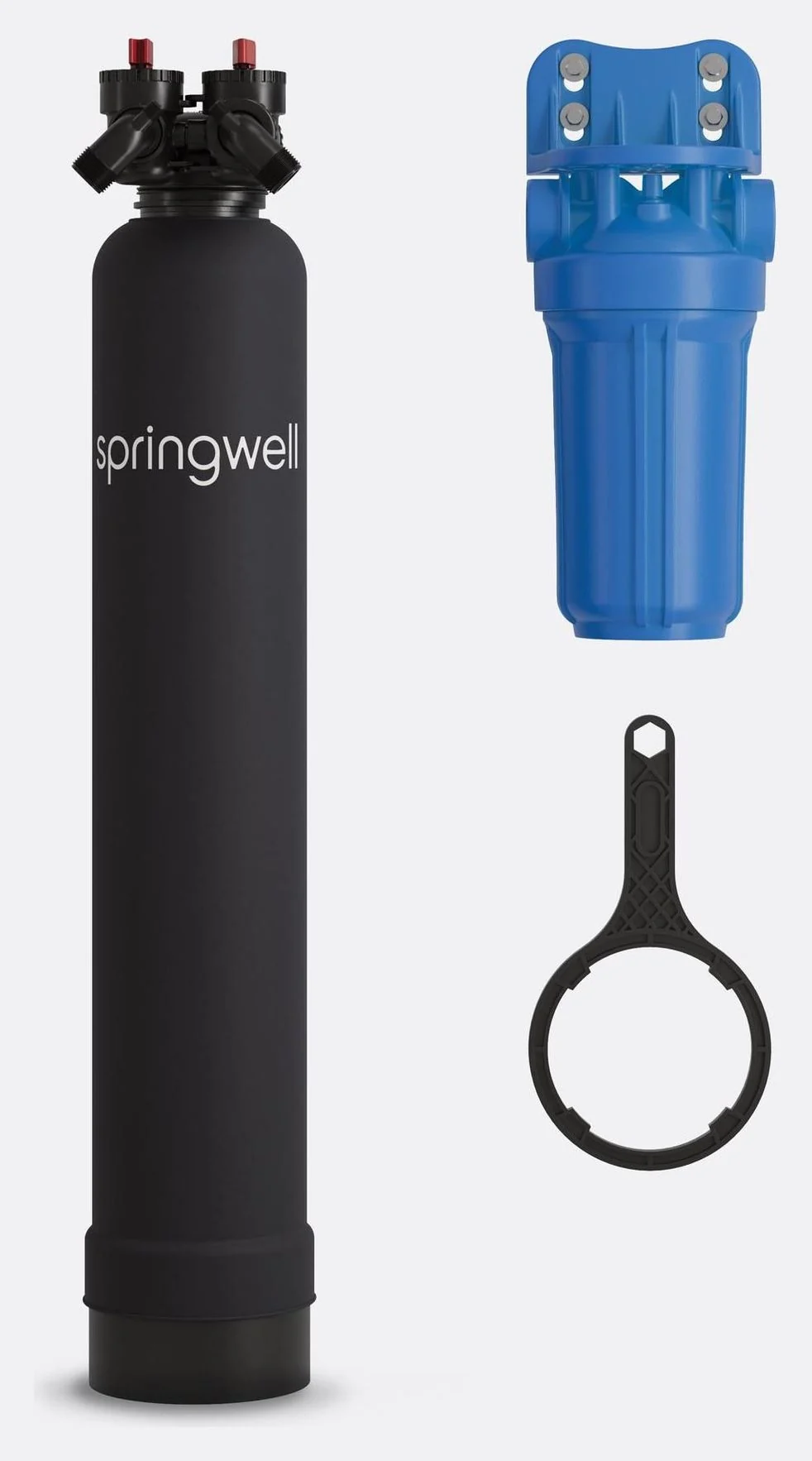
SpringWell
SpringWell FutureSoft FS1 Salt-Free Water Conditioner
Best for: City-water homes that want scale prevention without salt, a drain or electricity, not for anyone expecting soft-feeling water
- Technology
- TAC (Template Assisted Crystallization)
- Flow rate
- 12 GPM
- Bathrooms
- 1 to 3
- Tank
- 6" × 35"
- Max hardness
- 81 GPG
- Scale prevention
- Up to 95% (manufacturer claim)
The full head-to-head is in our salt-based vs salt-free comparison, the ranked field is in best salt-free water softeners, and the unit itself gets a full teardown in our SpringWell FutureSoft review.
6. The complete fix: a salt-based water softener#
Ion exchange swaps calcium and magnesium for sodium, so the hardness leaves the water instead of being managed. Spots stop, soap lathers, scale stops accumulating in the water heater. It is the only solution here that changes your test result.
Budget path: the Rheem RHS32 at $489 (as of Aug 28, 2026) covers small homes from the Home Depot shelf, with the trade being a 1-year warranty and a 7.9 GPM flow rate, both examined in our Rheem softener review. The factory-direct benchmark is the SpringWell SS1, taken apart in our SpringWell softener review. Sizing it right matters more than the brand either way, so run our softener sizing guide before you order anything.
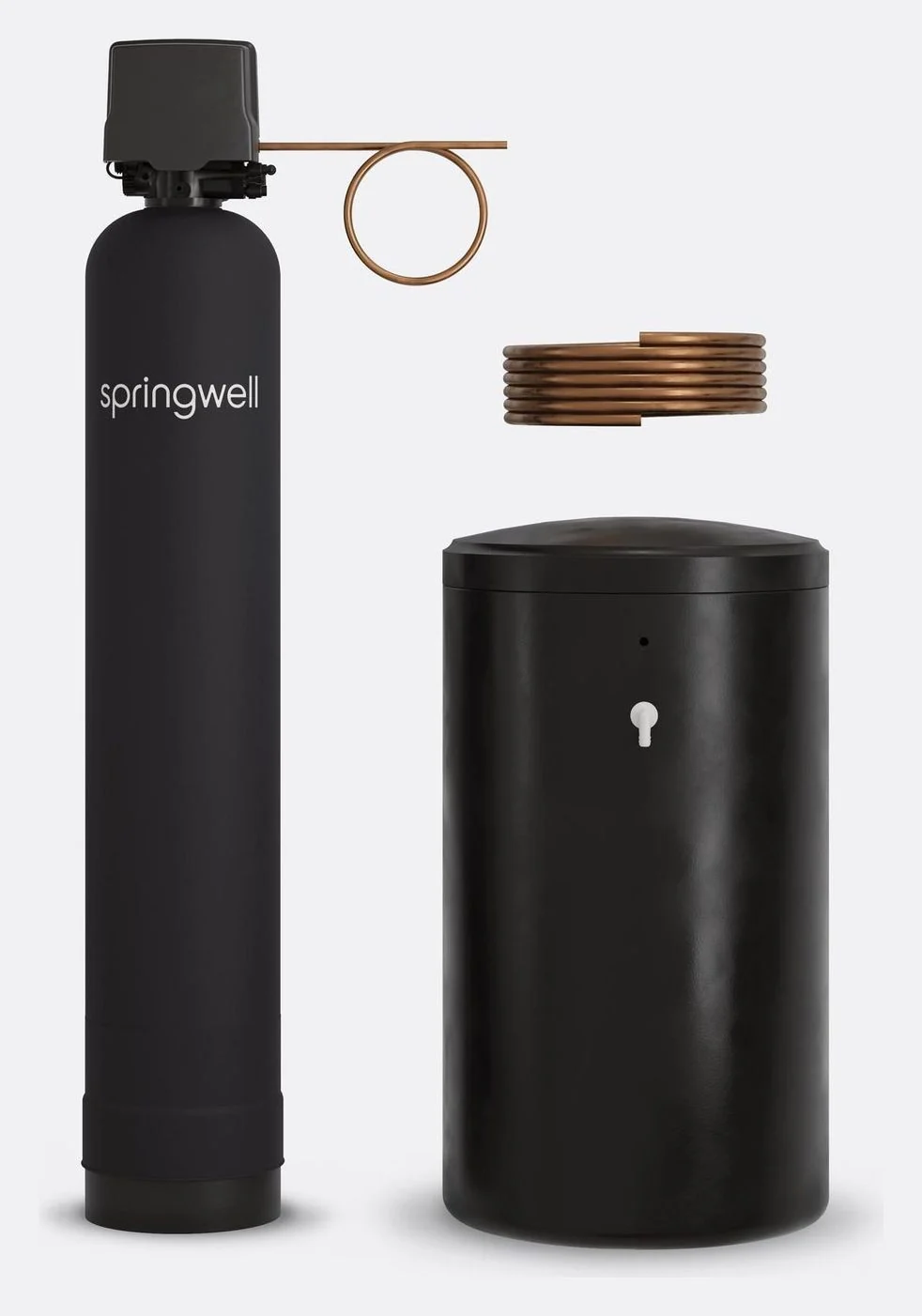
SpringWell
SpringWell SS1 Salt Based Water Softener
Best for: Homes with 1 to 3 bathrooms on hard city water that want true ion-exchange softening at a factory-direct price
- Grain capacity
- 32,000
- Service flow
- 11 GPM
- Bathrooms
- 1 to 3
- Tank
- 9" × 48" (57" with head)
- Connection
- 1"
- Brine tank
- 18" × 33" round (~200 lb salt)
What Does the Permanent Fix Really Cost?#
$2,500
HomeGuide's 2026 data puts the installed range at $1,200 to $3,800, with pro installation alone at $300 to $1,500 per Angi, HomeGuide and Fixr, and salt running $50 to $150 per year. Our installation cost guide itemizes the labor line, and the full cost breakdown stacks equipment, install, salt and repairs across a decade so you can see which layer a quote is padding.
One warning while you shop: Culligan, Kinetico and RainSoft dealer quotes commonly land between $5,000 and $10,000 for the same job class this page prices in the low thousands.
Ten years of ownership
as of Aug 28, 2026- EquipmentBig-box is the middle of Angi's 2026 range for a 48,000-grain unit, $600 to $1,200. Factory-direct is SpringWell's SS1 at $1,606.50. The dealer column is a Culligan system installed, middle of $1,800 to $6,500.
- Installation$900, the middle of the $300 to $1,500 a plumber charges in the 2026 Angi, HomeGuide and Fixr guides. Doing it yourself takes this line to zero. Dealer quotes already contain it.
- Salt, ten years$100 a year, the middle of HomeGuide's 2026 range of $50 to $150, times ten. Hard water and a thirsty household push this to the top of the range.
- Regeneration water, ten years$20 a year on city water, the middle of $10 to $30, times ten. On a private well the water itself costs nothing, so this line disappears.
Midpoints of dated ranges, added up: Angi 2026 capacity table, HomeGuide and Fixr 2026 cost guides, Modernize dealer pages (Culligan page updated Aug 21, 2026) and manufacturer prices read Aug 28, 2026. No inflation, no repairs, no resin replacement. Read it as an order of magnitude, not a quote: your bill moves with hardness, water use and local labor.
What Should a Renter Actually Buy?#
Everything on this list that leaves with you, and nothing that does not. Three purchases and one habit cover it, and none of them is a filter cartridge, which is a distinction worth understanding before you spend anything: our hard water filter guide explains why no cartridge rating reaches dissolved hardness.
The renter's hard water kit
5 itemsThe Verdict#
Renting: vinegar plus a shower filter now, a portable softener if you have the connection. Owning with real hardness: a properly sized salt-based softener is the only fix that removes the problem, from $489 in a big-box store to about $1,600 factory direct, plus install. Owning with a salt ban or zero appetite for maintenance: a conditioner prevents most of the damage and asks nothing back, as long as you accept that the water still tests hard. Skip the electronic descalers, and skip any quote with a comma in the wrong place.
Frequently asked questions
What is the cheapest way to fix hard water?
A bottle of white vinegar. Soaking aerators and shower heads and running vinegar through the coffee maker removes existing scale for a few dollars. It treats the symptom only: deposits return as long as the water stays hard. The cheapest permanent fix is a big-box ion-exchange softener like the Rheem RHS32 at $489 (as of Aug 28, 2026), plus installation.
Can hard water be fixed without a water softener?
The scale can, the hardness cannot. TAC conditioners cut scale formation by more than 88% in testing led by Arizona State University for the WateReuse Research Foundation, but the minerals stay in the water, so it still tests hard and soap still will not lather like it does with soft water.
Do electronic water descalers actually work?
The evidence is weak. In the same WateReuse Research Foundation evaluation that validated TAC at over 88% scale reduction, electromagnetic treatment came in around 50%, and no descaler removes any hardness from the water. If you want scale control without salt, TAC is the technology with data behind it.
What can renters do about hard water?
Three things that leave with you: a vinegar descaling routine for fixtures and appliances, a shower filter for chlorine and shower comfort, and a portable ion-exchange softener that connects at a single point. A whole-house system needs the landlord's plumbing and is their call.
How much does it cost to fix hard water permanently?
Per HomeGuide's 2026 figures, a professionally installed water softener runs $1,200 to $3,800 with a national average around $2,500, and salt costs $50 to $150 per year. Handy owners can cut that with a big-box unit from $489 plus $300 to $1,500 for professional installation. Dealer quotes of $5,000 to $10,000 are for a different business model, not better water.
Does a water filter fix hard water?
No. A carbon whole-house filter removes chlorine, chloramine and chemical contaminants and leaves calcium and magnesium untouched, so the water tests exactly as hard on the way out as on the way in. Homes with both problems buy both, which is why filter-plus-softener combo packages exist.
Keep reading
Not sure what you need?
Answer 5 questions, get the right system for your water.
City or well, budget, household size, our quiz matches your answers against every system we track.