Whole House Water Filters: The Complete Homeowner's Guide
How a whole house water filter works on city water, what it removes and what it costs: real systems from $516.99 to $1,791, every price dated Sep 2026.
By Home Water Lab TeamUpdated Prices verified Oct 7, 2026
This page contains affiliate links; buying through them costs you nothing extra.
A whole house water filter treats every tap in your home from a single point of entry, and on city water the job is specific: remove the chlorine or chloramine your utility adds, plus chemical contaminants like PFAS and VOCs. The real systems we track run $516.99 to $1,330.95, with our top pick at $1,160.25.

The short answer
as of Aug 31, 2026What does a whole house water filter do, and what should it cost?
A whole house filter installs on your main line and treats every tap, removing what your utility adds (chlorine or chloramine) plus chemical contaminants such as PFAS and VOCs. It does not soften water: dissolved calcium and magnesium pass straight through the carbon. The real systems we track run $516.99 to $1,330.95, and our top pick on ten-year cost of ownership is the SpringWell CF1 at $1,160.25, with about $40 a year in pre-filters (prices read Aug 28 to Oct 5, 2026).
One thing this page will not do is pretend city water and well water are the same problem. They are not, and sites that blur them end up recommending carbon filters against iron. This guide covers municipal water. If your water comes from a private well, start with the well water treatment guide instead: different contaminants, different equipment, different budget. If your complaint is scale rather than taste, you are in the wrong aisle entirely, and the hard water hub is where to begin.
Key takeaways
- Carbon and KDF media remove chlorine, chloramine, PFAS and VOCs. They remove zero grains of hardness.
- Tank systems are rated 1,000,000 gallons or about 10 years; cartridge systems need new cartridges every year.
- Our top pick, the SpringWell CF1, is $1,160.25 with roughly $40 a year in pre-filters (Sep 12, 2026).
- The cheapest system we track, the iSpring WGB32B at $516.99, runs $126 to $252 a year in cartridges on our arithmetic.
- Chloramine needs catalytic carbon, which is why the BodyGuard Plus ($1,330.95 on Oct 5, 2026) exists as its own answer.
What Is a Whole House Water Filter?#
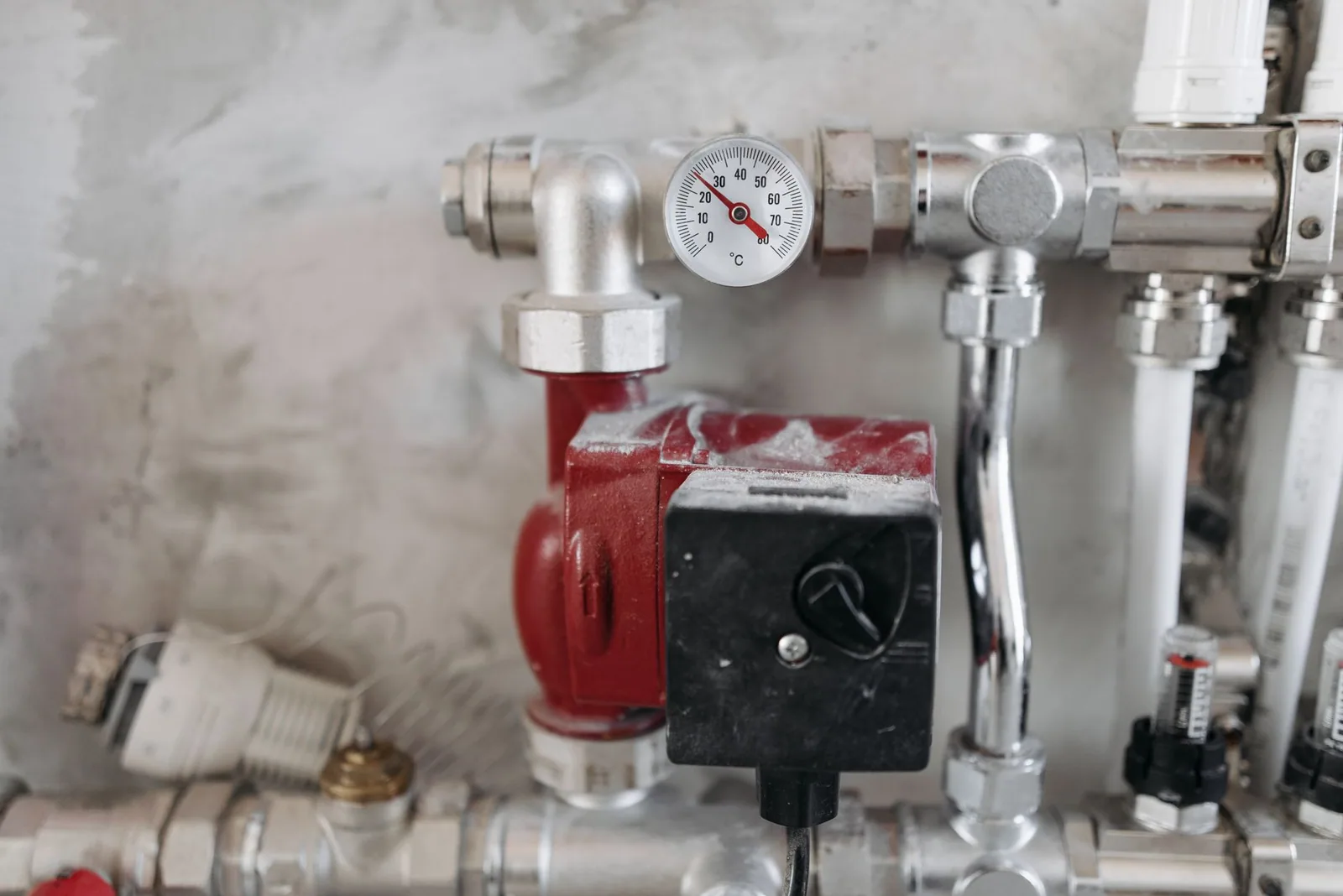
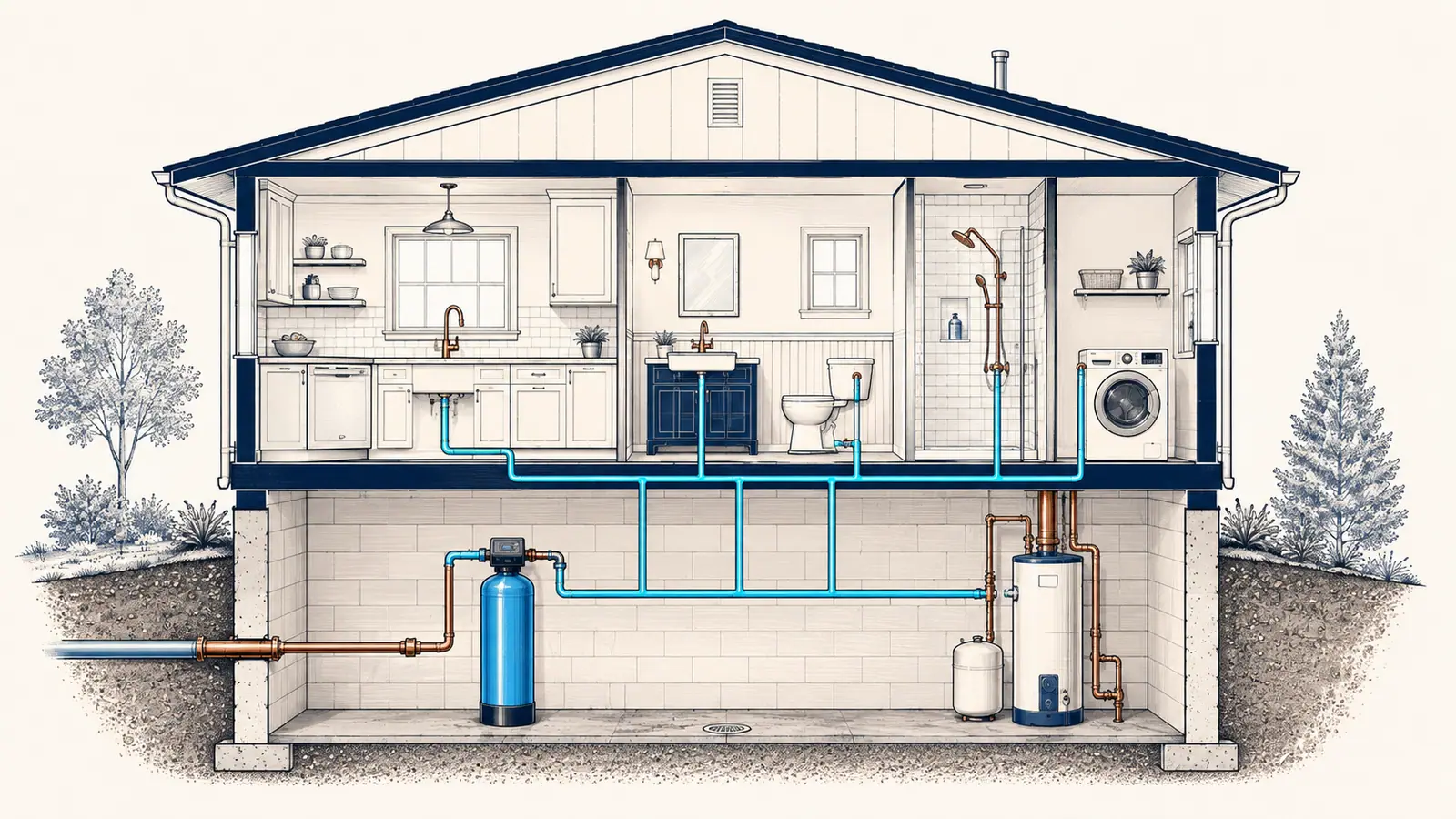
It is a tank or cartridge housing plumbed into your main line, usually within a few feet of the shutoff, so that every fixture downstream gets treated water. That single position is the whole difference from an under-sink unit, which treats one tap.
The typical city-water system is a tank of filtration media, most often catalytic carbon with KDF, sometimes preceded by a sediment pre-filter that catches particles before they clog the expensive media. Water flows through passively: no electricity, no drain, no wastewater in most tank designs.
Whole house filtration makes sense when the problem is in all your water (chlorine smell in the shower, chemical taste everywhere). When the concern is only what you drink, an under-sink unit does the job for a fraction of the price, and our reverse osmosis guide covers that side.
What Does a Whole House Filter Actually Remove?#
Four things, on the systems built for municipal supply: chlorine, chloramine, chemical contaminants such as PFAS and VOCs, and sediment. Everything else you may have been told is either a different machine's job or nothing's.
What each stage is for
- Sedimentreplace: 6 to 9 monthsA cheap cartridge that protects an expensive bed. It catches rust, sand, silt and scale flakes before they can blind the carbon downstream, which is why it is the one part on a service interval.
- KDF + carbonThe working media. KDF handles chlorine, hydrogen sulfide and heavy metals and keeps bacteria from settling in the tank; catalytic carbon takes on chloramine, VOCs, PFAS and everything you can taste or smell.
- Post-filterA final screen so the bed never sends its own dust to your taps, and so the first draw after a backwash runs clear.
A tank system layers these media inside one vessel, a cartridge system gives each its own housing. The order never changes: coarse first, so the expensive media is not spending itself doing the cheap media's job. Sediment interval and media stack from the SpringWell CF spec, read Aug 28, 2026.
- Chlorine. The standard disinfectant. The Aquasana Rhino is independently tested to NSF/ANSI 42 for 97% chlorine reduction, and the SpringWell CF1 carries a written performance guarantee of chlorine below detection for 6 years or 1,000,000 gallons.
- Chloramine. The chlorine-ammonia disinfectant many utilities switched to, and the molecule standard carbon struggles with. It takes catalytic carbon, which is why chloramine-specific systems like the US Water Systems BodyGuard Plus exist.
- PFAS and VOCs. The CF1 lists PFAS, PFOA and PFOS reduction among its four media stages, with components certified to NSF/ANSI 42 and 53.
- Sediment. Handled by the pre-filter stage, which you replace on a schedule.
97%
Now the honest list of what these systems do not do. They do not make microbiologically unsafe water safe: bacteria need UV or disinfection, not carbon. Dissolved lead is a job for point-of-use treatment at the tap. And they do not soften.
What you hear
A whole house filter will take care of my hard water too.
What the numbers say
It will not. Carbon and KDF remove chlorine, chloramine, PFAS and VOCs. Dissolved calcium and magnesium pass straight through, so scale, spotting and stiff laundry continue exactly as before.
Your utility's annual Consumer Confidence Report (published under EPA rules) tells you which disinfectant and which contaminants you are actually dealing with.
Pull these five things off your CCR before you shop
5 itemsTank or Cartridge: Which Design Costs Less to Own?#
Every whole house filter is one of two designs, and the choice matters more than the brand. Cartridge systems win the checkout screen. Tank systems win the decade, and the gap is entirely in the consumables.
| Design | Upfront | Media cost per year | Media life |
|---|---|---|---|
| Tank: SpringWell CF1 | $1,160.25 (Sep 12, 2026) | about $40 (pre-filters) | 1,000,000 gal / ~10 years |
| Tank: Aquasana Rhino | $999 on sale, $1,998 list (Sep 21, 2026) | pre-filter change every 2 months | 1,000,000 gal / 10 years |
| Cartridge: Kind E-1000 | $976.46 (Sep 21, 2026) | $120 - $300 (WaterFilterGuru, 2026) | 80,000 gal per cartridge set |
| Cartridge: iSpring WGB32B | $516.99 (Sep 12, 2026) | $126 - $252 (our arithmetic, below) | Cartridges, replaced on schedule |
If the WGB32B is the one on your shortlist, our iSpring WGB32B review, cartridge by cartridge works through its three stages, its pressure limits and what it leaves in the water.
A third party reached the same conclusion on a shorter horizon: QualityWaterLab put five-year ownership at about $1,599 for the Rhino against about $1,344 for the CF1 (reading of Sep 12, 2026), despite the Rhino's lower sticker.
Tank system
- Media rated 1,000,000 gallons or about 10 years
- Only pre-filters to change, about $40 a year on the CF1
- Higher entry price: $999 to $1,791 on the systems we track
- Needs floor space and a plumber for the tie-in
Cartridge system
- Entry from $516.99 (iSpring WGB32B, Sep 12, 2026)
- New cartridges every year, $126 to $300 depending on model
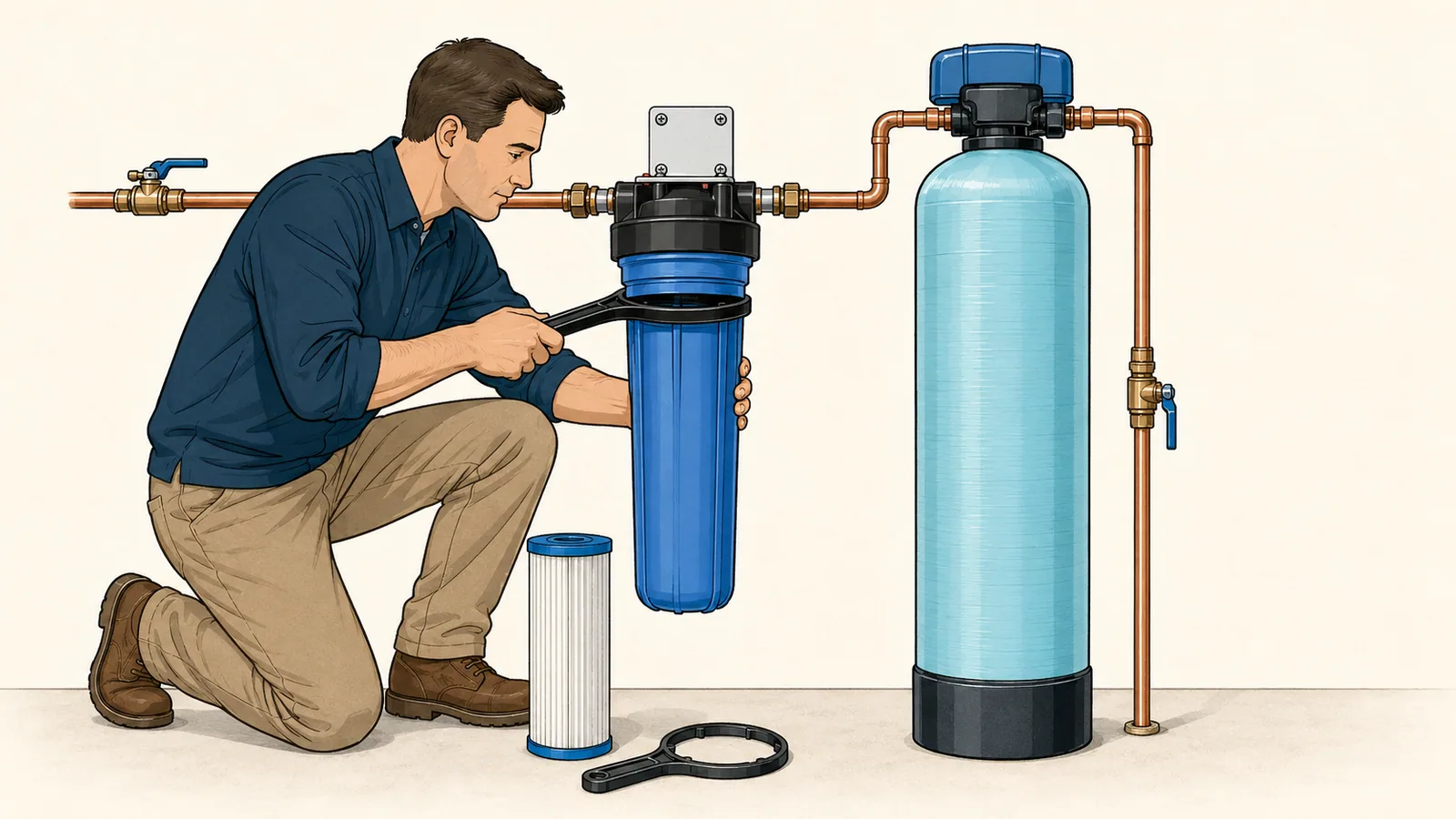
- Swaps take about 15 minutes with no tank to re-bed
- Cheapest over three years, rarely over ten
Bottom line
Cartridge wins the checkout screen and any short horizon: renters, a house you plan to sell, or a first filter you want to test the concept with. Tank wins the decade, which is how long most owners actually keep the system.
The full 10-year tables live in our whole house filter cost breakdown.
How Much Does a Whole House Water Filter Cost?#
Between $516.99 and $1,791 for the equipment across the systems we track, plus a plumber unless you are comfortable cutting into your main line. Prices as of Sep 21, 2026 unless noted:
- iSpring WGB32B: $516.99 on iSpring's own site (Sep 14, 2026). The budget cartridge entry, with the recurring costs above.
- Kind E-1000: $976.46. Cartridge design, 15 GPM flow. Its page also carries a $2,062.22 strikethrough, and its structured data quietly lists a 10% lower figure the store never shows, so read the price in the cart.
- Aquasana Rhino: $999, half off a $1,998 list price. That banner ran all summer, came down on Sep 12, and was back up on Sep 21. Read the page the day you buy.
- SpringWell CF1: $1,160.25.
- US Water Systems BodyGuard Plus: $1,330.95 on Oct 5, 2026, back at its Sep 14 price after a countdown sale took it to $1,147.95 on Sep 28.
Installation is extra on all of them: these tie into your main line, so a plumber visit is the norm. Budget for it, and see the installed totals and 10-year view before you commit.
Which Whole House Water Filter Should You Buy?#
The SpringWell CF1 for most city-water homes, on ten-year cost rather than on the sticker. The Rhino's sticker moves: $999 on Sep 21, 2026 under a half-off banner, $1,998 nine days earlier when that banner was down. Take the Rhino for its certification record and a small house, and take it on a day the banner is up. The BodyGuard Plus if your utility disinfects with chloramine. The full ranking with the comparison matrix is at best whole house filters for city water.
SpringWell
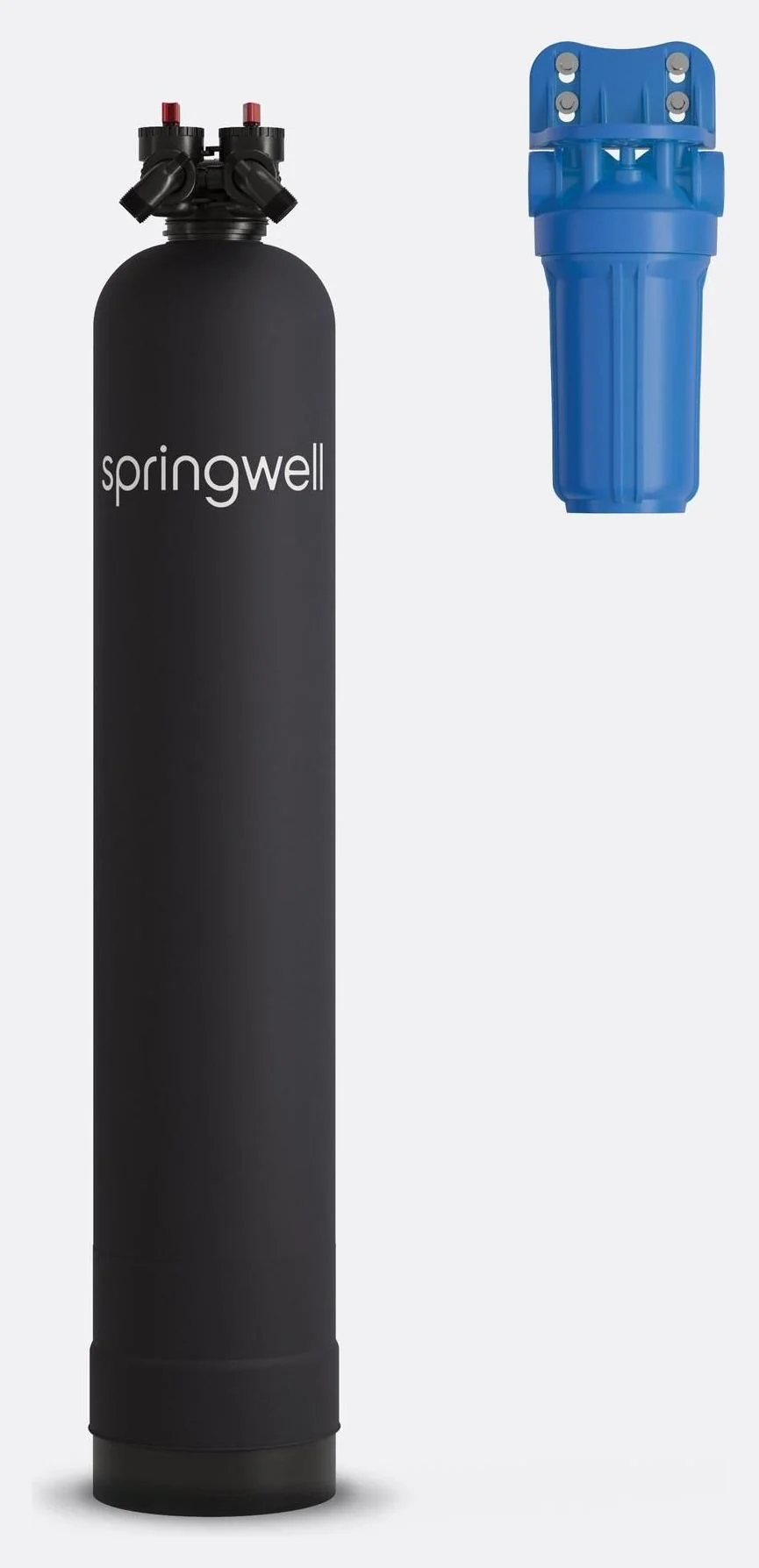
SpringWell CF1 Whole House Water Filter
Best for: City-water homes that want chlorine, chloramine and PFAS handled house-wide with the lowest 10-year cost of ownership
- Capacity
- 1,000,000 gallons / ~10 years
- Flow rate
- 9 GPM
- Bathrooms
- 1 to 3
- Media
- Catalytic carbon + KDF + sediment, 4 stages
- Reduces
- Chlorine, chloramine, PFAS/PFOA/PFOS, VOCs
- Sediment pre-filter
- Replace every 6 to 9 months (~$40/yr)
The CF1 wins on the numbers that matter over a decade: 1,000,000-gallon media, about $40 a year in pre-filters, a written performance guarantee on chlorine and chloramine, and NSF/ANSI 42 and 53 certified components. The named flaws: it is not for unsafe well water, it does nothing about hardness, the 9-inch media tank is smaller than some rivals at the price, and owners keep reporting that the pre-filter bracket switched from metal to plastic. Full analysis in the SpringWell CF Series review.
The Aquasana Rhino, $999 on Sep 21, 2026 and $1,998 when the banner is down, is the brand-name alternative for smaller homes, with a real NSF/ANSI 42 chlorine test behind it. It also carries the fine print that made our review necessary: independent long-term testing measured real-world flow in the low 5 GPM range after a year, the sealed tank cannot be re-bedded (a replacement means buying the system again), and Aquasana's Trustpilot sat at 1.5/5 across 170 reviews as of Aug 28, 2026. Details in the Aquasana Rhino review.
The BodyGuard Plus at $1,330.95 (Oct 5, 2026) is the pick when your utility uses chloramine: catalytic carbon in a backwashing tank, purpose-built for the molecule standard carbon misses. It needs a drain connection and has thinner independent review coverage than the two above.
If you are choosing between the two biggest names, our SpringWell versus Aquasana head-to-head settles it profile by profile.
Picking one in four moves
Name the contaminant from your CCR
Chlorine, chloramine, PFAS or sediment. The report is free, published annually, and it decides everything that follows.Match the media to it
Standard carbon handles chlorine. Chloramine needs catalytic carbon. PFAS needs a system that lists it explicitly, not one that implies it.Verify certification per model
Tested to NSF standards is not the same as certified to them, and certification attaches to a model, never to a brand.Price the decade, not the box
Add ten years of cartridges or pre-filters to the sticker before comparing anything. That single step reorders most shortlists.
Do You Need a Filter, a Softener, or Both?#
It depends entirely on which of two separate problems you have, and plenty of homes have both:
- Chemical taste, chlorine smell, PFAS concern: filter. That is this page.
- Scale on fixtures, spotted glasses, dry skin, appliances dying young: softener. The symptoms are catalogued in our signs of hard water guide, and the equipment in the water softener systems hub.
- Both symptoms, which is common on hard chlorinated city water: both systems, plumbed in series. Combo packages price below buying separately, and we compare them in filter and softener combos.
A 30-second reality check: hardness is a mineral problem measured in gpg, filtration is a chemistry problem, and no single carbon tank solves both. Any seller claiming otherwise is your cue to leave. If you are unsure which side you are on, check your area in the hardness lookup, then compare what each machine actually costs in the softener cost pillar and the filter breakdown above. Where salt is restricted, a salt-free conditioner is the third piece of that puzzle.
What About Whole House Reverse Osmosis?#
Mostly, you do not need it. Whole house RO is the most aggressive residential option, and HomeGuide (read Aug 28, 2026) prices it at $4,800 to $10,000 installed, before the added complexity of storage and wastewater. For typical city water, a whole house filter plus an under-sink RO at the kitchen tap delivers what most buyers actually want for a fraction of that.
The legitimate cases are extreme source water, usually on wells or high-TDS supplies. If you suspect you are one of them, start from the reverse osmosis buyer's guide and get a lab test before anyone quotes you five figures. Iron-heavy wells in particular need dedicated iron treatment rather than any filter on this page, and the well system cost guide shows what those stacks run.
The order of operations that picks the right filter#
If all you actually want is better drinking water rather than a whole house of it, the cheaper answer is one cupboard away, ranked in best under sink water filters. On city water, buy a tank system sized for your home, verify the certification for the contaminant you care about, and read the recurring costs before the sticker: that order of operations picks the right system almost every time. Our top pick is the SpringWell CF1 at $1,160.25 (as of Sep 21, 2026) on 10-year cost of ownership, with the Rhino for smaller homes and the BodyGuard Plus at $1,330.95 (Oct 5, 2026) for chloramine utilities.
Frequently asked questions
Does a whole house water filter soften hard water?
No. Carbon and KDF media remove chlorine, chloramine and other chemical contaminants, but they do not touch dissolved calcium and magnesium. If your problem is scale and spotting, you need a water softener or a salt-free conditioner, and many homes on hard city water end up needing both a filter and a softener.
How long does a whole house water filter last?
Tank systems like the SpringWell CF1 and Aquasana Rhino are rated for 1,000,000 gallons or about 10 years, with only pre-filters to change along the way. Cartridge systems need new cartridges roughly every year: about $120 to $300 per year on the Kind E-1000 per WaterFilterGuru's 2026 data, and $126 to $252 on the iSpring WGB32B on our own arithmetic, using its official $125.99 replacement pack priced Sep 12, 2026.
Do whole house water filters remove PFAS?
Some do. The SpringWell CF1 lists PFAS, PFOA and PFOS reduction and uses components certified to NSF/ANSI 42 and 53. Certification is model-specific, so verify the exact system before buying. For drinking water, an under-sink reverse osmosis unit remains the strongest PFAS barrier and pairs well with a whole house filter.
Can I use a whole house water filter on well water?
Not the city-water carbon systems on this page. Private wells usually fail on iron, sulfur, sediment or bacteria, which need air injection oxidation, dedicated sediment stages or UV, not carbon. Start from a lab test and follow our well water treatment guide instead.
Published in this section
Whole House Sediment Filters: Micron Ratings, Types and Top Picks
Read the guide
Whole House Water Filter Cost in 2026: What You'll Actually Pay
Read the cost breakdown
Best Whole House Water Filter and Softener Combos in 2026
Read the buyer's guideSpringWell Whole House Water Filter Review 2026 (CF Series, Real Numbers)
Read the review
Best Whole House Water Filter for City Water in 2026 (Top 7 Compared)
Read the buyer's guideKeep reading
Not sure what you need?
Answer 5 questions, get the right system for your water.
City or well, budget, household size, our quiz matches your answers against every system we track.