Best Iron Filter for Well Water 2026 (Air Injection, Greensand & Katalox)
The best iron filter for well water is SpringWell's WS1 at $2,231.25: air injection, greensand and Katalox compared, with honest limits above 7 ppm iron.
By Home Water Lab TeamUpdated Prices verified Sep 12, 2026
This page contains affiliate links; buying through them costs you nothing extra.
This decision comes down to one number on your lab report: iron in ppm. Under 7, the SpringWell WS1 at $2,231.25 (Sep 12, 2026) is the best iron filter you can buy, and it costs essentially nothing to run. Over 7, SpringWell is the wrong catalog and no amount of shopping around inside it will fix that, so this page tells you exactly what to buy instead.
The short answer
as of Aug 28, 2026What is the best iron filter for well water?
The SpringWell WS1, $2,231.25: air injection oxidation in a single tank, rated for 7 ppm iron, 1 ppm manganese and 8 ppm hydrogen sulfide, with a greensand media bed that runs 10-plus years on nothing but an automatic nightly backwash. There are no chemicals to dose, no cartridges to replace, and no consumables at all, so the running cost after purchase is the backwash water. Above 7 ppm iron, a Katalox Light build or a hydrogen peroxide injection system is the correct tool.
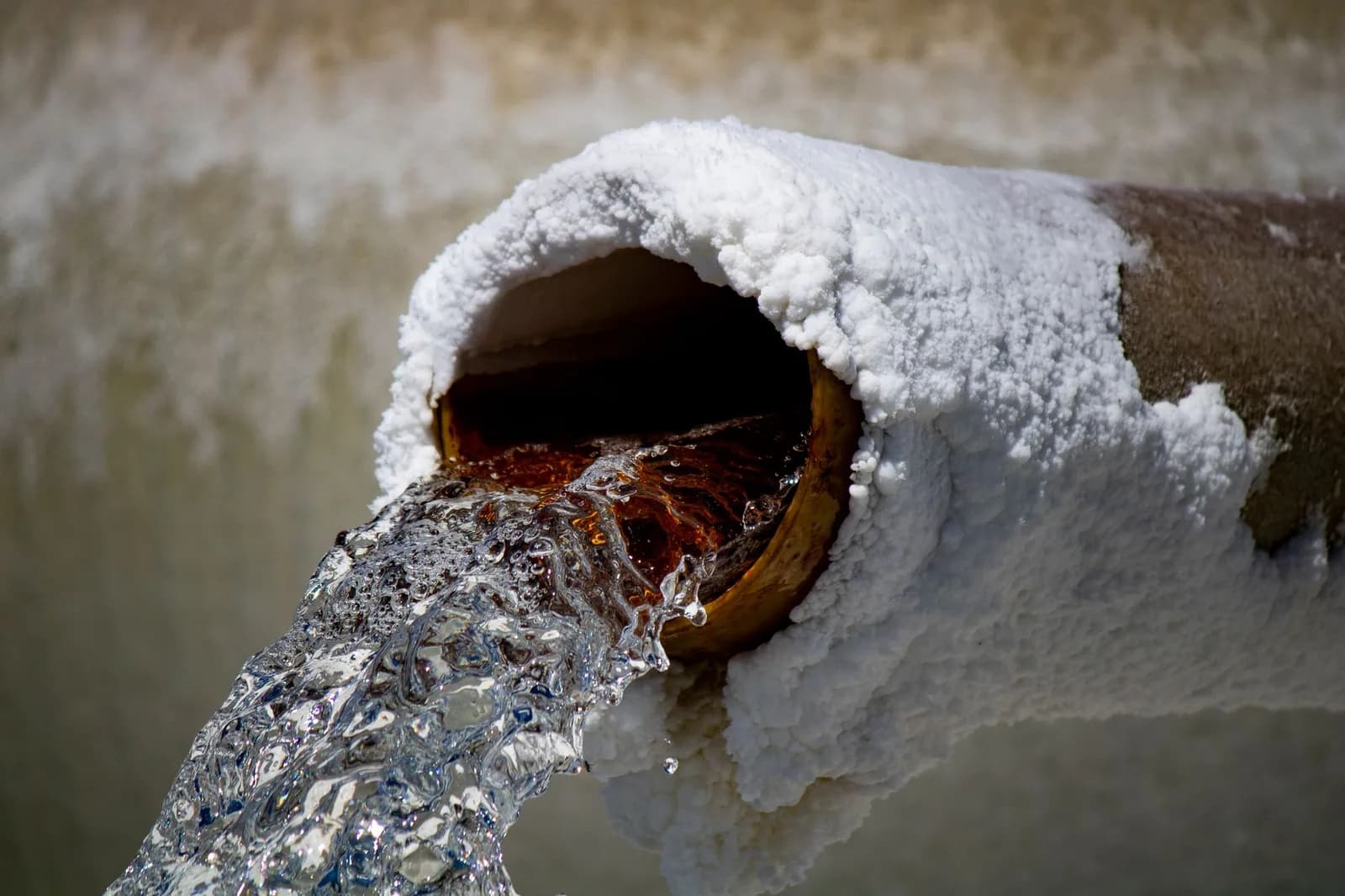
Iron is the most common complaint on private wells, and it is rarely the only one, which is why this page sits inside our broader private well treatment guide. Start with the threshold, because it decides whether you have a problem at all.
Key takeaways
- Staining starts at 0.3 mg/L, the EPA secondary standard, and well tests at 2 to 6 ppm are routine.
- The SpringWell WS1 covers 7 ppm iron, 1 ppm manganese and 8 ppm hydrogen sulfide for $2,231.25 (Sep 12, 2026).
- Air injection consumes nothing: no dosing pump, no cartridges, and a greensand bed rated 10-plus years.
- A Fleck 2510 AIO on Katalox Light advertises 30 ppm iron at a similar price, per Mid Atlantic Water, July 2026.
- Iron bacteria are not a filtration problem: a colonized well needs shock chlorination before any media helps.
How Much Iron Is Too Much?#
Less than you would guess. The EPA's secondary drinking water standard for iron sits at 0.3 mg/L, and above it water starts staining fixtures, tubs and laundry orange and tasting metallic.
0.3 mg/L
Secondary means a nuisance limit rather than a health limit, which is why nobody sends you a warning letter about it. Well tests coming back at 2, 4 or 6 ppm are routine, which is 10 to 20 times past the staining line.
Know which iron you have, because it decides the treatment:
- Ferrous (clear-water) iron is fully dissolved. The glass fills clear, then the sink rim turns orange as air oxidizes the iron on contact. This is what oxidizing filters are built for.
- Ferric (red-water) iron is already oxidized, visible as rusty particles. Sediment filtration catches it, and any oxidizing system handles it incidentally.
- Iron bacteria are the third case: slimy reddish growth in the toilet tank is the tell. No media filter fixes a colonized well on its own; the well typically needs shock chlorination first, so test before you shop.
What to have in hand before you buy an iron filter
6 itemsAir Injection vs Greensand vs Katalox: What Is the Difference?#
Every serious iron filter does the same two jobs: oxidize dissolved iron into solid particles, then catch the particles. The technologies differ in how they oxidize, and in how much load they can take before they fall behind.
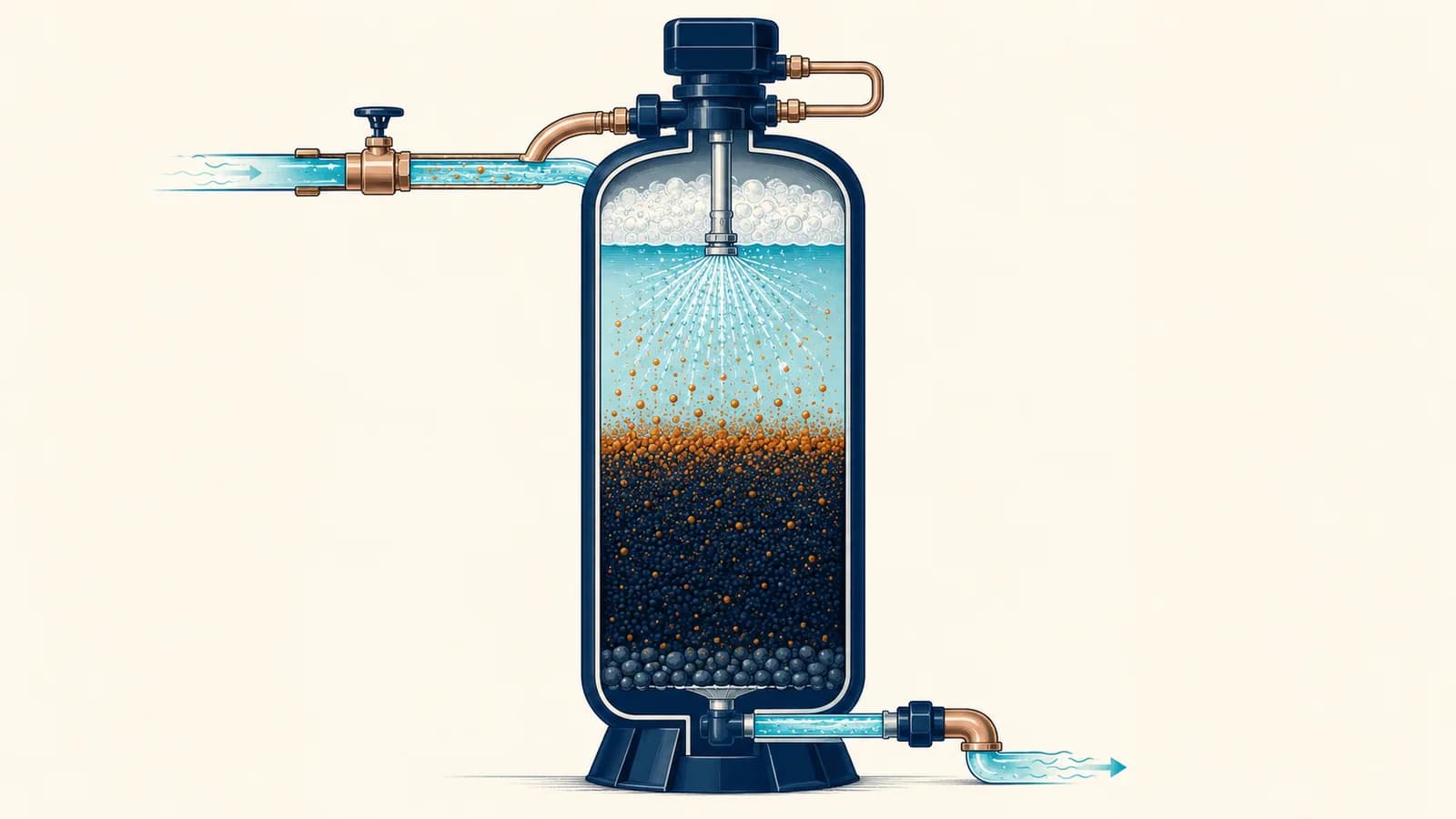
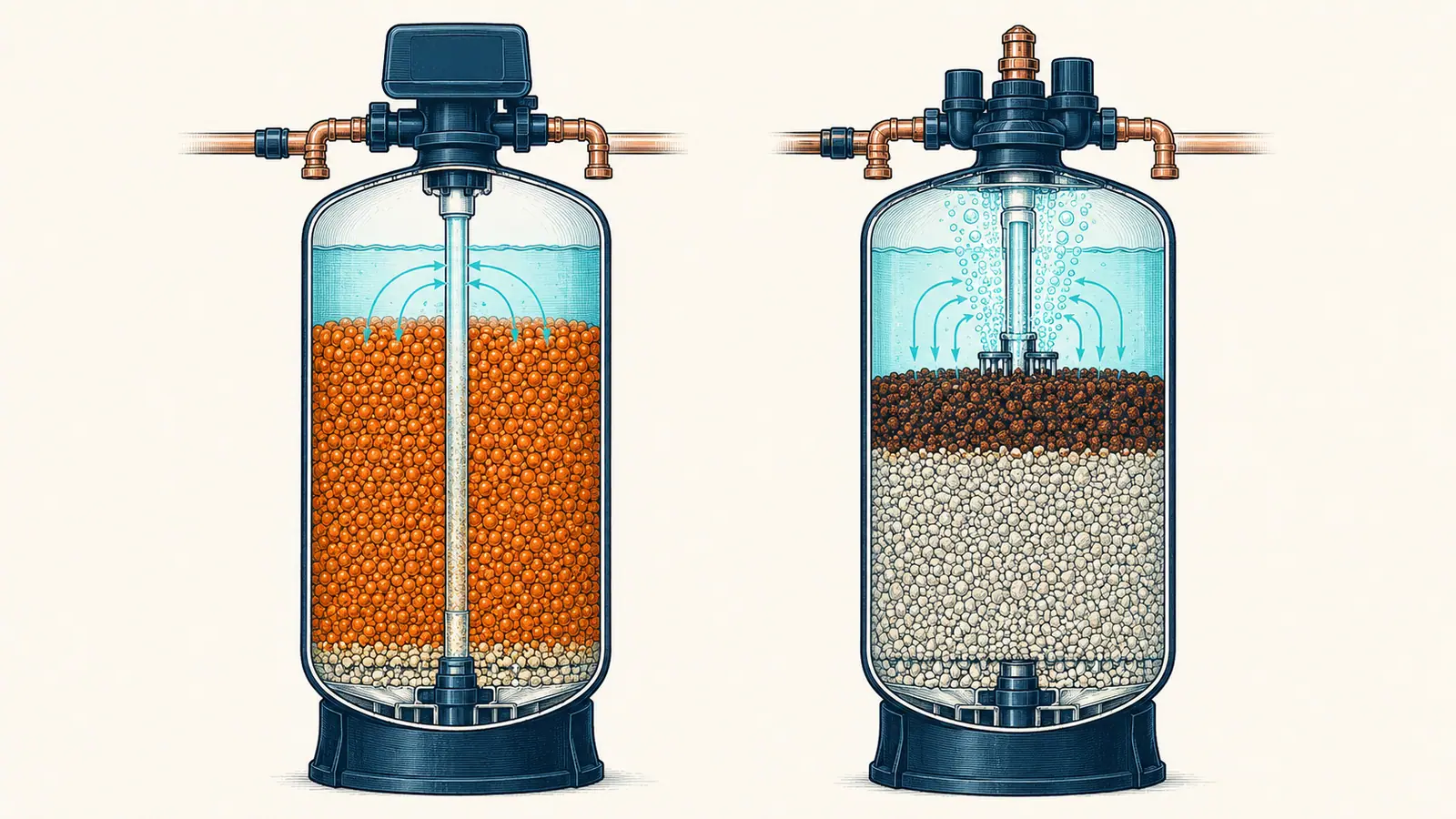
Air injection oxidation (AIO) keeps a pocket of compressed air at the top of a single tank. Water falls through it, oxygen does the oxidation, a media bed below catches the solids, and a nightly backwash flushes them to the drain. No chemicals, no cartridges, no dosing pump. This is the WS1's architecture.
What each stage is for
- Air pocketA pocket of compressed air kept at the top of the tank. Water falls through it and oxygen converts dissolved iron, manganese and hydrogen sulfide into solid particles. No chemicals, no cartridges, no dosing pump.
- Greensand bedManganese-dioxide-coated granules that finish the oxidation and catch the solids. A nightly backwash flushes the bed to the drain, which is why the media is rated 10-plus years with nothing to refill.
Architecture and ratings of the SpringWell WS series (7 ppm iron, 1 ppm manganese, 8 ppm hydrogen sulfide), read Aug 28, 2026. Katalox Light raises those ceilings on the same layout; chemical injection replaces the air pocket with a dosing pump ahead of the catch tank.
Greensand is the classic catch media: manganese-dioxide-coated granules that both finish the oxidation and trap the particles. SpringWell's greensand fusion bed is rated 10-plus years.
What you hear
Greensand means buying potassium permanganate forever.
What the numbers say
That was true of traditional greensand installs, which regenerated the media chemically. In an air injection tank the trapped air pocket does the oxidizing and the greensand only catches solids, so the bed regenerates on a nightly backwash with no chemical to buy.
Katalox Light is a higher-capacity manganese-dioxide media used by builders who need bigger numbers. The difference is not marketing: Mid Atlantic Water's July 2026 comparison notes that a Fleck 2510 AIO running Katalox Light advertises 30 ppm iron, 15 ppm manganese and 10 ppm sulfur, against the WS1's 7/1/8 ratings at a similar price.
Chemical injection is the escalation path: a dosing pump feeds hydrogen peroxide (or chlorine) ahead of a catch tank, oxidizing loads that no air pocket can keep up with. It is the right call for extreme wells, at the price of consumable chemicals and a system that realistically wants professional installation.
Air injection (WS1 and equivalents)
- Rated to 7 ppm iron on the WS series, 30 ppm on a Katalox Light build
- Zero consumables: no chemical, no cartridge, media rated 10-plus years
- One tank, a drain line and a nightly backwash you can hear
- DIY install is realistic for a confident plumber
Chemical injection (peroxide or chlorine)
- Handles iron and sulfur loads no air pocket can keep up with
- Buys oxidizer continuously, plus a dosing pump to maintain
- Needs a solution tank, a pump and usually a contact tank
- Realistically a professional installation
Bottom line
Air injection until your lab report forces you past its ratings. The moment it does, switch technology rather than buying a bigger version of the wrong one.
SpringWell WS1: Best Iron Filter for Most Wells#
SpringWell
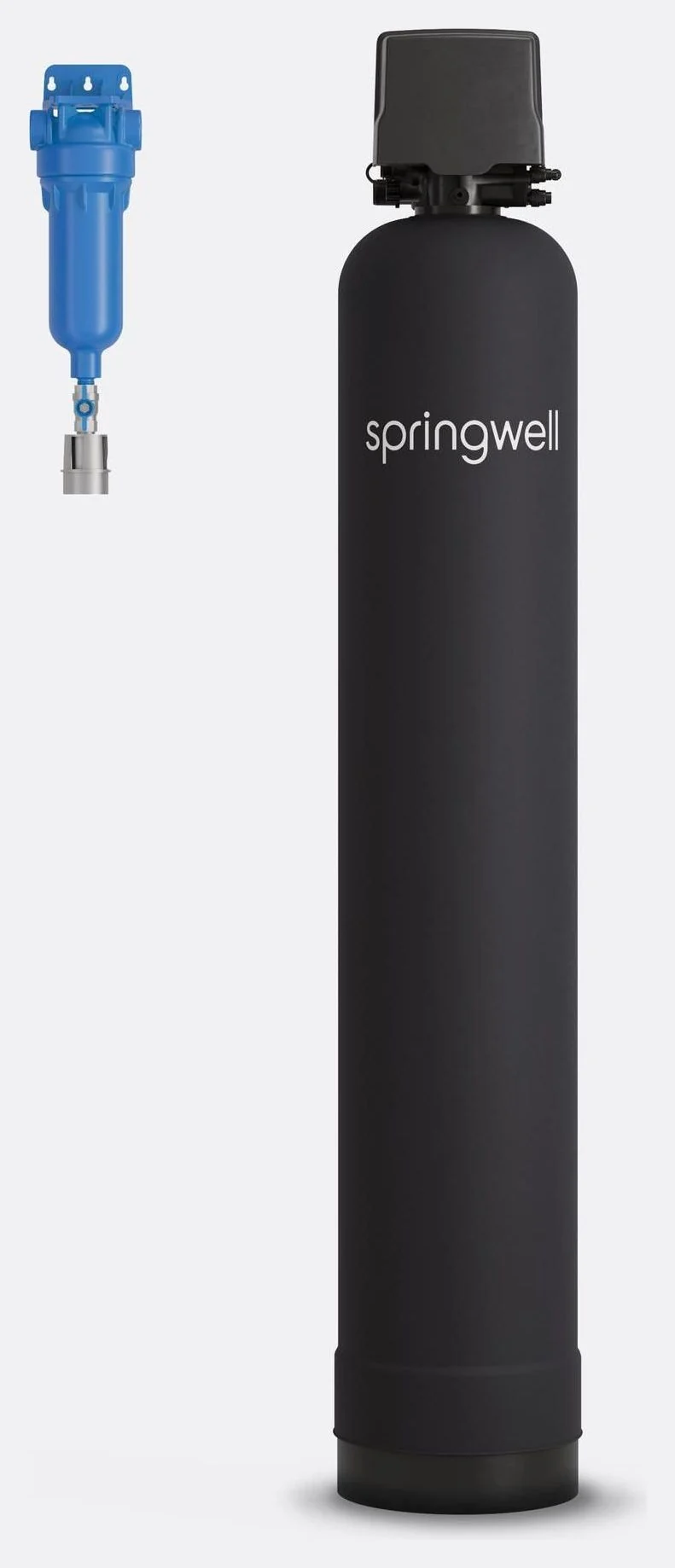
SpringWell WS1 Whole House Well Water Filter
Best for: Well-water homes with light-to-moderate iron, sulfur or manganese that want a chemical-free, no-consumable setup
- Technology
- Air Injection Oxidation (AIO), single tank, chemical-free
- Flow rate
- 12 GPM
- Iron rating
- 7 ppm
- Manganese rating
- 1 ppm
- Sulfur (H2S) rating
- 8 ppm
- Media
- Greensand fusion, 10+ year life
Within its ratings, the WS1 is the system we would put on our own well. One tank, no chemicals, a Bluetooth head you configure from an app, an automatic nightly backwash, and a media bed with no consumables to refill for a decade or more. The tank carries a lifetime warranty, shipping in the US is free, and at $2,231.25 (Sep 12, 2026) it undercuts what well-water dealers quote for comparable oxidizing systems; across SpringWell's catalog, dealer quotes from the Culligan and Kinetico channel routinely land between $5,000 and $10,000 for packaged well setups.
It also earns points for what it does beyond iron: the same oxidation handles up to 8 ppm hydrogen sulfide, which is the rotten-egg smell, and 1 ppm manganese, the source of black staining.
What we like
- Chemical-free AIO in a single tank, no chlorine injection, no dosing pump
- Automatic nightly backwash; media lasts 10+ years with no consumables to refill
- Bluetooth head configurable from the app
- Lifetime warranty on the tank
What to watch
- Iron ratings are modest: 7 ppm iron / 1 ppm Mn / 8 ppm sulfur, undersized for heavily loaded wells vs Katalox Light setups
- Does not soften water, pair with a softener for hardness
- Backwash cycle is audible at night
- On-page "$5,100" strikethrough price is a bundle comparison, not a real discount
Where the WS1 Honestly Falls Short#
Four things the product page will not lead with, and the first one is a genuine buying decision rather than a quibble.
The other three: the $5,100 strikethrough on the WS1 page is a bundle comparison rather than a discount, and $2,231.25 was the real price at our reading. The backwash is audible and runs nightly, so think twice about a spot sharing a wall with a bedroom. And the warranty splits: lifetime on the tank, 5 years on the electronic head, a Chandler Systems valve platform with a thinner parts network than Fleck or Clack, and returns accepted uninstalled only with a 10% restocking fee (up to 25%).
What Does an Iron Filter Cost to Own?#
The category's quiet advantage is what happens after checkout. An AIO system consumes nothing: no cartridges, no chemicals, no media changes for a decade or more. The recurring cost is the backwash water it sends to the drain each night, which on a private well you are not buying from anyone.
SpringWell WS1 route, all-in
as of Aug 28, 2026- WS1 air injection filter (factory direct)Price displayed on springwellwater.com, Aug 28, 2026; ignore the $5,100 strikethrough
- $2,100
- Professional installationAngi / HomeGuide / Fixr 2026 range for a main-line install
- $300 to $1,500
- ConsumablesNo chemicals or cartridges; greensand bed rated 10+ years
- $0 / yr
Equipment total (before install)
$2,100
Chemical injection systems reverse this math: cheaper tanks, but peroxide or chlorine as a permanent consumable, plus a dosing pump to maintain. Full scenario pricing is in our well water filtration cost breakdown.
The labor line is the one people underestimate, and it is itemized in our installation cost breakdown. Full scenario pricing across the whole well category, from a single AIO tank to a peroxide skid, sits in the well filtration cost guide.
What If My Well Has More Than 7 ppm Iron?#
Skip SpringWell. The honest escalation path is US Water Systems, the specialist catalog for problem wells: their Infusion line uses hydrogen peroxide injection to oxidize iron and sulfur loads beyond what any air pocket handles, and their 7-day hotline is staffed by actual water technicians who size the system from your test results. Pricing is configuration-dependent, so their free water test is step one rather than a checkout button, and plan on professional installation for any injection system. A Katalox Light build on a standard Fleck valve, per the Mid Atlantic Water comparison above, is the other route plumbers reach for on heavy wells.
Best Iron Filter If You Also Have Hard Water#
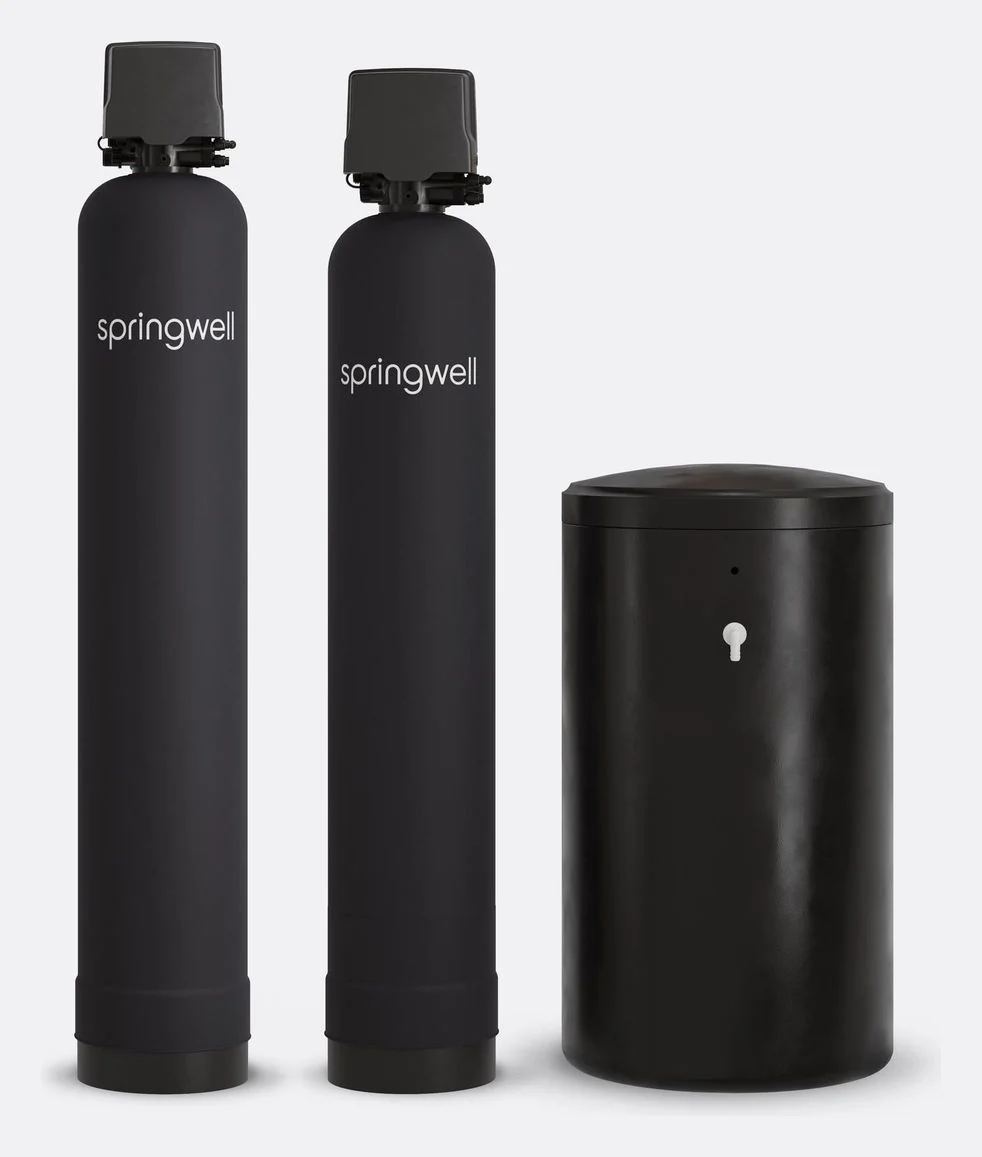
SpringWell
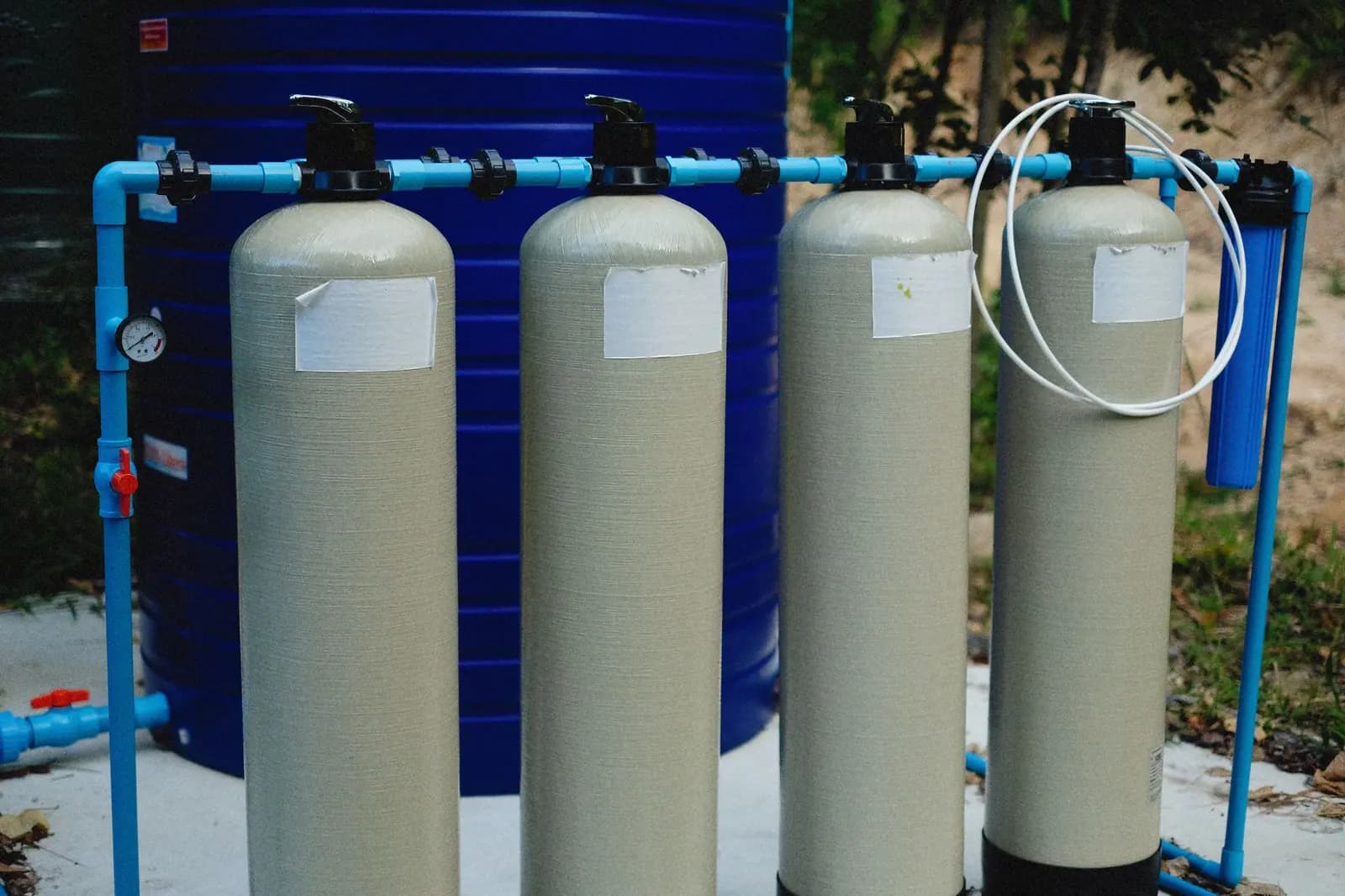
SpringWell WSSS1 Well Water Filter + Salt Softener Combo
Best for: Well-water homes with iron, sulfur AND hardness, the correct treatment order in one package
- Contents
- WS air-injection iron filter + SS salt-based softener
- Iron rating
- 7 ppm
- Sulfur (H2S) rating
- 8 ppm
- Manganese rating
- 1 ppm
- Price range
- $2,975, $3,400 depending on size
- Treatment order
- AIO iron filter first, then softener (protects the resin)
Most iron wells are also hard wells, and the order of equipment matters: iron filter first, softener second, so the resin is protected. The WSSS1 packages the WS1 with SpringWell's 32,000-grain salt softener for $3,123.75 (Sep 12, 2026), which is the correct order pre-assembled. We rank it against the alternatives, including the budget and heavy-iron routes, in our well water softener rankings, and the softener half is dissected in the SpringWell SS1 review.
Iron also inflates the softener capacity you need: the standard industry rule adds 3 gpg of compensated hardness for every 1 ppm of dissolved iron, which can move you up a whole size. Run it through the grain sizing guide before you pick a capacity, and skip salt-free entirely on a well for the reasons laid out in our salt versus salt-free comparison.
Do Water Softeners Count as Iron Filters?#
No, and this is the most expensive misunderstanding on this topic. Softener spec sheets carry iron ratings, the Whirlpool WHES44 claims up to 12 ppm for instance, and homeowners read that as iron treatment. It is tolerance, not treatment: the resin catches dissolved ferrous iron while it fouls, losing capacity and lifespan with every regeneration, and it does nothing for sulfur smell or iron bacteria. Our Whirlpool review covers where that 12 ppm figure actually helps (trace iron on a budget) and where it quietly costs you a resin bed, and the quarterly resin-cleaner routine that slows the damage is in our maintenance checklist.
Verdict#
On city water and just discovering orange stains from old pipes? Different problem, different page: start with the city water filter rankings, or let the system finder quiz route you.
Frequently asked questions
What is the best way to remove iron from well water?
For most wells, an air injection oxidation (AIO) filter: it oxidizes dissolved iron with a trapped pocket of air and catches the particles in a greensand media bed, with no chemicals or cartridges. The SpringWell WS1 handles up to 7 ppm iron this way. Above that level, higher-capacity media like Katalox Light or a chemical injection system (hydrogen peroxide) becomes the right tool.
Will a water softener remove iron from well water?
Partly, and at a cost. Softener resin catches dissolved ferrous iron, which is why spec sheets list iron ratings, but the iron fouls the resin over time, cutting capacity and lifespan. A softener iron rating is a tolerance, not a treatment plan. A dedicated iron filter ahead of the softener is the setup that lasts.
How much iron in well water is too much?
Staining and metallic taste generally begin above 0.3 mg/L, the level the EPA sets as its secondary (aesthetic) drinking water standard for iron. Secondary means it is a nuisance threshold, not a health limit, but in practice anything above it stains fixtures and laundry orange, and levels of several ppm demand dedicated treatment.
Does an air injection iron filter also remove sulfur smell?
Yes, within its rating. The same oxidation that converts dissolved iron to filterable particles also oxidizes hydrogen sulfide, the rotten-egg gas. The SpringWell WS1 is rated for 8 ppm hydrogen sulfide alongside 7 ppm iron and 1 ppm manganese.
How long does greensand iron filter media last?
SpringWell rates the WS1's greensand fusion bed at 10+ years with no consumables to refill; the system regenerates itself with an automatic nightly backwash. That is the main running-cost advantage over chemical injection systems, which consume peroxide or chlorine continuously.
Keep reading
Not sure what you need?
Answer 5 questions, get the right system for your water.
City or well, budget, household size, our quiz matches your answers against every system we track.