10 Signs of Hard Water in Your Home (and What Each One Costs You)
The 10 signs of hard water, from crusted faucets to a rumbling water heater, what each one costs you, and the 60-second strip test that confirms it at home.
By Home Water Lab TeamUpdated Prices verified Sep 12, 2026
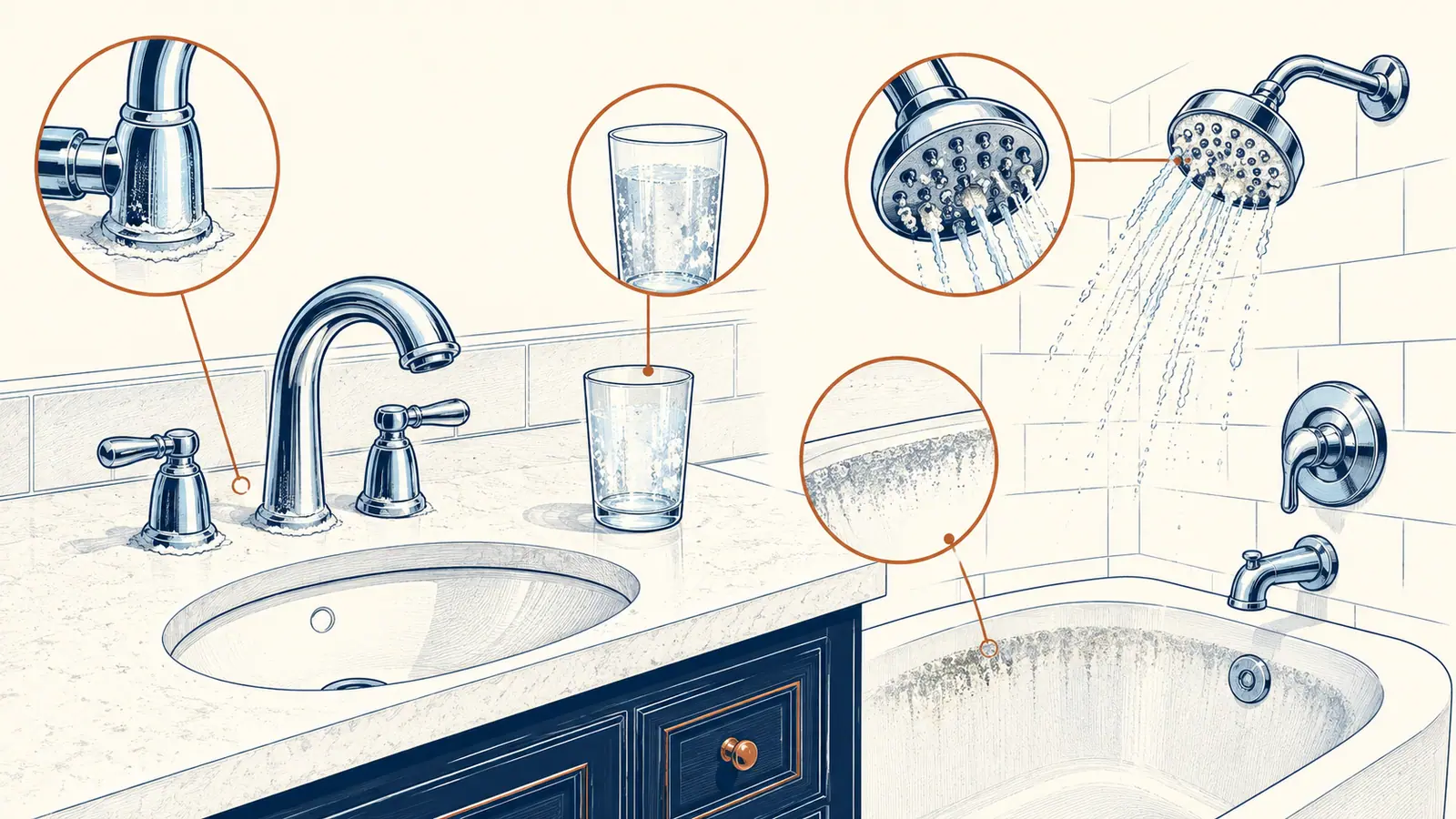
White crust on the faucet, spotted glasses out of the dishwasher, and soap that will not lather. Those three together are hard water, which the USGS defines as more than 121 mg/L of dissolved calcium and magnesium, about 7 grains per gallon. The hardest band on the national map runs from the Dakotas to Texas, and most of the Midwest and Southwest sits above that line, so this is the default condition of American tap water rather than a local misfortune. Here are all 10 signs, ordered from the ones you meet in week one to the expensive ones hiding in the utility room, with what each is quietly costing you. The full unit and testing background lives on our hard water hub.
The short answer
as of Aug 30, 2026What are the signs of hard water?
The reliable ones are white scale on faucets and shower heads, spotted glassware, soap that will not lather, stiff laundry, dry skin, falling water pressure and a water heater that rumbles. Any single sign has other possible causes; three or more together mean hardness, and a test strip costing a few dollars turns that into a number in about a minute. Hard water starts at 7 grains per gallon on the USGS scale.
Key takeaways
- Signs 1 to 5 cost you cleaning products and comfort; signs 6 to 10 cost you equipment.
- The most expensive sign is a rumbling water heater: about 4% efficiency lost per 5 gpg, up to 48% over its life.
- Tankless heaters on 26 gpg water clogged completely in roughly 1.6 years in the Battelle testing.
- Three or more signs together is a reliable tell; a strip test costs a few dollars and settles it in 60 seconds.
- Hardness is not a health issue: the EPA does not regulate it, so nobody upstream will fix it for you.

What Are the 10 Signs of Hard Water?#
Tick every one you recognize. Three or more is your answer.
Count your signs
10 itemsAny one of these can have another cause. A single spotted glass is a dishwasher problem; ten spotted glasses plus a crusted aerator plus soap that will not foam is chemistry. The test below settles it for a few dollars.
Which Signs Show Up First?#
The first five appear wherever water evaporates or meets skin, which is why they land in the bathroom and the kitchen within weeks of moving in.
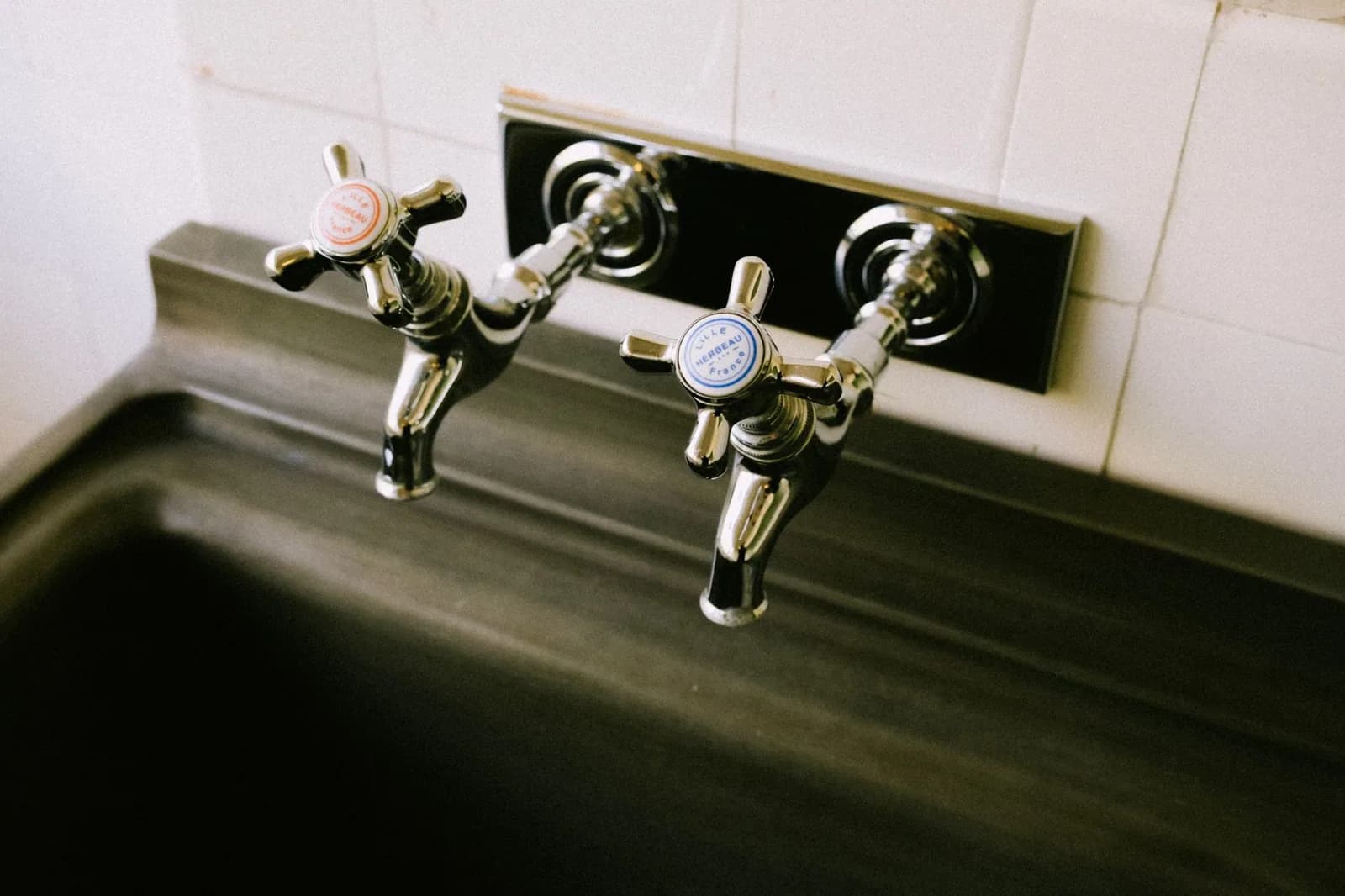
1. White crust on faucets and shower heads#
Limescale is dissolved calcium carbonate coming out of solution wherever water evaporates or gets heated, and fixture tips are where you see it first. The cost: scrubbing time every week, clogged spray nozzles, and fixtures replaced years ahead of schedule.
2. Spots and cloudy film on glasses and dishes#
Those white droplet marks are mineral residue left as rinse water dries. Rewashing does not fix it, because the next rinse leaves the same minerals behind. The cost: extra rinse aid, extra detergent, rewashed loads, and glassware that eventually etches permanently cloudy.
3. Soap that will not lather, plus soap scum#
Hardness minerals react with soap and form scum instead of foam. This is the classic chemistry tell: the same shampoo that foamed instantly on a trip to a soft-water city barely works at home. The cost: more soap, shampoo and detergent every single day, for worse results.
4. Dry, itchy skin and dull hair#
The mineral film that spots your glasses dries on skin and hair too. Many people report tightness, itchiness or flat hair that no product change fixes, because the water is the variable nobody thinks to test. The cost: a rotating cast of lotions and conditioners treating a plumbing problem.
5. Stiff, scratchy, faded laundry#
Minerals bind with detergent in the wash and stay in the fabric, leaving towels stiff and colors dull. The cost: more detergent per load, and clothing that wears out sooner.
What you hear
A softening shower head will fix the dry skin and the spotting.
What the numbers say
No shower-mounted filter removes hardness. Water crosses the cartridge in a fraction of a second, far too little contact time for ion exchange, so the mineral film stays. A good shower filter does reduce chlorine, which is a different complaint worth solving on its own terms.
Which Signs Cost the Most?#
Signs 6 through 10 all live downstream of a heating element, and they are where hard water stops being a chore and becomes a capital expense.
6. A water heater that rumbles, pops, or runs longer#
Scale settles on heating elements and the tank bottom, so the heater burns energy through an insulating mineral layer. The popping sound is water flashing to steam trapped under sediment. The reference numbers come from the Battelle study run for the Water Quality Research Foundation, an industry-funded but independently run lab study: gas water heaters lose about 4% efficiency for every 5 gpg of hardness, and electric heaters build roughly 0.4 lb of scale per year for every 5 gpg.
48%
7. Error codes on a tankless water heater#
Tankless units push water through narrow heat-exchanger channels, which makes them the fastest casualty of scale. In the same Battelle testing, tankless heaters on 26 gpg water clogged completely in about 1.6 years. The cost: descaling service calls, error lockouts, and a shortened life for the most expensive water appliance in the house.
8. Dropping water pressure and clogged aerators#
Scale narrows pipes and blocks the small screens in faucets and shower heads. If unscrewing an aerator reveals white grit, that is hardness. The cost: plumber visits for a problem that rebuilds itself, and in older homes, repiping brought forward by years.
9. Appliances that die years early#
Dishwashers, washing machines and coffee makers all heat water, so they all scale up exactly like the water heater does. The cost: replacing major appliances ahead of their design life, which is where hard water quietly becomes the most expensive utility problem in the house.
10. Rings in the toilet and tub that always come back#
A mineral ring at the waterline that returns days after scrubbing is not a cleaning failure, it is deposition. The cost: endless cleaner and effort spent on a symptom that returns as long as the water stays hard.
How Hard Is Hard? The Numbers That Matter#
Hard water starts at 121 mg/L, about 7 grains per gallon in the unit the treatment industry uses, and very hard starts near 10.5 gpg. Signs 1 to 5 typically appear around the hard line; signs 6 to 10 belong to the very hard end of the scale.
USGS hardness bands
- Soft, 0 to 60 ppm0 to 3.5 gpg. No scale problem. A softener solves nothing here.
- Moderately hard, 61 to 120 ppm3.6 to 7.0 gpg. Spotting and light scale. Treatment is optional, not urgent.
- Hard, 121 to 180 ppm7.1 to 10.5 gpg. Scale in the water heater, soap that will not lather, film on the glassware.
- Very hard, over 180 ppmOver 10.5 gpg. Appliance territory: scale builds fast in anything that heats water, and it shortens the life of the thing doing the heating.
USGS classification of hardness as calcium carbonate, where 1 grain per gallon = 17.1 mg/L. A statewide or citywide figure is a wide typical range, never a reading at your address: the USGS says its national map is not built for decisions at the scale of one property. A test strip settles it in two minutes.
Our hard water explained guide works through the gpg and ppm conversion and what those milligrams weigh over a year, and the state hardness map shows where your own state sits. If you are in Texas, the state's typical range runs well into the very hard band, and none of the signs above will surprise you.
How Do You Confirm Hard Water?#
Do not size any equipment off symptoms. Three routes, cheapest first, and the right one depends on where your water comes from.
From symptom to number
City water: pull the Consumer Confidence Report
Your utility's annual water quality report usually lists hardness. Search the utility name plus CCR, or call and ask for the figure in gpg or mg/L. Free, and it takes ten minutes.Any water: run a strip test at the tap
Hardness strips from a hardware store or Amazon cost a few dollars and read in about 60 seconds. Dip, wait, compare against the color chart. Take the sample from a cold tap that no softener sits in front of.Well water: order a certified lab panel
Private wells are outside EPA reporting rules, so a state-certified test is the only real answer. It also returns iron and manganese, which change what treatment you need before hardness is even addressed.
Write the result down in grains per gallon. That single number drives every treatment decision, including the decision not to treat.
What Should You Do Next?#
Count your signs, then test, then let the number choose. Below about 3.5 gpg treatment rarely pays. In the moderately hard band it is a comfort call. At 7 gpg and above, the scale, energy and appliance math starts favoring a fix, and the only fix that removes the minerals is an ion-exchange softener.
Our guide to whether a water softener is worth it runs the decade of costs against the one benefit that has actually been measured. On price, HomeGuide's 2026 cost data puts a professionally installed softener at $1,200 to $3,800 with a national average around $2,500, broken down tier by tier in our water softener price guide. Capacity comes from your gpg number and household size, either by hand in what size water softener do I need or automatically in the sizing calculator.
If you rent, or salt is off the table, start with how to fix hard water: it compares every option by budget and situation, including the ones that only manage symptoms. On a private well, iron usually has to be handled before hardness, which is the subject of our well water softener guide. And when you are ready to compare finished systems, the ranked shortlist sits in best water softeners.
Frequently asked questions
How can I tell if I have hard water without a test kit?
Check three spots: white crust on the faucet aerator, cloudy spots on glasses out of the dishwasher, and how soap lathers. If soap struggles to foam and leaves a scummy film in the tub, you almost certainly have hard water. Three or more of the signs in this guide together are a reliable tell, but a test strip gives you the actual number in about a minute.
How many grains per gallon is considered hard water?
Per the USGS classification, water above 121 mg/L (about 7 grains per gallon) is hard, and above 180 mg/L (about 10.5 gpg) it is very hard. Between 61 and 120 mg/L counts as moderately hard, and many households in that band already notice spotting and scale.
Is hard water bad for your health?
No. Hardness is dissolved calcium and magnesium, the same minerals found in food, and the EPA does not regulate hardness as a health contaminant. Hard water is a comfort, appliance and money problem, not a safety problem.
Does hard water ruin water heaters?
It is the single most expensive thing hard water does. The Battelle study run for the Water Quality Research Foundation found gas water heaters lose about 4% efficiency for every 5 gpg of hardness, up to 48% over the heater's life, and tankless units at 26 gpg clogged completely in about 1.6 years without treatment.
What removes hard water permanently?
Only an ion-exchange water softener removes hardness minerals from the water. Salt-free conditioners reduce the scale the minerals form but leave the water testing just as hard, and cleaning products only remove deposits after the fact.
Can hard water signs appear in a house that already has a softener?
Yes, and it usually means the softener stopped working rather than that the water changed. The three cheap causes, in order, are an empty brine tank, a salt bridge holding a crust of salt above the water line, and a hardness setting programmed below the real number. Work through those before assuming the resin is finished.
Keep reading
Not sure what you need?
Answer 5 questions, get the right system for your water.
City or well, budget, household size, our quiz matches your answers against every system we track.