Best Under Sink Water Filters 2026: RO vs Carbon for Every Budget
The best under sink water filter depends on one question: dissolved solids or chlorine. Five picks from $124.99 to $999, each on a dated manufacturer price.
By Home Water Lab TeamUpdated Prices verified Oct 7, 2026
This page contains affiliate links; buying through them costs you nothing extra.
The best under sink water filter depends entirely on one question, and it is not about brands: are you trying to remove dissolved solids or chlorine and taste. Get that wrong and you buy a membrane you did not need, or a carbon block that cannot do the job you bought it for.
The short answer
as of Oct 12, 2026Which under-sink water filter should you buy?
For dissolved solids (lead, fluoride, nitrate, PFAS), buy the Aquasana SmartFlow at $224.99 on sale ($449.99 list, Oct 5, 2026): certified by the WQA to NSF/ANSI 42, 53 including P473, 58, 401 and CSA B483.1, remineralizer included. For chlorine, chloramine and taste on city water, buy the Aquasana Claryum Direct Connect at $124.99: it keeps your existing faucet, runs at 1.5 GPM and wastes no water. Budget route with a membrane: the iSpring RCC7AK at $239.99 (Oct 12, 2026), NSF/ANSI 58 certified and cheapest to run.
Both answers sit inside the reverse osmosis hub, which covers what a membrane does that carbon cannot. This page ranks the systems themselves, carbon and RO together, because that is how the decision is actually made: at the cupboard door, with a budget.
| Rank | System | Type | Price (Oct 12, 2026) | Wins at |
|---|---|---|---|---|
| 1 | Aquasana SmartFlow | RO, compact tank | $224.99 on sale, $449.99 list | Best overall, five named certifications |
| 2 | Aquasana Claryum Direct Connect | Carbon | $124.99 on sale, $249.99 list | Best carbon, no second faucet |
| 3 | iSpring RCC7AK | Tank RO | $239.99 | Best budget membrane |
| 4 | Moen RO (via SpringWell) | Tank RO | $363.80 | Best for SpringWell owners |
| 5 | Waterdrop G3P800 | Tankless RO | $999 | Best flow and efficiency |
Key takeaways
- Carbon and RO are not competitors. Carbon handles chlorine, taste and certified lead and PFAS; only a membrane reaches dissolved solids across the board.
- The Claryum Direct Connect at $124.99 keeps your existing tap; almost every RO system needs its own faucet and a hole in the counter.
- RO costs you flow: 0.7 GPM on the SmartFlow against 1.5 GPM on the carbon unit.
- Cartridges run from about $98 a year on the iSpring RCC7AK to about $310 on the SmartFlow at single-cartridge prices (Oct 12, 2026), and overtake the purchase price difference within a few years.
- Aquasana prices swing with a half-off banner that came down on Sep 12, 2026 and went back up by Sep 21. Read the cart, not the badge.
Carbon or Reverse Osmosis: Which Do You Actually Need?#
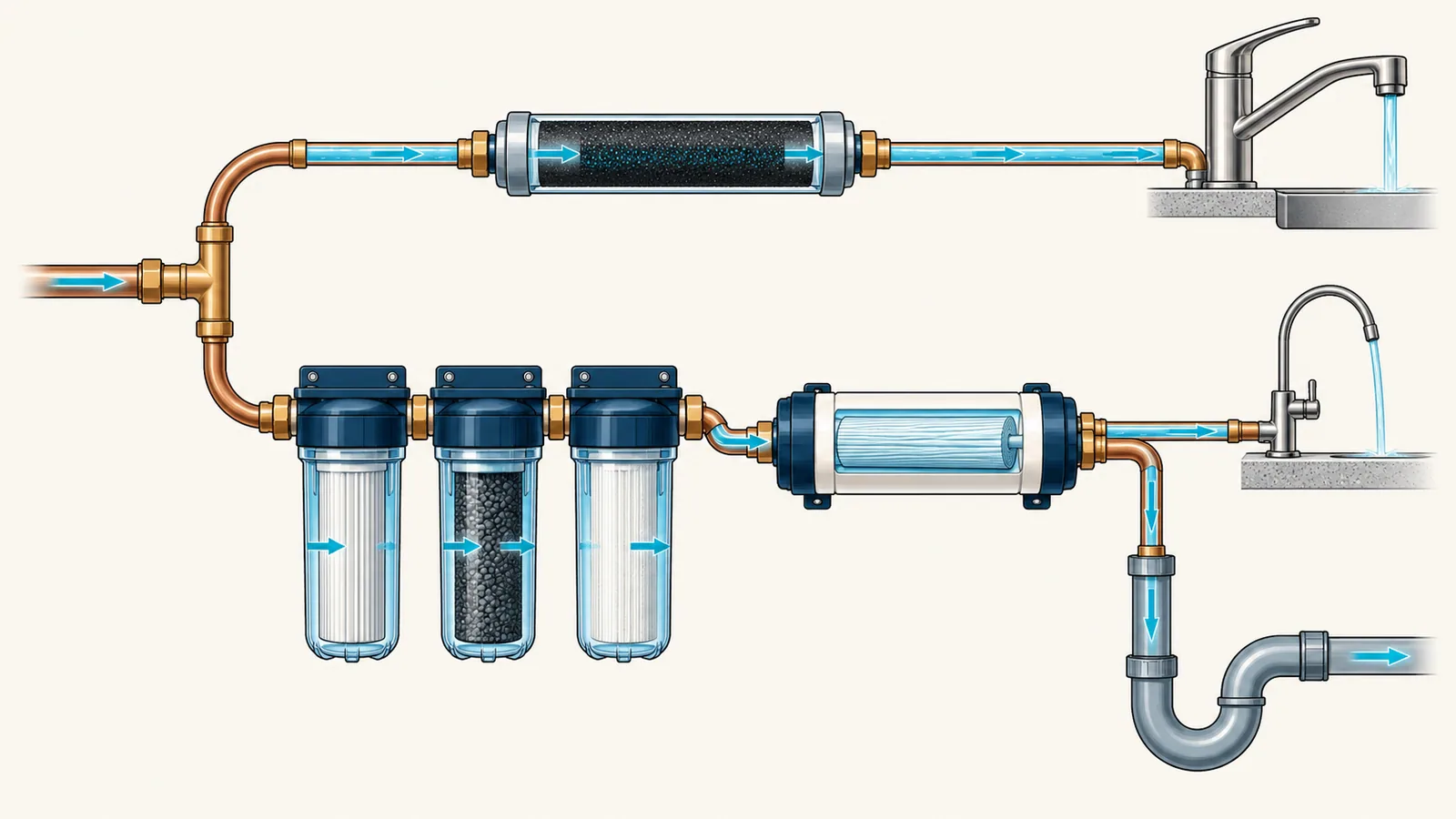
Start with your water report rather than a product page. If the problem is chlorine, chloramine, taste or odour, carbon does it faster and cheaper, with no drain line at all. Certified blocks reach lead and PFAS too. If the problem is anything dissolved across the board, nitrate and fluoride included, only a membrane reaches it.
Size decides what a filter can reach
- Spin-down screen50 to 1000 micronA reusable stainless mesh that stops sand, rust flakes and pipe scale. It is flushed rather than replaced, which is why it costs almost nothing to run and why it is the right first line on a well.
- Sediment cartridge1 to 50 micronThe pleated or spun cartridge in a standard housing. It takes the silt a screen lets through, and it is the part that protects the carbon and the softener resin behind it.
- Carbon block0.5 to 10 micronRated in the same range on paper, but it works by adsorption rather than straining: this is the stage that takes chlorine, taste and odour, and on certified blocks lead and PFAS.
- RO membrane0.0001 micronThree orders of magnitude below everything else on this chart, which is why reverse osmosis is the only stage here that reaches dissolved solids at all.
Particle sizes are public orders of magnitude. Carbon works by adsorption as well as straining, which is how a certified block reaches lead and PFAS despite its micron rating: it is chemistry, not a sieve. Dissolved hardness is smaller than every band shown and passes through all of them.
Carbon block
- Chlorine, chloramine, taste and odour
- Certified blocks also reach lead and PFAS
- No drain line, no wastewater, no electricity
- Full-ish flow: 1.5 GPM on the Claryum
Reverse osmosis
- Dissolved solids: fluoride, nitrate, arsenic, TDS
- Needs a drain line and usually its own faucet
- Drains 1 to 3 gallons per gallon produced
- Slower at the tap: 0.7 GPM on the SmartFlow
Bottom line
City water with a taste complaint: carbon, and keep the money. A test that comes back with nitrate, fluoride or high TDS: membrane, and accept the drain line.
Best Overall: Aquasana SmartFlow#
Aquasana
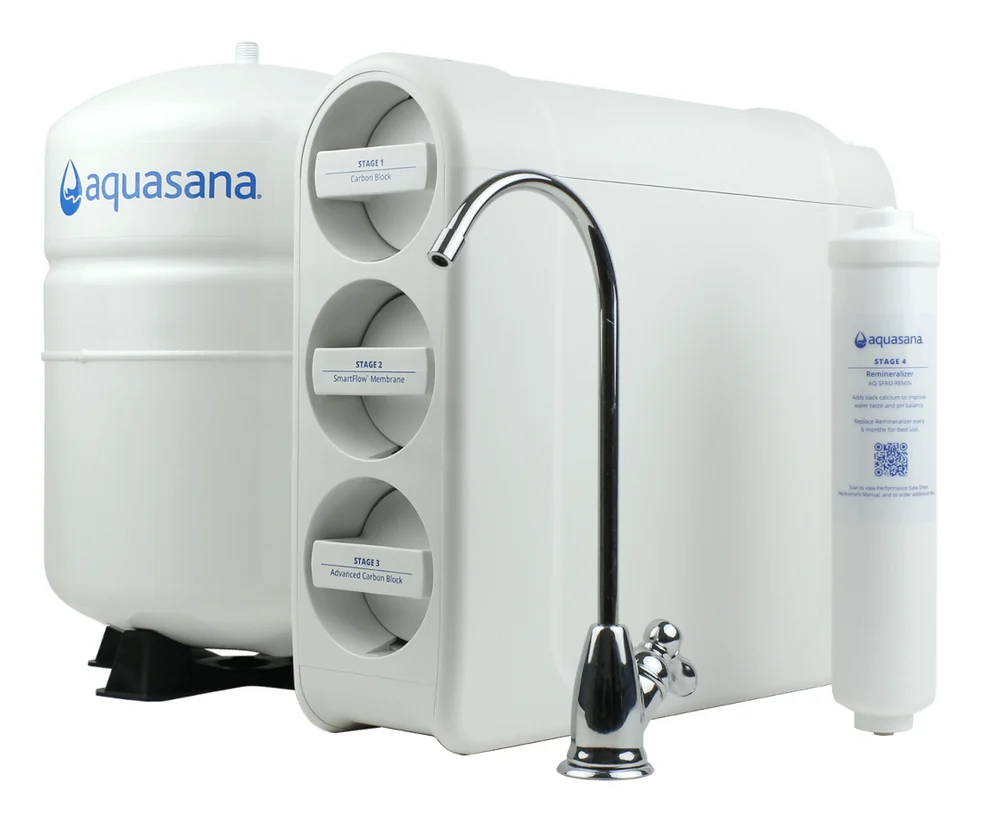
Aquasana SmartFlow Reverse Osmosis System
Best for: Drinking-water protection (PFAS, fluoride, lead) at the best certifications-per-dollar ratio on the market
- Contaminants reduced
- 99.99% of 90 contaminants
- PFAS / fluoride / arsenic
- 96% PFAS (P473), 90% fluoride, 96% arsenic
- Production
- 25.7 gallons/day
- Faucet flow
- 0.7 GPM
- Design
- Compact holding tank (3.2 gallons total, 1.4 to 3.2 usable), remineralizer included
- Filter schedule
- Cartridges 6 months, membrane 12 months
The certification list is why it wins, and it is worth spelling out because almost nothing at this price matches it: NSF/ANSI 42, 53 including the P473 PFAS protocol, 58, 401 and CSA B483.1, certified by the WQA rather than claimed by the brand. It reports 96% PFAS reduction, 90% fluoride and 96% arsenic, and it ships with a remineralizer most rivals sell as an upgrade.
What we like
- WQA certified to NSF/ANSI 42, 53 (incl. P473/PFAS), 58, 401 and CSA B483.1, the strongest certification story in its class
- Remineralizer included (competitors charge extra for pH/alkalinity polish)
- Compact tank (13.74 x 9.06 in) and slim manifold, sized by Aquasana to take less cabinet room than a standard RO tank
- $224.99 on Oct 5, 2026 under a 50%-off banner ($449.99 list), and nothing near that price carries the same certification list
What to watch
- 0.7 GPM faucet flow, filling pots is slow
- 25.7 gallons/day production is modest for large households
- Replacement filters are generally non-commissionable and proprietary
- Brand customer-service reputation (Trustpilot 1.5/5, Aug 28, 2026)
Live with the flow. 0.7 GPM and 25.7 gallons a day is a drinking and cooking tap, not a second sink. Cartridges are on a 6-month schedule, the membrane on 12, and both are proprietary.
The price is a banner state rather than a number: $449.99 on Sep 12, 2026 when Aquasana withdrew its promotion, $224.99 nine days later when it came back, $199.99 on Sep 28 under a deeper banner, and $224.99 again on Oct 5. At the sale price nothing here competes on certifications per dollar. At list, read the iSpring section again. The same swing runs across the brand's range, documented in our Aquasana Rhino review.
Best Carbon System: Aquasana Claryum Direct Connect#
Aquasana
Aquasana Claryum Direct Connect Under Sink Filter
Best for: City water where the job is chlorine, chloramine, lead and PFAS rather than dissolved solids
- Type
- Carbon block and catalytic carbon, no membrane, no drain line
- Flow rate
- 1.5 GPM
- Cartridge life
- 784 gallons or 6 months
- Install
- Connects to the cold line, keeps your existing faucet
- Wastewater
- None
This is the pick most city-water kitchens should actually buy. Carbon block and catalytic carbon, no membrane and no drain line. It plumbs into the cold supply, so filtered water comes out of the tap you already own. No hole in the counter, no second spout, no wastewater, and 1.5 GPM means filling a pot is not an event.
What we like
- No drain line and no wastewater, which is what separates carbon from RO under a sink
- 1.5 GPM keeps the tap usable for filling pots
- Runs off the existing faucet, so there is no hole to drill in the counter
- Cheaper per year than a membrane system on city water
What to watch
- Rated for 784 gallons or 6 months, so the cartridge schedule is short
- Carbon does not touch dissolved minerals, nitrate or hardness
- The headline figure is a subscription price; outright it read $124.99 on Sep 21, 2026, against a $249.99 list
- Aquasana customer-service reputation is weak (Trustpilot 1.5/5, Aug 28, 2026)
The honest limits: 784 gallons or 6 months per cartridge is a short schedule, and carbon does nothing about dissolved minerals, nitrate or hardness. Bought outright it read $124.99 on Oct 12, 2026 against a $249.99 list, and its AQ-MF-1-R replacement cartridge cost $91.99 the same day, so two a year come to $183.98, or $78.19 each on Aquasana's Water for Life plan. And Aquasana's service reputation sat at 1.5/5 on Trustpilot across 170 reviews when we checked in August. If you are choosing between the Direct Connect and the dedicated-faucet Claryum models, our model-by-model Claryum review with certifier details sets them side by side.
Best Budget Membrane: iSpring RCC7AK#
iSpring
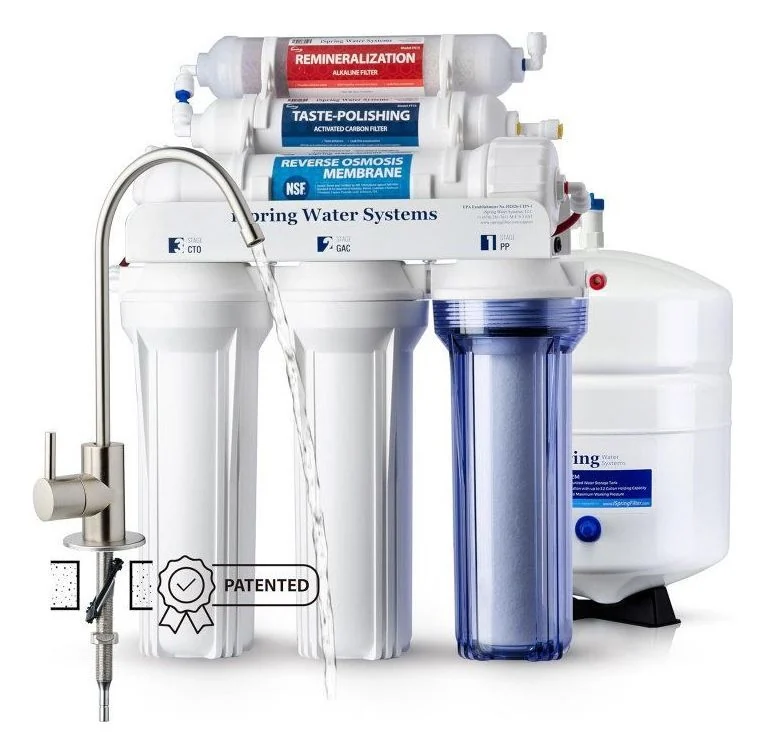
iSpring RCC7AK 6-Stage Reverse Osmosis System
Best for: A proven, cheap-to-run 6-stage under-sink RO with a very large owner base
- Stages
- 6 (with alkaline remineralization)
- Certification
- NSF/ANSI 58
- Waste ratio
- ~1:3 (classic tank design)
- Annual filter cost
- ~$100 to 110
Six stages with alkaline remineralization, NSF/ANSI 58 certified, $239.99 on Oct 12, 2026. The reason to choose it over the SmartFlow is the running cost: its cartridges hold it near $100 a year, where the SmartFlow's run about $310 and the Waterdrop G3P800's proprietary set $159.97 at single-cartridge prices the same day. Over five years that gap is worth more than the difference in sticker price.
It is a tank design, so expect a bladder tank in the cupboard and roughly three gallons to drain for every gallon produced. Check every compression fitting after the first day; leaks at the connectors are the most common owner complaint.
Best for SpringWell Owners: Moen RO#
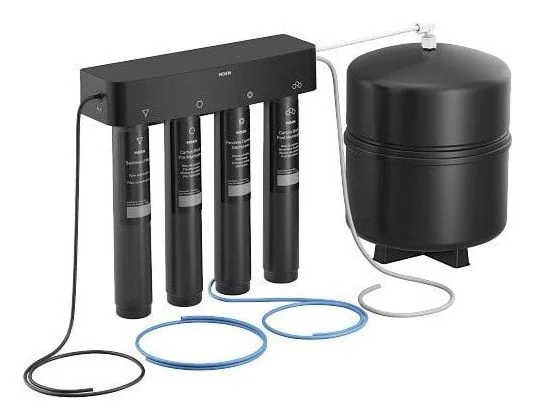
Moen
Moen Reverse Osmosis System (sold by SpringWell)
Best for: Drinking-water polish for SpringWell whole-house owners who want one supplier for everything
- Stages
- 4
- Contaminants reduced
- 86 (incl. arsenic, fluoride, chlorine, lead, mercury, bacteria, viruses)
- Bundle option
- Moen RO + Sip Faucet from $520
- Replacement filters
- $55.11 (stages 1 to 2) to $132.60 (membrane)
Four stages, 86 contaminants reduced including arsenic, fluoride, lead and mercury, sold through SpringWell. Its argument is consolidation: one support channel for the whole-house system and the drinking tap. Against it, four proprietary cartridges with the membrane alone at $132.60, and only seven site reviews at reading time.
Best Flow: Waterdrop G3P800#
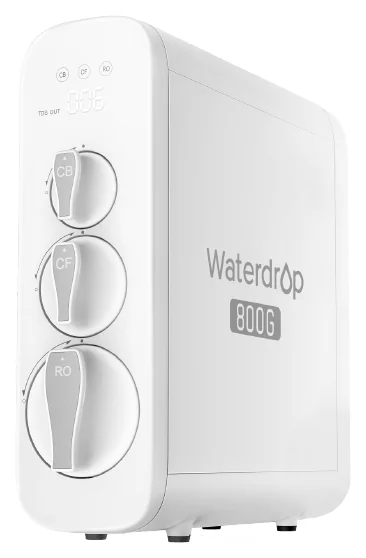
Waterdrop
Waterdrop G3P800 Tankless Reverse Osmosis System
Best for: The premium tankless RO reference: high flow, UV, and a 3:1 efficiency ratio that flips the classic RO waste math
- Production
- 800 GPD, tankless
- Extras
- Smart TDS faucet; UV is claimed on some Waterdrop pages for this model and denied on others
- Pure-to-drain ratio
- 3:1
- Annual filter cost
- $159.97
800 GPD, tankless, with a 3:1 pure-to-drain ratio that inverts the usual waste maths and a TDS readout in the faucet. It is the answer when the objection to RO is either the wait or the wastewater, and the price says so: $999, with cartridges at $159.97 a year. Waterdrop's own pages disagree with each other about what this model includes and what it costs, which we work through in the Waterdrop G3P800 review.
What Does an Under-Sink Filter Cost to Own?#
The sticker is the small number. Here is the five-year picture using each manufacturer's own annual filter figure, which is the comparison that changes minds.
iSpring RCC7AK, five-year cost
as of Oct 12, 2026- EquipmentiSpring's own store, Oct 12, 2026
- $239.99
- Cartridges, five yearsFive iSpring F9K one-year sets at $80.99 plus two MC7 membranes at $42.99, Oct 12, 2026
- $490.93
- Professional installationDIY is realistic here; a plumber charges for the faucet hole more than the plumbing
- $0 to $300
Five-year total before installation
$730.92
Our arithmetic on iSpring's own store prices for the system and its cartridges, all read Oct 12, 2026.
Waterdrop G3P800, five-year cost
as of Oct 12, 2026- Equipment
- $999
- Proprietary cartridges, five yearsWaterdrop's own $159.97 a year, times five, with no generic option
- $799.85
- Professional installationSame job as any under-sink system, plus a socket within reach
- $0 to $300
Five-year total before installation
$1,798.85
Our arithmetic from Waterdrop's store price and its published annual filter cost, both read Oct 12, 2026.
Two conclusions fall out of those tables. The cheapest system to buy is rarely the cheapest to own, because a 6-month cartridge schedule adds up faster than a sticker gap. And the spread between the budget membrane and the premium one is about $1,068 over five years, not the $759 on the price tags (Oct 12, 2026), which is the number worth arguing with.
Installation: What You Are Signing Up For#
A typical under-sink install
Shut off and drain the cold line
Close the angle stop under the sink, open the tap to release pressure, and put a towel down. Every system on this page taps the cold supply.Decide about the faucet
Carbon direct-connect systems use your existing tap. RO systems need their own, which means an unused sprayer hole or a new hole in the counter. This is the step that sends most people to a plumber.Fit the drain saddle, if RO
The concentrate line needs a connection into the waste pipe above the trap. Carbon systems skip this entirely.Mount and connect
Bracket the unit to the cabinet wall rather than leaving it on the floor, so a leak is visible before it is a problem.Flush before you drink
Every manufacturer specifies a first flush to clear carbon fines and membrane preservative. Skipping it is why the first glass tastes wrong.
A plumber charges by the hour for this, and the comparable main-line job runs $300 to $1,500 in the Angi, HomeGuide and Fixr 2026 guides, which our water softener installation cost page breaks down. An under-sink filter sits at the bottom of that range, or at zero if you own a drill and an afternoon.
Where an Under-Sink Filter Stops#
It treats one tap. The shower still runs chlorinated, the kettle still scales, the water heater still collects hardness, because none of that water goes through the cupboard. If the complaint is house-wide, the tool is a whole house water filter and the ranking is in our best whole house filter guide.
It also does nothing for hardness, at any price, in any of these designs. Soft water comes from ion exchange, which is a water softener, and the difference is explained properly in our guide to fixing hard water.
Prices read on the dates shown. Aquasana figures are given in both states because the brand alternates between a list price and a standing half-off banner. Certification lists are quoted from each manufacturer's own specification page.
Under-sink filter questions people actually search
What is the best under-sink water filter according to Consumer Reports?
We do not republish another publication's rankings, and a page that does is usually quoting a paywalled table it has not read. What we can show is the evidence anyone can check: which NSF/ANSI standards each system carries, which body certified them, and what the manufacturer says about flow and filter life. That is the table above.
Can I install an under-sink filter myself?
A direct-connect carbon system, yes: a shut-off, two push fittings, a bracket. A reverse osmosis system is harder, mostly because of the drain saddle and the faucet hole. If your counter is stone and there is no spare sprayer hole, hire the hole out even if you do the rest.
Does an under-sink RO system need a storage tank?
Most do, because a membrane produces slowly and a tank buffers it; even the SmartFlow keeps a compact 3.2-gallon tank. Tankless designs like the Waterdrop G3P800 push water through on demand instead, which frees the cupboard and needs mains power.
Will a filter fix my hard water?
No. Neither carbon nor a membrane at one tap changes what reaches the shower, the kettle or the heater, and hardness minerals are dissolved ions smaller than any cartridge rating. Softening is ion exchange, and it happens where the water enters the house.
How do I know whether I need carbon or RO?
Read your utility's Consumer Confidence Report, which is free and annual. Chlorine, chloramine, taste and odour complaints point to carbon. Nitrate, fluoride, arsenic or a high TDS reading point to a membrane. On a private well, test first: neither system belongs on untreated well water without pretreatment.
Frequently asked questions
Is an under-sink water filter worth it?
For city water with a chlorine or taste problem, yes, and a carbon system pays for itself against bottled water inside a year: the Aquasana Claryum Direct Connect read $124.99 on Sep 21, 2026. For dissolved solids like lead, fluoride, nitrate or PFAS, a carbon filter is not enough and you need a membrane, which is a different purchase with a drain line attached.
Which under-sink filter is best?
The Aquasana SmartFlow, $224.99 on sale on Oct 5, 2026, if you want a membrane, because it carries five named certifications including the NSF/ANSI 53 P473 PFAS protocol. The Aquasana Claryum Direct Connect at $124.99 if you want carbon, because it keeps your existing faucet, wastes no water and runs at 1.5 GPM rather than 0.7.
What is the best under-sink water filter without a separate faucet?
A direct-connect carbon system. The Aquasana Claryum Direct Connect plumbs into the cold line and sends filtered water through the tap you already have, so there is no hole to drill and no second spout on the counter. Reverse osmosis systems almost always need their own faucet, because the membrane cannot supply a full-flow tap.
How much does an under-sink water filter cost?
$124.99 to $999 across the systems we track, on readings dated Oct 12, 2026. Carbon systems sit at the bottom of that range, classic tank RO in the middle at $239.99 to $363.80, and tankless RO at the top. Cartridges add about $98 a year on the iSpring RCC7AK, $159.97 on the Waterdrop G3P800, $183.98 on the Claryum Direct Connect and about $310 on the SmartFlow at single-cartridge prices the same day, and they matter more than the sticker within a few years.
Do under-sink filters reduce water pressure?
Carbon systems barely: the Claryum Direct Connect runs 1.5 GPM, close enough to a normal tap that most people never notice. Reverse osmosis systems do, unavoidably, because the water reaching the faucet has crossed a membrane: the SmartFlow delivers 0.7 GPM and produces 25.7 gallons a day. That is a dedicated drinking tap, not a second kitchen faucet.
How often do under-sink filter cartridges need changing?
Carbon cartridges run on gallons as much as months: the Claryum is rated 784 gallons or 6 months, whichever comes first. RO pre-filters run 6 to 12 months and membranes 2 to 5 years. Hard water and sediment shorten every one of those intervals, which is the argument for a cheap prefilter upstream.
Keep reading
Not sure what you need?
Answer 5 questions, get the right system for your water.
City or well, budget, household size, our quiz matches your answers against every system we track.