Best Sediment Filter for Well Water 2026 (Spin-Down vs Cartridge vs Backwashing)
The best sediment filter for most wells is a $79.99 spin-down screen. When to pay for auto-flush, add a Big Blue cartridge, or step up to a backwashing tank.
By Home Water Lab TeamUpdated Prices verified Oct 7, 2026
This page contains affiliate links; buying through them costs you nothing extra.
The best sediment filter for most wells is a reusable spin-down screen, and the iSpring WSP-50SL at $79.99 (Oct 12, 2026) is the one we'd fit first. A busier well, or an owner who won't flush, earns the self-cleaning version; fine silt earns a cartridge behind it; a well that sends silt all day, every day, earns a backwashing tank. Sediment is the first stage of a full well treatment system, planned in the right order, so the choice here protects everything that follows.
The short answer
as of Oct 12, 2026What is the best sediment filter for well water?
A spin-down screen for almost every well: the iSpring WSP-50SL at $79.99, in 50 to 1,000 micron on one body, flushed rather than replaced. If it needs flushing more often than you'll do it, the iSpring WSP50ARB at $252.99 flushes itself on a schedule. Add a 5 micron Big Blue cartridge ($37.99 each) behind the screen for fine silt. A backwashing media tank only makes sense for heavy, constant silt, and the one we priced was $1,895 and sold out. Prices read Oct 12, 2026.

Key takeaways
- A spin-down screen is the right first stage on most wells: $79.99 for the iSpring WSP-50SL on Oct 12, 2026.
- Self-flushing costs more than triple: the iSpring WSP50ARB was $252.99, rated up to 25 GPM.
- A 5 micron Big Blue cartridge behind the screen takes fine silt; iSpring's FP25B was $37.99.
- Install after the pressure tank: Boshart warns a filter between pump and tank leaves the pump running against a clog.
- No sediment filter touches dissolved iron, hardness or smell; those need their own stages.
Does Well Water Need a Sediment Filter?#
Most wells do, because grit is the one contaminant that damages the rest of the system. Sand and rust flakes wear the seals in a softener or iron filter valve, foul media beds and clog the cartridges of anything finer behind them.
The exceptions are real but narrow. A deep, well-built well with clean faucet aerators and a lab report showing no turbidity may run fine without one. The other case is a well whose problem only looks like sediment: water that runs clear and turns orange later is dissolved iron, and no screen stops it. Our guide to matching a rust filter to the stain it leaves sorts that out with a glass of water.
Signs your well needs a sediment stage
4 itemsSpin-Down vs Cartridge vs Backwashing: Which Type?#
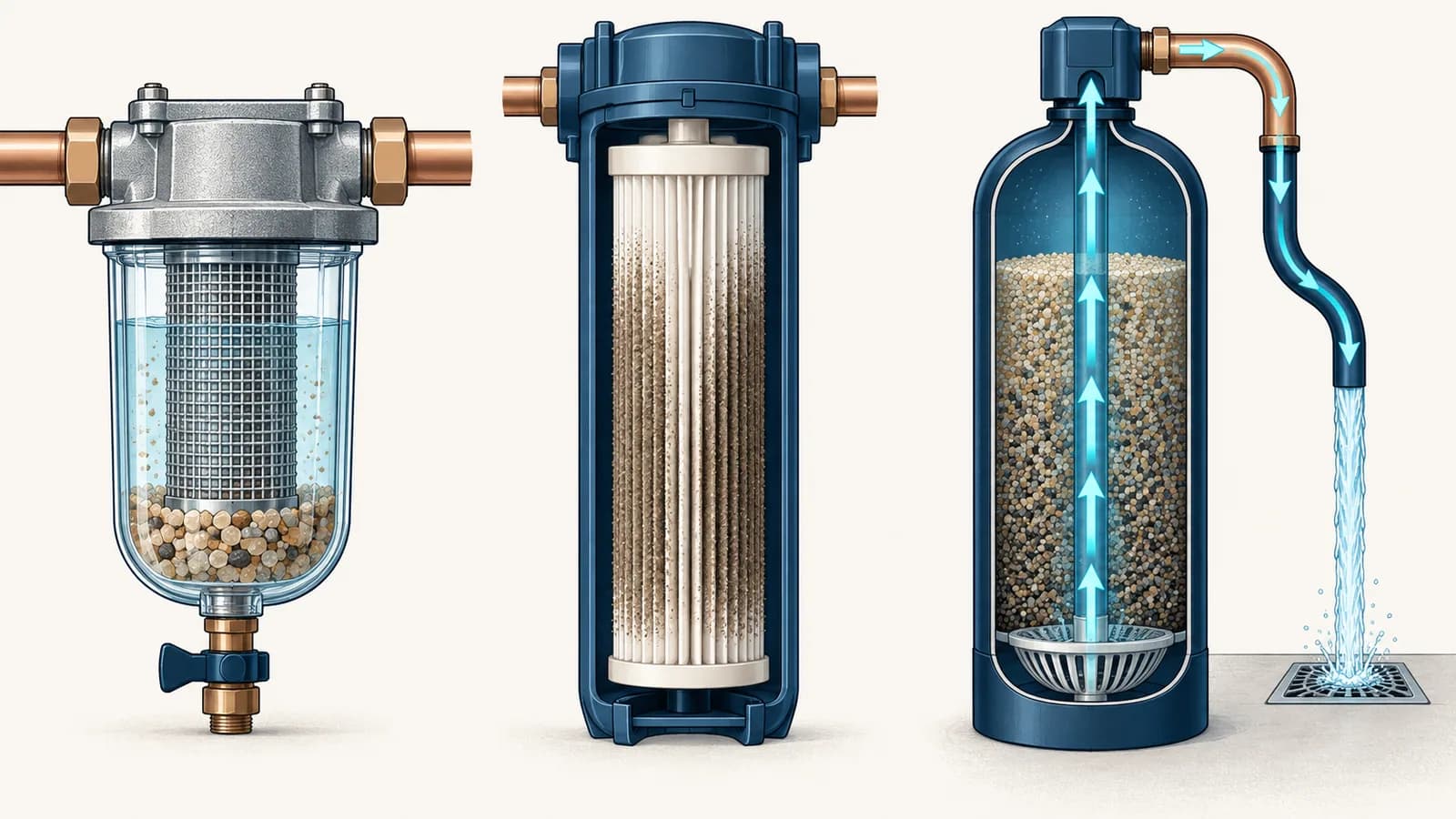
Pick by how much sediment arrives and how fine it is. A spin-down screen handles the coarse load cheaply, a cartridge takes the fine silt the screen passes, and a backwashing tank replaces both only when the load is too heavy for either to keep up.
| Type | What it stops | Upkeep | Example, price on Oct 12, 2026 | Best for |
|---|---|---|---|---|
| Spin-down screen | Sand, grit, rust flakes, at 50 to 1,000 micron | Flush through a valve; nothing to replace except an optional Siliphos cartridge | iSpring WSP-50SL, $79.99 | The first stage on almost every well |
| Self-flushing spin-down | The same, flushed on a schedule | Power for the module; a drain in reach | iSpring WSP50ARB, $252.99 | Sandy wells, or owners who won't flush |
| Big Blue cartridge | Fine silt, at 5 micron on iSpring's FP25B | Replace the cartridge | iSpring FP25B, $37.99 each | A second stage behind the screen |
| Backwashing media tank | Fine silt at a few microns, continuously | Automatic backwash to a drain | Mid Atlantic Water Turbidex system, $1,895 (sold out) | Heavy silt that never lets up |
Micron ratings, flush routines and how the two cheap stages work together are covered in our walkthrough of whole-house sediment filtration, so this page sticks to the purchase.
Best Sediment Filter for Most Wells: iSpring WSP-50SL#
iSpring
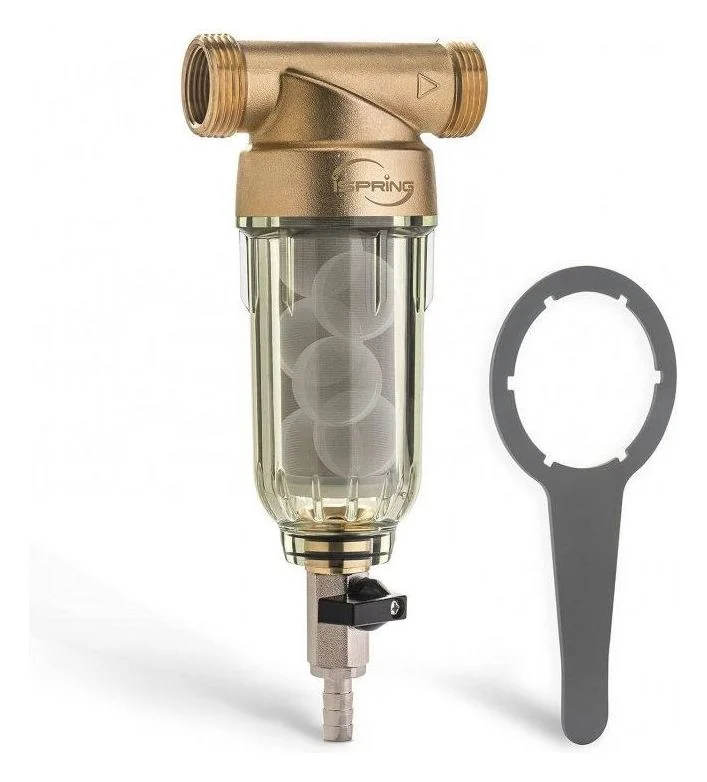
iSpring WSP-50SL Reusable Spin-Down Sediment Prefilter
Best for: Putting a flushable, never-replaced screen in front of a softener, an iron filter or a cartridge stack
- Micron options
- 50, 100, 200, 500 and 1,000 on the same body
- Ports
- 1 in MNPT and 3/4 in FNPT, both ends
- Pressure range
- 20 to 100 PSI
- Temperature range
- 40 to 100 F
- Screen
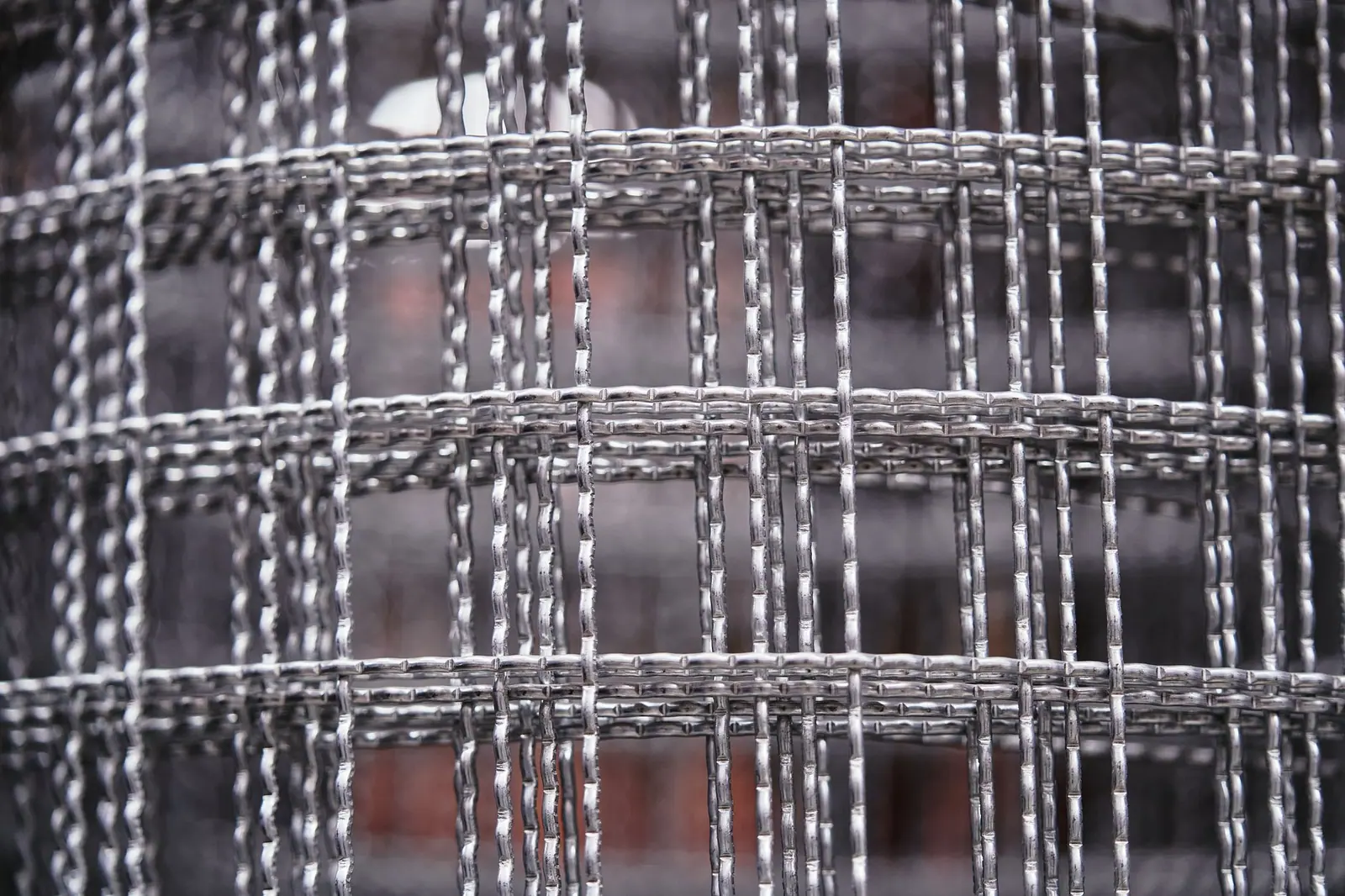
- Reusable 316L stainless, flushed by valve
- Siliphos cartridge
- Replace every 3 to 6 months
The WSP-50SL is a stainless mesh in a clear bowl on a brass head, and the bowl is the reason it works on a well: you see the load building instead of guessing at it. It was $79.99 on Oct 12, 2026, in 50, 100, 200, 500 and 1,000 micron at the same price, with 1 inch male and 3/4 inch female threads at both ends and a 20 to 100 psi operating range.
Choose the screen by what the well sends. A coarse screen on a sandy well and a finer one behind it is a common split, and iSpring also sells the plain WSP without the Siliphos cartridge for $69.99. That Siliphos cartridge, a scale and corrosion treatment, is the one consumable here, on a 3 to 6 month interval per iSpring.
The defect is human. Flushing is manual, and a screen nobody flushes blinds over and becomes the pressure problem it was bought to prevent. If that describes your household, read the next pick before you order.
Best Self-Cleaning Sediment Filter: iSpring WSP50ARB#
iSpring
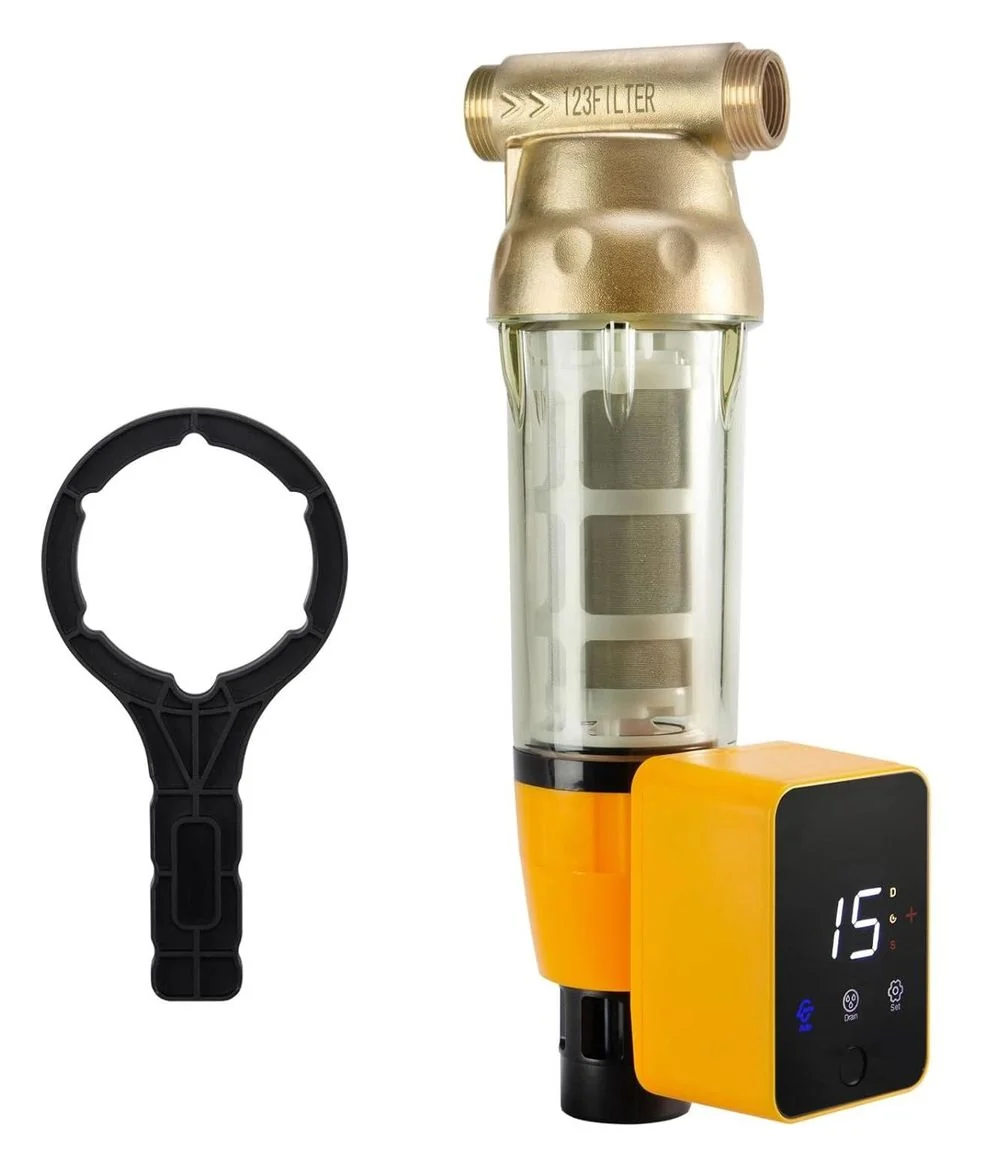
iSpring WSP50ARB Auto-Flushing Spin-Down Sediment Filter
Best for: Sandy or gritty wells where a manual spin-down would need flushing more often than anyone will actually do it
- Micron options
- 50 or 100 on the same body
- Max flow
- 25 GPM (maker)
- Ports
- 1 in MNPT and 3/4 in FNPT
- Flushing
- Touch-screen module: auto, semi-auto or manual, on a preset schedule
- Screen
- Stainless mesh with built-in scraper, lead-free brass head
The WSP50ARB adds a touch-screen module that flushes the screen on a preset schedule, in auto, semi-auto or manual mode, plus a scraper that wipes the mesh as it flushes. iSpring rates it up to 25 GPM on 1 inch MNPT or 3/4 inch FNPT ports, in 50 or 100 micron, and it was $252.99 on Oct 12, 2026.
What it asks in return: power at the filter, a drain or bucket within reach of the flush valve, and a module iSpring warrants for one year. The page does not state a warranty for the filter body itself.
Rusco Spin-Down: the trade's screen, sold without a public price#
Rusco is the name plumbers and well contractors reach for, and its 1 inch Spin-Down is rated 1 to 25 GPM at up to 150 psi, with screens from 700 micron down to 15 micron in polyester and 500 to 75 micron in stainless, per rusco.com on Oct 12, 2026. Larger bodies go to 50 and 100 GPM. What Rusco does not publish is a price, so it gets no card here: buy it through a plumbing supplier and compare the quote with the iSpring prices above.
Best Fine Second Stage: a Big Blue Sediment Cartridge#
A 20 inch Big Blue housing with a 5 micron cartridge is the standard fine stage behind a screen. iSpring's FP25B fits standard 20 by 4.5 inch housings, flows up to 15 GPM, and was $37.99 on Oct 12, 2026; iSpring rates it at 100,000 gallons, "depending on your water quality".
That last clause is the whole story on a well. A cartridge's life is set by the silt you feed it, which is why the screen goes first. Without one, a 5 micron cartridge on a sandy well clogs long before its rated gallons, and the first sign is a weak shower.
If you also need iron treatment on light iron, iSpring sells the same housings with an iron cartridge in the WGB32BM, $535.99 on Oct 12, 2026, which our rust filter guide covers with its limits.
When Is a Backwashing Sediment Filter Worth It?#
When silt arrives in volume, all the time, and fine enough that a cartridge stage would need replacing every few weeks. A backwashing filter is a tank of granular media under an automatic valve that reverses the flow on a schedule and sends the trapped silt to a drain, so nothing is replaced.
The media most often named for it is Turbidex, which a distributor listing (Nelsen) and a Lenntech data sheet both put at roughly 3 to 5 microns. The two spec sheets we found disagree on the backwash rate it needs, so we print none; the practical points are that the tank needs a drain, and your well has to deliver enough flow to lift the bed. Ask the seller to size it from your well's flow test.
What you hear
A backwashing sediment filter is simply a bigger, better spin-down.
What the numbers say
It is a different machine. A spin-down is a screen you flush by hand or on a timer; a backwashing filter is a media tank under a control valve that needs a drain and enough well flow to lift its bed. The one complete system we priced was $1,895, against $79.99 for a screen.
Price is the other barrier. The one complete system we found priced, Mid Atlantic Water's Fleck 2510SXT 2.5 cubic foot sediment removal system with Turbidex, listed at $1,895 and was sold out on Oct 12, 2026, with a 5 year warranty on the valve and 10 years on the tank. At that money, test the screen and cartridge route first.
Where Should a Sediment Filter Go on a Well?#
After the pressure tank, before everything else. That is the rule Boshart, a maker of well fittings, states without exception: "sediment filters should always be installed AFTER the pressure tank."
Pump, tank, then the filters
- Well pumpkeep this run clearNothing that can clog belongs between the pump and the tank. Boshart's guidance: a filter there sits ahead of the pressure switch, so a blocked element leaves the pump running against it.
- Pressure tank and switchThe switch reads tank pressure and starts or stops the pump. Every filter after this tee shows up as pressure the switch can see.
- Spin-down screenfirst stageA reusable stainless mesh in a clear bowl. It takes the sand and grit, and it is flushed through a valve to a drain rather than replaced.
- Cartridge housingoptionalA finer pleated or spun cartridge for the silt the screen lets through. This is the part on a replacement schedule.
- Iron filter or softenerprotectedThe expensive tanks come last, so the two cheap stages in front of them take the grit that would otherwise foul a valve or a media bed.
The order of the parts, not a measurement. Placement rule from Boshart's knowledge base, read Oct 12, 2026. Some sellers mount a coarse screen ahead of the tank instead; the article explains the trade-off.
The reasoning is mechanical. The pressure switch sits at the tank, so a filter between the pump and the tank is invisible to it; as the element clogs, Boshart explains, the switch keeps calling for water and the pump runs against the blockage, with the relief valve on the far side unable to help.
Not every seller agrees. SoftPro, a water treatment vendor, recommends mounting a coarse spin-down at the well discharge, ahead of the tank, to keep sand out of it, while its own FAQ also places the sediment filter after the tank. We follow Boshart. If you do mount a screen ahead of the tank, keep it a coarse, flushable screen with valves either side, and never a cartridge.
This is also the honest answer to the people searching for a "well pump sediment filter": the filter protects the house and the tanks, after the pump. Grit reaching the pump itself is a well construction question for a contractor.
What Does Sediment Filtration Cost on a Well?#
Under $120 in parts for most wells: a $79.99 screen plus a $37.99 fine cartridge, read Oct 12, 2026, before the housing for that cartridge and any plumbing labor. It is the smallest line in any well budget.
Sediment stages on a well, priced at the maker
as of Oct 12, 2026- iSpring WSP-50SL spin-down screenFlushed, not replaced; optional Siliphos cartridge every 3 to 6 months
- $79.99
- iSpring WSP50ARB self-flushing screenReplacement screen $45.99
- $252.99
- iSpring FP25B 5 micron Big Blue cartridgePer cartridge; needs a 20 x 4.5 in housing
- $37.99
- Backwashing Turbidex systemMid Atlantic Water listing, sold out on the day
- $1,895
- Plumbing laborA threaded inline fit is a common DIY job; cutting into the main is a plumber's
- Varies
Screen plus one fine cartridge, parts only
$117.98
Prices read on ispringfilter.com and midatlanticwater.net on Oct 12, 2026. The total is our arithmetic on the first and third rows; a Big Blue housing for the cartridge is not included.
The sediment stage is the cheapest line in every well stack we priced, and the full budget, with iron, softening and UV installed, is in our installed cost of each well treatment stage. City water readers can compare the cartridge economics in our whole house filter running-cost math.
When a Sediment Filter Won't Fix Your Well#
When the problem is dissolved rather than suspended. A sediment stage stops particles and nothing else.
Sediment filter territory
- Sand, grit and silt you can feel or see settle
- Orange water that is orange straight from the tap
- Flakes from old pipe or casing
- Cartridges downstream clogging early
Needs another stage
- Clear water that stains orange later: dissolved iron
- Black or brown staining, which the EPA links to manganese
- Rotten-egg smell: hydrogen sulfide gas
- Scale and spotting: hardness
The call
Fit the screen anyway, then test for what it can't see. The lab report decides the next stage.
Dissolved iron and manganese go to an oxidizing filter, ranked in our iron filter comparison by ppm rating, or, when the lab finds only light iron, to a three-stage cartridge stack built for well water. Hardness goes to a softener behind it, and our well-specific softener rankings put both in the right order. To know which you have, start with a certified lab, as our private well testing walkthrough explains, or run the system match quiz for well owners.
All prices and specifications were read on the maker's or seller's own page on Oct 12, 2026. Rusco publishes no price. The Turbidex backwash rates in the two data sheets we found disagree, so none is printed. We did not bench-test these filters; ratings are the makers' own.
Sediment filters on a well: what people ask
What micron sediment filter is best for well water?
Stage it rather than picking one number: a coarse spin-down screen first, sized to how sandy the well is, then a fine cartridge such as a 5 micron Big Blue behind it. iSpring sells its WSP-50SL screen in 50, 100, 200, 500 and 1,000 micron at the same $79.99, which lets you match the screen to the well. Our sediment filter guide covers the micron choice in detail.
How do I get rid of sediment in my well water?
Filter what reaches the house with a spin-down screen and, if needed, a fine cartridge, installed after the pressure tank. If the amount of sand suddenly rises, have a well contractor look at the well itself, because a filter treats the symptom at the house, not its cause in the well.
How often should you flush a spin-down filter on a well?
As often as the bowl shows a layer of grit. The clear bowl is the schedule: on a sandy well that can be frequent, which is the case for the self-flushing WSP50ARB, whose module flushes on a preset schedule.
Can you use a whole house sediment filter on well water?
Yes, and it is where they are most useful. Use one rated for your flow (the iSpring WSP50ARB is rated up to 25 GPM, the Rusco 1 inch Spin-Down 1 to 25 GPM) and put it after the pressure tank, ahead of any iron filter or softener.
Frequently asked questions
What is the best sediment filter for well water?
For most wells, a reusable spin-down screen such as the iSpring WSP-50SL, $79.99 on Oct 12, 2026, sold in 50 to 1,000 micron on the same body. If the screen needs flushing more often than you will actually do it, the self-flushing iSpring WSP50ARB ($252.99) does it on a schedule. Add a 5 micron Big Blue cartridge behind either one for fine silt, and look at a backwashing media tank only when heavy silt never lets up.
Does well water need a sediment filter?
Most wells benefit from one, because sand, grit and rust flakes wear valves and foul the media of every tank behind them. It is the cheapest stage in a well system and the only one that protects the others. A well whose lab report and faucet aerators both come back clean can skip it, but it is rarely the part worth saving on.
Where do you install a sediment filter on a well?
After the pressure tank. Boshart, a maker of well fittings, says a filter between the pump and the tank must be avoided: as it clogs, the pressure switch downstream cannot see the blockage and the pump keeps running against it. Some sellers mount a coarse spin-down before the tank instead; if you follow them, keep it to a flushable screen with isolation valves.
Is a spin-down filter better than a cartridge for well water?
They do different jobs, and wells usually want both. A spin-down screen takes sand and grit and is flushed rather than replaced. A cartridge catches the finer silt that passes the screen and is replaced on a schedule. Putting the screen first is what keeps the cartridge from clogging in weeks.
Keep reading

Not sure what you need?
Answer 5 questions, get the right system for your water.
City or well, budget, household size, our quiz matches your answers against every system we track.