Best Water Softener for Well Water 2026 (Iron, Sulfur & Hardness)
The best water softener for well water is SpringWell's WSSS1 combo at $3,124: iron filter plus softener in the right order, 4 setups compared on dated prices.
By Home Water Lab TeamUpdated Prices verified Sep 12, 2026
This page contains affiliate links; buying through them costs you nothing extra.
On a well, buying a softener by itself is the expensive mistake, because iron destroys softening resin from the inside. The best answer is the SpringWell WSSS1, a packaged air-injection iron filter plus salt-based softener at $3,123.75 as of Sep 12, 2026, and it wins for one structural reason: it puts the iron filter in front of the softener in the correct order, out of the box.
The short answer
as of Aug 28, 2026What is the best water softener for well water?
The SpringWell WSSS1 combo at $3,123.75, because a well is rarely one problem. Its air-injection stage is rated for 7 ppm iron, 1 ppm manganese and 8 ppm hydrogen sulfide and sits ahead of a 32,000-grain salt softener, so the resin only ever sees hardness. If your existing softener still works, buy the WS1 iron filter alone at $2,231.25 instead. Above 7 ppm iron, SpringWell is the wrong catalog entirely: price a peroxide-injection setup from a well specialist.
Everything on this page assumes you have, or are about to get, a lab test. If you are earlier than that in the process, our well water treatment guide covers what to test for and why. Below: why wells break ordinary softeners, the right treatment order, four setups ranked honestly, and the point at which SpringWell stops being the answer.
| Rank | Setup | Price (Aug 28, 2026) | Wins at |
|---|---|---|---|
| 1 | SpringWell WSSS1 combo | $3,123.75 | Best overall: iron + sulfur + hardness, one package |
| 2 | SpringWell WS1 + your softener | $2,231.25 (WS1 alone) | Best if your existing softener still works |
| 3 | USWS Matrixx (+ USWS iron treatment) | $1,466.95 (softener alone) | Best serviceable valve; the route for iron above 7 ppm |
| 4 | Whirlpool WHES44 | $619 | Best budget, low-iron wells only |
Key takeaways
- Order beats hardware on a well: iron filter first, softener second, UV last. Reverse it and the resin pays.
- The WSSS1 covers up to 7 ppm iron, 1 ppm manganese and 8 ppm hydrogen sulfide for $3,123.75 (Sep 12, 2026).
- A softener's iron rating is tolerance, not treatment. Every ppm the resin catches is resin life you are spending.
- Salt-free conditioners are out: SpringWell's FutureSoft sheet demands 0 ppm iron, manganese, copper and H2S.
- Above 7 ppm iron, a Katalox Light build advertises 30 ppm at a similar price, so switch catalogs rather than sizes.
Why Do Regular Water Softeners Fail on Well Water?#
Because a softener is built for one contaminant and a well delivers four. City water arrives pre-treated; well water arrives as the aquifer made it, and in much of the US that means dissolved ferrous iron, manganese and hydrogen sulfide stacked on top of hardness. Hardness itself is the familiar part: per the USGS classification, water above about 10.5 grains per gallon counts as very hard, and private wells regularly test far beyond that. What that classification means in practice is unpacked in our hard water guide.
The stacking is what kills softeners. Ion-exchange resin is built to trade sodium for calcium and magnesium. Dissolved iron takes the same ride, but unlike hardness minerals it clings to the resin beads and does not fully rinse out during regeneration. The result is progressive fouling: capacity drops, salt use climbs, and the resin bed dies years early. Sulfur gas, meanwhile, passes straight through a softener untouched, so the water comes out soft and still smells like eggs.
What you hear
This softener is rated for 12 ppm of iron, so it handles my well.
What the numbers say
An iron rating is a survival limit, not a treatment plan. It covers dissolved ferrous iron only, it does nothing for sulfur gas or iron bacteria, and every grain of capacity spent on iron is resin life burned. Above roughly 1 ppm, a dedicated filter ahead of the softener is the setup that lasts.
That is why every serious well setup is a two-stage answer, and why this page ranks systems, not single tanks.
What Order Should the Equipment Go In?#
The sequence is not optional, and it is the single decision that separates a well setup that lasts fifteen years from one that needs a new resin bed in three.
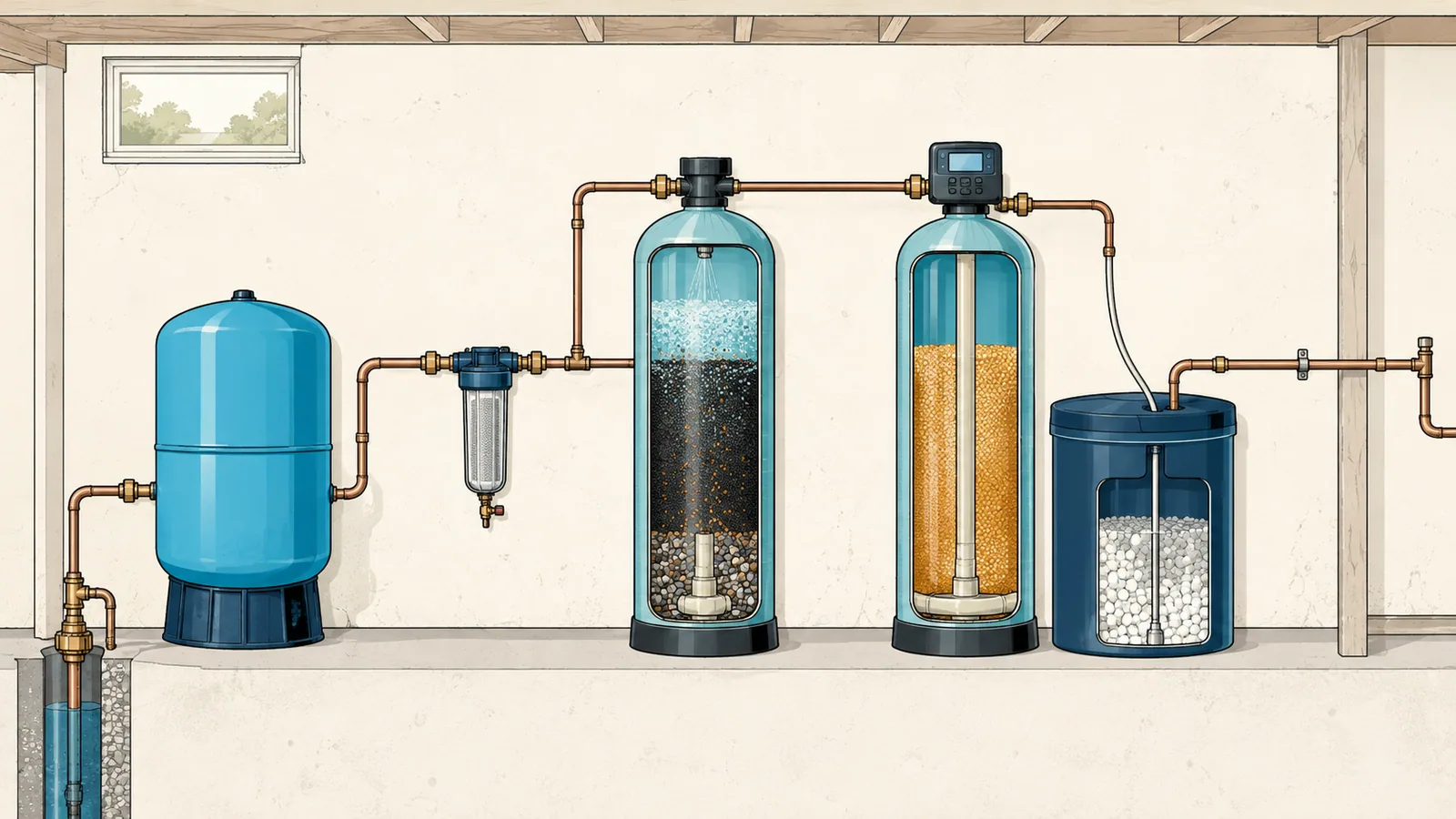
The correct treatment order
Iron and sulfur removal first
An air injection oxidation (AIO) filter holds a pocket of air at the top of its tank; incoming water falls through it, the oxygen converts dissolved iron and sulfur into solid particles, and a greensand media bed catches them. A nightly backwash flushes the bed. No chemicals, no cartridges.Softening second
With iron gone, the resin does the one job it is good at: removing hardness. It lasts the way the warranty assumes it will, and your salt consumption tracks your actual hardness instead of your iron.Disinfection last, if needed
A UV lamp only works in water the light can pass through, so it terminates the line, after everything that could cloud or coat the sleeve has already been removed.
The install, in order
- Main shut-offEverything downstream starts here. Find it and turn it before you buy anything: an install with no working shut-off is a plumber's job, not a Saturday.
- Untreated branchOutdoor taps and irrigation tee off before the softener. A lawn does not care about hardness, and softened water is salt you paid for. Many installs run the kitchen cold tap off this same branch and keep drinking water untreated.
- Bypass valveTakes the softener out of service without cutting water to the house. It is what turns a resin change from an outage into an errand.
- SoftenerOn the main line, ahead of anything that heats water. Everything downstream of this point is soft; everything on the untreated branch is not.
- Brine tankStands within a few feet of the valve, and needs enough clearance overhead to lift a 40 pound bag of salt over the lid.
- Drain line, with air gapBackwash has to reach a drain, and the gap above it is what code asks for. The distance to that drain is the most common reason an install ends up on a different wall.
- Water heaterDownstream, on purpose. Scale forms fastest where water is heated, so the heater is the appliance a softener is really protecting.
- Power outletThe control valve needs power within reach of its cord. The battery inside only holds the clock, it does not run a cycle.
Schematic: pipe runs, wall space and distances change with every house. The order does not. Main, then the untreated branch, then the bypass, then the softener, then the heater, plus the three things a control valve has to reach: a drain, its brine tank and an outlet.
We break down the iron-removal stage in detail, including media types and their real limits, in our ranking of iron filters for private wells.
How Do You Know What Your Well Actually Needs?#
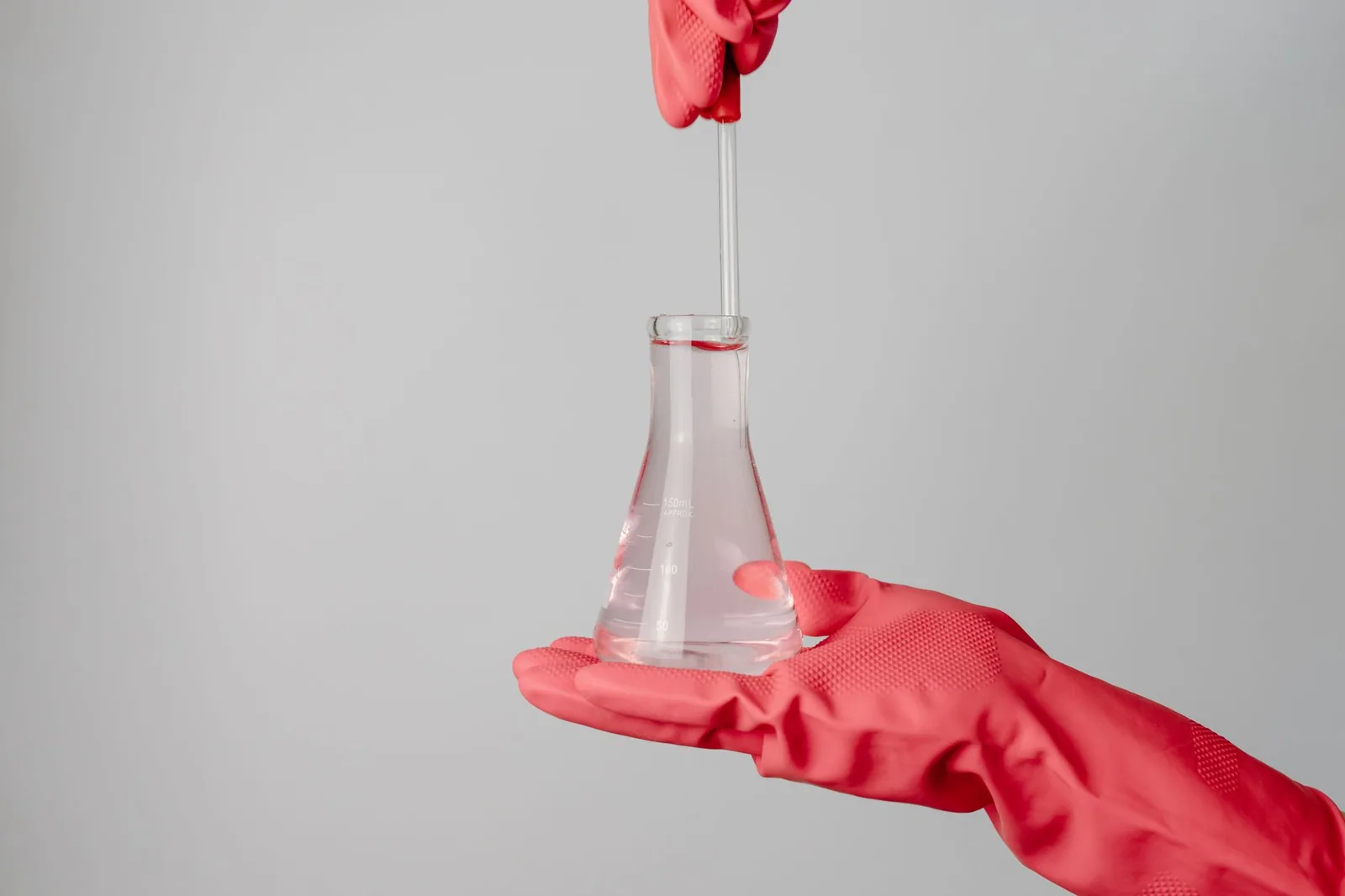
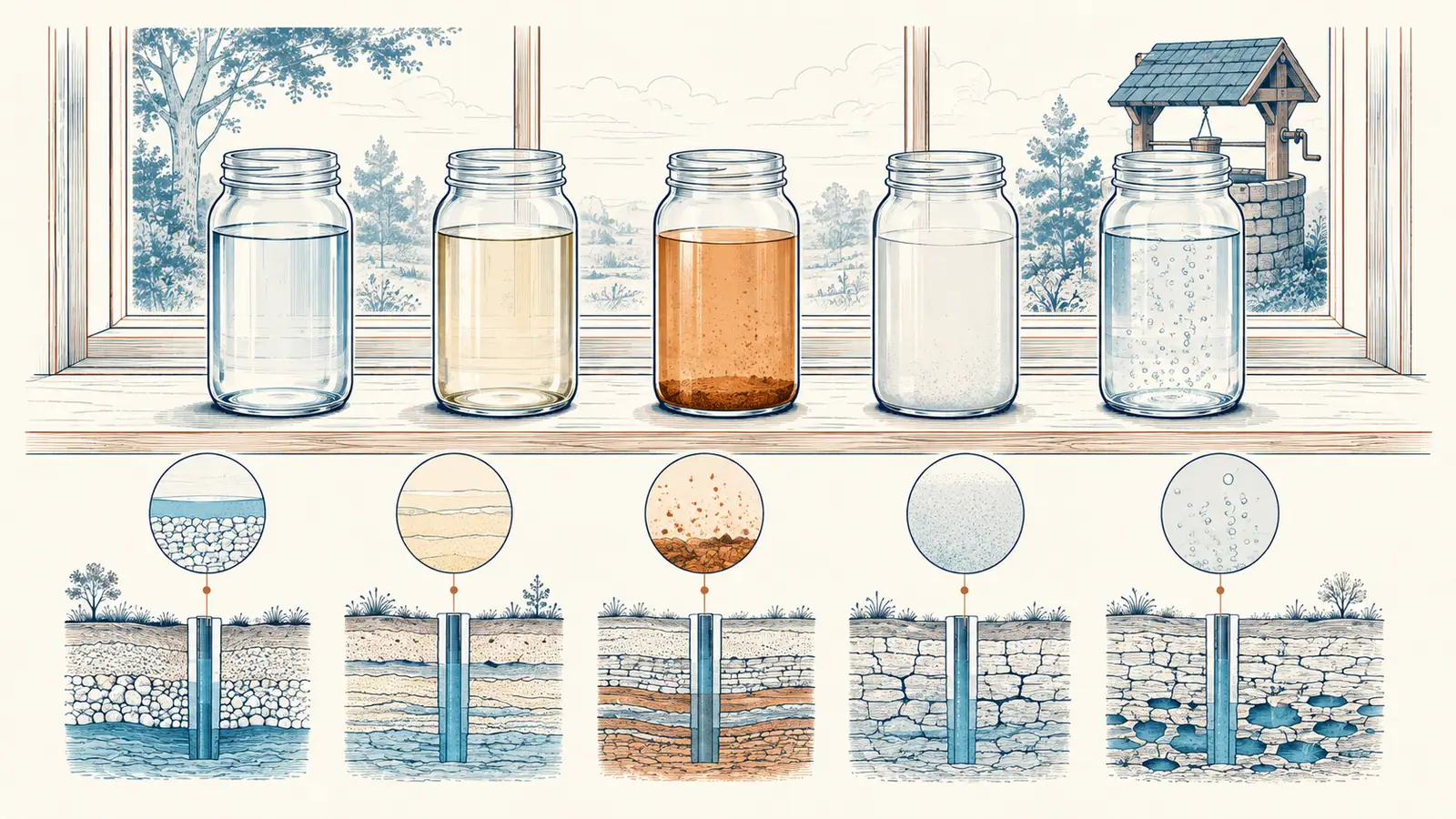
Test before you buy, and use a real lab. The EPA's private well guidance recommends testing well water at least once a year, and unlike city systems, nobody publishes a Consumer Confidence Report for your backyard. Hardware-store strips will flag hardness, but they routinely miss the numbers this purchase depends on.
What your lab panel has to report before you shop
5 itemsIron bacteria deserve a flag of their own: no media filter fixes a colonized well on its own, and the well itself typically needs shock chlorination first. Test before you shop.
With the report in hand, the four mistakes to avoid write themselves: sizing on hardness alone when iron adds load, ignoring manganese because the sample looked clear, installing the softener ahead of the iron filter, and reading a softener's iron rating as a treatment plan rather than a tolerance.
1. SpringWell WSSS1: Best Water Softener for Well Water Overall#
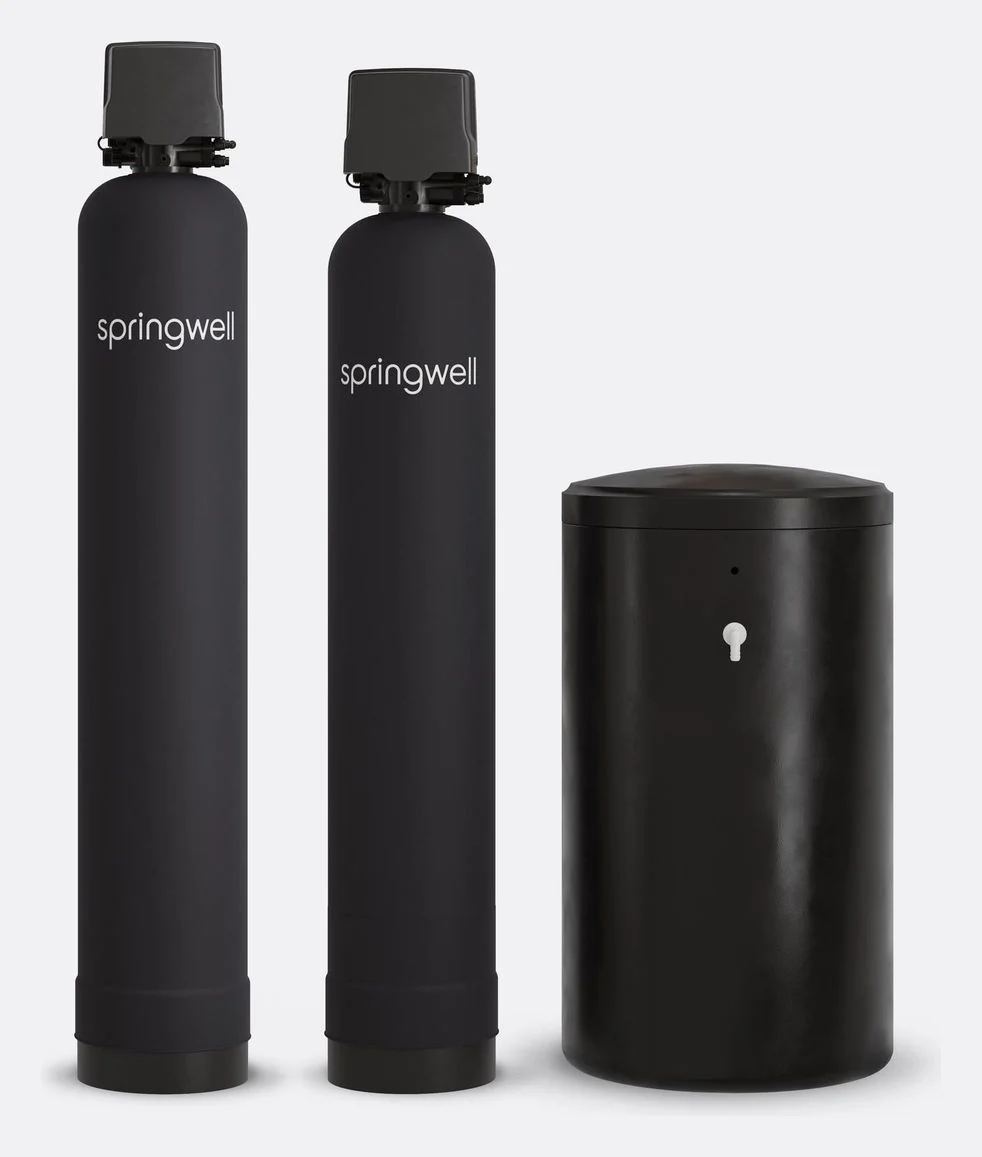
SpringWell
SpringWell WSSS1 Well Water Filter + Salt Softener Combo
Best for: Well-water homes with iron, sulfur AND hardness, the correct treatment order in one package
- Contents
- WS air-injection iron filter + SS salt-based softener
- Iron rating
- 7 ppm
- Sulfur (H2S) rating
- 8 ppm
- Manganese rating
- 1 ppm
- Price range
- $2,975, $3,400 depending on size
- Treatment order
- AIO iron filter first, then softener (protects the resin)
SpringWell WSSS1 at a glance
as of Aug 28, 2026- Price read
- $3,123.75
- Size range
- $3,123.75 to $3,570
- Contents
- AIO iron filter + salt softener
- Iron rating
- 7 ppm
- Manganese
- 1 ppm
- Hydrogen sulfide
- 8 ppm
- Softener capacity
- 32,000 grains
- Media life
- 10+ years, no consumables
Ratings from the SpringWell WS series spec sheet; price read on springwellwater.com/shop. Exceeding the published feed-water limits voids well-water coverage.
The WSSS1 is SpringWell's WS air-injection iron filter and SS salt-based softener sold as one system. The iron stage runs chemical-free with a greensand fusion bed rated 10-plus years and backwashes automatically at night. The softener behind it is the same 32,000-grain Bluetooth-headed SS1 covered in our SS-series review. Tanks, valves and fittings carry a lifetime warranty.
The honest list of drawbacks: the electronic heads are warrantied 5 years despite the lifetime marketing, the footprint is three tanks, the valve platform is Chandler Systems (a thinner parts network than Fleck or Clack, so your local plumber may not know it), returns are accepted uninstalled only with a 10% restocking fee (up to 25%), and the well-water warranty conditions are strict: exceed the ratings and you are out of coverage. Most importantly, 7 ppm iron is a real ceiling, and we deal with it two picks down.
What we like
- Solves the classic well-water stack (iron + sulfur + hardness) in one order
- AIO pre-filtration protects the softener resin from iron fouling
- Chemical-free, media lasts 10+ years
- Lifetime warranty on tanks and valves
What to watch
- Not enough for heavily loaded wells above 7 ppm iron, look at stronger AIO/Katalox setups
- Large footprint: three tanks total
- Well-water warranty conditions apply (no H2S/oil beyond limits, copper < 1.30 mg/L)
- Electronic heads warrantied 5 years only
2. SpringWell WS1: Best If Your Existing Softener Still Works#
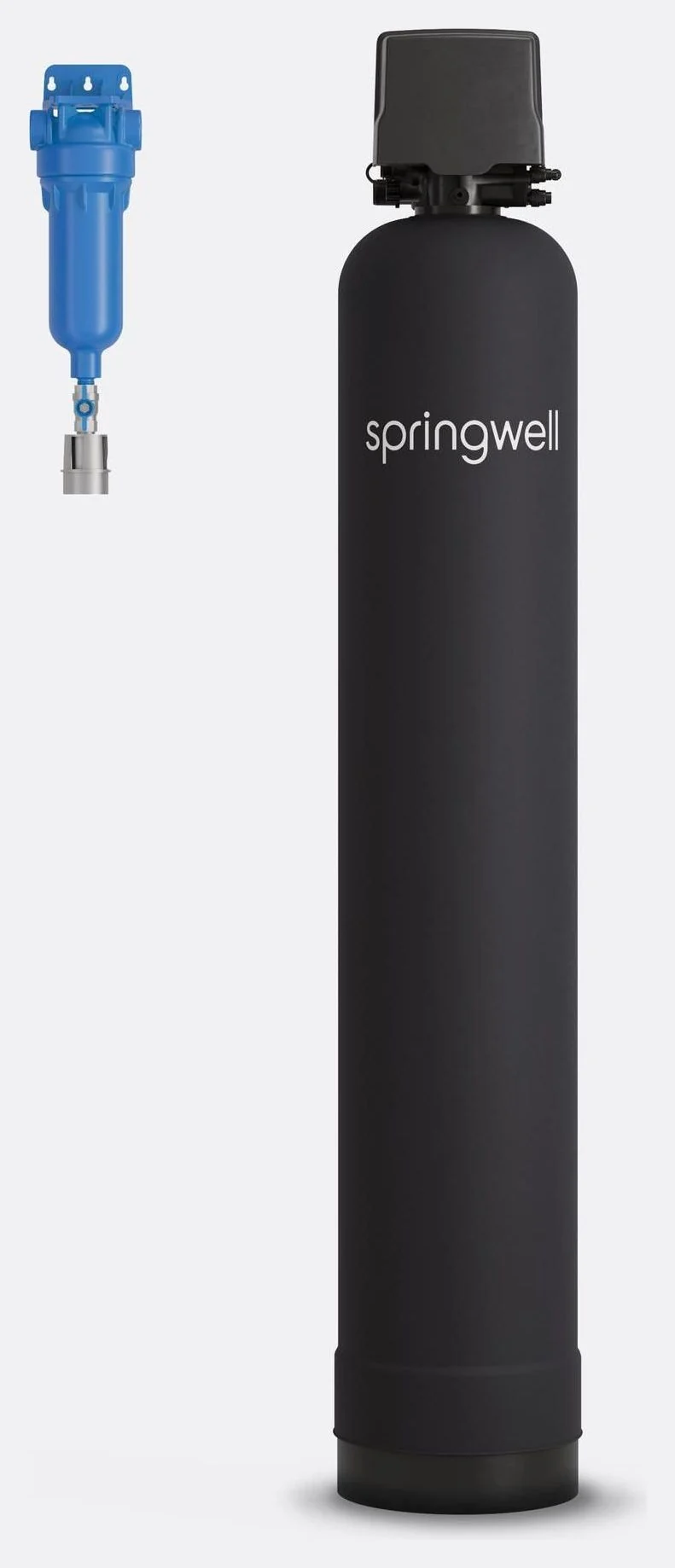
SpringWell
SpringWell WS1 Whole House Well Water Filter
Best for: Well-water homes with light-to-moderate iron, sulfur or manganese that want a chemical-free, no-consumable setup
- Technology
- Air Injection Oxidation (AIO), single tank, chemical-free
- Flow rate
- 12 GPM
- Iron rating
- 7 ppm
- Manganese rating
- 1 ppm
- Sulfur (H2S) rating
- 8 ppm
- Media
- Greensand fusion, 10+ year life
If you already own a softener that behaves, do not pay to replace it. The failure mode on wells is almost always the missing front half, and the WS1 is exactly that: the same air-injection iron filter from the combo, sold alone at $2,231.25 (Sep 12, 2026). Install it ahead of your softener and the resin stops eating iron the same day.
Two things to know. The nightly backwash is audible, worth considering if the install spot shares a wall with a bedroom. And the product page shows a $5,100 strikethrough price that is a bundle comparison, not a real discount; $2,231.25 was the actual price at our reading.
SpringWell
SpringWell WSSS1
- Contents
- WS air-injection iron filter + SS salt-based softener
- Iron rating
- 7 ppm
- Manganese rating
- 1 ppm
- Sulfur (H2S) rating
- 8 ppm
SpringWell
SpringWell WS1
- Contents
- N/A
- Iron rating
- 7 ppm
- Manganese rating
- 1 ppm
- Sulfur (H2S) rating
- 8 ppm
Prices checked Sep 12, 2026.
3. US Water Systems Matrixx: Best Serviceable Softener, and the Route Above 7 ppm Iron#
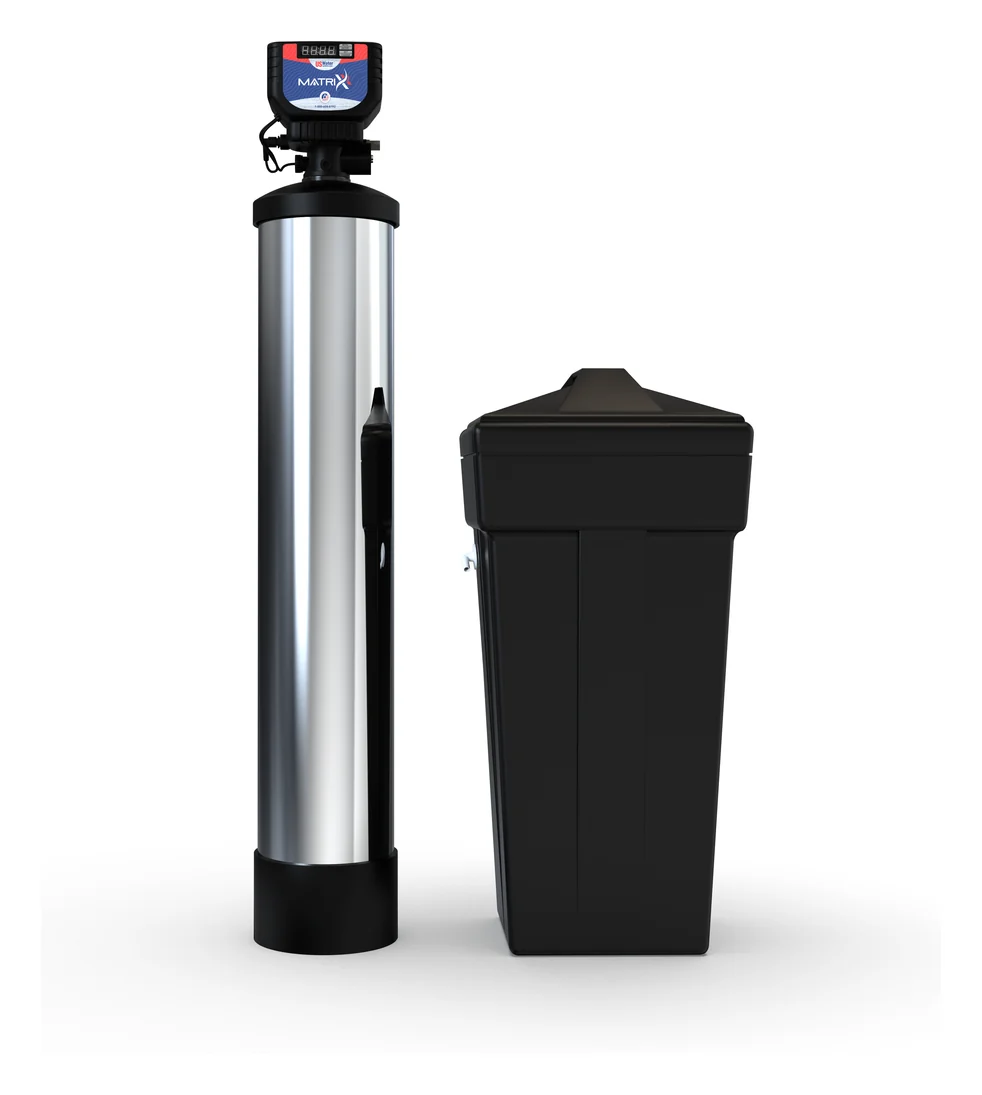
US Water Systems
US Water Systems Matrixx Smart Metered Water Softener
Best for: Buyers who want a serviceable, open-valve softener backed by real technical support, the softener plumbers buy for themselves
- Valve
- Smart metered electronic valve with Bluetooth
- Valve platform
- Open standard, rebuildable, not proprietary
- Support
- 7-day hotline staffed by water technicians
Here is the honesty section. SpringWell's WS series tops out at 7 ppm iron and 1 ppm manganese. Independent comparisons make the gap concrete: Mid Atlantic Water's July 2026 review notes that a Fleck 2510 AIO running Katalox Light media advertises 30 ppm iron, 15 ppm manganese and 10 ppm sulfur at a similar price. If your well test reads above 7 ppm, SpringWell is the wrong catalog, full stop.
The catalog that covers heavy wells is US Water Systems. Their Matrixx softener ($1,466.95 as of Sep 12, 2026) runs an open-standard smart metered valve with rebuild kits, meaning any tech can service it for life, and undercuts the SpringWell SS1 by roughly $375. For the iron stage on hot wells, USWS sells peroxide-injection systems (their Infusion line) that oxidize iron and sulfur chemically instead of with an air pocket; pricing is configuration-dependent, so treat their free water test and 7-day technician hotline as step one. Fair warning: their perpetual factory-direct strikethrough pricing takes reading past, and injection systems realistically need professional installation, which our installation cost guide prices out.
4. Whirlpool WHES44: Best Budget Softener for Low-Iron Wells#
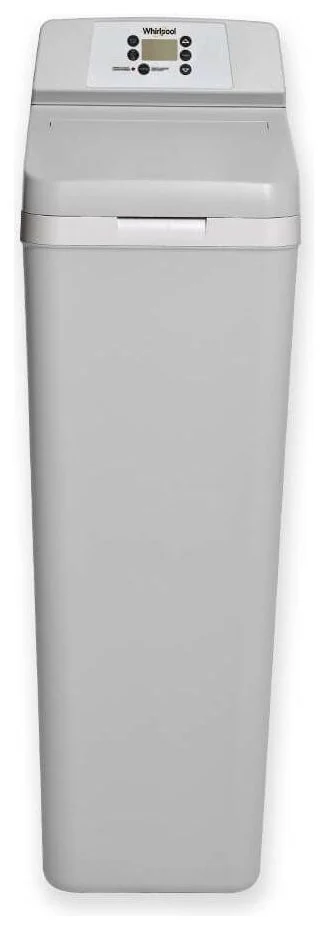
Whirlpool
Whirlpool WHES44 Water Softener (44,000 Grain)
Best for: Big families on a budget: the highest grain, hardness and iron ratings in the big-box aisle
- Grain capacity
- 44,000
- Flow rate
- 9 GPM
- Max hardness
- 140 GPG
- Iron reduction
- 12 PPM
- Retail
- Sold at Lowe's (machine not sold on Amazon, parts only)
At $619 (Sep 12, 2026, sold at Lowe's), the WHES44 is the highest-rated big-box unit on paper for well conditions: 44,000 grains, a 140 GPG maximum hardness rating, NSF certification, and a claimed 12 ppm iron reduction. For a well with hard water and only a trace of iron, it is the defensible cheap answer.
Read that 12 ppm claim the right way, as covered in the myth above: it covers dissolved ferrous iron only, and there is no pre-filter protecting the bed. The base warranty is 1 year, and the valve is proprietary. Our Whirlpool model comparison covers where it fits and where it fails. If your water actually comes from a municipal supply and you landed here by accident, the general softener rankings are the right page.
What About Salt-Free Conditioners on a Well?#
Short answer: no. The media that makes a conditioner work is the media a well destroys.
0 ppm
Salt-free TAC conditioners require essentially perfect feed water. SpringWell's own FutureSoft documentation demands 0 ppm iron, 0 ppm manganese, 0 ppm copper and 0 ppm hydrogen sulfide, and a pH between 7.0 and 9.5. Most wells fail at least one of those on the first test, and a conditioner does not soften water in the measured sense anyway. The full argument is in our salt against salt-free comparison; on a well, salt-based with iron pretreatment is the recommendation.
What Will It Cost All-In?#
Budget in three lines: the equipment, the installation, and the salt. Only the first is a fixed number, and on a well the regeneration water line disappears entirely because you are not buying the water.
SpringWell WSSS1 route, all-in
as of Aug 28, 2026- WSSS1 combo (factory direct)$3,123.75 to $3,570 depending on size
- $2,940
- Professional installationAngi / HomeGuide 2026 range for a main-line install; DIY is realistic for experienced hands
- $300 to $1,500
- Salt, ongoingHomeGuide 2026 figure for a salt-based softener
- $50 to $150 / yr
Equipment total (before install and salt)
$2,940
The greensand iron media is rated 10+ years with no consumables; the softener consumes salt only. Dealer quotes for equivalent well packages from Culligan or Kinetico routinely land between $5,000 and $10,000.
Ten years of ownership
as of Aug 28, 2026- EquipmentBig-box is the middle of Angi's 2026 range for a 48,000-grain unit, $600 to $1,200. Factory-direct is SpringWell's SS1 at $1,606.50. The dealer column is a Culligan system installed, middle of $1,800 to $6,500.
- Installation$900, the middle of the $300 to $1,500 a plumber charges in the 2026 Angi, HomeGuide and Fixr guides. Doing it yourself takes this line to zero. Dealer quotes already contain it.
- Salt, ten years$100 a year, the middle of HomeGuide's 2026 range of $50 to $150, times ten. Hard water and a thirsty household push this to the top of the range.
- Regeneration water, ten years$20 a year on city water, the middle of $10 to $30, times ten. On a private well the water itself costs nothing, so this line disappears.
Midpoints of dated ranges: Angi 2026 capacity table, HomeGuide and Fixr 2026 cost guides, Modernize dealer pages (Culligan page updated Aug 21, 2026) and manufacturer prices read Aug 28, 2026. Softener only, city-water assumptions: on a private well the regeneration water costs nothing, and the iron stage is a separate line the chart does not carry. No inflation, no repairs, no resin replacement.
Sizing matters more on wells than city water because iron adds load on top of hardness: the standard rule adds 3 gpg of compensated hardness for every 1 ppm of dissolved iron. Run your numbers through the sizing worksheet or the capacity calculator, and see the well filtration price ranges for the full spread of scenarios, from budget to peroxide injection.
Verdict: Which Setup for Your Well?#
Chlorine and taste are a different problem with different hardware; if you also own a place on city water, the whole house filter rankings cover that side.
Frequently asked questions
Can I use a regular water softener on well water?
Only if your well tests near zero for iron and manganese. Dissolved ferrous iron binds to softener resin and fouls it, cutting capacity and lifespan with every regeneration. If your test shows meaningful iron, sulfur smell or manganese staining, put a dedicated iron filter ahead of the softener or buy a packaged combo that does it for you.
What order should well water treatment equipment go in?
Sediment and iron removal first, softening second, disinfection last: an air injection iron filter takes out iron, sulfur and manganese, the softener then handles hardness with protected resin, and a UV system, if you need one, goes at the end of the line where the water is already clear enough for the light to work.
How much iron can a water softener remove by itself?
Softener spec sheets list iron ratings, the Whirlpool WHES44 claims up to 12 ppm for example, but those cover dissolved ferrous iron only and every ppm the resin catches shortens its life. Treat a softener's iron rating as tolerance, not treatment: above roughly 1 ppm, a dedicated iron filter ahead of the softener is the setup that lasts.
Do salt-free water softeners work on well water?
Almost never. Salt-free TAC conditioners require essentially perfect feed water: SpringWell's own FutureSoft spec sheet demands 0 ppm iron, 0 ppm manganese and 0 ppm hydrogen sulfide. Most wells fail at least one of those, so on well water the salt-based route with iron pretreatment is the honest recommendation.
How much does a well water softener system cost?
The SpringWell WSSS1 iron filter plus softener combo listed at $3,123.75 on Sep 12, 2026, with the range running $3,123.75 to $3,570 by size. A budget route is a $619 Whirlpool WHES44 on a low-iron well. Add $300 to $1,500 for professional installation and $50 to $150 a year in salt per HomeGuide's 2026 figures.
Keep reading
Not sure what you need?
Answer 5 questions, get the right system for your water.
City or well, budget, household size, our quiz matches your answers against every system we track.