Waterdrop G3P800 Review 2026: The Tankless Benchmark, on the Numbers
Waterdrop G3P800 review: 800 GPD, a 3:1 drain ratio, and three different certification lists on Waterdrop's own pages. What the $999 actually buys.
By Home Water Lab TeamUpdated Prices verified Oct 7, 2026
This page contains affiliate links; buying through them costs you nothing extra.
The Waterdrop G3P800 is the tankless reverse osmosis benchmark, and it earns that on two numbers: 800 GPD of on-demand production and a 3:1 pure-to-drain ratio that inverts the waste maths every other tank system lives with. It is also $999, which is four times what a certified alternative costs.
The short answer
as of Sep 21, 2026Should you buy the Waterdrop G3P800?
Buy it if wastewater or waiting is what has kept you from reverse osmosis. Nothing else in the class pairs 800 GPD with a 3:1 ratio, and the tankless body frees the whole cupboard. Do not buy it for its certification record: Waterdrop publishes three different certification lists for this one model across its own pages, with only NSF/ANSI 58 and 372 appearing on all of them. For pure contaminant reduction the Aquasana SmartFlow at $224.99 on sale (Oct 5, 2026) carries five named standards for under a quarter of the price.
Key takeaways
- 800 GPD tankless output and a 3:1 pure-to-drain ratio are the two reasons to pay $999 for this system.
- Waterdrop's own pages publish three different certification lists for this model; NSF/ANSI 58 and 372 are the two common to all of them.
- Cartridges are proprietary: $159.97 a year, with the membrane alone at $139.99 every 24 months.
- It needs mains power. A cut means no filtered water, where a tank system still has a tankful.
- Waterdrop's own store data returns $999 for the product; a promotional banner on the same page showed $759 on Sep 21, 2026.
What the G3P800 Actually Does#
It is a tankless under-sink reverse osmosis system: water crosses the membrane on demand under pump pressure rather than trickling into a storage bladder for later. That single design decision produces every advantage and every drawback in this review.
Where the water goes
- Pre-filters6 to 12 monthsSediment then carbon, in that order. They exist to protect the membrane: grit would tear it and chlorine would dissolve it, so the cheap cartridges spend themselves first.
- RO membrane2 to 5 yearsThe stage that does the work the others cannot. Pressure pushes water through a film whose pores stop dissolved solids, which is why RO reaches lead, fluoride, nitrate and PFAS where carbon alone does not.
- Post carbon12 monthsA taste polish on the way out, and on remineralizing systems the stage that puts calcium and magnesium back so the water does not taste flat.
- The drain lineconcentrateEverything the membrane refuses leaves here. This pipe is why an RO system has a water bill attached to it, and why the pure-to-drain ratio belongs in any honest comparison.
Ratio and production figures are Waterdrop's own published specifications for the G3P800, read Sep 21, 2026. Stage names here are generic; Waterdrop describes the system as 10-stage across three replaceable cartridges.
Waterdrop
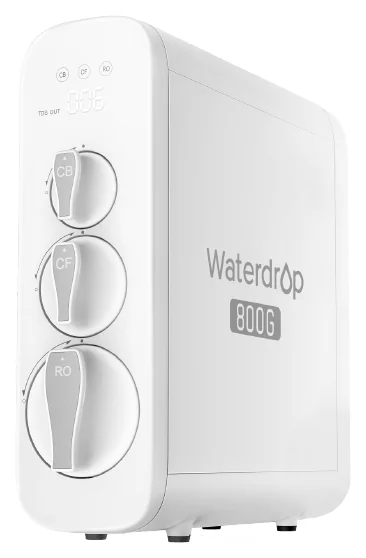
Waterdrop G3P800 Tankless Reverse Osmosis System
Best for: The premium tankless RO reference: high flow, UV, and a 3:1 efficiency ratio that flips the classic RO waste math
- Production
- 800 GPD, tankless
- Extras
- Smart TDS faucet; UV is claimed on some Waterdrop pages for this model and denied on others
- Pure-to-drain ratio
- 3:1
- Annual filter cost
- $159.97
The Two Numbers That Justify the Price#
800 gallons a day, on demand. A classic tank system produces slowly and stores what it makes, which is why a tank empties during a dinner party and refills for an hour afterwards. The G3P800 simply keeps producing. In practice you notice this when filling a pot rather than a glass.
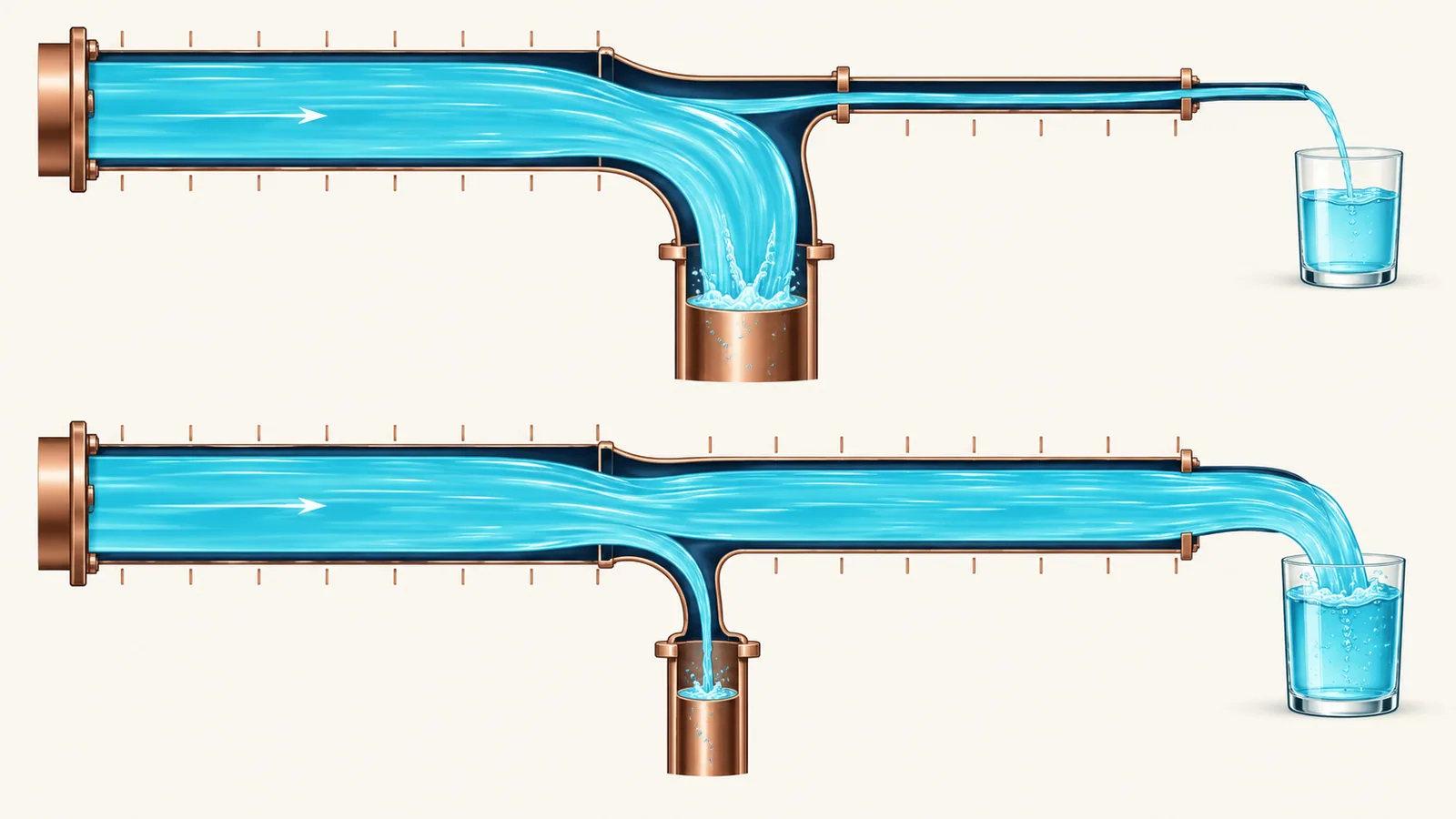
3:1 rather than 1:3. Standard tank RO sends roughly three gallons to the drain for each gallon it delivers. This system reverses that. Over a year of a household's drinking and cooking water, the difference is measured in hundreds of gallons, and on a metered supply it is the argument that makes the purchase defensible.
3:1
The Certification Problem#
This is the part of the review that took the longest, and it is the part a buyer should read twice. On Sep 21, 2026 we read three Waterdrop pages describing this one model.
| Waterdrop page | Certifications stated | Certifying body named |
|---|---|---|
| G3P800 product page | NSF/ANSI 42, 53, 58, 372 | None |
| G3P800 remineralization bundle | NSF/ANSI 42, 53, 58, 372 | IAPMO R&T |
| G3P800 landing page | NSF/ANSI 58, 372 | NSF International |
Two of those pages attribute the same four standards to different bodies, and the third drops two of the standards entirely. We are not accusing anyone of anything: this pattern is usually a marketing site that has outgrown its own copy, and the certificates may well all exist. But a certification claim is only worth what it can be checked against, so this review treats NSF/ANSI 58 and 372 as established for the G3P800, since those are the two that appear on every page, and treats 42 and 53 as claimed rather than confirmed.
What you hear
More certifications listed means better filtration.
What the numbers say
A certification is a specific standard, tested by a specific body, on a specific model. When the same manufacturer publishes three different lists for one product, the length of any single list stops being evidence. Compare the standards that survive across every page, and if a number matters to you, ask the manufacturer for the certificate that covers your exact model.
The same discipline puts the Aquasana SmartFlow ahead on this specific axis: one list, one certifying body (the WQA), five standards including the P473 PFAS protocol, published consistently. That is a different claim from saying it filters better, which neither of us can test.
The Price Is Also Two Numbers#
Waterdrop's own store data returns $999 for this product: a single variant, no compare-at price, in stock, read on Sep 21, 2026. The rendered product page the same morning showed $759 against a $999 strikethrough, and the remineralization bundle showed $786.99 against $1,026.99.
We publish $999 because it is what the store's product record says the item costs, and we note the banner because you may well be offered it. The practical advice is the same one we give for every brand that runs standing promotions: the price is whatever the cart says at checkout, and a strikethrough is a marketing device, not a countdown.

What Goes Wrong, According to Owners#
Three complaints recur in the discussion threads that rank alongside the product itself on Google, and all three are structural rather than defects.
No power, no water. A pumped tankless system stops when the electricity does. A tank system has whatever is in the tank. In an area with regular outages this is a genuine consideration, not a quibble.
Cold water and low pressure cut the output. The 800 GPD figure is a rating under favourable conditions. Winter feed water in a northern state produces measurably less, which is normal for every membrane and disappointing only if the headline number was the reason you bought it.
Filter lock-in. There is no generic equivalent for these cartridges, so $159.97 a year is not negotiable the way the iSpring's filter bill is. Over a decade that is more than the system cost.
We take those threads as signals about where to look, never as sources of fact: the specifications in this review come from Waterdrop's own pages, and the prices from its store data.
G3P800 vs the Alternatives#
Waterdrop
Waterdrop G3P800
- Production
- 800 GPD, tankless
- Extras
- Smart TDS faucet; UV is claimed on some Waterdrop pages for this model and denied on others
- Pure-to-drain ratio
- 3:1
- Annual filter cost
- $159.97
- Contaminants reduced
- N/A
- PFAS / fluoride / arsenic
- N/A
- Faucet flow
- N/A
- Design
- N/A
- Filter schedule
- N/A
- Stages
- N/A
- Certification
- N/A
- Waste ratio
- N/A
Aquasana
SmartFlow RO
- Production
- 25.7 gallons/day
- Extras
- N/A
- Pure-to-drain ratio
- N/A
- Annual filter cost
- N/A
- Contaminants reduced
- 99.99% of 90 contaminants
- PFAS / fluoride / arsenic
- 96% PFAS (P473), 90% fluoride, 96% arsenic
- Faucet flow
- 0.7 GPM
- Design
- Compact holding tank (3.2 gallons total, 1.4 to 3.2 usable), remineralizer included
- Filter schedule
- Cartridges 6 months, membrane 12 months
- Stages
- N/A
- Certification
- N/A
- Waste ratio
- N/A
iSpring
iSpring RCC7AK
- Production
- N/A
- Extras
- N/A
- Pure-to-drain ratio
- N/A
- Annual filter cost
- ~$100 to 110
- Contaminants reduced
- N/A
- PFAS / fluoride / arsenic
- N/A
- Faucet flow
- N/A
- Design
- N/A
- Filter schedule
- N/A
- Stages
- 6 (with alkaline remineralization)
- Certification
- NSF/ANSI 58
- Waste ratio
- ~1:3 (classic tank design)
Prices checked Oct 9, 2026.
Against the Aquasana SmartFlow ($224.99 on a banner day, Oct 5, 2026). The SmartFlow wins the certification argument outright and costs under a quarter as much. The G3P800 wins flow by a distance: 0.7 GPM and 25.7 gallons a day against 800 GPD. If your household drinks and cooks with filtered water and nothing more, the SmartFlow is the better purchase, as set out in our best reverse osmosis systems ranking.
Against the iSpring RCC7AK ($239.99, Oct 12, 2026). The iSpring is NSF/ANSI 58 certified, cheap to buy and cheaper to run, and it drains three gallons per gallon produced while taking up the cupboard with a bladder tank. It is the honest budget answer, compared properly in our under-sink filter guide.
Against doing nothing to the plumbing. If drilling the counter is the obstacle rather than the price, a countertop RO unit sidesteps the whole install, and our best countertop water filters covers that segment.
Who Should Buy the G3P800#
Buy it if all four are true
4 itemsAnd skip it if the objection was always price. The G3P800 is a premium answer to problems that many kitchens do not have, and a $224.99 system with five named certifications solves the contaminant question just as well.
What It Will Not Do#
It treats one tap. Hardness at the shower, chlorine in the bath and scale in the water heater are untouched, because that water never crosses this membrane, and no filter rating reaches dissolved hardness in any case, as our hard water filter guide explains. Whole-house chlorine removal is a whole house water filter; hardness is a water softener; and treating the entire house by reverse osmosis is a specialist purchase covered in our whole house RO guide.
Specifications, certification statements and cartridge prices read on the date shown. Where Waterdrop's pages contradict each other, both readings are reported rather than reconciled. Price taken from the store's own product record.
G3P800 questions people actually search
Is the G3P800 better than the G3P600?
It produces more: 800 GPD against 600 on the earlier model, on the same tankless architecture. Whether that matters depends on whether your household ever outruns 600 gallons a day, which almost none do. Check the cartridge compatibility before assuming filters carry across the range, because part numbers differ.
Does the G3P800 need a dedicated faucet?
Yes, like nearly every under-sink RO system. It ships with a smart faucet carrying a TDS readout, which needs a hole in the counter or a spare sprayer opening. That hole is the part of the install most people pay a plumber for.
How loud is it?
It is a pump, so it is audible when producing, in the same register as a small fridge compressor. Tankless systems run more often in short bursts than tank systems, which fill and then go quiet.
Can I use it on well water?
Not without pretreatment. Sediment and iron foul a membrane quickly and no amount of production rating helps. Build sediment and iron removal at the point the water enters the house first, as our [well water guide](/well-water) and our [sediment filter guide](/guides/whole-house-sediment-filter) set out, and then the G3P800 is a reasonable finish.
Does it remove fluoride and PFAS?
Waterdrop states reduction of PFAS, fluoride, lead and chromium for this model. The certification behind those specific claims is where its pages disagree, so we report the claim as published and treat NSF/ANSI 58 and 372 as the established part of its record.
Frequently asked questions
Is the Waterdrop G3P800 worth it?
It is worth it for two specific reasons and overpriced for every other one. The 3:1 pure-to-drain ratio and 800 GPD of tankless output are genuinely best in class, and if wastewater or waiting is what has stopped you buying reverse osmosis, this solves both. If you just want contaminants out of your drinking water, the Aquasana SmartFlow does that with a clearer certification record for $224.99 on sale (Oct 5, 2026) against this system's $999.
What are the common issues with the Waterdrop G3P800?
Three recur. It depends on mains power, so an outage means no filtered water at all. Real output drops when incoming water is cold or pressure is low, so the 800 GPD headline is a best case. And the filters are proprietary at $159.97 a year with no generic equivalent, which is the cost that outlives the purchase.
What is the lifespan of a Waterdrop G3P800 filter?
Waterdrop publishes three intervals for the three cartridges: the G3-N1CF at 6 months or 550 gallons, the G3-N3CB at 12 months or 1,100 gallons, and the G3P800-N2RO membrane at 24 months or 2,200 gallons. Gallons and months are both limits, so heavy use or difficult feed water brings the change forward.
Does the Waterdrop G3P800 have UV sterilization?
Waterdrop's own pages disagree, which is the honest answer. Its G3P800 landing page lists a UV sterilizer in the box with a 99.9% sterilization rate; the product page we take the price from states that UV is not included in that model. Check the specific listing you are buying, and do not assume the feature transfers between variants.
Is the Waterdrop G3P800 NSF certified?
Partly, and the details differ by page. One Waterdrop page lists NSF/ANSI 42, 53, 58 and 372; another attributes the same four standards to IAPMO R&T; a third names only NSF/ANSI 58 and 372, certified by NSF International. The two standards that appear on all three are NSF/ANSI 58 and 372, so those are the ones we treat as established.
What is the downside of reverse osmosis water?
It removes calcium and magnesium along with the contaminants, which is why remineralization cartridges exist and why RO water can taste flat without one. Waterdrop sells a mineralization filter for the G3P800 at $36.99 and an alkaline version at $29.99. The other downside is the drain water, and the 3:1 ratio here is the best answer to it in this price class.
Keep reading
Best Countertop Water Filters 2026: Certified Picks for Renters
Read the buyer's guide
Best Under Sink Water Filters 2026: RO vs Carbon for Every Budget
Read the buyer's guide
Best Reverse Osmosis Systems 2026: Every Budget, Ranked on the Specs
Read the buyer's guideNot sure what you need?
Answer 5 questions, get the right system for your water.
City or well, budget, household size, our quiz matches your answers against every system we track.