Best Water Conditioner 2026: Top Whole-House Systems Compared
The best water conditioner depends on the problem: scale, chlorine or both. Five picks from $160.99 to $2,320.50, read Oct 5, 2026, and none softens water.
By Home Water Lab TeamUpdated Prices verified Oct 7, 2026
This page contains affiliate links; buying through them costs you nothing extra.
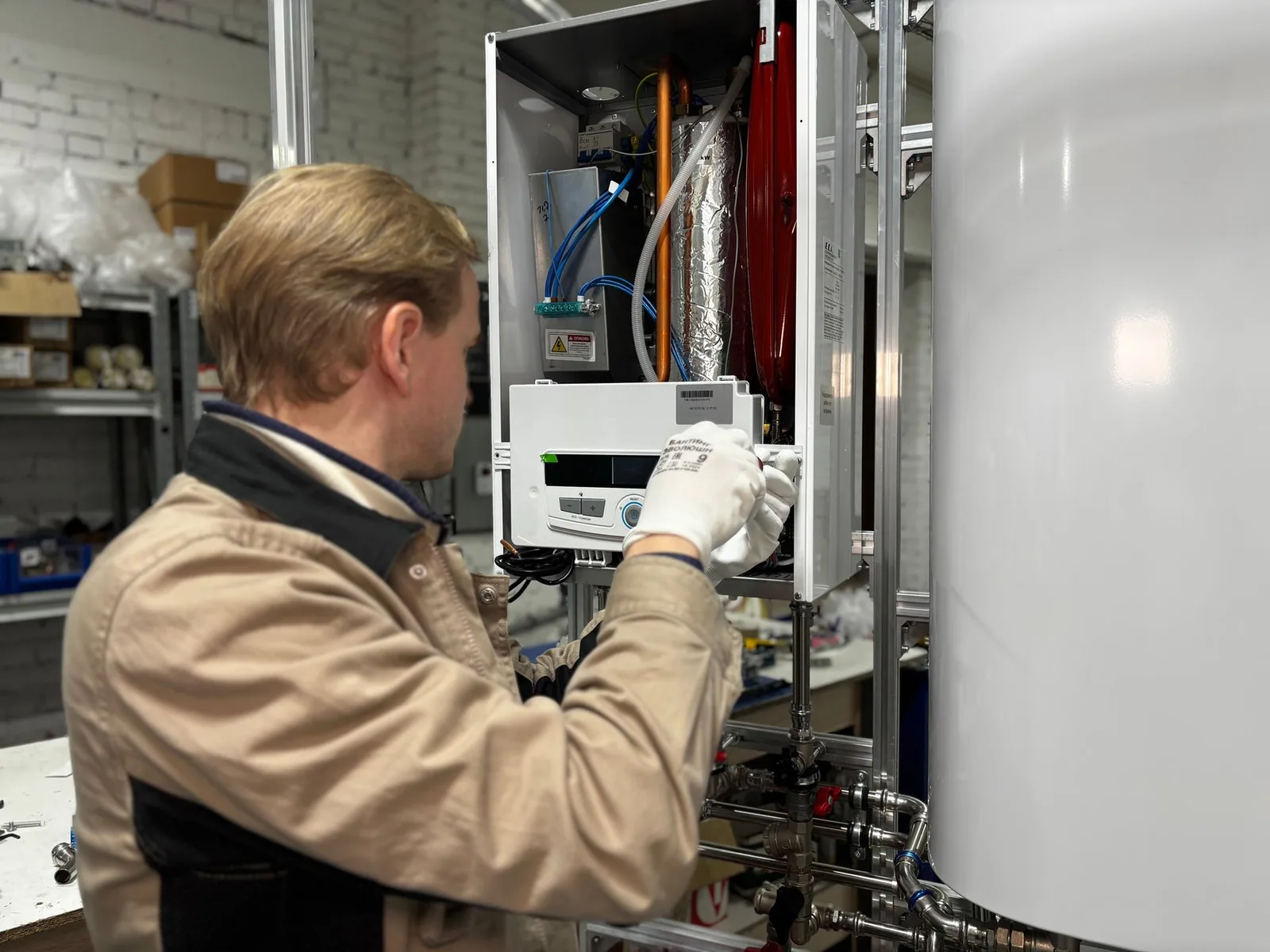
The best water conditioner for most city homes is the SpringWell FutureSoft FS1, $1,785 on Oct 5, 2026, if scale is the only complaint, and the SpringWell CSF1 combo at $2,320.50 the same day if chlorine taste is the second one. Neither softens anything. Your hardness reading stays where it was and only the scale changes, which our salt-free water softener guide explains in full; this page sorts every machine sold as a "conditioner" by the problem it actually fixes.
The short answer
as of Oct 5, 2026What is the best water conditioner?
For scale alone on city water, buy the SpringWell FutureSoft FS1: $1,785 on Oct 5, 2026, 12 GPM, rated to 81 grains per gallon. For chlorine and scale in one install, the SpringWell CSF1 at $2,320.50 puts a carbon filter ahead of the same tank, and the Aquasana SimplySoft ($879 on sale, $1,758 at list) is the budget route. None of them removes hardness. Template assisted crystallization cut scale by more than 88% in WateReuse Research Foundation testing, but the minerals stay in the water and a test strip reads the same afterwards.
Key takeaways
- Template assisted crystallization (TAC) cut scale by more than 88% in the WateReuse Research Foundation study; plug-in electronic units managed about 50%.
- No conditioner lowers measured hardness. Aquasana answers "No." to that exact question in its own FAQ.
- For scale only, the SpringWell FS1 at $1,785 or the Aquasana SimplySoft at $879 on sale ($1,758 list), both read Oct 5, 2026.
- For chlorine plus scale, the SpringWell CSF1 at $2,320.50 on Oct 5, 2026 saves $624.75 against buying its two halves separately that day.
- The Kind E-3000's TAC cartridge cost $799.99 on Oct 5, 2026 and is due every 3 to 5 years on Kind's own schedule.
| Your problem | Our pick | Price (read Oct 5, 2026) | What it leaves alone |
|---|---|---|---|
| Scale only, city water | SpringWell FutureSoft FS1 | $1,785 | Hardness reading, spotting, chlorine |
| Scale only, small home, tight budget | Aquasana SimplySoft | $879 on sale, $1,758 list | Same, at 7.0 GPM rated flow |
| Chlorine and scale, tank media | SpringWell CSF1 | $2,320.50 | Hardness reading, spotting |
| Chlorine and scale, wall-mounted | Kind E-3000 | $2,094.10 before checkout discount | Hardness reading, spotting |
| Scale, no plumbing at all | iSpring ED2000 | $160.99 | Hardness, and about half the scale TAC stops |
| Spotting, lather, the hardness number | A salt softener | See our softener rankings | Chlorine |
Does a Water Conditioner Really Work?#
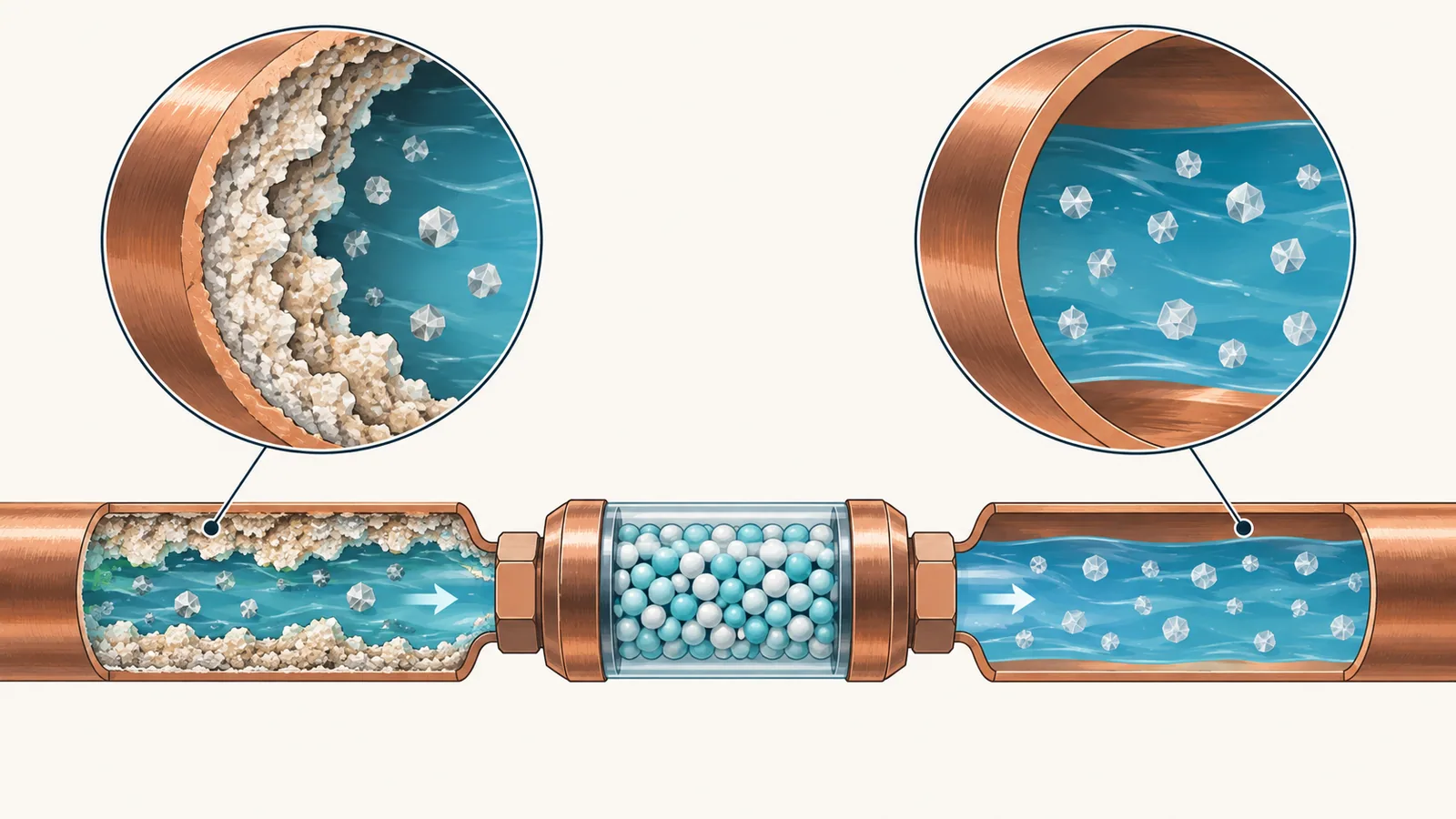
For scale, yes, and the proof is independent. WateReuse Research Foundation project 08-06, led by Peter Fox at Arizona State University and published in 2014, ran salt-free devices through the German DVGW-W512 protocol. Template assisted crystallization (TAC) cut scale formation by more than 88 percent, and electromagnetic and electrically induced precipitation units by about 50 percent.
What none of those devices did is soften the water. That is the line most product pages blur, and it explains why one word now covers machines that do very different jobs. Our water conditioner explainer decodes the four meanings of the word. The grid below does something narrower and shows what each machine changes, complaint by complaint.
Five machines, four complaints
as of Oct 5, 2026- TAC tankscale onlyMore than 88% less scale in the WateReuse Research Foundation testing. The hardness reading, spotting and chlorine taste are unchanged, which SpringWell and Aquasana both state in their own copy.
- Carbon + TACtwo jobsThe same TAC stage behind a carbon stage. Chlorine reduction is the maker's claim on the Kind and SpringWell combo pages; the hardness reading does not move.
- Salt softenerthe only softenerRemoves calcium and magnesium, so scale, the hardness reading, spotting and lather all change. Ion exchange reduced scale efficiently in the same study. Chlorine passes straight through.
- Polyphosphatemaker's claimFeeds a scale inhibitor into the water ahead of one appliance. The scale claim is the manufacturer's: polyphosphate is not among the technologies in the WateReuse findings, and iSpring's own table marks it as not reducing hardness.
- Electronic coilabout halfAbout 50% less scale in the WateReuse testing, and the scale that did form brushed off instead of needing acid. Nothing else about the water changes.
Solid dot: fixes it. Half dot: partial, independently measured. Dashed ring with a question mark: claimed by the maker, not independently measured in our sources. Ring with a bar: no change. Scale figures from WateReuse Research Foundation project 08-06 (Arizona State University, published 2014); everything else from the manufacturers' own pages, re-read Oct 5, 2026.
So the buying question is never "which conditioner is best" in the abstract. It is which complaint you have, and whether a conditioner is even the machine that fixes it.
Best Whole House Water Conditioner for Scale: SpringWell FutureSoft FS1#
If the only thing you want gone is limescale in the heater and the shower head, the FutureSoft FS1 is the pick. It moves 12 GPM of service flow and accepts water up to 81 grains per gallon. It needs neither salt nor a drain, and it runs without power.
SpringWell
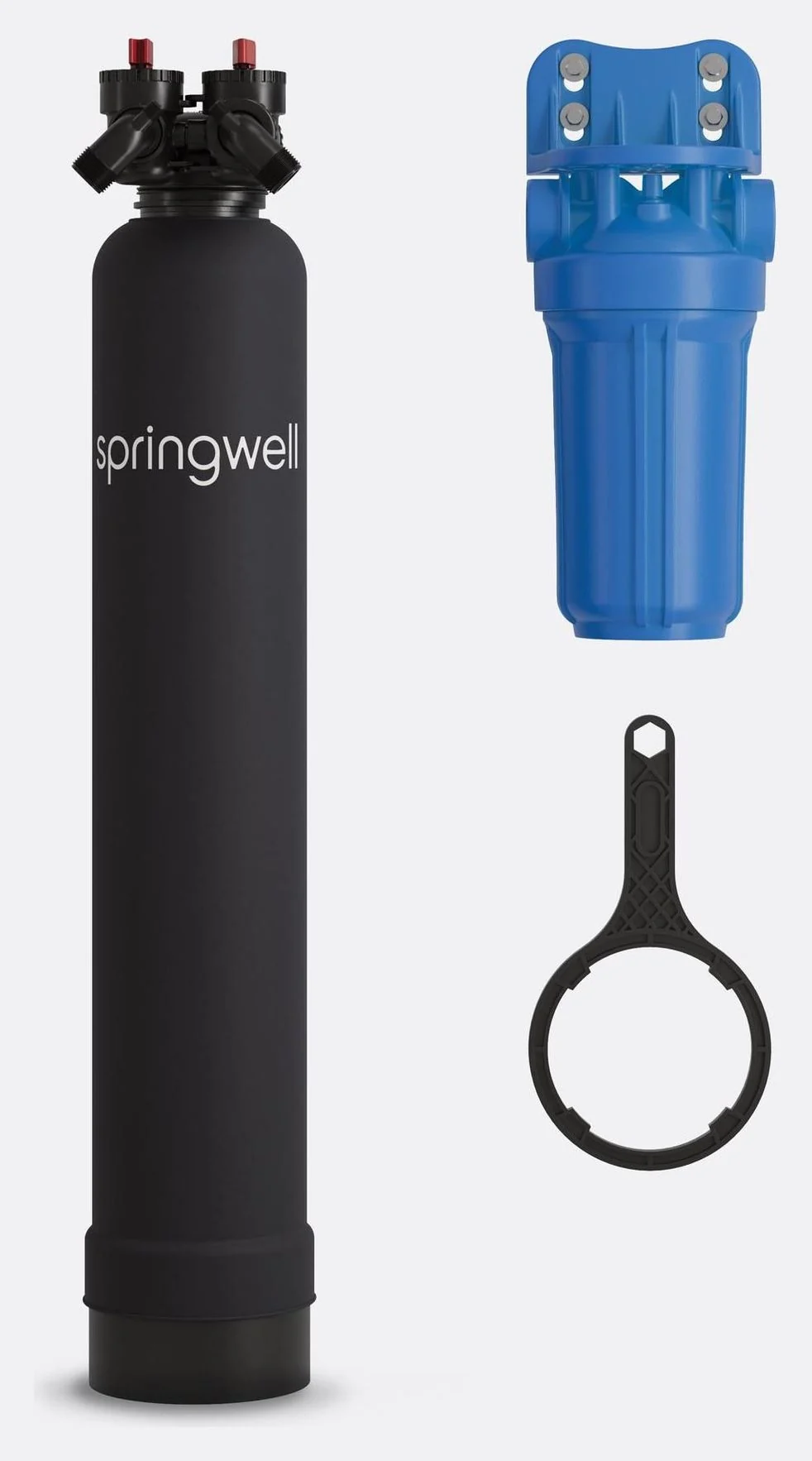
SpringWell FutureSoft FS1 Salt-Free Water Conditioner
Best for: City-water homes that want scale prevention without salt, a drain or electricity, not for anyone expecting soft-feeling water
- Technology
- TAC (Template Assisted Crystallization)
- Flow rate
- 12 GPM
- Bathrooms
- 1 to 3
- Tank
- 6" × 35"
- Max hardness
- 81 GPG
- Scale prevention
- Up to 95% (manufacturer claim)
SpringWell sold it at $1,785 against a $2,100 list on Oct 5, 2026, under a standing "15% Off All Systems" banner. Bigger homes step up to the FS4 ($1,963.50, 15 GPM, 4 to 6 bathrooms) or the FS+ ($2,320.50, 20 GPM, 7 or more), same day. Warranty is lifetime, with a 6-month money-back window.
Two defects, both printed in SpringWell's own copy. The spec sheet tolerates no iron and no manganese at all (0 ppm). It also caps free chlorine at 3 ppm and wants a pH of 7.0 to 9.5, which describes treated city water and rules out most wells. And SpringWell's pages disagree on media life: the FutureSoft page says "5+ year lifespan," while the combo page FAQ says the media "will never need to be replaced." We print neither as a number. Our FutureSoft review has the full teardown, and the five-system shortlist sits in our best salt-free water softener rankings.
What we like
- 12 GPM of service flow, rated to 81 grains per gallon
- No salt and no drain line to plan around
- Lifetime warranty plus a 6-month money-back window
What to watch
- Won't stop spotting or make water feel slick, in SpringWell's own words
- Zero-iron, zero-manganese feed limits rule out most wells
- SpringWell's own pages disagree on how long the media lasts
Budget pick: Aquasana SimplySoft#
Aquasana
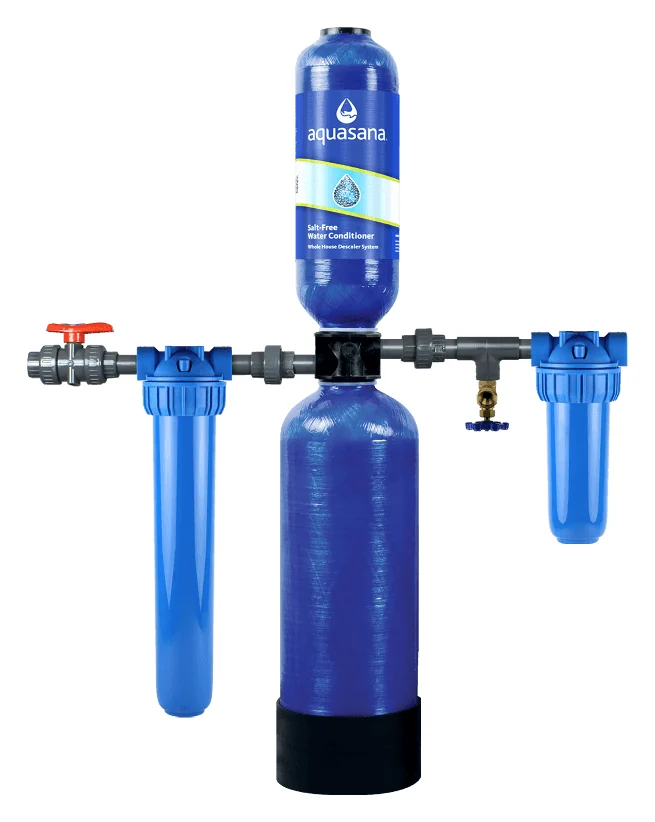
Aquasana SimplySoft Salt-Free Water Conditioner
Best for: City-water homes that want low-cost scale control without salt, and understand it is not a softener
- Technology
- SCM (Scale Control Media)
- Capacity
- 1,000,000 gallons / 10 years
- Flow rate
- 7.0 GPM nominal / 15.3 GPM peak
- Operation
- No salt, no electricity, no drain, no backflush
The SimplySoft read $879 on Oct 5, 2026 under a "50% OFF WHOLE HOUSE SYSTEMS" banner, against a $1,758 MSRP that Aquasana charged outright on Sep 12. It does the FS1's job with Aquasana's Scale Control Media, rated for 1,000,000 gallons or 10 years, under a 10-year limited warranty and a 90-day satisfaction guarantee.
The trade is flow. Aquasana rates it at 7.0 GPM (15.3 GPM peak), which gets tight past two bathrooms. Its FAQ carries the most honest line in this category: asked "Will the system reduce hardness or TDS levels?", Aquasana answers "No." The weak point is service, at 1.5 out of 5 on Trustpilot across 170 reviews when we checked on Aug 28, 2026.
Best Water Conditioner Systems for Chlorine and Scale#
City water often brings two complaints at once, the chlorine or chloramine you taste and the scale you find in the kettle. A combo handles both in one install, carbon first and conditioner second. The SpringWell CSF1 does it with two tanks and the Kind E-3000 with three cartridges on a wall bracket, and the real difference between them shows up when the first TAC cartridge falls due rather than on the receipt.
Best combo: SpringWell CSF1#
SpringWell
SpringWell CSF1 Whole House Filter + Salt-Free Conditioner Combo
Best for: City-water homes with both a chlorine or chloramine taste problem and scale, that cannot or will not run a salt softener
- Configuration
- CF1 whole house filter + FutureSoft FS1 salt-free conditioner
- Home size
- 1 to 3 bathrooms
- Filter stage
- 9 GPM service flow, 1,000,000 gallons or 10 years of media (maker)
- Conditioner stage
- 12 GPM service flow, rated to 81 gpg, 0 ppm iron and manganese
- Scale claim
- Prevents up to 95% of scale buildup (maker claim)
The CSF1 is SpringWell's CF1 whole-house filter plumbed ahead of the FS1 conditioner, sold as one kit at $2,320.50 against a $2,730 list (Oct 5, 2026). Bought separately on the same day, the CF1 at $1,160.25 and the FS1 at $1,785 come to $2,945.25, so the bundle saves $624.75. SpringWell rates the filter media at 1,000,000 gallons or 10 years and puts the sediment pre-filter on a 6 to 9 month schedule, "around $34.95 per year" by its own figure.
The filter half is rated at 9 GPM of service flow and the conditioner half at 12 GPM, and SpringWell sizes both for 1 to 3 bathrooms. Chlorine, chloramine and PFAS reduction, plus "up to 95%" scale prevention, are SpringWell's claims for the combo rather than independent results. The independent figure for TAC is still the WateReuse 88 percent. The carbon half has its own CF1 filter review if you want the media details.
Wall-mounted alternative: Kind E-3000#
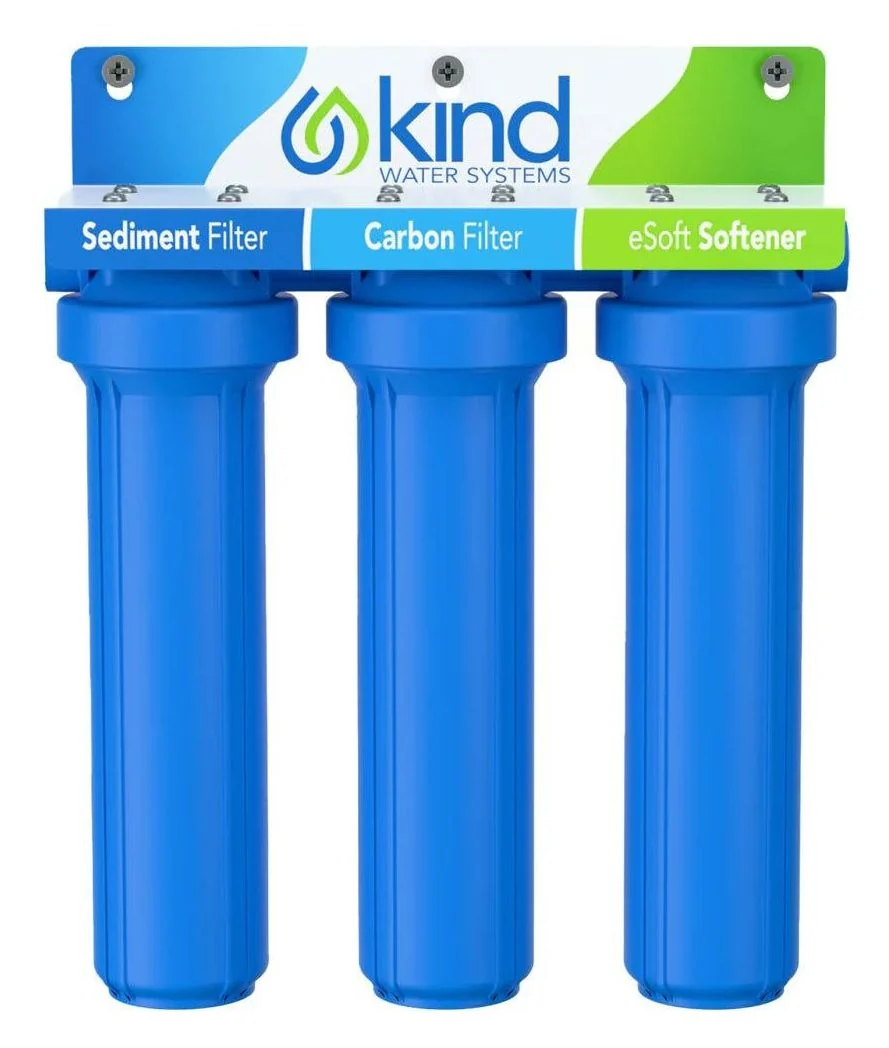
Kind Water Systems
Kind E-3000 Whole House Salt-Free Softener + Filter Combo
Best for: HOA/eco-constrained homes (salt-softener bans in CA/TX) that want filtration plus scale control in one pass
- Type
- Whole-house filter + TAC salt-free conditioner combo (best seller)
- Technology
- TAC, no electricity, no wastewater, no salt
- Maintenance
- Yearly cartridge replacement (~15 minutes)
Kind stacks a sediment cartridge, a carbon block and an ESOFT TAC cartridge on one wall-mounted manifold. By Kind's spec it delivers 15 GPM for 1 to 5 bathrooms, accepts up to 75 grains per gallon, and needs no drain or power. It read $2,094.10 on Oct 5, 2026, with a "10% OFF All Systems" banner promising a further cut at checkout that we did not apply, and it carries a lifetime warranty with a 120-day satisfaction guarantee.
Read the certification line carefully. Kind lists its carbon block as "NSF/ANSI - 42 Material Safety and Structural Integrity," which certifies the materials; chlorine reduction appears as Kind's own claim. Our Kind Water Systems review covers the brand and its Pelican lineage in detail.
SpringWell CSF1, $2,320.50 (Oct 5, 2026)
- Two floor-standing tanks: carbon filter, then FutureSoft TAC
- Filter media rated 1,000,000 gallons or 10 years
- Pre-filter around $34.95 a year by SpringWell's figure
- Lifetime warranty, 6-month money-back window
Kind E-3000, $2,094.10 (Oct 5, 2026)
- One wall-mounted manifold, 15 GPM by Kind's spec
- Sediment and carbon set at $155.28 every 6 to 12 months
- ESOFT TAC cartridge at $799.99 every 3 to 5 years
- Lifetime warranty, 120-day satisfaction guarantee
Bottom line
Floor space and a ten-year horizon point to the CSF1. Wall space only points to the E-3000, with its cartridge bill accepted up front.
What If Chlorine Is the Only Problem?#
Then skip the conditioner and buy a whole-house carbon filter, which some sellers also call a water conditioner. A filter does nothing for scale or hardness, but it is the right tool for chlorine taste and chloramine. The filter halves of both combos above are also sold alone, the Kind E-1000 at $976.46 and the SpringWell CF1 at $1,160.25, both read Oct 5, 2026. The wider field, cheaper cartridge systems included, is ranked in our whole house filter shortlist for city water.
Do Electronic Water Conditioners Work?#
Partly. Electromagnetic and electrically induced precipitation devices cut scale by about 50 percent in the WateReuse study, against more than 88 percent for TAC, and the scale that did form was a "soft" scale "easily removed by brushing." They cost a fraction of a tank and need no plumbing. The hardness stays exactly where it was.
iSpring
iSpring ED2000 Whole House Electronic Descaler
Best for: Renters and moderate-hardness city homes that want to try scale control for under $200 without cutting a pipe
- Type
- Electronic descaler wrapped around the main pipe
- Hardness limit
- Up to 425 ppm (25 gpg), per iSpring
- Iron
- Pre-treat above 0.3 ppm, per iSpring
- Pipe size
- Two units may be needed on mains over 1 in and under 1.5 in
- Power
- 110 to 120 V outlet near the pipe
- Time to effect
- Up to 12 weeks, per iSpring
The iSpring ED2000 read $160.99 on iSpring's own site on Oct 5, 2026. Two coils wrap the main pipe and a control box plugs into a 110 to 120 V outlet. iSpring's limits are unusually specific, and they matter more than the price:
- It is not a softener. "The ED2000 is NOT a water softener and does not remove calcium or magnesium," in iSpring's own words.
- The ceiling is 25 grains per gallon (425 ppm). Above that, iSpring recommends a traditional softener as well.
- Iron above 0.3 ppm needs an iron removal filter ahead of the unit.
- One unit covers about 50 feet of pipe. Mains over 1 inch, or long runs, may need a second one.
- Results are slow. iSpring says the effects may take up to 12 weeks to appear.
We did not repeat iSpring's one-year payback figure or its claim that treated water lathers better, because nothing independent backs either. ScaleBlaster, the other electronic name in the shopping results, advertises residential units "starting from $199" on its homepage (Oct 5, 2026) without a model price we could confirm.
Polyphosphate cartridges are the last branch of the family. iSpring's WSP-50SL spin-down filter ($79.99 on Oct 5, 2026) takes a Siliphos cartridge ($27.99 the same day, every 3 to 6 months) that feeds a scale inhibitor into the water. iSpring's own comparison table marks it "Reduce water hardness: N," and polyphosphate was not among the technologies in the WateReuse findings, so its scale claim is the maker's alone.
Video coming soon
We cover this topic on the Home Water Lab channel.
Which Is Better, a Water Softener or a Water Conditioner?#
A softener, if your complaint is spotting, stiff laundry, soap that won't lather or the number on a test strip. Ion exchange removes calcium and magnesium, and no conditioner on this page does. A conditioner wins when scale is the whole complaint or when brine discharge is restricted where you live. It also suits a main line with no drain anywhere near it.
What you hear
If the quote says conditioner, it can't be a salt softener.
What the numbers say
Culligan's own page for its Aquasential Smart High Efficiency softener lists a lifetime warranty on the 'conditioner tank' and one year on the 'Entire conditioner', on a machine with a salt storage container and a brine valve. Dealers use the word for both machines, so ask whether the quote includes salt deliveries.
If soft water is what you want, our salt softener rankings and the whole-house softener picks sized for real homes are the pages to read instead. The profile-by-profile duel between the two technologies is in our salt-based against salt-free comparison.
What Is the Best Water Conditioner for Well Water?#
On untreated well water, usually none of them. SpringWell's FutureSoft requires zero iron and zero hydrogen sulfide in the feed water. Kind builds the E-3000 "for City Water," and iSpring wants an iron filter ahead of the ED2000 once iron passes 0.3 ppm. Treat the well first, then decide how to handle the hardness that's left.
Before any conditioner goes on a well
6 itemsThe iron and sulfur equipment that comes first is ranked in our iron filter shortlist for wells, and the salt softeners that cope with well water are in our well water softener picks. Look up the typical reading for your area on the state-by-state hardness map before you price anything.
Which Water Conditioner Should You Buy?#
Match the machine to the complaint and the choice is short. Scale on city water points to the FS1, or to the SimplySoft if the house is small and the budget stops near its $879 sale price. Chlorine and scale together point to the CSF1 for tanks or the E-3000 for a wall. With no plumbing and moderate hardness, the ED2000 does part of the job for $160.99. All four prices were read on Oct 5, 2026. Anything involving spots or lather needs a salt softener, whatever the brochure calls it.
Prices were read on Oct 5, 2026 from each manufacturer's own product page, before any checkout code. Aquasana's price is given in both states because the brand moves between a list price and a half-off banner. Scale reduction figures come from the WateReuse study (Arizona State University, published 2014); every other performance figure is the manufacturer's claim and is labeled as such. We did not bench-test any of these systems.
Water conditioner questions people actually search
How long does a water conditioner take to work?
It depends on the type. iSpring says its ED2000 electronic unit may take up to 12 weeks to show results, depending on the age of the scale and the hardness of the water. A TAC tank treats the water passing through it, so judge it on new scale at your next heater flush or kettle descale rather than on deposits already in the pipes.
How does a water conditioner work?
A TAC conditioner gives calcium and magnesium a surface to crystallize on inside the media bed, so they travel on as microscopic particles instead of bonding to hot surfaces downstream. Aquasana describes its media as altering the charge of hard mineral ions so they do not bind together. Electronic units act through coils wrapped around the pipe instead. In every case, nothing is removed from the water.
What is the best salt free water conditioner?
For a typical city home, the SpringWell FutureSoft FS1 at $1,785 (Oct 5, 2026), on flow rate and warranty. The Aquasana SimplySoft is the cheaper route at $879 on sale the same day, $1,758 at list, for homes of about two bathrooms or fewer.
What is a TAC water conditioner?
TAC stands for template assisted crystallization, the media in salt-free systems such as SpringWell's FutureSoft tank and Kind's ESOFT cartridge. It reduced scale by more than 88 percent in the WateReuse study, against about 50 percent for electronic units. Like every conditioner, it leaves your hardness reading unchanged.
Is a home water conditioner the same as an aquarium water conditioner?
No. An aquarium water conditioner is a liquid treatment dosed into a fish tank. A home water conditioner is equipment on your main water line that targets scale. Search results mix the two, and nothing on this page is meant for a fish tank.
Not sure which complaint is really yours? Our short system-matching quiz sorts it out from your own answers.
Frequently asked questions
Is a water conditioner worth it?
Yes, if scale is your problem and you are on treated city water. Template assisted crystallization cut scale by more than 88% in the WateReuse Research Foundation study led at Arizona State University, with no salt, drain or power. No, if you want soft-feeling water, spot-free glass or better lather. A conditioner leaves the hardness in, and only a salt softener removes it.
Does a water conditioner really work?
For scale, yes, and how well depends on the type. In the same WateReuse study, template assisted crystallization reduced scale by more than 88%, while electromagnetic and electrically induced precipitation devices managed about 50%. None of them lowers the hardness reading, because none of them removes calcium or magnesium.
Which is better, a water softener or a water conditioner?
A softener, if your complaint is spotting, stiff laundry or soap that won't lather, because ion exchange removes the hardness minerals. A conditioner, if your only complaint is scale in the heater and pipes, or if brine discharge is restricted where you live. Some dealers, Culligan included, call a salt softener a conditioner, so check whether the quote includes salt.
What is the best water conditioner for well water?
Usually none of them on untreated well water. SpringWell's FutureSoft requires 0 ppm iron, manganese and hydrogen sulfide, and iSpring says iron above 0.3 ppm needs an iron filter ahead of its ED2000 descaler. Treat the iron and sulfur first, then decide between a conditioner and a salt softener for the hardness that remains.
What is the best soft water conditioner?
There isn't one, because no conditioner produces soft water. Aquasana answers its own question 'Will the system reduce hardness or TDS levels?' with 'No.', and iSpring states that its ED2000 does not remove calcium or magnesium. If soft water is the goal, the right purchase is an ion exchange softener.
Keep reading
Water Conditioners: The Complete Guide (Types, Costs, What They Really Do)
Read the guide
Best Salt-Free Water Softener 2026: Top 5 Systems That Actually Reduce Scale
Read the buyer's guide
Salt-Based vs Salt-Free Water Softener: Which One Should You Buy?
Read the head-to-headNot sure what you need?
Answer 5 questions, get the right system for your water.
City or well, budget, household size, our quiz matches your answers against every system we track.