SpringWell FutureSoft Review 2026: The Salt-Free System Under the Microscope
SpringWell FutureSoft review: the $1,785 FS1 prevents up to 95% of scale but removes 0 grains of hardness. Specs, the 0 ppm iron limit, and who should skip it.
By Home Water Lab TeamUpdated Prices verified Sep 12, 2026
This page contains affiliate links; buying through them costs you nothing extra.
The SpringWell FutureSoft FS1 is a water conditioner, not a water softener, and that distinction is the entire review. At $1,785 as of Sep 12, 2026, it prevents scale, up to 95% by SpringWell's own claim, but it removes zero grains of hardness: your test strip reads the same before and after. If you expect slick-feeling water and spot-free glassware, buy a salt-based system instead. If you want scale protection with no salt bags, no drain, no electricity and near-zero upkeep, this is one of the best-built TAC units on the market, and SpringWell is unusually honest about what it does.
The short answer
as of Aug 28, 2026Does the SpringWell FutureSoft actually soften water?
No, and SpringWell says so itself. The FS1 is a template assisted crystallization conditioner: it converts dissolved calcium and magnesium into crystals that pass through instead of bonding to hot surfaces, preventing up to 95% of scale by the manufacturer's claim. Measured hardness and TDS do not move, so water will not feel slick and glasses can still spot. At $1,785 it is a well-built scale-prevention system with no salt, no drain, no electricity and no backwash, and it is the wrong purchase for anyone who wants the feel of soft water.
The rest of this review is the fine print: what TAC actually does, the strict water chemistry the FS1 requires, what it costs to own against a real softener, and the two rivals that frame its price. Where conditioners sit as a category is covered in our salt-free water softeners hub.
Key takeaways
- The FS1 lists at $1,785 (Sep 12, 2026), with the FutureSoft range spanning $1,785 to $2,320.50 by size.
- TAC changes the form of hardness minerals; it removes none of them, so grains per gallon reads the same after treatment.
- The spec sheet requires 0 ppm iron, 0 ppm manganese, 0 ppm copper and 0 ppm hydrogen sulfide, which rules out most untreated wells.
- Running cost in normal operation is effectively $0: no salt, no regeneration water, no electricity, media rated 3-5+ years.
- The FS1 costs about $180 more than the SS1 softener, which does remove hardness, at the same Aug 28, 2026 readings.
SpringWell FutureSoft FS1 at a glance
as of Aug 28, 2026- Price
- $1,785
- Range, by size
- $1,785-$2,320.50
- Flow rate
- 12 GPM
- Sized for
- 1-3 bathrooms
- Tank
- 6" x 35"
- Max hardness
- 81 GPG
- Hardness removed
- 0 grains
- Media life
- 3-5+ years
- Salt, drain, power
- None required
- Warranty
- Lifetime, tank and media
SpringWell FutureSoft product and category pages, read Aug 28, 2026, under the site's standing discount banner, 15% on our Sep 12, 2026 reading. The 'hardness removed' row is the defining specification of the category, not a defect.
What Does the FutureSoft Actually Do?#
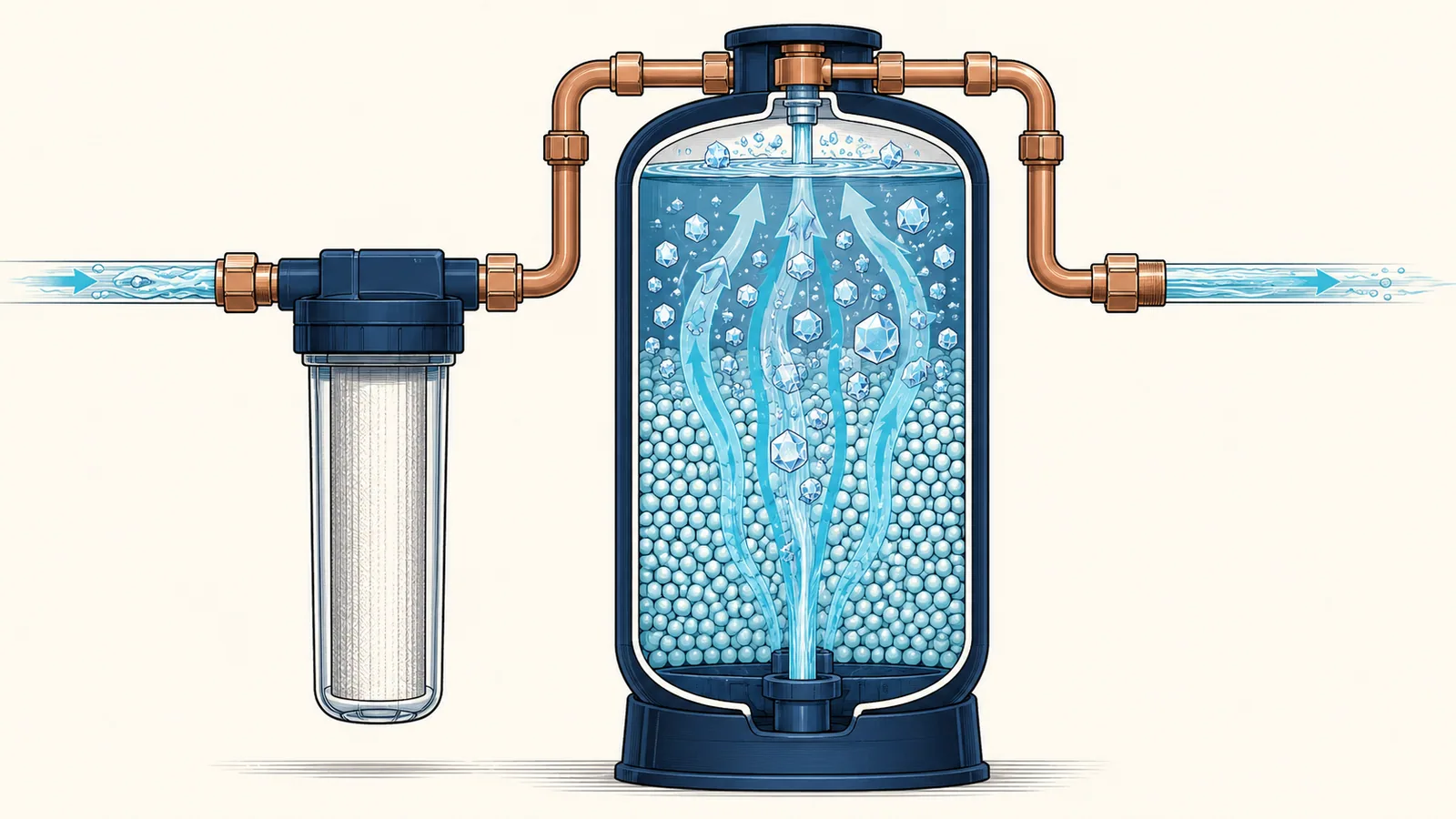
It changes the shape of hardness minerals so they stop sticking. The FS1 uses TAC, template assisted crystallization. Water flows upward through a media bed whose surface acts as a seeding template: dissolved calcium and magnesium form microscopic crystals on the media, detach, and flow on through your plumbing. Crystallized minerals are far less able to bond to hot surfaces, so scale buildup in water heaters, pipes and fixtures drops sharply. SpringWell claims up to 95% scale prevention, a manufacturer figure that matches what TAC systems generally advertise.
What you hear
A salt-free softener softens your water without the salt.
What the numbers say
Nothing is removed, so nothing gets softer. Measured hardness in grains per gallon and TDS are unchanged after a TAC conditioner. SpringWell's own product page states the FutureSoft will not make water feel slick or stop spotting the way salt-based softening does.
Soap still behaves like hard-water soap, and dried droplets can still leave calcium marks on glass. That trade-off is the entire salt-based versus salt-free decision, and we compare the two technologies head-to-head in salt-based vs salt-free water softeners. If you are still working out which symptom you are actually trying to fix, our hard water hub explains the damage mechanisms and how to fix hard water ranks every option from $20 to $1,500.
What Are the FutureSoft FS1 Specs?#
Compact tank, high flow, an enormous hardness ceiling and one strict chemistry list. From SpringWell's product pages, read Aug 28, 2026:
| Spec | FS1 | FS4 | FS+ |
|---|---|---|---|
| Bathrooms | 1-3 | 4-6 | 7+ |
| Flow rate | 12 GPM | 15 GPM | 20 GPM |
| Tank | 6" x 35" | 9" x 48" | 13" x 54" |
| Max hardness | 81 GPG | 81 GPG | 81 GPG |
| Operation | Upflow, no electricity, no drain, no backwash | same | same |
Three specs deserve a comment. The 81 GPG maximum hardness rating is enormous (the USGS "very hard" classification starts at about 10.5 GPG), so raw hardness will almost never disqualify you, whatever your test strip reads. The 12 GPM flow on the FS1 comfortably covers a 1-3 bathroom home. And the 6" x 35" tank is genuinely small: no brine tank, no drain line, no outlet needed, which makes this one of the few whole-house units that fits a tight utility closet.
The FS1 listed at $1,785 on Sep 12, 2026, with the FutureSoft range spanning $1,785 to $2,320.50 by size, under the site's standing discount banner, 15% on our Sep 12, 2026 reading. SpringWell's own review widget showed 4.5/5 across 241 reviews the same day.
What Water Conditions Does It Require?#
Zeros, not "low". This is the fine print that generates disappointed one-star reviews elsewhere, so read it before buying. The FutureSoft spec sheet requires:
- 0 ppm iron
- 0 ppm manganese
- 0 ppm copper
- 0 ppm hydrogen sulfide (H2S)
- No oil
- Maximum 3 ppm free chlorine
- pH between 7.0 and 9.5
Iron or manganese coats TAC media and stops the crystallization reaction, and water outside these limits also jeopardizes warranty coverage.
Confirm your water qualifies before ordering
8 itemsIn practice this makes the FutureSoft a city-water product. If you are on a well, start with our guide to iron filters for well water and treat the conditioner as step two, or skip TAC entirely for a salt-based softener rated for iron; the well water hub covers the whole treatment sequence.
Is the FutureSoft Hard to Install?#
Easier than almost any other whole-house unit, because there is nothing to hook up beyond the plumbing. The FS1 runs upflow with no drain line, no backwash cycle and no electrical connection, so installation comes down to two cuts into the main line and a mounting spot for a 6" x 35" tank. There is no brine tank to place and no outlet needed, which is why this system fits utility closets and crawl spaces that a salt-based softener cannot.
SpringWell publishes free downloadable installation guides on the product page and keeps an official How-To Install playlist on its YouTube channel that covers the FutureSoft line. If you have never cut into a main water line, a plumber handles this in a short visit; there is no softener loop or drain routing to add, which puts it at the cheap end of the range in our installation cost guide.
How Much Does the FutureSoft Cost to Own?#
$1,785 upfront, and after that almost nothing. This is the FutureSoft's strongest argument against its salt-based sibling.
$0 / yr
Our water conditioner cost breakdown puts full numbers on that comparison across brands, including the salt-based side of the same decade.
The same return rules as every SpringWell system apply: 6-month money-back on uninstalled units only, a 10% restocking fee that can reach 25%, and return shipping at your cost. Treat the purchase as final once installed.
How Does the FutureSoft Compare to Other Salt-Free Conditioners?#
Two brand-name rivals frame the FS1's price; all prices here were read Aug 28, 2026.
The Aquasana SimplySoft costs $879 under the half-off banner running on Sep 21, 2026 and $1,758 when that banner is down, so between half the FS1 and about the same, using SCM (Scale Control Media) rather than TAC, and its fine print is honest in exactly the same way: it does not reduce measured hardness either. What you give up for the savings is flow and support. The SimplySoft is rated 7.0 GPM nominal against the FS1's 12 GPM, and Aquasana's Trustpilot score sat at 1.5/5 across 170 reviews the day we checked, a service record we document in full in our Aquasana Rhino review.
The Kind E-3000, at $2,094.10, takes a different shape: a whole-house cartridge filter and a TAC conditioner in one combo, built by the ex-Pelican Water team. It wins on maintenance simplicity, with yearly cartridge swaps the maker puts at about 15 minutes, but that same design means a recurring cartridge bill every year, where the FS1's media bed runs 3-5+ years with nothing to buy in between.
Our short version: the FS1 is the flow and warranty pick, the SimplySoft is the budget pick, and the E-3000 is the pick when you want chlorine filtration bundled into the same footprint. The full ranking, including Crystal Quest, lives in our roundup of the best salt-free water softeners.
FutureSoft or a Real Softener: Which Should You Buy?#
Answer one question honestly: do you want the feel of soft water, or do you want to protect the plumbing?
FutureSoft FS1, conditioner
- $1,785, removes 0 grains of hardness
- Prevents up to 95% of scale, manufacturer claim
- No salt, no drain, no power, no backwash
- Requires 0 ppm iron and manganese
- Media 3-5+ years, about $0 a year to run
SpringWell SS1, salt softener
- $1,606.50, removes 32,000 grains of hardness
- Slick water, easier lather, spot-free glassware
- Needs a drain, an outlet and salt refills
- Tolerates low iron; wells still want pre-treatment
- $60 to $190 a year in salt and regeneration water
Bottom line
Want the feel and finish of soft water, only ion exchange delivers it, and the SS1 costs less than the FS1. Want scale protection with zero upkeep, no drain access or a brine discharge restriction, the FutureSoft is the better-engineered answer.
If soft water is the goal, read our SpringWell water softener review; the SS1 costs less than the FS1 and actually removes hardness, and the full salt-based field is ranked in our water softeners guide. If protecting the house is the goal, confirm hardness is your real problem first with our guide to signs of hard water.
Ion exchange, step by step
- Hardness arrivesCalcium and magnesium are the two ions the industry calls hardness. They are dissolved, not suspended, so no filter screen can catch them.
- The resin bedPolymer beads whose exchange sites are pre-loaded with sodium. The resin grips calcium and magnesium far harder than it grips sodium, and that difference in affinity is the whole trick.
- The trade, one for twoEvery calcium ion that sticks releases two sodium ions, because one Ca2+ carries the charge of two Na+. Nothing is strained out: hardness is swapped, ion for ion.
- Until the beads fill upSites are used up from the inlet end toward the outlet. When that front reaches the outlet, hardness starts to break through and the control valve runs a regeneration.
The swap runs both ways, which is why a bed saturated with hardness can be recharged with nothing more concentrated than salt water. A softener does not consume its resin, it rents it out and takes it back every few days.
What we like
- No salt, no electricity, no drain, no wastewater
- Prevents up to 95% of scale (manufacturer claim)
- Media lasts 3 to 5+ years with no consumables
- Lifetime warranty on tank and FutureSoft media
What to watch
- Does not soften: TDS and measured hardness are unchanged, it is a conditioner, not a softener
- Won't make water feel slick or stop spotting the way salt does (SpringWell's own wording)
- Strict feed-water limits: 0 ppm iron, 0 ppm manganese, 0 ppm copper, 0 ppm H2S, max 3 ppm free chlorine, pH 7.0 to 9.5
- Unusable on most well water without pretreatment
Who Should Buy the SpringWell FutureSoft?#
City-water homes with 1-3 bathrooms (FS1) that want scale protection without salt, drain lines or electricity, and that accept spotting and hard-water feel as the price of zero upkeep. HOA and septic situations where brine discharge is restricted are the textbook case. It is the wrong buy for anyone expecting soft-feeling water, and for most well owners unless the water is pre-treated to its strict 0 ppm limits. Within the salt-free category it is our top pick at this size.
One combo worth knowing before checkout: if your city water is also chlorinated, SpringWell's CSF1 pairs the CF whole house filter with the FutureSoft for $2,320.50 (as of Sep 12, 2026), about $680 less than buying the two separately. The filter half of that bundle gets its own examination in our SpringWell whole house filter review.
SpringWell
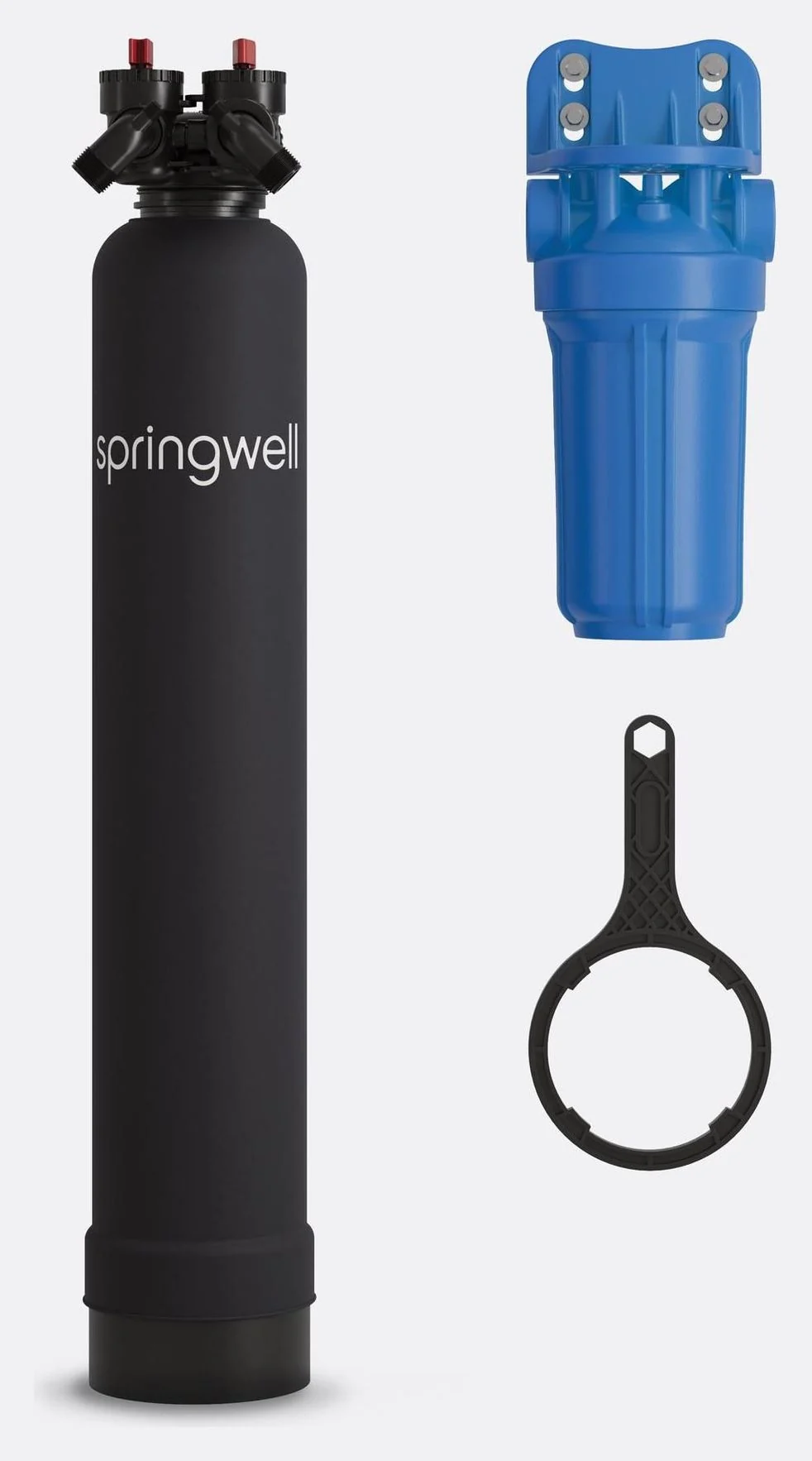
SpringWell FutureSoft FS1 Salt-Free Water Conditioner
Best for: City-water homes that want scale prevention without salt, a drain or electricity, not for anyone expecting soft-feeling water
- Technology
- TAC (Template Assisted Crystallization)
- Flow rate
- 12 GPM
- Bathrooms
- 1 to 3
- Tank
- 6" × 35"
- Max hardness
- 81 GPG
- Scale prevention
- Up to 95% (manufacturer claim)
Still unsure whether you need conditioning, softening or filtration? Our 60-second system matcher asks six questions and points you at the right category first.
Frequently asked questions
Does the SpringWell FutureSoft really work?
For scale prevention, yes: its TAC media crystallizes hardness minerals so they pass through instead of sticking, and SpringWell claims up to 95% scale prevention. For softening, no: measured hardness and TDS are unchanged, water will not feel slick, and spotting can still occur. SpringWell's own product page says it will not make water feel the way salt softening does.
Is the FutureSoft a water softener?
Technically no. It is a salt-free water conditioner. A softener removes calcium and magnesium through ion exchange; the FutureSoft leaves them in the water but converts them into crystals that are less able to form scale on pipes, heaters and fixtures. If a test strip reads 15 GPG before the FutureSoft, it will read about 15 GPG after.
Can I use the SpringWell FutureSoft on well water?
Usually not without pre-treatment. The spec sheet requires 0 ppm iron, 0 ppm manganese, 0 ppm copper, 0 ppm hydrogen sulfide, no oil, a maximum of 3 ppm free chlorine, and pH between 7.0 and 9.5. Most private wells fail at least one of those limits, so plan on an iron filter upstream or choose a salt-based softener rated for your well chemistry.
How long does FutureSoft media last?
SpringWell rates the FutureSoft media at 3-5+ years, and the tank and media carry a lifetime warranty. There is no salt, no electricity, no drain and no backwash in normal operation, so the recurring cost between media changes is essentially zero.
Keep reading
Not sure what you need?
Answer 5 questions, get the right system for your water.
City or well, budget, household size, our quiz matches your answers against every system we track.