Best Salt-Free Water Softener 2026: Top 5 Systems That Actually Reduce Scale
The best salt free water softener picks for 2026, ranked honestly: SpringWell FutureSoft, Aquasana SimplySoft and Kind E-3000 compared from $879 to $2,094.10.
By Home Water Lab TeamUpdated Prices verified Sep 12, 2026
This page contains affiliate links; buying through them costs you nothing extra.
Every product on this page is a scale conditioner sold under the words "salt-free softener," and none of them softens water. Say that out loud before shopping, because it is the difference between a satisfied owner and a return: your hardness number will read exactly the same after installation. What these systems do deliver is scale prevention with no salt bags, no drain line and no electricity, and the best of them do it for years at almost zero running cost.
The short answer
as of Aug 28, 2026What is the best salt-free water softener?
The SpringWell FutureSoft FS1 at $1,785, on flow rate, tolerance and warranty: 12 GPM of service flow, rated to 81 grains per gallon of hardness, TAC media that runs 3 to 5+ years with no consumables, and a lifetime warranty on tank and media. The Aquasana SimplySoft, $879 under the half-off banner running on Sep 21, 2026 and $1,758 at list, is the budget pick for homes up to about two bathrooms, and the Kind E-3000 at $2,094.10 bundles filtration with conditioning for salt-restricted households. All three are conditioners: independent WateReuse Research Foundation testing put template assisted crystallization above 88% scale reduction, but measured hardness does not move.
The chemistry behind that distinction, and the scam-or-legit verdict on the category as a whole, is on our salt-free water softener hub. This page is the shortlist that survives it.
Key takeaways
- TAC reduced scale by more than 88% in WateReuse Research Foundation testing led by Arizona State University; plug-in electromagnetic descalers managed around 50%.
- No conditioner changes measured hardness or TDS, which both SpringWell and Aquasana state in their own copy.
- The FS1 is rated to 81 gpg and 12 GPM; the SimplySoft is 7.0 GPM nominal, which caps it near two bathrooms.
- Feed-water limits are the real dealbreaker: 0 ppm iron, manganese, copper and hydrogen sulfide on the FutureSoft.
- Prices ran $976.46 to $1,785 at our Sep 12, 2026 readings, with the FutureSoft line topping out at $2,320.50 on the largest size.
Do Salt-Free Water Softeners Actually Work?#
Yes, for the one job they actually perform, and the evidence is independent rather than promotional. TAC (Template Assisted Crystallization) converts dissolved calcium and magnesium into microscopic crystals that stay suspended in the water instead of sticking to pipes, heating elements and fixtures. SpringWell claims up to 95 percent scale prevention for its TAC media, and Aquasana's SCM (Scale Control Media) makes the same style of claim.
What you hear
Salt-free water softeners soften water without the salt.
What the numbers say
They crystallize hardness so it slides through instead of sticking. The calcium and magnesium stay in the water, so a test strip reads the same grains per gallon at the inlet and the outlet, and soap behaves exactly as it did before.
That is not a technicality. Soap scum, stiff laundry and the slick-water feel are hardness problems, not scale problems, and they survive a conditioner untouched. SpringWell's own wording concedes the FutureSoft will not make water feel slick or stop spotting the way salt does, which is a rare piece of honesty in this category and the reason it tops this list.
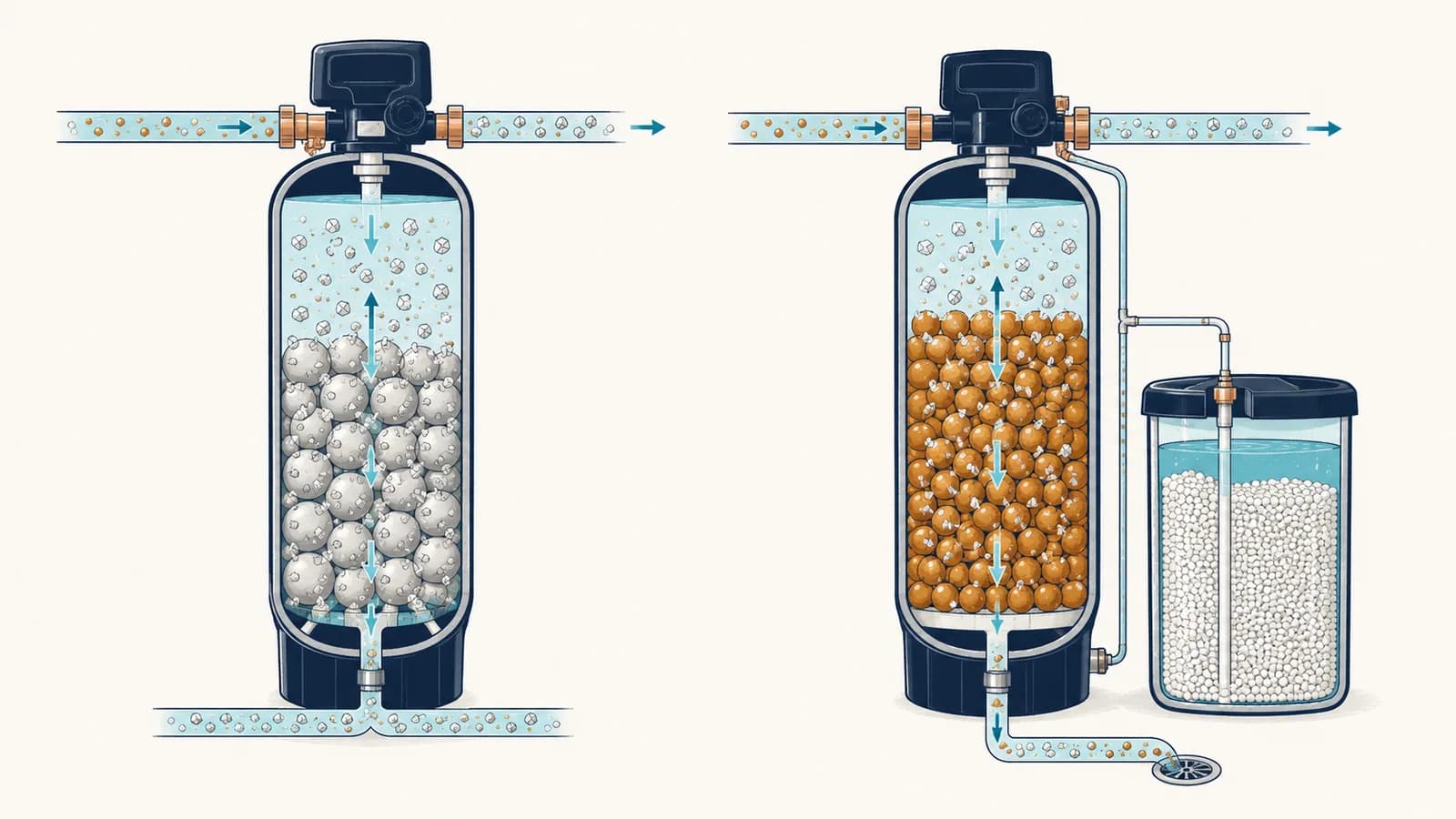
Ion exchange, step by step
- Hardness arrivesCalcium and magnesium are the two ions the industry calls hardness. They are dissolved, not suspended, so no filter screen can catch them.
- The resin bedPolymer beads whose exchange sites are pre-loaded with sodium. The resin grips calcium and magnesium far harder than it grips sodium, and that difference in affinity is the whole trick.
- The trade, one for twoEvery calcium ion that sticks releases two sodium ions, because one Ca2+ carries the charge of two Na+. Nothing is strained out: hardness is swapped, ion for ion.
- Until the beads fill upSites are used up from the inlet end toward the outlet. When that front reaches the outlet, hardness starts to break through and the control valve runs a regeneration.
The swap runs both ways, which is why a bed saturated with hardness can be recharged with nothing more concentrated than salt water. A softener does not consume its resin, it rents it out and takes it back every few days.
If that trade suits you, here are the five worth buying. If it does not, the head-to-head reasoning is laid out in salt-based against salt-free, and the ion-exchange field is ranked in our water softener buyer's guide.
How Did We Pick These Five?#
Every price on this page was read on the date shown, not copied from a press release. We read the warranty documents and spec-sheet limits in full, we name the defects, and we rank conditioners as conditioners: on scale prevention credibility, feed-water limits, media life, flow rate and total cost of ownership. No system was ranked on a softness promise it cannot keep. The rules are published on our how we rank.
Which Salt-Free Water Softeners Are Worth Buying in 2026?#
1. SpringWell FutureSoft FS1: best overall#
SpringWell
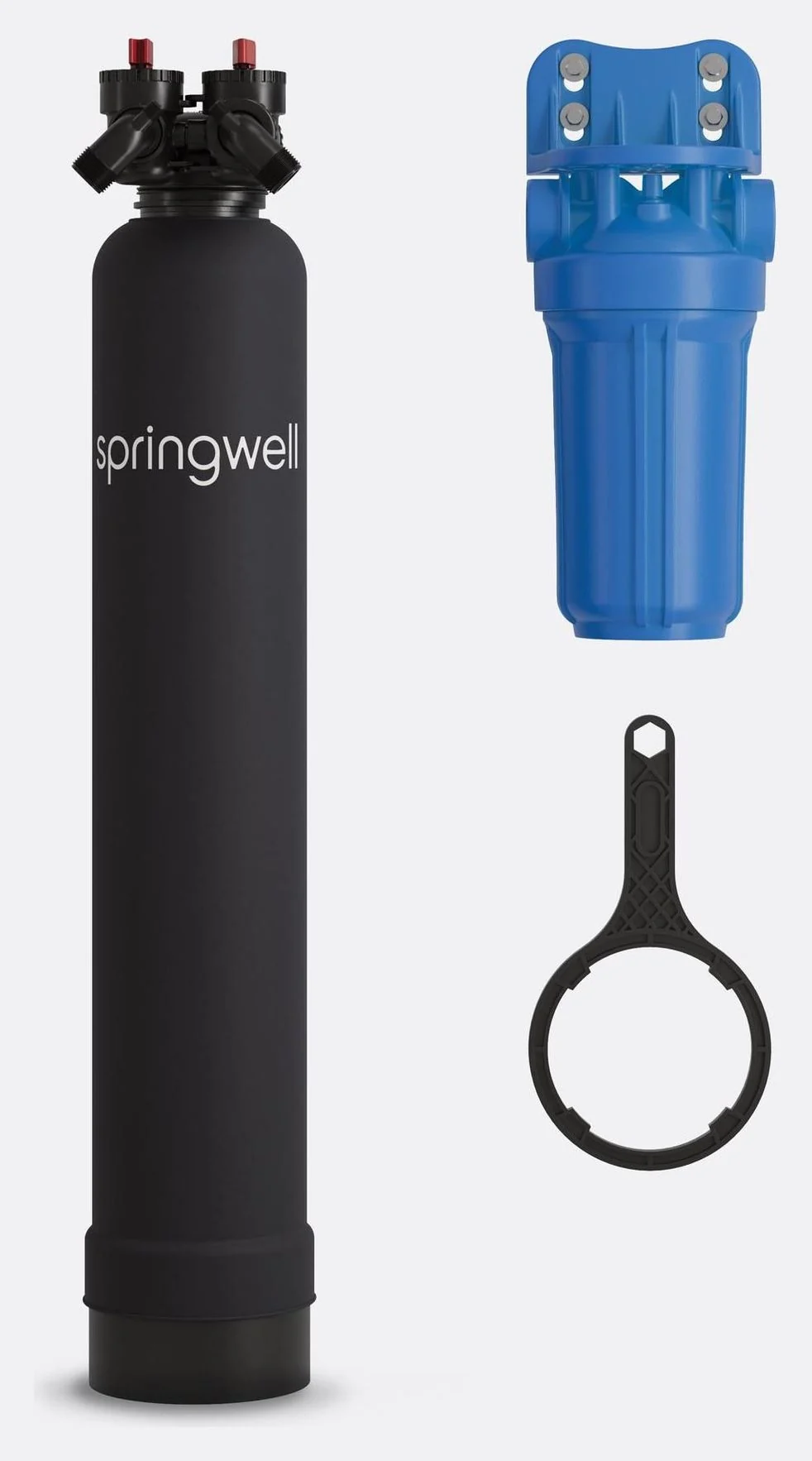
SpringWell FutureSoft FS1 Salt-Free Water Conditioner
Best for: City-water homes that want scale prevention without salt, a drain or electricity, not for anyone expecting soft-feeling water
- Technology
- TAC (Template Assisted Crystallization)
- Flow rate
- 12 GPM
- Bathrooms
- 1 to 3
- Tank
- 6" × 35"
- Max hardness
- 81 GPG
- Scale prevention
- Up to 95% (manufacturer claim)
The FS1 wins on the numbers that matter for a conditioner. Its 12 GPM service flow is the strongest of the three main picks, it is rated to handle up to 81 grains per gallon of hardness, and the TAC media runs 3 to 5+ years with no electricity, no drain, no backwash and no consumables. SpringWell backs the tank and the media with a lifetime warranty, and prices the FutureSoft range from $1,785 to $2,320.50 depending on size (category page, as of Sep 12, 2026).
The honest caveats: at $1,785 it is double the price of the SimplySoft, and its feed-water limits are strict. Our full FutureSoft teardown digs into the media chemistry and the warranty fine print.
What we like
- No salt, no electricity, no drain, no wastewater
- Prevents up to 95% of scale (manufacturer claim)
- Media lasts 3 to 5+ years with no consumables
- Lifetime warranty on tank and FutureSoft media
What to watch
- Does not soften: TDS and measured hardness are unchanged, it is a conditioner, not a softener
- Won't make water feel slick or stop spotting the way salt does (SpringWell's own wording)
- Strict feed-water limits: 0 ppm iron, 0 ppm manganese, 0 ppm copper, 0 ppm H2S, max 3 ppm free chlorine, pH 7.0 to 9.5
- Unusable on most well water without pretreatment
2. Aquasana SimplySoft: best budget#
Aquasana
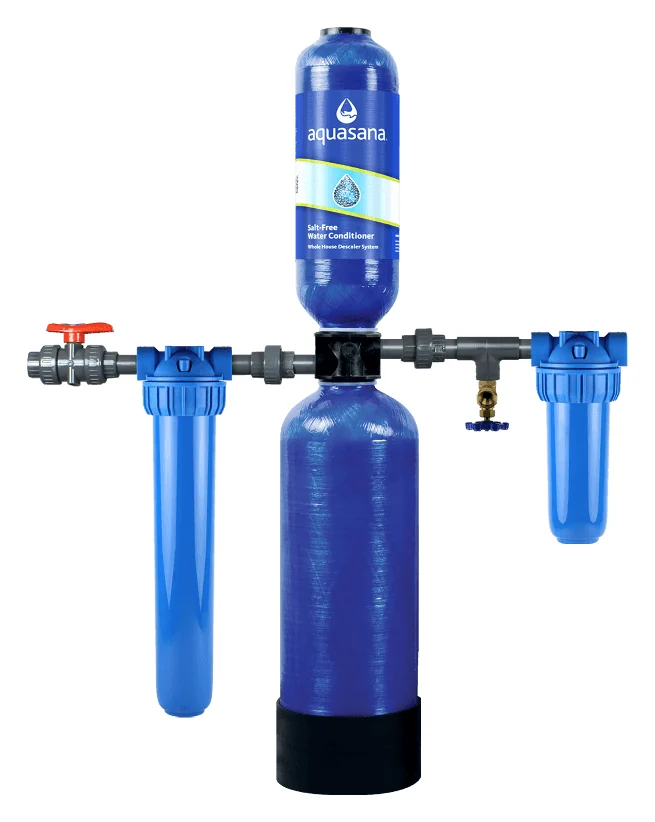
Aquasana SimplySoft Salt-Free Water Conditioner
Best for: City-water homes that want low-cost scale control without salt, and understand it is not a softener
- Technology
- SCM (Scale Control Media)
- Capacity
- 1,000,000 gallons / 10 years
- Flow rate
- 7.0 GPM nominal / 15.3 GPM peak
- Operation
- No salt, no electricity, no drain, no backflush
At $879 on Sep 21, 2026, half off a $1,758 list price, the SimplySoft is the cheapest brand-name whole-house conditioner on the market. Treat both numbers as live: Aquasana withdrew that banner on Sep 12 and restored it nine days later, so read the page before you commit. The value case is real: SCM media rated for 1,000,000 gallons or 10 years, zero active maintenance, a 10-year warranty plus a 90-day satisfaction guarantee, and A.O. Smith ownership behind the brand.
The compromises are equally real. Nominal flow is 7.0 GPM, which gets tight beyond roughly two bathrooms. Aquasana's own fine print confirms it does not reduce hardness, and calcium spotting on glass can continue. And the brand's service reputation is the worst in this comparison: Trustpilot sat at 1.5/5 across 170 reviews as of Aug 28, 2026, a record we document in detail in our Aquasana Rhino review. Buy it for the price and the set-and-forget design, not for the after-sales experience.
What we like
- Cheapest brand-name whole-house scale conditioner ($879 as of Sep 21, 2026, half off a $1,758 list)
- Zero active maintenance: no salt, power, drain or backflush
- 10-year warranty + 90-day satisfaction guarantee
- Pairs as a +$774 add-on to the Rhino for a full city-water stack
What to watch
- Does not reduce hardness, Aquasana's own fine print; measured TDS/GPG is unchanged
- Calcium spotting on glass and fixtures can still occur
- Nominal 7 GPM flow is tight for larger homes
- Same customer-service reputation issues as the rest of the brand (Trustpilot 1.5/5, Aug 28, 2026)
3. Kind E-3000: best filter and conditioner combo#
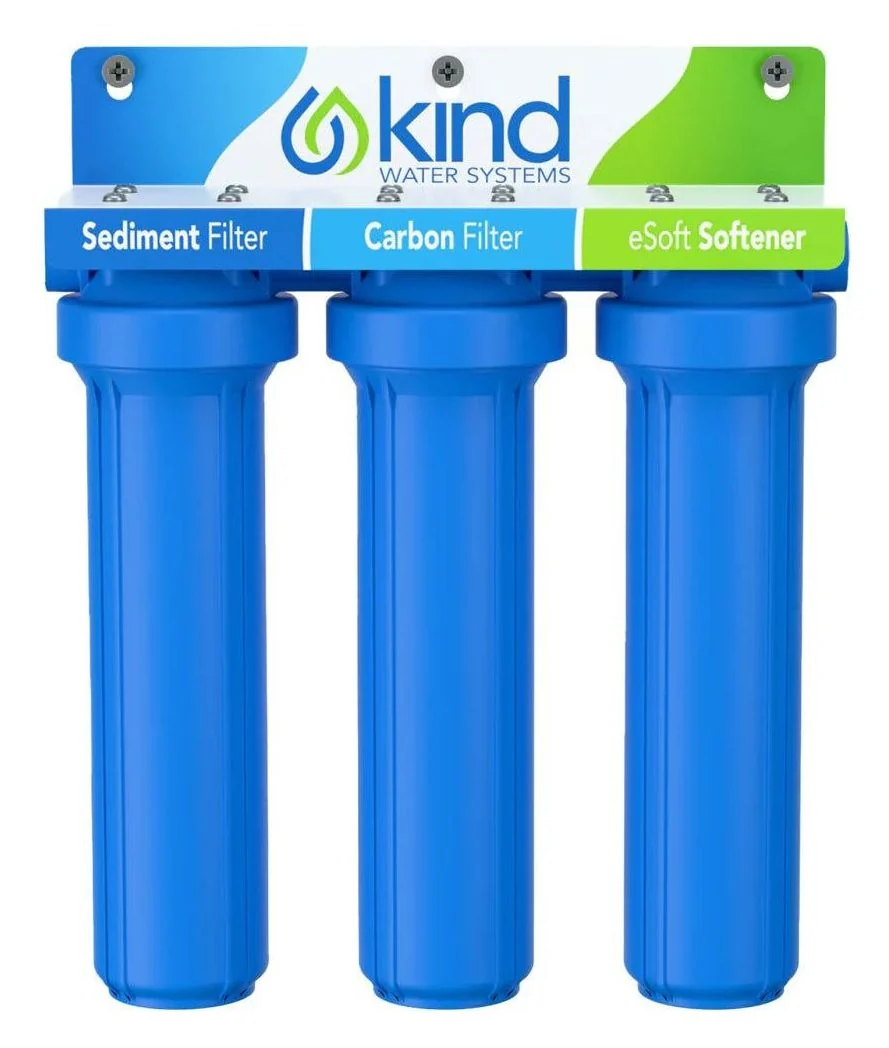
Kind Water Systems
Kind E-3000 Whole House Salt-Free Softener + Filter Combo
Best for: HOA/eco-constrained homes (salt-softener bans in CA/TX) that want filtration plus scale control in one pass
- Type
- Whole-house filter + TAC salt-free conditioner combo (best seller)
- Technology
- TAC, no electricity, no wastewater, no salt
- Maintenance
- Yearly cartridge replacement (~15 minutes)
The E-3000 is the pick if you want whole-house filtration and scale control in a single install. Built by ex-Pelican engineers, it pairs carbon filtration with a TAC conditioner stage, needs no salt, electricity or wastewater line, and carries a limited lifetime warranty with NSF-certified components. At $2,094.10 (as of Sep 12, 2026, with no discount showing) it lands close to the FS1 while also replacing a separate filter purchase, which is why it is the natural answer for HOA and salt-ban situations in states like California and Texas.
The trade is recurring cost: cartridges are replaced roughly yearly, listed at $124.22 a year on Kind's own E-100R and E-200R subscription and estimated at $120 to $300 a year by WaterFilterGuru, so the 10-year math trails tank-media systems. The brand is also young (founded around 2022-2023) with a short service track record, and its own spec sheet caps the unit at 75 gpg. If a combo is your direction, compare the full field in our filter and conditioner combo rankings.
What we like
- Filtration + scale conditioning in a single install (an afternoon, per the maker)
- No salt, electricity or wastewater, HOA and septic friendly
- Lifetime (limited) warranty; NSF-certified components
- Ex-Pelican engineering pedigree
What to watch
- TAC conditions, it does not soften, measured hardness is unchanged
- Not appropriate for very hard water buyers expecting soft-feel results (25+ GPG)
- Yearly cartridge cost undercuts the long-term math vs 10-year media tanks
- Weak fit for iron/sulfur well water
4. SpringWell FutureSoft FS4: best for large homes#
Same TAC media and 81 gpg rating as the FS1, scaled up: 15 GPM of service flow for homes with 4 to 6 bathrooms, in a 9 by 48 inch tank. If the FS1's 12 GPM is marginal for your household, this is the correct answer rather than accepting pressure drop at peak use. SpringWell's FutureSoft range pricing of $1,785 to $2,320.50 (as of Sep 12, 2026) puts the FS4 between the FS1 and the top of the range; confirm the live price on the size you configure. Every FS1 caveat applies unchanged, including the city-water-only feed limits.
5. Aquasana EQ-SS20 SimplySoft: best compact pick for tankless water heaters#
A small-format SimplySoft built for a single job: protecting a tankless water heater from scale, the failure mode that kills those units. Third-party retailers listed it around $299 at our last check, but we have not verified that price on aquasana.com, so treat it as indicative and confirm before buying. Same SCM conditioning approach as its big sibling, same limitation: it protects the heater, it does not soften the house.
How Do the Top Three Compare Head to Head?#
Flow rate and feed-water tolerance separate these three far more than price does. The FS1 moves the most water and takes the hardest water; the SimplySoft is half the money and half the flow; the E-3000 adds filtration and takes on a yearly cartridge habit.
For most buyers the real decision is binary, between the two pure conditioners:
SpringWell FutureSoft FS1, $1,785
- 12 GPM service flow, rated to 81 grains per gallon
- Media rated 3 to 5+ years with no consumables
- Lifetime warranty on tank and media
- Twice the price of the SimplySoft
Aquasana SimplySoft, $879 on sale
- 7.0 GPM nominal, which gets tight past about two bathrooms
- SCM media rated 1,000,000 gallons or 10 years
- 10-year warranty plus a 90-day satisfaction guarantee
- Trustpilot 1.5/5 across 170 reviews (Aug 28, 2026)
Bottom line
Three bathrooms or more, or hardness in the twenties: pay for the FS1. Two bathrooms and a firm budget: the SimplySoft does the same chemistry for half the money.
SpringWell
FutureSoft FS1
- Technology
- TAC (Template Assisted Crystallization)
- Flow rate
- 12 GPM
- Operation
- Upflow, no electricity, no drain, no backwash
- Media life
- 3 to 5+ years
- Maintenance
- N/A
Aquasana
SimplySoft
- Technology
- SCM (Scale Control Media)
- Flow rate
- 7.0 GPM nominal / 15.3 GPM peak
- Operation
- No salt, no electricity, no drain, no backflush
- Media life
- N/A
- Maintenance
- N/A
Kind Water Systems
Kind E-3000
- Technology
- TAC, no electricity, no wastewater, no salt
- Flow rate
- N/A
- Operation
- N/A
- Media life
- N/A
- Maintenance
- Yearly cartridge replacement (~15 minutes)
Prices checked Sep 12, 2026.
What Will a Salt-Free Conditioner Never Do?#
Buy any of these systems with the full list in view, because no amount of marketing changes it:
- It will not lower your hardness number. Test strips read the same before and after. TDS is unchanged.
- It will not fix soap and laundry problems. Lathering, soap scum and stiff towels are caused by the minerals that remain in the water, and the signs of hard water that survive a conditioner are exactly those.
- It will not guarantee spotless glass. Evaporation still leaves minerals behind; both SpringWell and Aquasana admit spotting can continue.
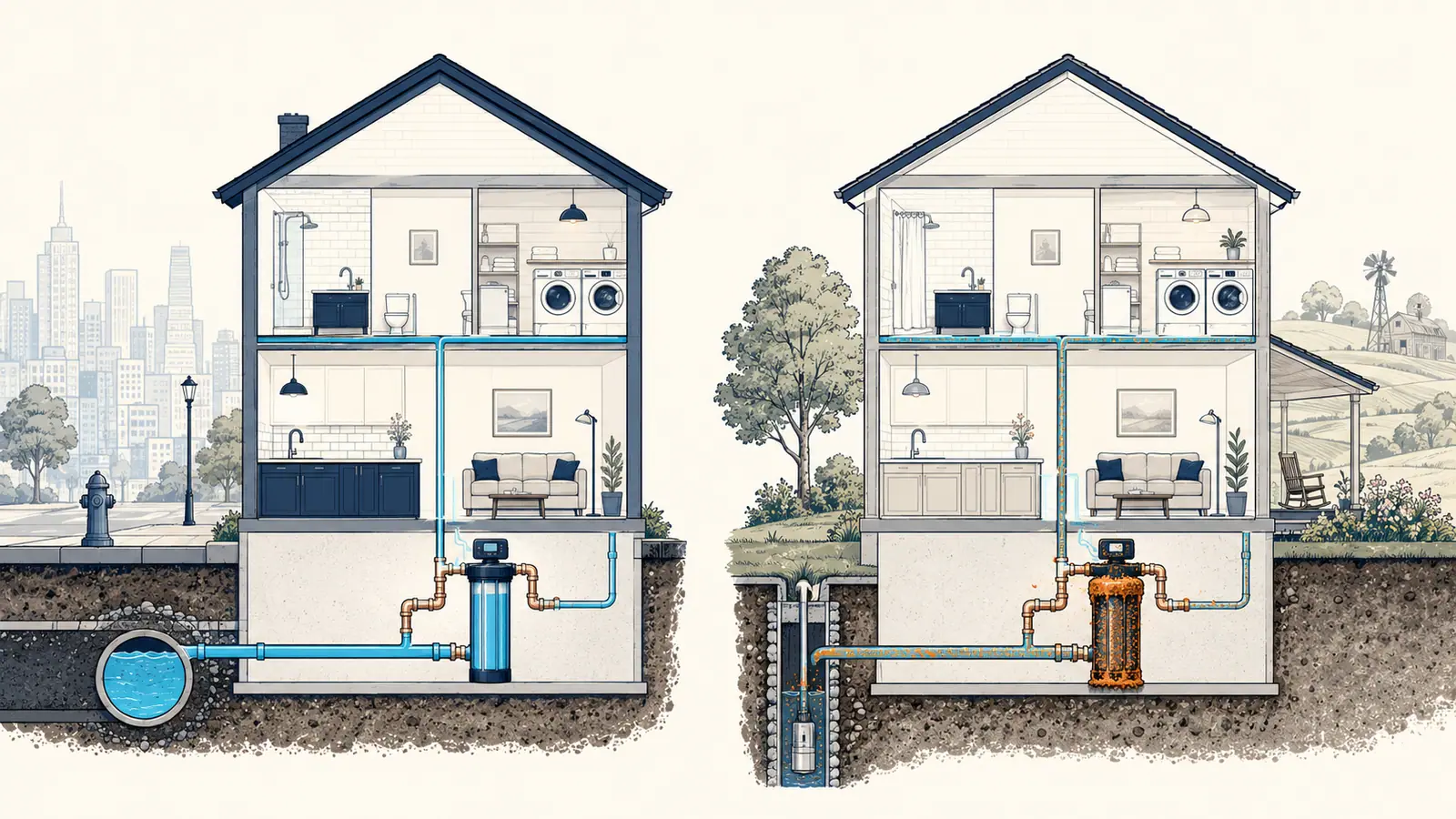
- It will not survive most well water. Iron, manganese and sulfide limits on TAC media are effectively zero. Wells need pretreatment first.
- It will not soften for a 25+ gpg household. At extreme hardness, buyers expecting a transformation end up returning conditioners. That is a salt-based job.
If any item on that list is the problem you are actually trying to solve, you want ion exchange, and the honest comparison of every route from cheap fixes to full systems is in how to fix hard water. Conditioner pricing across the whole market, including the units we did not rank, is broken down in our water conditioner cost guide; the ion-exchange side is priced in the softener cost breakdown.
Are You a Candidate for Salt-Free?#
Six checks, and the honest answer is that failing any of the first three sends you to a salt softener instead.
Before you buy a conditioner
6 itemsDo not guess your hardness for that fourth line: our state-by-state hardness data gives you the ballpark, and a strip at the tap confirms it.
Which Salt-Free System Should You Buy?#
Scale protection for a typical city-water home: the FS1, on flow rate, media life and warranty. Tight budget and two bathrooms or fewer: the SimplySoft at half the price, eyes open on service. One install for filtration plus scale control, or an HOA that bans salt: the Kind E-3000. Big house: FS4. Tankless heater only: EQ-SS20.
Not certain which camp you are in? The two-minute water quiz asks the six questions above and hands back a shortlist.
Frequently asked questions
Do salt-free water softeners really reduce hardness?
No. A salt-free system is a conditioner: TAC and SCM media crystallize hardness minerals so less scale sticks to pipes and heaters, but the calcium and magnesium stay in the water. Measured hardness and TDS are unchanged before and after. Only salt-based ion exchange actually removes hardness.
Can you use a salt-free water softener on well water?
Usually not without pretreatment. SpringWell's FutureSoft spec sheet requires 0 ppm iron, 0 ppm manganese, 0 ppm copper and 0 ppm hydrogen sulfide, with pH between 7.0 and 9.5. Most untreated wells fail at least one of those limits, and the media fouls if you ignore them.
How long does salt-free conditioner media last?
It depends on the design. SpringWell rates FutureSoft media at 3 to 5+ years with no consumables. Aquasana rates the SimplySoft tank at 1,000,000 gallons or 10 years. Kind's E-3000 uses cartridges replaced roughly yearly, listed at $124.22 a year on Kind's own subscription at our August 2026 reading.
Is a salt-free softener worth it over a salt-based one?
It is worth it if scale prevention is your only goal, your area restricts salt softeners, or you refuse salt bags and drain lines. If you want soft-feeling water, better soap lathering and a lower measured hardness number, a salt-based softener is the only technology that delivers it.
Keep reading
Not sure what you need?
Answer 5 questions, get the right system for your water.
City or well, budget, household size, our quiz matches your answers against every system we track.