Does Hard Water Cause Hair Loss? What the Research Actually Says
No study shows hard water makes hair fall out. One found hard-water hair 8% weaker, one found no difference, one found mineral residue. What that means for you.
By Home Water Lab TeamUpdated Prices verified Oct 7, 2026
This page contains affiliate links; buying through them costs you nothing extra.
There is no evidence that hard water makes your hair fall out. The few studies on the question tested strands already cut from the head, and they disagree: one found no change, one found hard-water hair about 8% weaker, one found extra mineral deposits but no visible damage. What hard water plausibly does is leave residue and make strands easier to snap, which is a different thing from losing hair at the root. Hard water is a nuisance worth fixing for many reasons, all laid out in our overview of hard water, from scale to soap, but regrowing hair is not one of them.
The short answer
as of Oct 19, 2026Can hard water cause hair loss?
Not according to any study we could find. A 2013 study found no difference in hair strength after 30 days in hard water, a 2018 study found hair soaked in very hard water for three months about 8% weaker and more likely to break, and a 2017 study found more magnesium on the hair shaft but no visible damage. All three tested cut hair, and none measured hair loss. The American Academy of Dermatology's list of 18 causes of hair loss does not include hard water.
Key takeaways
- Srinivasan, 2013: 15 women's hair, 212.5 ppm hard water for 30 days, no significant change in strength or elasticity.
- Luqman, 2018: 70 men's hair, 486.7 ppm for 3 months, about 8% weaker than untreated hair (our arithmetic on the means).
- Alahmmed, 2017: 20 volunteers, more magnesium on the shaft after 3 weeks, no significant visible damage.
- None of the three measured hair loss: all tested strands already cut from the head.
- The AAD's 18 causes of hair loss leave out hard water; hereditary hair loss is the most common cause worldwide.
Does Hard Water Cause Hair Loss? What the Studies Measured#
They measured strength, stretch and surface residue on cut hair, never hair falling out. That is the whole evidence base, and it is small: three lab studies, 15 to 70 people each, published in dermatology and trichology journals between 2013 and 2018.
Three studies, one gap
- Srinivasan 2013no differenceInternational Journal of Trichology. Hair soaked 10 minutes on alternate days in hard or distilled water. Tensile strength 105.28 against 103.66 (P = 0.858), elasticity 37.06 against 36.84: no significant difference.
- Luqman 20188% weakerInternational Journal of Trichology. Tap water from the hardest of 10 districts tested. Mean tensile strength 234.16 for hard water against 255.49 untreated (P = 0.001); deionized water made no difference. The authors conclude hard water increases breakage.
- Alahmmed 2017more residueIndian Journal of Dermatology, Venereology and Leprology. Electron microscopy found more magnesium on hard-water hair (P = 0.001) but no significant difference in calcium or in visible surface damage.
- Hair lossnot measuredAll three studies tested hair that had already been cut from the head. None counted hairs shed or followed anyone's scalp, so none of them can show that hard water makes hair fall out.
Hardness as calcium carbonate, as each paper reports it. From the three papers, read Oct 19, 2026; the 8% is our arithmetic on Luqman's group means. Lab tests on cut hair, small samples, no follow-up of real scalps.
The 2013 study, by Srinivasan and colleagues in the International Journal of Trichology, split hair samples from 15 women and soaked half in hard water at 212.5 ppm, half in distilled water, 10 minutes every other day for a month. Tensile strength came out at 105.28 against 103.66, a difference the authors found was not significant (P = 0.858), and elasticity matched too. Their conclusion was that hardness "does not interfere with the tensile strength and elasticity of hair," with the caveat that harder water or longer exposure might differ.
The 2018 study, by Luqman and colleagues in the same journal, did go harder and longer. Hair from 70 men soaked in local tap water at 486.7 mg/L for three months broke at a mean of 234.16 against 255.49 for untreated hair (P = 0.001), while deionized water made no difference. That is about 8% weaker by our arithmetic, and the authors concluded that hard water "decreases strength of hair and thus increases breakage."
8%
The 2017 study, by Alahmmed and colleagues in the Indian Journal of Dermatology, Venereology and Leprology, looked at the surface under an electron microscope after three weeks of washing in tap water at roughly 287 to 533 ppm. It found significantly more magnesium on the hard-water samples (P = 0.001), no significant difference in calcium, and no significant difference in visible damage. The authors' own summary: hard water "may be associated with increased deposits on the hair shaft surface," without evident structural change.
What Does Hard Water Do to Your Hair?#
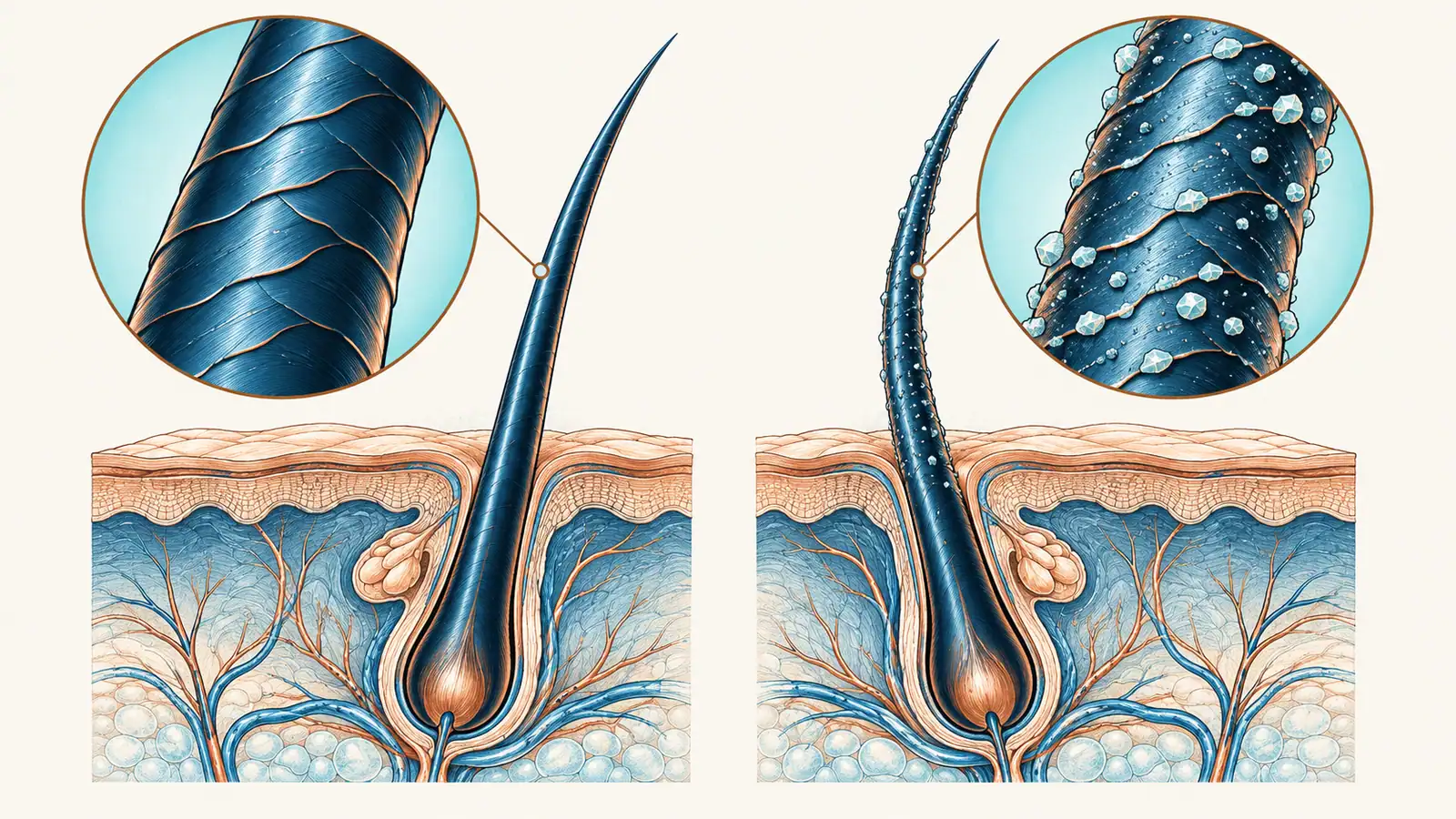
On the evidence, two things: it can leave mineral residue on the strand, and very hard water may make strands somewhat easier to snap. Both are about the hair shaft, the part you can cut. Neither is about the follicle, where hair loss happens.
That distinction answers most of the forum threads. Hair that breaks mid-shaft looks thinner and frizzier and can collect in a brush, which feels like hair loss. Hair that sheds from the root is hair loss, and it has its own causes.
What the studies support
- Mineral residue on the hair shaft (2017)
- Weaker strands in very hard water (2018)
- Possibly more breakage along the shaft
What no study has shown
- Hair falling out from the root
- Thinning that softened water reverses
- Any effect on the follicle or scalp growth
Bottom line
Treat hard water as a residue and breakage question, not a hair loss diagnosis.
Why Is My Hair Falling Out After Moving?#
Probably not because of the water. The American Academy of Dermatology lists 18 causes of hair loss, from hereditary hair loss and age to stress, illness, childbirth, hormonal changes, thyroid disease, medication, scalp infections, hairstyles that pull, and too little iron, protein, zinc or biotin. Hard water is not on the list.
A move bundles several of those at once: stress, a change of routine, sometimes a change of diet. The AAD calls hereditary hair loss the most common cause worldwide, and it says that without an accurate diagnosis, treatment is often ineffective.
How Do You Know If Hard Water Is Affecting Your Hair?#
Start with the water, not the hair. If you do not know your hardness, testing it at home, free or with a kit takes a few minutes. Hair complaints on soft water point somewhere else.
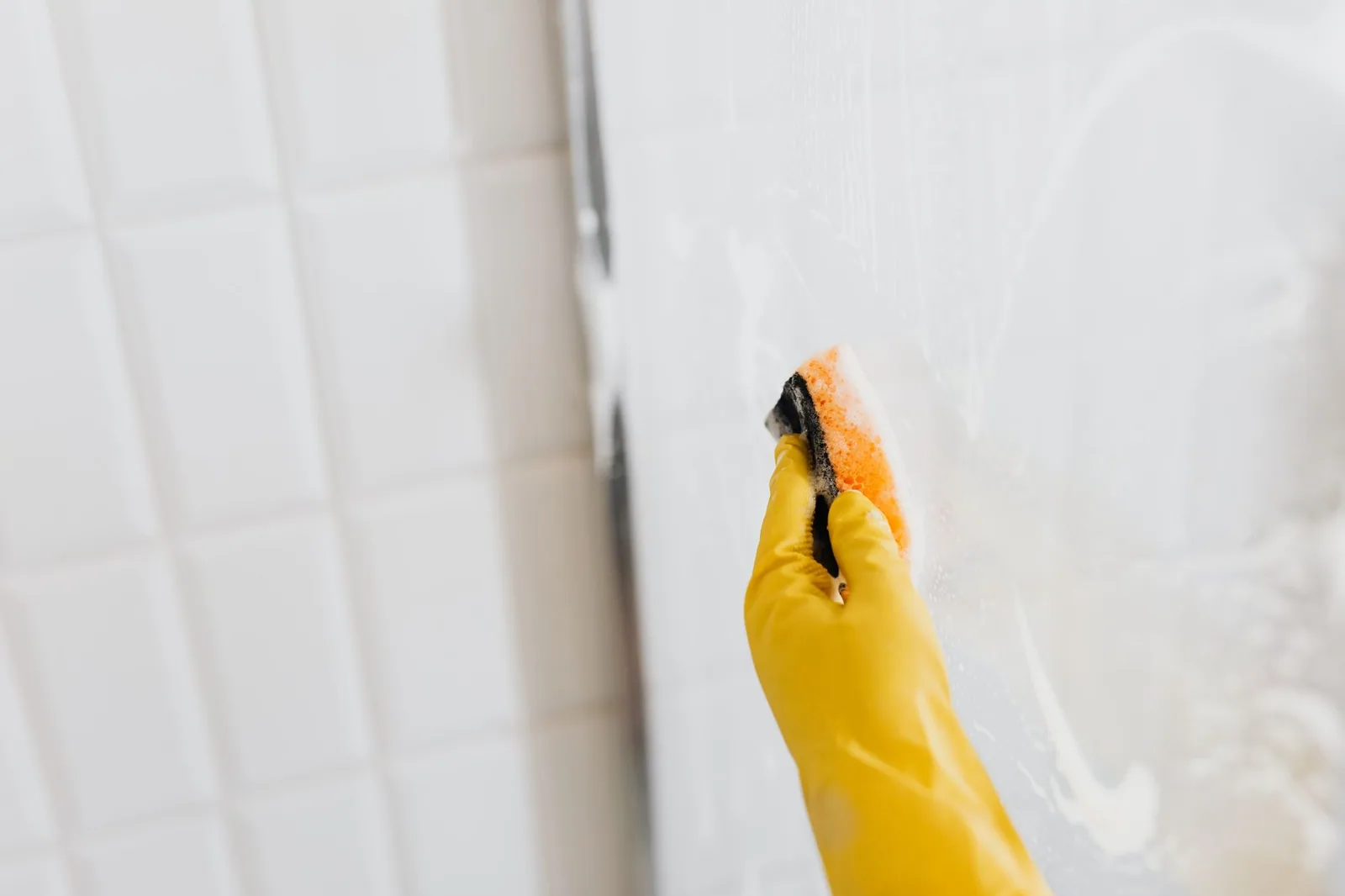
If the water is hard, the household tells you more than your hair does: spots on glasses, scale on faucets, soap that will not lather, a film on the shower door that our guide to removing hard water stains from shower glass deals with. Our checklist of the household signs of hard water covers the rest. The hair signs people report, a dull or coated feel and shampoo that does not foam, match the residue the 2017 study found, though no study we read measured how hair feels.
How Can You Protect Your Hair from Hard Water?#
Reduce the minerals that reach it. There are three levels, from a bottle to the whole house, and only the last two change the water itself.
Three levels, cheapest first
Rinse off the residue
Shampoos sold as chelating or clarifying are formulated by their makers to lift mineral and product buildup. We found no clinical study of them for hard water, so treat them as a residue fix and use them as the label directs.Soften the shower water
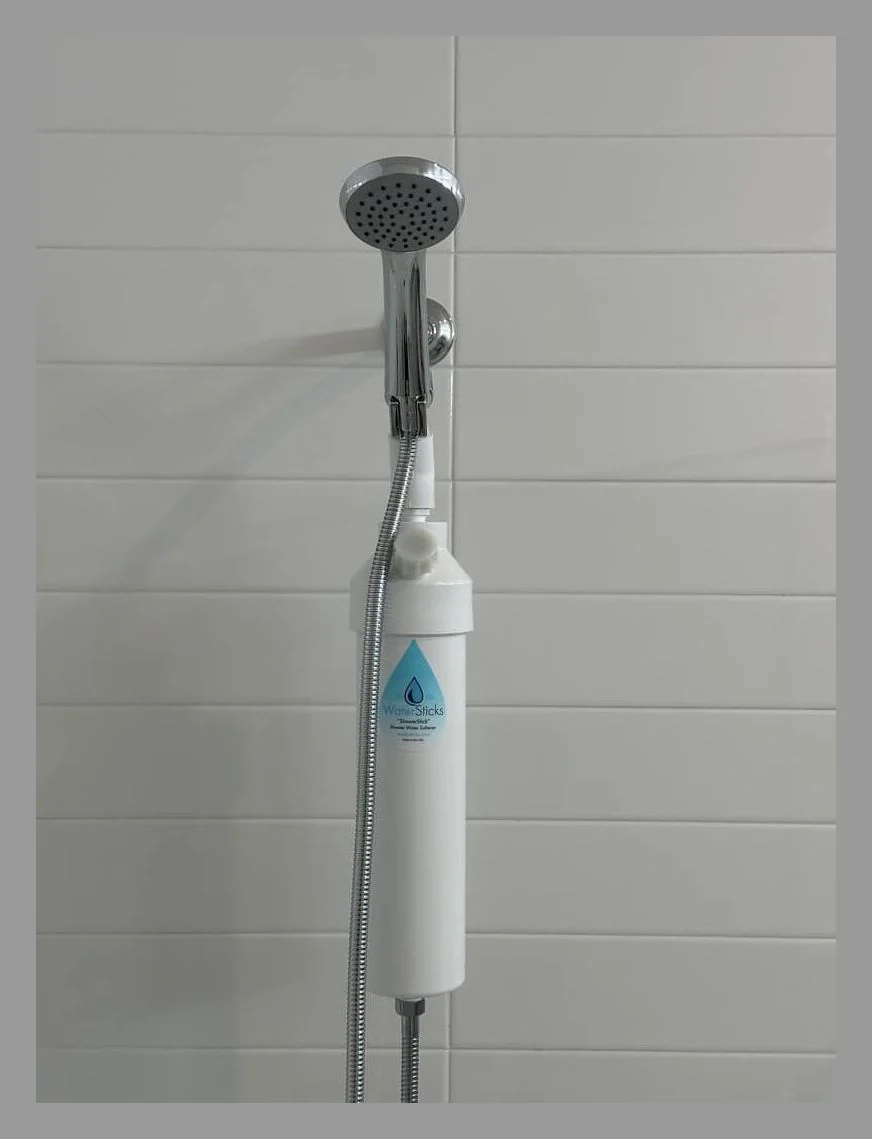
An ion-exchange shower softener such as the ShowerStick removes calcium and magnesium at one shower head, with salt regeneration by hand. A shower filter does not: carbon, KDF and vitamin C reduce chlorine and let hardness through.Soften the whole house
A salt-based softener removes the minerals before they reach any tap. It is the only fix that also stops scale, spots and soap scum everywhere else.
What you hear
A shower filter will stop hard water from damaging your hair.
What the numbers say
Shower filters built on carbon, KDF, calcium sulfite or vitamin C reduce chlorine, and calcium and magnesium pass straight through. Only ion exchange removes hardness, which is why the ShowerStick uses resin beads and a salt rinse.
Our shower filters compared for hard water and chlorine goes through each technology and what it does and does not remove, and the video below covers the same ground in a few minutes.
WaterSticks
WaterSticks ShowerStick Shower Water Softener
Best for: Renters and one-shower households who want genuinely soft water at that shower and will regenerate it by hand
- Technology
- Ion-exchange resin, salt regenerated
- Soft water per regeneration
- 58 min at 10 gpg (maker chart, 1.8 gpm)
- Regeneration
- 1 cup table salt in 1 liter of water
- Resin life
- Up to 10 years with chlorine protection (maker)
- Chlorine
- Not reduced; KDF filter sold separately
- Returns
- 14 days, shipping not refunded
The ShowerStick's limits are real. Its maker's own chart gives about 58 minutes of soft water per regeneration at 10 gpg, and 38 at 15 gpg; it will not fit a ceiling-mounted rain head; returns close after 14 days. For more than one shower, the economics favor a whole-house unit, and our guide to whether a water softener is worth it does that math.
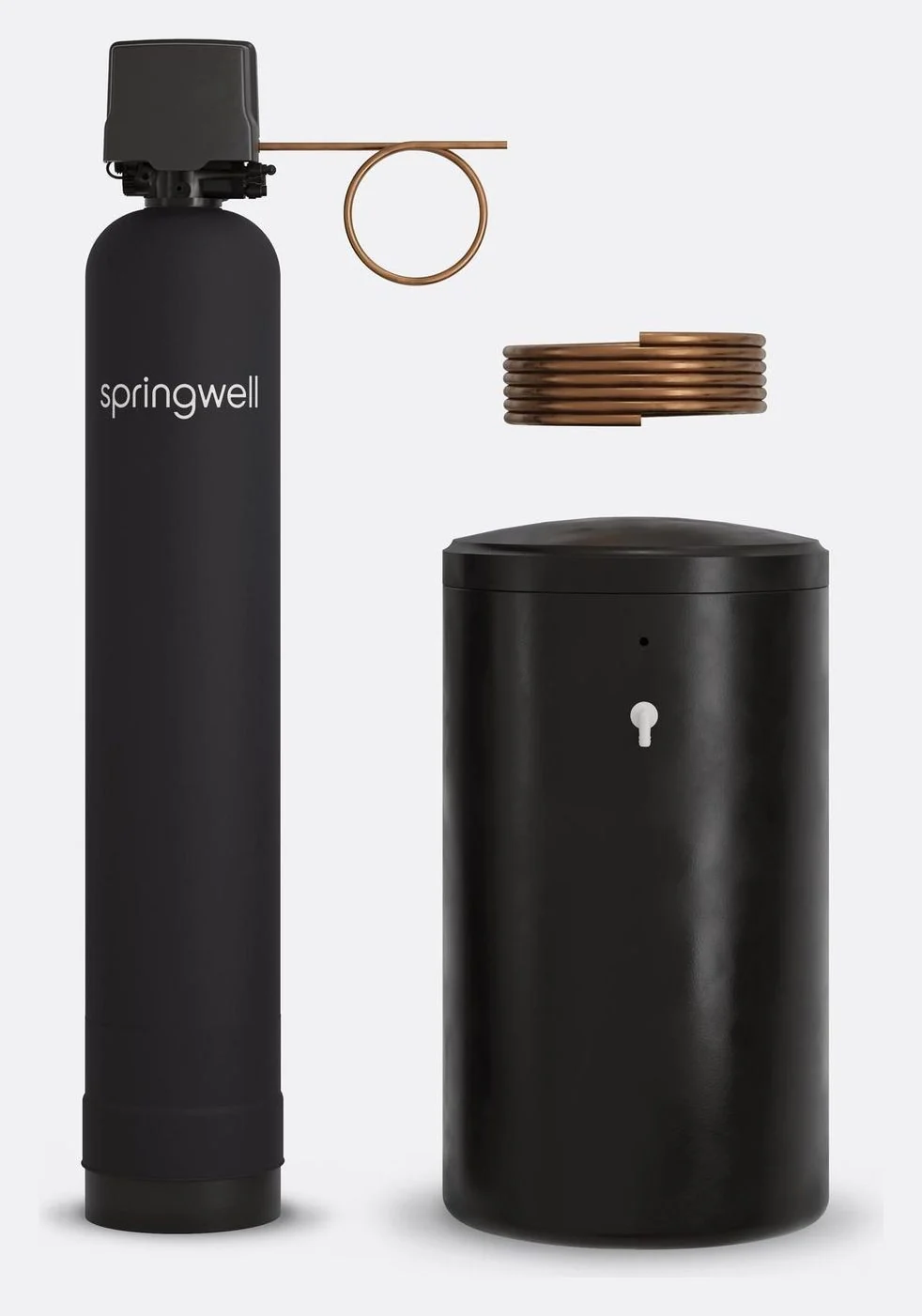
SpringWell
SpringWell SS1 Salt Based Water Softener
Best for: Homes with 1 to 3 bathrooms on hard city water that want true ion-exchange softening at a factory-direct price
- Grain capacity
- 32,000
- Service flow
- 11 GPM
- Bathrooms
- 1 to 3
- Tank
- 9" × 48" (57" with head)
- Connection
- 1"
- Brine tank
- 18" × 33" round (~200 lb salt)
What a whole-house softener does, and how to size one explains the machine, and our ladder of hard water fixes, from a $20 spray to a softener puts it in context with the cheaper steps.
The three studies were read in full on PubMed Central and the journal's site on Oct 19, 2026; figures are quoted from their results, and the 8% is our arithmetic on the 2018 group means. The causes of hair loss are from the American Academy of Dermatology's public page, read the same day. Shower filter technologies and ShowerStick specs come from maker pages read Oct 5, 2026. This page reports research; it is not medical advice.
Hard water and hair questions
Is hard water bad for your hair?
It can leave mineral residue, and one 2018 study found strands soaked in very hard water for three months about 8% weaker. A 2013 study at lower hardness found no difference. The effect, if any, is on the hair shaft, not on how much hair you grow.
Does hard water make your hair greasy?
No study we read measured it. What the research does show is extra mineral deposits on the shaft, and hard water also reacts with soap to form scum, which the USGS describes. Residue from both can make hair feel coated rather than clean.
Does hard water cause thinning hair?
Breakage along the shaft can make hair look thinner, and the 2018 study found weaker strands in very hard water. Thinning from the scalp is a different process, and the American Academy of Dermatology's causes of hair loss do not include hard water.
Will a water softener help hair loss?
A softener removes the calcium and magnesium that leave residue on hair. No study we found shows it reverses or prevents hair loss, and if you are shedding hair from the root, a dermatologist is the right first stop.
Frequently asked questions
Can hard water cause hair loss?
No study has shown it. The three lab studies we found tested hair already cut from the head: one found no change in strength, one found hard-water hair about 8% weaker and more prone to breaking, and one found extra mineral deposits but no visible damage. None measured hair falling out of the scalp, and the American Academy of Dermatology's list of 18 causes of hair loss does not include hard water.
What does hard water do to your hair?
It can leave mineral residue on the hair shaft and, in one 2018 study, made strands measurably weaker. A 2017 electron microscopy study found more magnesium on hair washed in hard water, and a 2018 study of 70 men found hair soaked in hard water for three months broke at lower force. That points to breakage and residue, not to hair falling out from the root.
Will hair loss from hard water grow back?
Hair that breaks along the shaft is not lost from the follicle, so it is not hair loss in the medical sense. If you are shedding hair from the root, the cause is very likely something else: the American Academy of Dermatology names hereditary hair loss as the most common cause worldwide, and says treatment without an accurate diagnosis is often ineffective. See a board-certified dermatologist.
Is soft water better for your hair?
It leaves less mineral residue, which is the one effect the research supports. A 2017 study found more magnesium deposited on hair washed in hard water. Softened water removes the calcium and magnesium before they reach the shower, so that residue goes away, but no study we found shows softened water reverses hair loss.
Keep reading

Not sure what you need?
Answer 5 questions, get the right system for your water.
City or well, budget, household size, our quiz matches your answers against every system we track.