How to Find (and Read) Your City's Water Quality Report
Where to find your city's water quality report (the Consumer Confidence Report), how to read each column, and the three things it never tells you.
By Home Water Lab TeamUpdated Prices verified Oct 7, 2026
Your water quality report, officially the Consumer Confidence Report (CCR), is free, published every year by July 1, and usually one search away: your utility's name plus "water quality report". Reading it takes ten minutes once you know which three columns carry the verdict. If you only want the yes or no on safety, our guide on whether tap water is safe to drink answers that; this page is the hands-on companion for the report itself, and for the numbers it holds that matter to your pipes, like the hardness figures behind the hard water problems we cover.
The short answer
as of Nov 2, 2026How do I find and read my water quality report?
Search your utility's name plus water quality report, or use the EPA's Find Your CCR tool at sdwis.epa.gov/fylccr (state, then county or system name). Every community system must send it by July 1 each year. Read the violation column first, then compare the highest level detected with the MCL in the same unit, then check the range. Hardness, if listed, sits in the secondary table: divide mg/L by 17.1 to get grains per gallon.

Key takeaways
- Every community water system must send a CCR by July 1 covering the previous calendar year (EPA).
- From 2027, systems serving more than 10,000 people send two reports a year under the rule finalized May 15, 2024.
- Read three columns in order: violation, highest level against the MCL, then the range.
- Hardness has no federal standard; when a report lists it, 17.1 mg/L equals 1 grain per gallon.
- Over 43 million Americans drink from private wells, which get no report at all (EPA).
Where Do I Find My Water Quality Report?#
Start with the bill. The utility named on it is the system whose report you need, and most post the current CCR on their website, often under "water quality". The EPA keeps a search tool too, and it is the fallback when a small system has no site.
Find your report in four steps
Read the utility name on your water bill
Cities often buy water from a regional wholesaler, so the name on the bill matters more than your city's name.Search the name plus water quality report
Most utilities post the latest CCR and the last few years as PDFs. Pick the most recent year.Use the EPA's Find Your CCR tool if that fails
At sdwis.epa.gov/fylccr you pick your state, then narrow by county, city or system name. It does not search by zip code.Call if nothing is online
The EPA's own advice is to call your local water supplier. Renters can ask the landlord, who receives it with the bill.
Searching by zip code works only on third-party databases such as EWG's, which compare utility results with the group's own guidelines rather than the legal limits. That is a second opinion, and the report itself is the primary document.
What Does a Consumer Confidence Report Include?#
The EPA fixes the minimum contents, and states may add to them. Every report has to name the source of the water and summarize its contamination risk, list the regulated contaminants detected, state the health effects of any contaminant found in violation, explain what the system did to fix it, and give phone numbers, including the Safe Drinking Water Hotline at 1-800-426-4791.
July 1
The rule is changing. Under revisions the EPA finalized on May 15, 2024, systems serving more than 10,000 people deliver reports twice a year starting in 2027, with plainer language, translation support and more information about lead.
How Do You Read a Water Quality Report Table?#
One row per contaminant, and three columns decide what that row means. The drawing below takes a nitrate row apart, because nitrate's federal goal and limit are the same simple number, 10 mg/L.
Reading a CCR table
- 1. Violationread firstA Yes here means the system broke a federal or state rule for this contaminant in the reporting year. The report must then explain the health effects and what the system did about it (EPA).
- 2. Highest level against the MCLsame unitCompliant means the figure that counts for the rule stayed at or under the MCL. Check the unit first: a value in ppb next to a limit in ppm looks a thousand times worse than it is.
- 3. RangecontextA wide range with a high top end usually means one source, one well or one season ran high. A narrow range near the limit is the pattern worth a question to the utility.
Sources: EPA, CCR Information for Consumers (required contents, July 1 deadline); EPA, National Primary Drinking Water Regulations (MCL, MCLG definitions; nitrate MCL 10 mg/L as nitrogen, MCLG 10). Column names vary by utility. Read Nov 2, 2026.
The vocabulary is short. The MCLG is "the level of a contaminant in drinking water below which there is no known or expected risk to health", and the MCL is "the highest level of a contaminant that is allowed in drinking water" (EPA). Some contaminants have a treatment technique instead of an MCL, meaning a required process rather than a number.
| Term | What it means | Typical example |
|---|---|---|
| MCL | Enforceable legal limit | Nitrate 10 mg/L, arsenic 0.010 mg/L |
| MCLG | Health goal, not enforceable | Zero for lead |
| Action level (AL) | Lead or copper trigger, judged on the 90th percentile of home samples | Lead 0.015 mg/L, copper 1.3 mg/L |
| TT | Treatment technique required instead of a number | Turbidity, some microbes |
| ppm / ppb | mg/L and µg/L | 0.015 mg/L = 15 ppb |
What Does the Lead Line Mean?#
Lead is reported differently from everything else. Utilities sample taps in homes, and the report gives the 90th percentile of those samples plus how many sites exceeded the action level. If more than 10 percent of samples are above 0.015 mg/L, the system must take additional steps (EPA), and that action level drops to 0.010 mg/L on November 1, 2027.
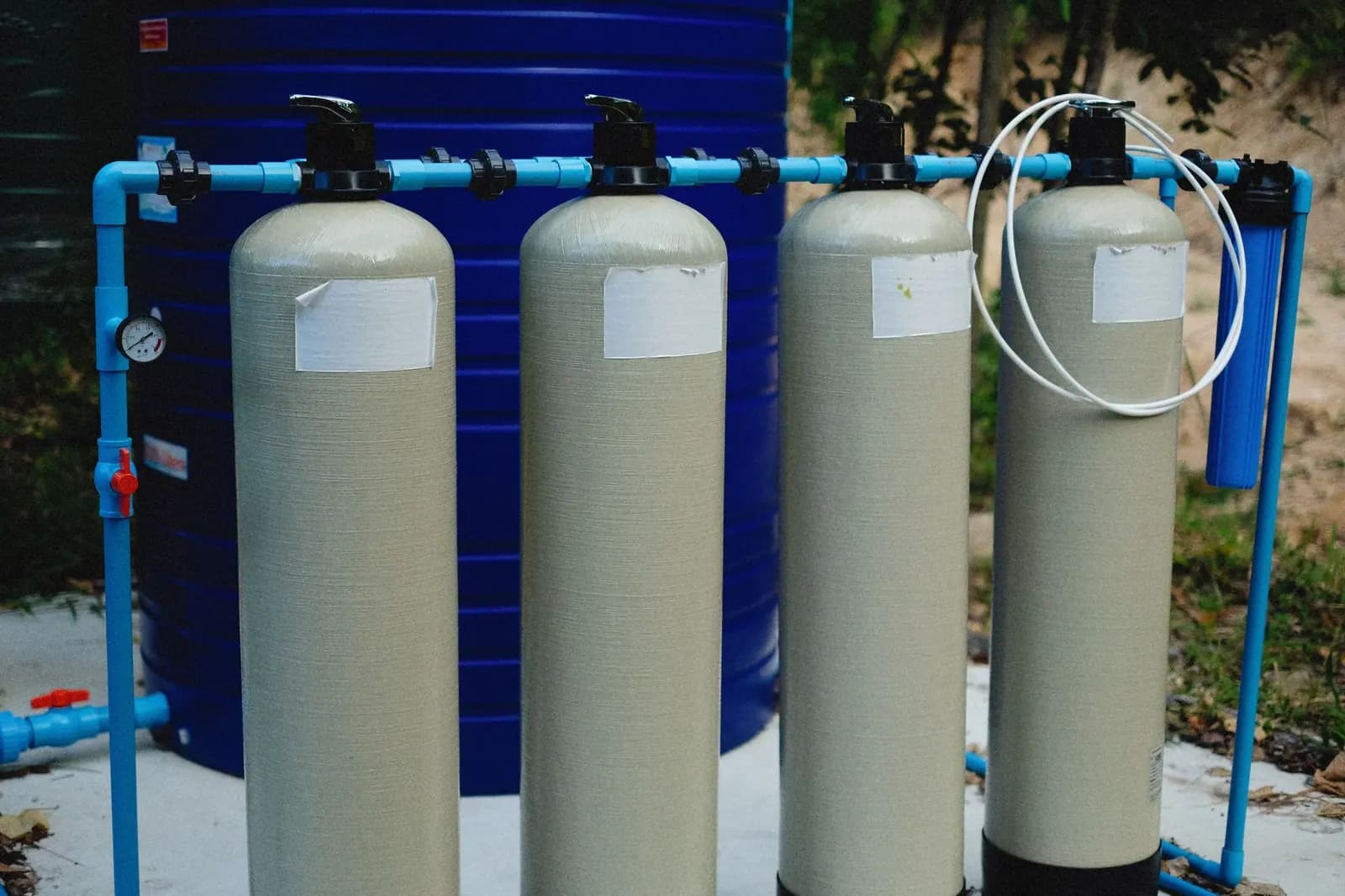
A clean lead line describes the system. Your own service line and fixtures are not in it, which is why an older house with an unknown service line is still worth a tap test.
What Your Water Quality Report Doesn't Tell You#
Three gaps, and each has a fix. Knowing them is what turns the report from reassurance into a decision.
Check what the report leaves out
3 itemsHardness is the one most homeowners actually came for. The EPA's secondary standards cover taste and appearance (TDS at 500 mg/L, iron at 0.3 mg/L, manganese at 0.05 mg/L), none of them enforced federally, and hardness is not on the list at all. When a utility does print it, and some cities print 16 gpg or more, as our ranking of the hardest-water US cities shows, convert with 17.1 mg/L per grain, then check it against the USGS hardness scale and your state's typical range and size a softener with our sizing calculator. If it is missing, a hardness test kit gives you the number in minutes.
The unregulated part comes from the EPA's UCMR 5 program: 29 PFAS plus lithium, sampled over a 12-month window between January 2023 and December 2025 by systems serving more than 3,300 people and 800 smaller ones. Results at or above the minimum reporting level go into the CCR with an average and a range. A TDS number, by contrast, says little about any of this, for the reasons in our explainer on what TDS in water measures.
Is There a Water Quality Report for Private Wells?#
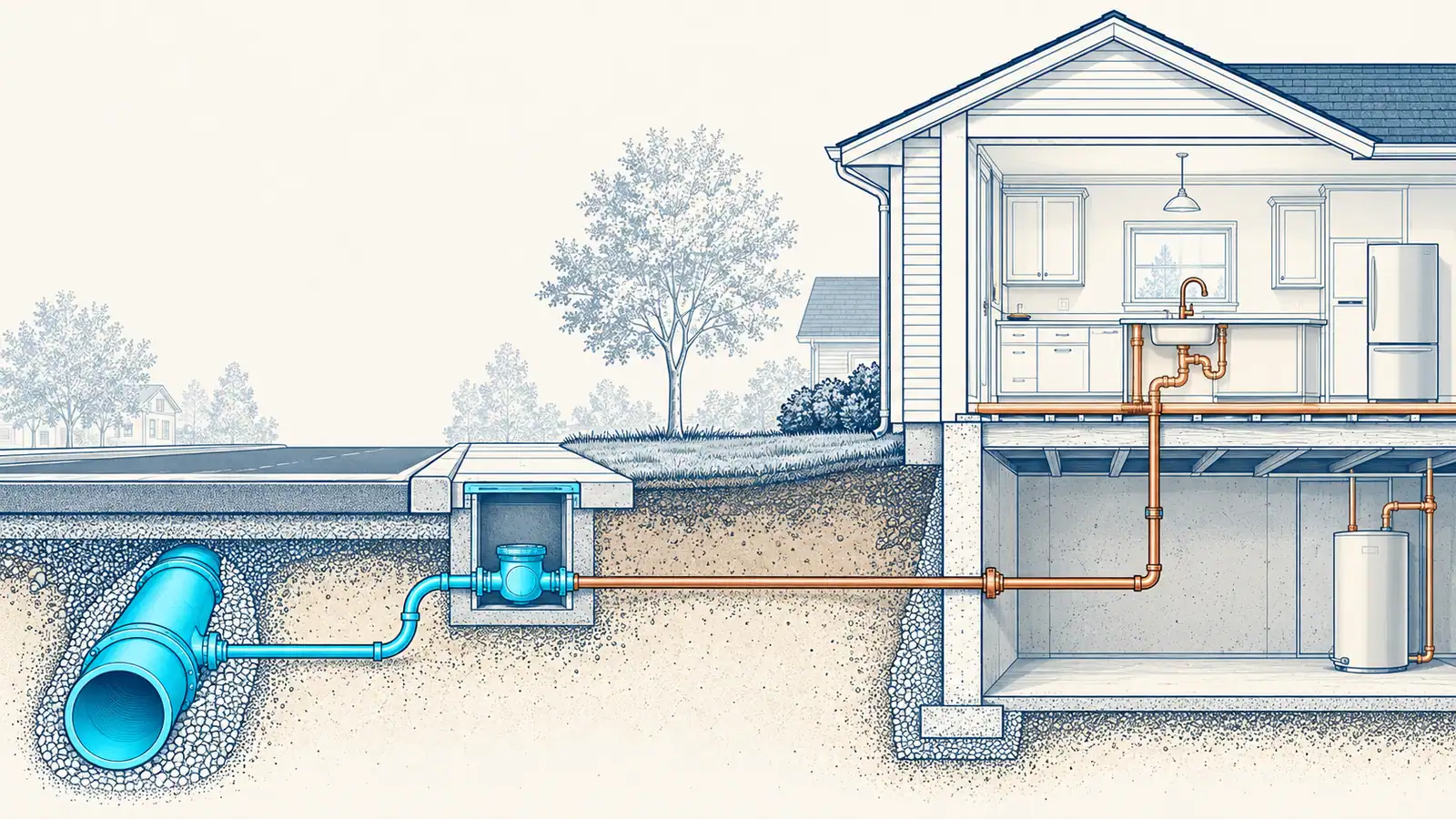
No. The EPA states that private well water is not regulated by the federal government, and over 43 million people, about 15 percent of the population, rely on private wells. The well owner is the utility, and the report is a lab test you order. Our well water testing guide lists the panel to start with, and the well water treatment hub maps each result to a fix.
What you hear
If my report shows no violations, my tap water has no problems worth fixing.
What the numbers say
No violations means the system met enforceable health limits. Hardness, taste, chlorine and your own plumbing are outside that verdict. Scale on a faucet is a hardness problem the report may not even mention.
What Should You Do After Reading Your Report?#
Act on a named result, not on a feeling. A violation or a lead exceedance is a call to the utility and a certified filter for that contaminant; an under-sink reverse osmosis unit at the kitchen tap covers most dissolved health contaminants. High hardness belongs to the softener side of the site. A clean report with chlorine taste is a carbon filter question, covered in our whole-house filter guide.
EPA pages read Nov 2, 2026: CCR Information for Consumers, Consumer Confidence Report Rule Revisions, the CCR program page (updated Sep 9, 2026) and its Find Your CCR tool, National Primary Drinking Water Regulations, Secondary Drinking Water Standards, the Fifth Unregulated Contaminant Monitoring Rule and Private Drinking Water Wells. The hardness conversion (1 grain per gallon = 17.1 mg/L as calcium carbonate) is the USGS figure used across this site. Not medical advice: for a health question about your water, ask your utility or your state drinking water program.
Water quality report questions
What is a consumer confidence report?
It is the annual drinking water quality report every community water system must send its customers by July 1. The EPA requires it to name the water source, list the regulated contaminants detected, flag any violation with its health effects and explain what the system did about it. From 2027, systems serving more than 10,000 people send two reports a year.
How do I find my water quality report by zip code?
The EPA tool does not search by zip code: it searches by state, then county, city or system name, at sdwis.epa.gov/fylccr. The faster route is the utility name printed on your water bill plus the words water quality report. Renters can ask the landlord or call the utility directly.
Where is water hardness in my water quality report?
Usually in a separate table of secondary or unregulated parameters, because the EPA sets no hardness standard. It may be printed in mg/L, ppm or grains per gallon. Divide mg/L or ppm by 17.1 to get grains per gallon, the unit softeners are sized in.
Does a water quality report cover bottled water or private wells?
No. A CCR covers one community water system. Private wells are not regulated by the federal government, so no report exists and the owner tests the water. Bottled water sits under a different regulator and publishes its own quality reports, which is why brands post them separately.
Frequently asked questions
What is a consumer confidence report?
It is the annual drinking water quality report every community water system must send its customers by July 1. The EPA requires it to name the water source, list the regulated contaminants detected, flag any violation with its health effects and explain what the system did about it. From 2027, systems serving more than 10,000 people send two reports a year.
How do I find my water quality report by zip code?
The EPA tool does not search by zip code: it searches by state, then county, city or system name, at sdwis.epa.gov/fylccr. The faster route is the utility name printed on your water bill plus the words water quality report. Renters can ask the landlord or call the utility directly.
Where is water hardness in my water quality report?
Usually in a separate table of secondary or unregulated parameters, because the EPA sets no hardness standard. It may be printed in mg/L, ppm or grains per gallon. Divide mg/L or ppm by 17.1 to get grains per gallon, the unit softeners are sized in.
Does a water quality report cover bottled water or private wells?
No. A CCR covers one community water system. Private wells are not regulated by the federal government, so no report exists and the owner tests the water. Bottled water sits under a different regulator and publishes its own quality reports, which is why brands post them separately.
Keep reading
Not sure what you need?
Answer 5 questions, get the right system for your water.
City or well, budget, household size, our quiz matches your answers against every system we track.