How to Test Water Hardness at Home (3 Free Ways + Best Kits)
Test water hardness at home for free with a soap bottle, your utility's water report or a well lab, then get an exact gpg number from a drop kit. What each result means.
By Home Water Lab TeamUpdated Prices verified Oct 7, 2026
This page contains affiliate links; buying through them costs you nothing extra.
You can test water hardness at home in a minute for free with a soap bottle test, read it off your utility's water quality report, or get an exact number with a drop titration kit. Strips sit in between, quick and cheap, good for a color band rather than a figure. Which one you need depends on the decision you are making, and the number only means something once you can place it on the hardness scale, which our complete guide to hard water and what it costs a house explains end to end.
The short answer
as of Oct 19, 2026How do you test water hardness at home?
For a free yes or no, fill a clear bottle one-third with tap water, add a few drops of pure liquid soap (Castile, no detergent), cap and shake: few bubbles and cloudy water mean hard water, per EcoWater. For a band, dip a hardness strip and match the color. For a number you can size a softener on, a drop titration kit reads total hardness in 1 gpg steps. Above 7 gpg (120 mg/L) the USGS calls water hard.
Key takeaways
- The soap bottle test is free and takes a minute, but it only works with a pure soap: detergents lather in hard water too.
- Strips read a color band: the WaterWorks chart jumps from 250 to 425 ppm, about 10 gpg in one step.
- Drop kits count hardness in 1 gpg steps, the unit a softener is programmed in.
- A TDS meter is not a hardness tester: it reads every dissolved ion as if it were salt.
- Divide mg/L or ppm by 17.1 to get grains per gallon; the USGS calls water hard above 120 mg/L, about 7 gpg.
How Do You Test Water Hardness for Free?#
Three ways cost nothing: the soap bottle test, your utility's water quality report, and, on a private well, a test through your local health department. The first tells you hard or soft, the second gives you the utility's own number, the third gives you a lab result.
1. The soap bottle test#
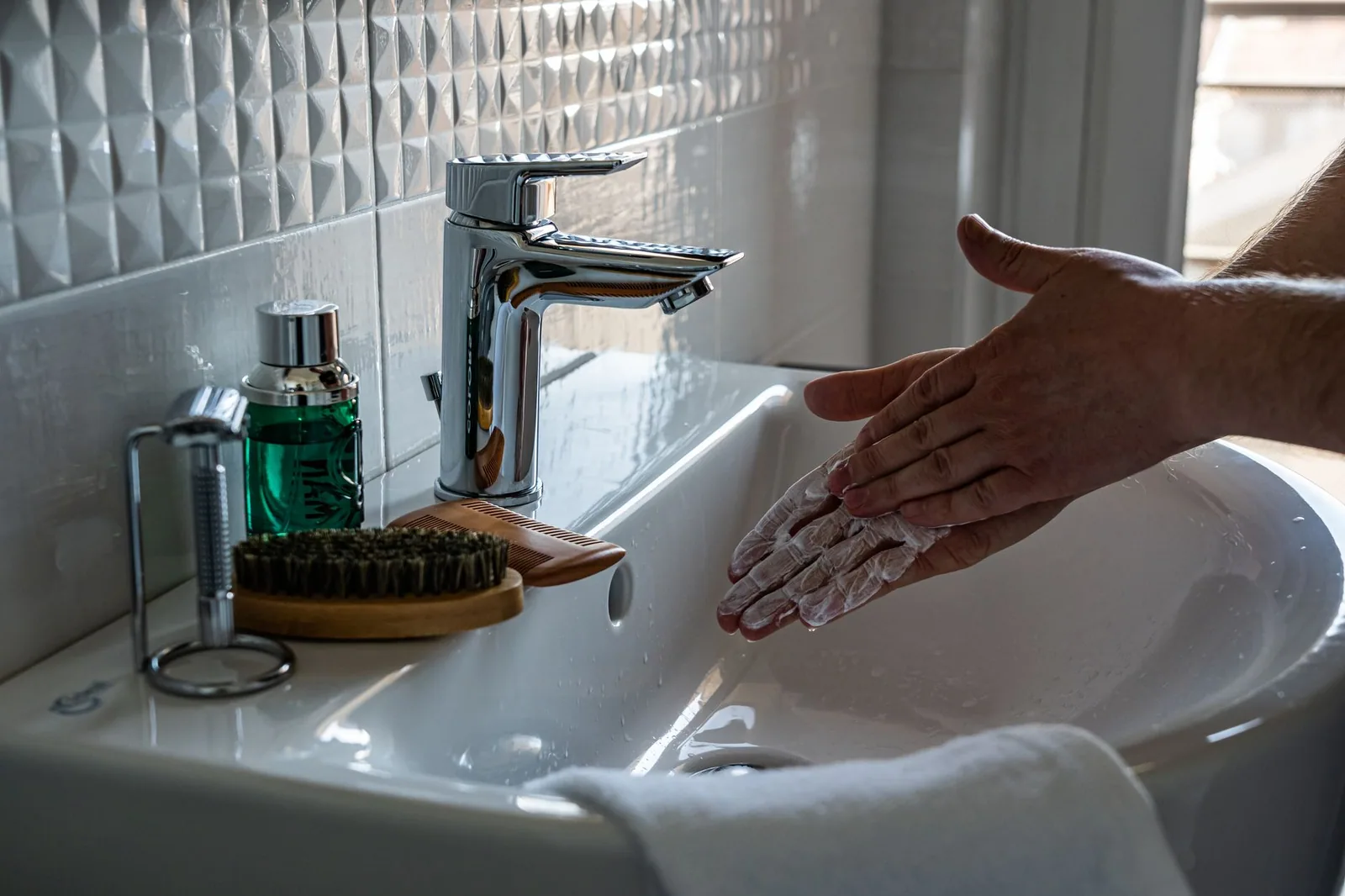
Hard water binds soap into scum instead of foam, and you can watch it happen in a bottle. EcoWater's method needs a clear bottle with a cap, a pure liquid soap, and water from your tap.
The soap test, EcoWater's way
Fill a clear bottle one-third full
Cold water straight from the tap, in a clean bottle with a cap. A water bottle works.Add a few drops of pure liquid soap
Castile soap, free of dyes, perfumes and detergents. Detergent soaps foam in hard water too, which is why dish soap fails this test.Shake hard for a few seconds
Cap it and shake vigorously.Read the bottle
Few fluffy bubbles and cloudy or milky water mean hard water. A thick head of bubbles over clear water means soft water.
The test answers one question, hard or not. It gives no number, and a borderline result tells you little. Treat it as the reason to measure properly, not the measurement.
2. Your water utility's report#
On city water, the utility has probably already measured it. Water systems publish an annual water quality report, the consumer confidence report, and many list hardness in it even though hardness is not a figure they are required to report. If yours does not, EcoWater's advice is to call the utility and ask. Where to find the report and which table hides the hardness line is covered in how to find and read your Consumer Confidence Report. Our state-by-state hardness readings give you the typical range in the meantime.
3. A health department test for well owners#
The EPA says your local health department may provide private well testing for free, and it advises a yearly well test at a certified lab for total coliform bacteria, nitrates, total dissolved solids and pH. Ask for hardness to be added. Our guide to testing well water, from the yearly panel to a full lab test walks through what to order.
How to Read Water Hardness Test Strips#
Dip the strip and match the pad to the color chart on the bottle once it has developed. EcoWater says to fill a glass with cold water and dip the strip for a few seconds rather than hold it under a running tap, which can skew the result.
Four tests, four questions
- Test stripa rangeReads total hardness as a color band. The WaterWorks chart steps from 120 to 180 to 250 to 425 ppm, so a strip tells you which band you are in, not where inside it.
- Drop titrationthe home standardCounts drops of titrant until the sample turns blue. Hach rates its 5-B kit at 1 drop = 1 gpg and Hanna rates the HI38033 in 1 gpg steps: a number you can program a softener with.
- TDS meternot a hardness testMeasures conductivity and converts it as if every dissolved ion were sodium chloride (HM Digital calibrates its TDS-3 on a 342 ppm NaCl solution). Calcium, magnesium and sodium all land in the same number.
- Certified labthe only full answerMeasures calcium and magnesium separately, then reports hardness in mg/L and gpg alongside iron, manganese, nitrate and bacteria, on a panel that lists them. The EPA's annual well test list is total coliform, nitrates, TDS and pH.
Solid dot: answers it. Half dot: answers it as a range only. Ring with a bar: cannot answer it. Column heads, left to right: total hardness (calcium plus magnesium), a reading precise to 1 grain per gallon, total dissolved solids, and a health panel (bacteria, nitrate, metals). Sources: Hach, Hanna Instruments, Industrial Test Systems, HM Digital and Tap Score product pages, and the EPA private well testing page, all read Oct 5, 2026.
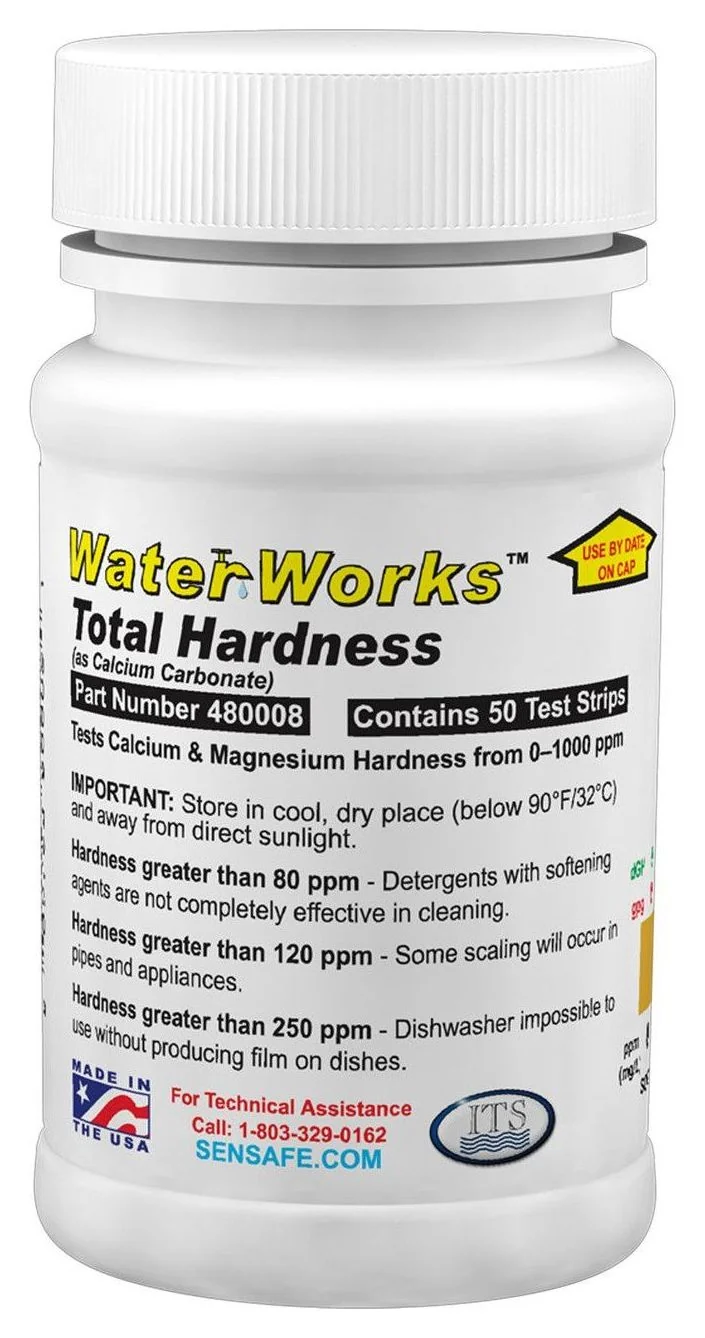
The chart is the strip's real limit. WaterWorks prints its color blocks at 0, 40, 80, 120, 180, 250, 425 and 1,000 ppm, so a strip tells you which band your water falls in, not where inside it. Between the 250 and 425 blocks sits about 10 gpg, enough to change the size of softener you should buy. The WaterWorks bottle's own label reads the bands for you: above 120 ppm, "some scaling will occur in pipes and appliances," and above 250 ppm, film on dishes from the dishwasher.
Industrial Test Systems
Industrial Test Systems WaterWorks Total Hardness Test Strips
Best for: Very hard city or well water that runs off the top of a 425 ppm chart
- Method
- Dip strip, color chart
- Color blocks
- 0, 40, 80, 120, 180, 250, 425, 1,000 ppm
- Top of range
- 1,000 ppm (about 58 gpg)
- Tests
- 50 per bottle
- Part number
- 480008
Check the date before you trust the color. The WaterWorks bottle prints a use-by date on its cap, and an expired strip is a guess.
What Is the Most Accurate Way to Test Water Hardness at Home?#
A drop titration kit. You add a reagent that turns the sample red or pink if hardness is present, then add titrant one drop at a time until it turns blue, and the drop count is the answer. Hach rates its 5-B kit at 1 drop = 1 gpg, and Hanna reads the HI38033 in 1 gpg steps across 0 to 30 gpg.
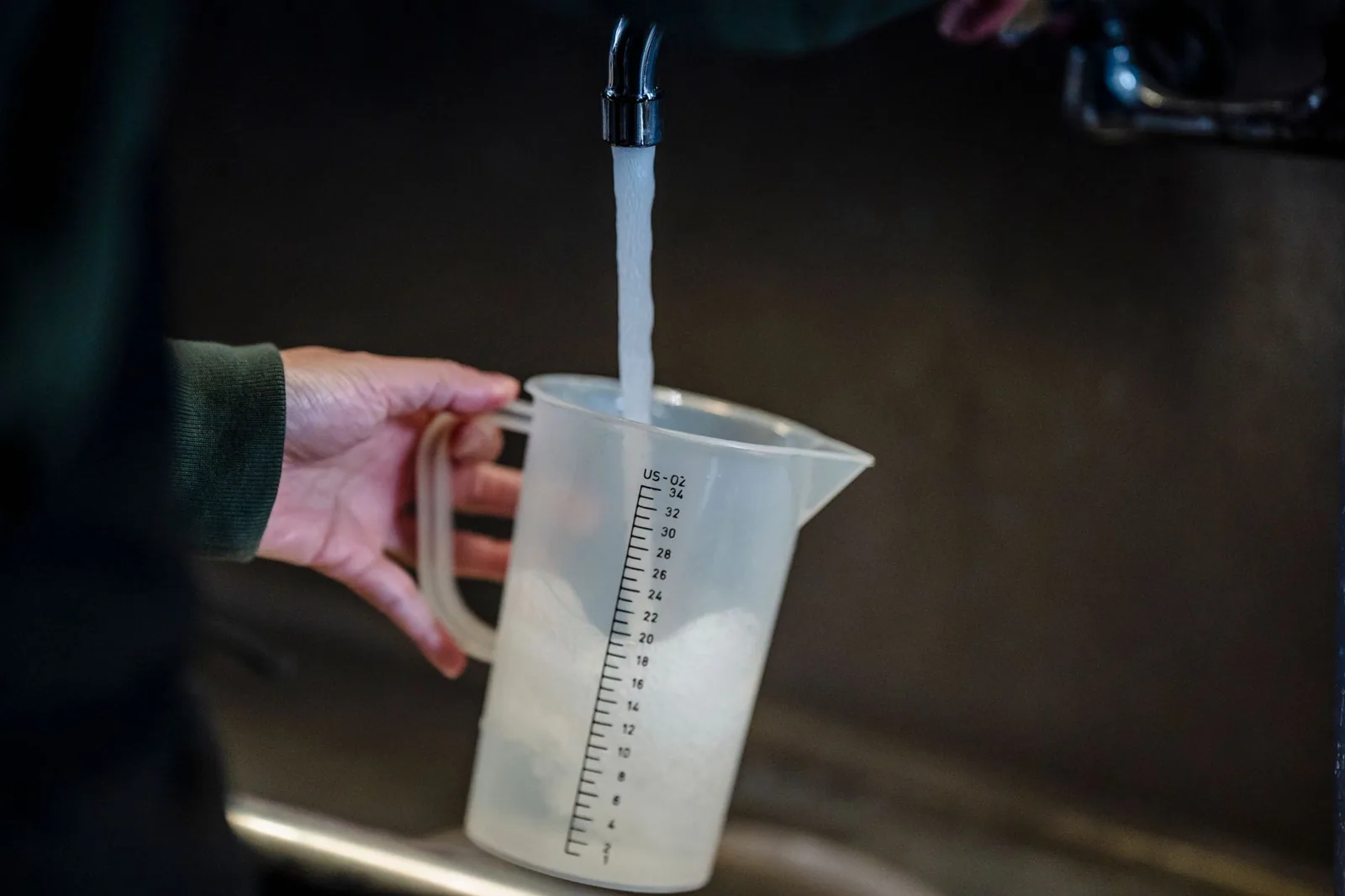
That precision is what a softener needs. Softeners are sized and programmed in grains per gallon, and our guide to what size water softener a household needs multiplies people by daily use by your exact gpg reading. A strip band cannot feed that formula honestly.
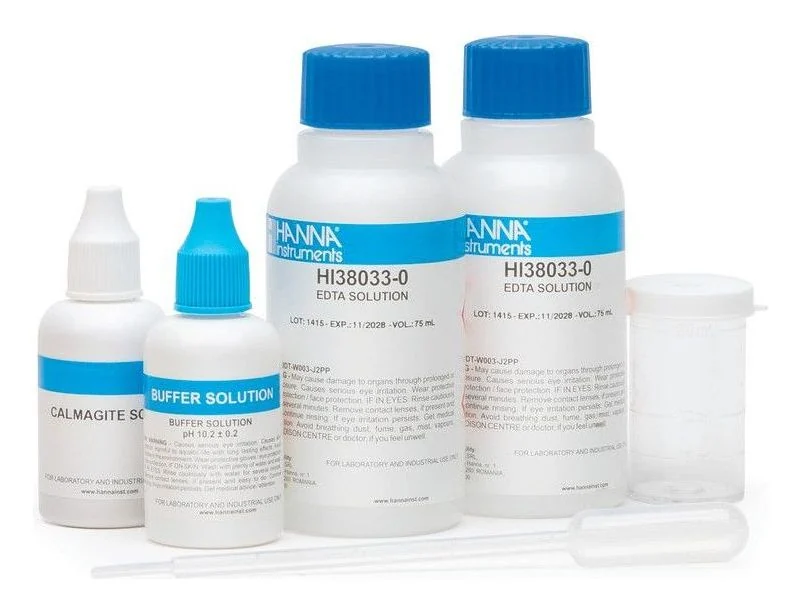
Hanna Instruments
Hanna Instruments HI38033 Total Hardness Test Kit
Best for: A hardness number precise enough to size and program a softener
- Method
- EDTA titration, color indicator
- Range
- 0 to 30 gpg
- Smallest step
- 1 gpg
- Tests per kit
- About 100
- Refill
- HI38033-100, $24.99 per 100 tests (Oct 5, 2026)
Two things the drop kit still misses. It reads total hardness only, so iron, which a softener also has to handle, needs its own test. And it says nothing about safety, which is lab work. Our comparison of hardness test kits ranks the strips, drop kits and lab panels side by side, with their dated prices.
Does a TDS Meter Test Water Hardness?#
No. A TDS meter reads electrical conductivity and converts it as if every dissolved ion were table salt; HM Digital, for example, calibrates its TDS-3 on a 342 ppm sodium chloride solution. Calcium, magnesium and sodium all land in one number.
That makes it useless after a softener, too. A softener swaps calcium and magnesium for sodium, so the TDS barely moves while the hardness drops to near zero. If you want to know what a TDS number does tell you, our explainer on what TDS in water means and when it matters covers it.
What Do Your Water Hardness Results Mean?#
Convert to grains per gallon first: divide mg/L or ppm by 17.1. Then place the number on the USGS scale, which calls water soft up to 60 mg/L (3.5 gpg), moderately hard to 120 (7 gpg), hard to 180 (10.5 gpg), and very hard above that.
USGS hardness bands
- Soft, 0 to 60 ppm0 to 3.5 gpg. No scale problem. A softener solves nothing here.
- Moderately hard, 61 to 120 ppm3.6 to 7.0 gpg. Spotting and light scale. Treatment is optional, not urgent.
- Hard, 121 to 180 ppm7.1 to 10.5 gpg. Scale in the water heater, soap that will not lather, film on the glassware.
- Very hard, over 180 ppmOver 10.5 gpg. Appliance territory: scale builds fast in anything that heats water, and it shortens the life of the thing doing the heating.
USGS classification of hardness as calcium carbonate, where 1 grain per gallon = 17.1 mg/L. A statewide or citywide figure is a wide typical range, never a reading at your address: the USGS says its national map is not built for decisions at the scale of one property. A test strip settles it in two minutes.
Expect labels to differ by source. Pentair's own table calls anything above 1 gpg slightly hard and anything above 10 gpg very hard, the convention water treatment sellers use, while the USGS scale is the one geologists and most utilities quote. The number is what matters, and our grains-per-gallon explainer turns it into a decision.
17.1
When Should You Test Your Water Hardness?#
Before buying any treatment, and again after installing a softener. A reading at a kitchen tap that bypasses the softener tells you the raw hardness; a reading at a bathroom tap tells you whether the softener is doing its job. Our water softener maintenance checklist puts a hardness check on its schedule.
Before you test
5 itemsIf the number comes back hard, the hard water fixes ranked by cost and by what they actually change is where to go next, and if it comes back very hard, our guide to salt-based water softeners explains the machine that removes it.
The soap test, strip handling and utility report advice are quoted from EcoWater's testing page, and the gpg table and 17.1 conversion from Pentair's, both read Oct 19, 2026. Kit methods, ranges and prices come from each maker's own product pages, read Oct 5, 2026, and the WaterWorks hardness bands from its bottle label. The USGS scale and the EPA well guidance are cited by name. We did not compare kit accuracy in a lab.
Water hardness testing questions
How do you test water hardness without a kit?
With the soap bottle test: a clear bottle one-third full of tap water, a few drops of pure liquid soap, a hard shake. Few bubbles and cloudy water mean hard water. Or read the hardness line in your utility's annual water quality report.
How do I test my water hardness for a water softener?
Use a drop titration kit or a lab result, because softeners are sized and programmed in grains per gallon and a strip only gives a band. Test cold water from a tap that does not run through any existing treatment, and test iron too.
Are water hardness test strips accurate?
They are accurate to their band. The WaterWorks chart steps from 250 to 425 ppm, about 10 gpg in one jump, so a strip tells you hard or very hard, not the exact figure a softener needs.
How often should you test water hardness?
Once before you buy anything, then periodically after installing a softener to confirm it is working. On a private well, the EPA advises a yearly lab test for bacteria, nitrates, TDS and pH; add hardness to it.
Frequently asked questions
How do you test water hardness at home?
The free way is a soap test: fill a clear bottle one-third with tap water, add a few drops of pure liquid soap such as Castile, cap it and shake. Few bubbles and cloudy water mean hard water, per EcoWater's instructions. For a number, a strip gives a band in 30 seconds or so, and a drop titration kit counts the hardness in 1 grain per gallon steps.
What is the most accurate way to check water hardness?
A certified lab, which measures calcium and magnesium separately. At home, a drop titration kit is the accurate option: Hach rates its 5-B kit at 1 drop = 1 gpg and Hanna reads its HI38033 in 1 gpg steps, the unit a softener is programmed in. Strips report a color band, and a TDS meter does not measure hardness at all.
Can you use Dawn to test for hard water?
Not reliably. EcoWater notes that most soaps are formulated with detergents and lather whatever your water, and dish soaps are detergents. Use a pure soap with no detergents, such as Castile, or the bottle test will read soft on hard water.
How do I find my water hardness for free?
On city water, read your utility's annual water quality report or call the utility: many list hardness even though it is not a required figure. On a well, your local health department may test for free, according to the EPA. A soap bottle test tells you hard or soft in a minute.
Keep reading

Not sure what you need?
Answer 5 questions, get the right system for your water.
City or well, budget, household size, our quiz matches your answers against every system we track.