Water Softener Replacement: When to Replace It, and How to Swap It
When to replace a water softener instead of repairing it, what a swap involves, and how to do it without a dealer. The five failure signs and the DIY decision.
By Home Water Lab TeamUpdated Prices verified Oct 7, 2026
This page contains affiliate links; buying through them costs you nothing extra.
A water softener replacement is one of the few home projects where the honest answer is usually the cheap one: most failing softeners are not worth repairing, and most swaps do not need a dealer. This guide covers the decision (repair or replace), the sequence (what the swap actually involves), and the part dealers rarely raise, which is whether the new machine should be the same size as the old one.
If the unit is still under warranty or the symptoms are recent, start with the water softener hub and our maintenance guide: a salt bridge and a fouled injector both look exactly like a dead softener and cost nothing to fix. For the money side of a new system, the cost of a water softener is the page with the numbers.
The short answer
as of Sep 14, 2026Should you replace your water softener or repair it?
Replace it when the machine is at the end of its expected life and the failure is at the control head. A salt-based softener runs 10 to 15 years including its resin, and 8 to 12 for big-box units on proprietary valves. HomeGuide's 2026 repair data puts a fix at $150 to $600, averaging $430, plus a $40 to $100 diagnostic visit, while big-box replacements sell for $489 to $619. On that tier, one significant repair costs most of a new machine. On an open, rebuildable valve platform the same repair often buys several more years and is worth doing.
Key takeaways
- Expected life: 10 to 15 years with resin, 8 to 12 on proprietary big-box valves, 15 to 20 on rebuildable platforms.
- The electronic control head fails first, which is why lifetime-warrantied brands still cap it at 5 years.
- A repair averages $430 plus a $40 to $100 diagnostic, against $489 to $619 for a new big-box unit.
- A like for like swap is a two to four hour job when the bypass and fittings match.
- Re-size before you rebuy: household size, water use and hardness all move over ten years.
How Do You Know a Water Softener Needs Replacing?#
Five signs, in the order they usually appear.
The failure list
5 itemsTwo of those have free fixes. Salt that stops dropping is often a salt bridge, a crust that leaves the brine tank looking full while nothing dissolves underneath, and salty water at the tap is usually a drain line or injector problem rather than a dead machine. Our salty water troubleshooting sequence works through both before you spend anything. The signs of hard water page is the other direction to check: it confirms the water really is hard again rather than something else changing in the house.
Repair or Replace? The Arithmetic#
What each path costs
as of Sep 14, 2026- Diagnostic visitHomeGuide 2026 data
- $40 to $100
- RepairNational average $430, HomeGuide 2026
- $150 to $600
- New big-box softenerRheem RHS32 $489, Whirlpool WHES44 $619
- $489 to $619
- New direct-to-consumer softenerSpringWell SS1, read Sep 14, 2026
- $1,606.50
The number that decides
$430
A $430 repair on a $489 machine is not a repair, it is a down payment on the same machine. On a rebuildable valve platform the same $430 buys years, which is why the valve type matters more than the age.
The rule that follows from those figures: repair the platform, replace the appliance. A softener built on a standard, serviceable valve is worth fixing because parts exist and any plumber can source them. A sealed proprietary head on a machine that cost $489 new is not.
What you hear
A softener that is ten years old is due for replacement.
What the numbers say
Age alone decides nothing. What decides is which part failed and whether the platform is serviceable. Manufacturers put the split in writing: SpringWell warranties the tank, valve body and fittings for life and caps the electronic head at 5 years, as read Aug 28, 2026. The head is the consumable, the tank is not.
What a Water Softener Swap Actually Involves#
A swap is the short version of a first install, because the connections, the drain and the outlet are already there. That's the whole difference. If any of those three are missing or being moved, the longer sequence in our water softener installation guide is the one to follow.
The sequence for a like for like replacement
Put the old unit in bypass and kill the water
Turn the bypass valve to bypass, close the main shut-off, then open a downstream faucet to drop the line pressure. Unplug the control head.Drain and disconnect
Empty the media tank as far as it will go, pull the drain line and the brine overflow, then break the inlet and outlet unions at the bypass. Have towels and a shallow pan ready, a media tank holds more water than it looks.Get the old tank out
This is the part people underestimate. A full-size tank is heavy and awkward, and finished basements rarely offer a straight path. Empty the resin into a bucket outside if the route is tight.Set and plumb the new system
Position the media tank and brine tank, connect inlet and outlet to the new bypass, run the drain line to a proper air gap, and secure the brine overflow. Reuse the old fittings only if the thread type and diameter match exactly.Program it for your water, not the factory default
Enter your current hardness in grains per gallon, plus iron if your test shows any, and the household size. A default program set to someone else's water wastes salt every cycle.Start a manual regeneration and check for leaks
Run one full cycle with the unit under pressure, watch every joint, then test the treated water with a strip to confirm the machine is doing its job.
Do You Need a Plumber?#
A straight swap is within reach of a competent DIYer: the connections are unions, the drain is a hose to a standpipe or a floor drain, and the programming is a menu. Call a professional when the job includes soldered copper, a new drain run, a new outlet for the control head, or any pressure tank work on a well.
DIY swap
- Two to four hours on a matching bypass
- No labor cost, just fittings and maybe a new bypass
- You program it to your own hardness reading
- You are responsible for the leak test and the first regeneration
Plumber
- Installation quoted at $300 to $1,500 in 2026 contractor data
- Right call for soldered copper, new drain lines or well pressure tanks
- Haul-away of the old unit usually included
- Ask whether the quote includes programming, not just plumbing
The call
If the old unit comes out through a door and the new one lands on the same bypass, do it yourself. If any part of the line has to be rebuilt, pay the professional.
The full breakdown of what contractors charge is in our water softener installation cost page, including where quotes inflate.
Should the New One Be the Same Size?#
Almost nobody checks this, and it is the one decision a replacement gets to revisit for free. Capacity is set by hardness times daily water use, and both change: children move out, a bathroom gets added, a utility changes its source blend.
What to Replace It With#
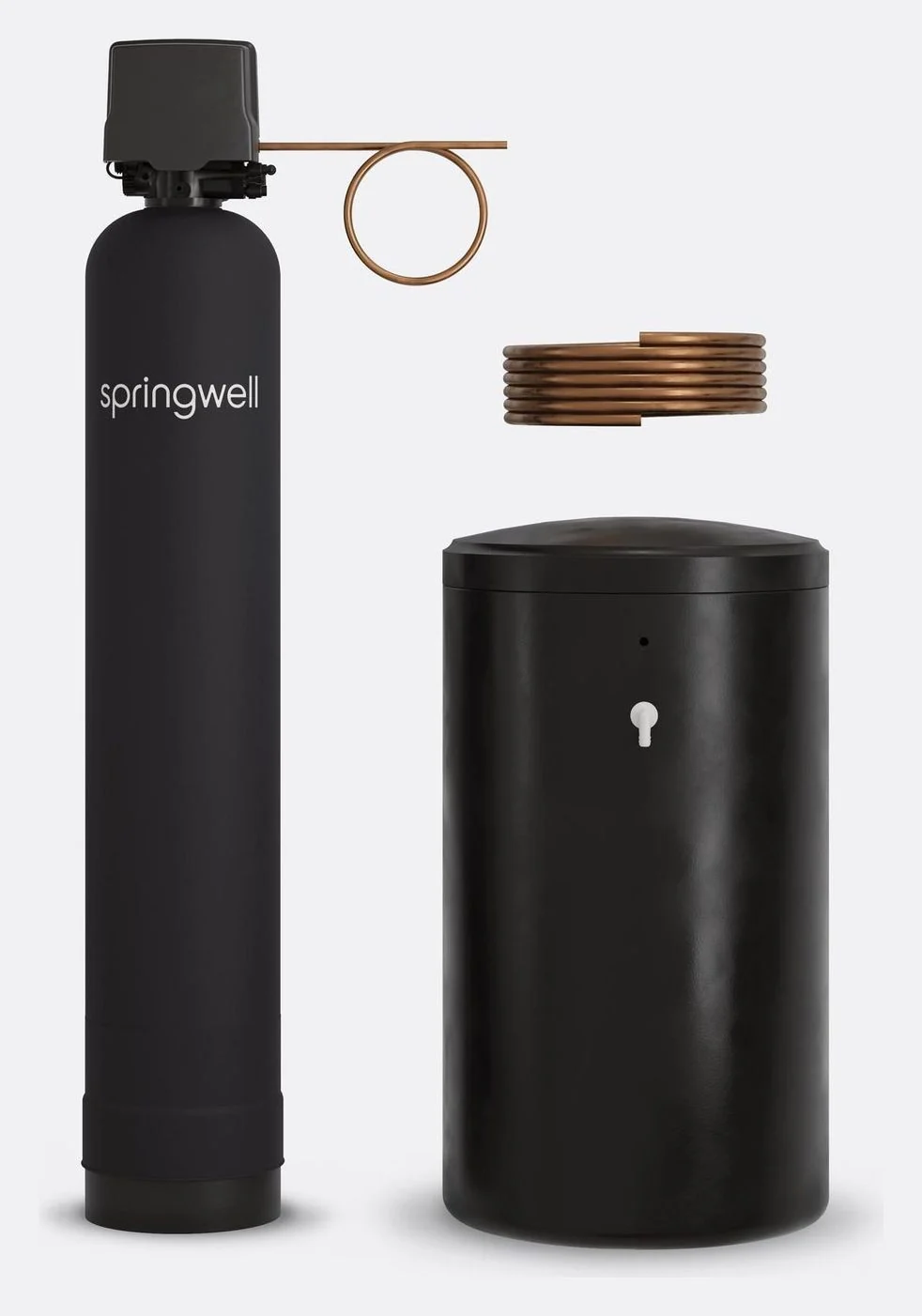
SpringWell
SpringWell SS1 Salt Based Water Softener
Best for: Homes with 1 to 3 bathrooms on hard city water that want true ion-exchange softening at a factory-direct price
- Grain capacity
- 32,000
- Service flow
- 11 GPM
- Bathrooms
- 1 to 3
- Tank
- 9" × 48" (57" with head)
- Connection
- 1"
- Brine tank
- 18" × 33" round (~200 lb salt)
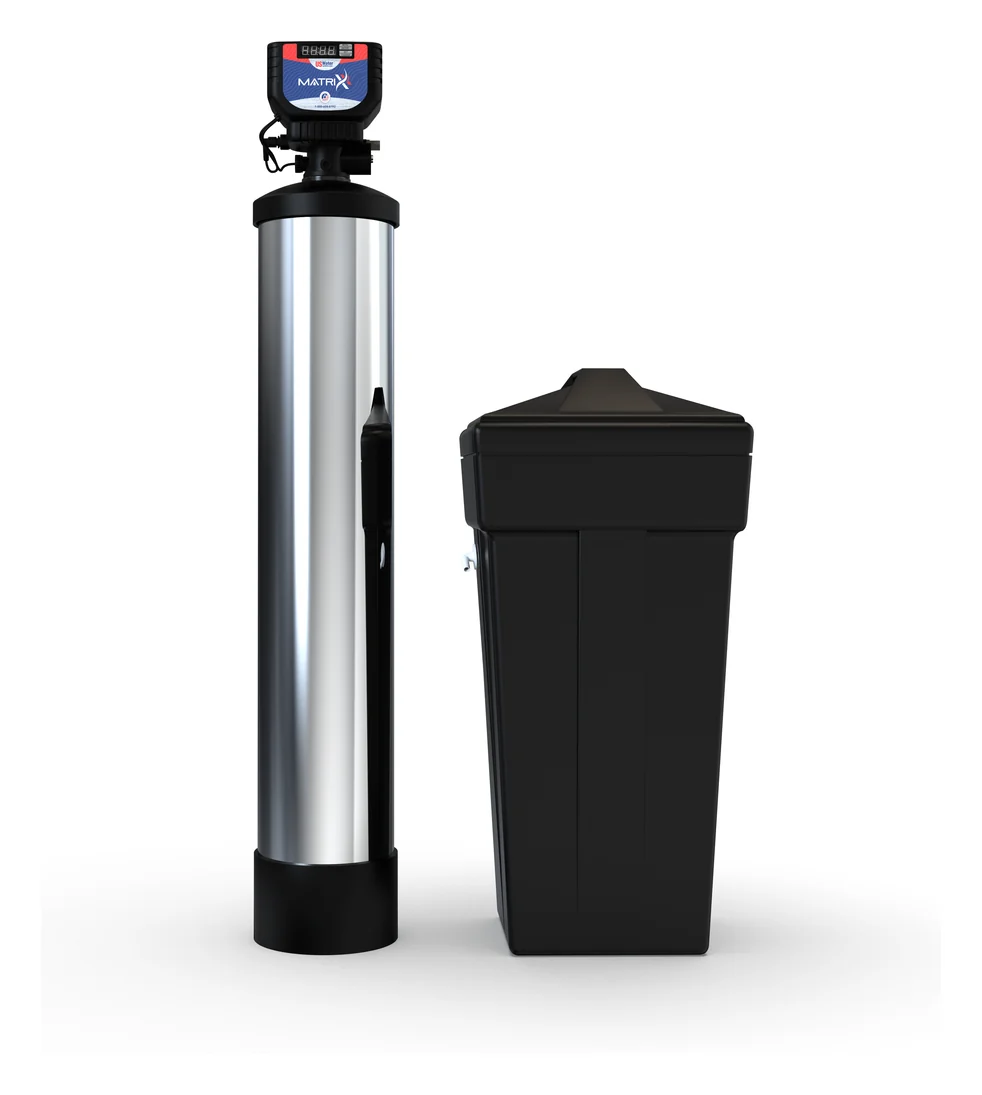
US Water Systems
US Water Systems Matrixx Smart Metered Water Softener
Best for: Buyers who want a serviceable, open-valve softener backed by real technical support, the softener plumbers buy for themselves
- Valve
- Smart metered electronic valve with Bluetooth
- Valve platform
- Open standard, rebuildable, not proprietary
- Support
- 7-day hotline staffed by water technicians
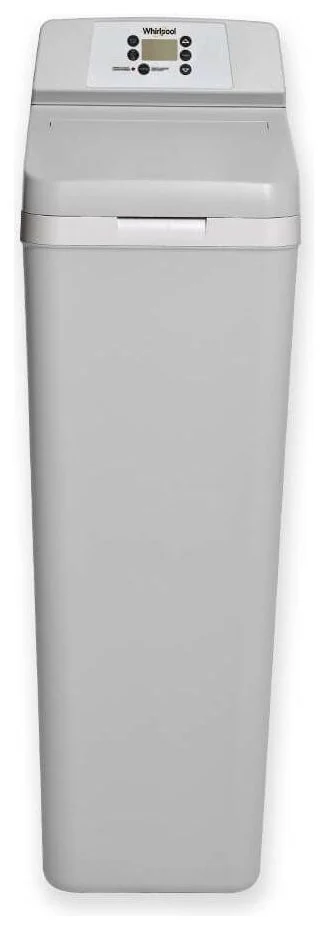
Whirlpool
Whirlpool WHES44 Water Softener (44,000 Grain)
Best for: Big families on a budget: the highest grain, hardness and iron ratings in the big-box aisle
- Grain capacity
- 44,000
- Flow rate
- 9 GPM
- Max hardness
- 140 GPG
- Iron reduction
- 12 PPM
- Retail
- Sold at Lowe's (machine not sold on Amazon, parts only)
The direct-to-consumer route is what changed this category. A dealer replacement quote is written around a service relationship; a DTC system arrives on a pallet with the bypass in the box, and the same swap you would have paid for is the one described above. If the old unit came from a dealer, our quote decoder shows what the replacement proposal is made of before you sign it, and the Culligan review covers the rent or buy question specifically.
For the shortlist by household and budget, the best water softeners page ranks them, and the quiz turns your answers into two or three candidates.
Video coming soon
We cover this topic on the Home Water Lab channel.
Water softener replacement, answered
When should you replace a water softener?
When the repair costs a meaningful share of a new machine, or when the unit is past its expected life and failing at the control head. Plan on 10 to 15 years including resin, 8 to 12 for big-box units on proprietary valves. HomeGuide's 2026 data puts a repair at $150 to $600 with a $430 average plus a $40 to $100 diagnostic, and big-box machines cost $489 to $619.
How do you replace a water softener yourself?
Close the main shut-off, open a downstream faucet to drop the pressure, disconnect the bypass at the old unit, pull it out, set the new tanks, reconnect inlet, outlet, drain line and overflow, then program the new head with your hardness and household size. The hard part is usually getting the old tank out, not the plumbing.
Can you replace just the resin instead of the whole softener?
On a serviceable tank with an open valve platform, yes, and it can buy years. On a big-box unit with a proprietary control valve, re-bedding is rarely worth the labor and the resin is not economically replaceable. The valve type decides, not the age.
Do you need a plumber to replace a water softener?
Not always. A like for like swap where the bypass and fittings match is within reach of a competent DIYer. Call a plumber when the job needs soldered copper, a new drain run, an electrical outlet, or well pressure tank work.
How long does a water softener replacement take?
Two to four hours for a straight swap, including flushing the new resin and programming the head. Add time for removing an old tank from a tight space, and a day if the drain line or bypass has to be rebuilt.
Should you replace a water softener with the same size?
Only after re-checking the arithmetic. Household size, water use and hardness all change over a decade, and the old unit may have been sized to a dealer script. Run your grain reading and daily use through the sizing calculator first.
Frequently asked questions
When should you replace a water softener?
When the repair costs a meaningful share of a new machine, or when the unit is past its expected life and failing at the control head. Plan on 10 to 15 years for a salt-based softener including resin, 8 to 12 for big-box units on proprietary valves. HomeGuide's 2026 data puts a repair at $150 to $600 with a $430 average plus a $40 to $100 diagnostic visit, and big-box machines cost $489 to $619, so on that tier the arithmetic usually favors replacement.
How do you replace a water softener yourself?
Close the main shut-off, open a downstream faucet to drop the pressure, disconnect the bypass valve at the old unit, pull it out, set the new tank and brine tank in place, reconnect inlet, outlet, drain line and overflow, then program the new head with your hardness and household size. The hard part is rarely the plumbing, it is getting the old tank out of a finished basement and matching the connection type.
Can you replace just the resin instead of the whole softener?
On a serviceable tank with an open valve platform, yes, and it can buy years. On a big-box unit with a proprietary control valve, re-bedding is rarely worth the labor, and the resin on those platforms is not economically replaceable. The valve type, not the age, decides.
Do you need a plumber to replace a water softener?
Not always. A like for like swap where the bypass and fittings match is within reach of a competent DIYer with a few hours. Call a plumber when the job needs soldered copper, a new drain run, an electrical outlet, or when the install is on a well with pressure tank work in scope.
How long does a water softener replacement take?
A straight swap runs two to four hours for most homes, including flushing the new resin and programming the head. Add time for removing an old tank from a tight space, and add a day if the drain line or the bypass has to be rebuilt rather than reused.
Should you replace a water softener with the same size?
Only after re-checking the arithmetic. Household size, water use and hardness all change over a decade, and the old unit may have been sized by a dealer to a script rather than to your water. Run your current grain reading and daily use through the sizing calculator before buying the same capacity again.
Keep reading


Not sure what you need?
Answer 5 questions, get the right system for your water.
City or well, budget, household size, our quiz matches your answers against every system we track.