Best Portable and RV Water Softeners 2026
The best portable and RV water softeners for 2026, sized by capacity class: what 8,000 vs 16,000 grains actually treats, sub-$300 pricing, and sizing math.
By Home Water Lab TeamUpdated Prices verified Sep 12, 2026
This page contains affiliate links; buying through them costs you nothing extra.
Two capacity classes describe essentially this entire market, and picking between them is the whole decision: 8,000 grains for weekends in a small rig, 16,000 grains for everyone else. Mainstream units in both classes listed for under $300 in our August 2026 market survey, so the money is not what you are optimizing here. The regeneration chore is.
The short answer
What size portable water softener should you buy for an RV?
Buy the 16,000-grain class unless storage space or lifting weight forces you smaller. At a typical campground hardness of 10 grains per gallon it treats roughly 1,600 gallons between regenerations, which is commonly two weeks to a month of hookup use, against about 800 gallons for the 8,000-grain class. Both classes listed under $300 in our August 2026 survey, and the extra capacity you do not use costs nothing, while every regeneration you avoid is a salt session you do not have to run beside the rig.
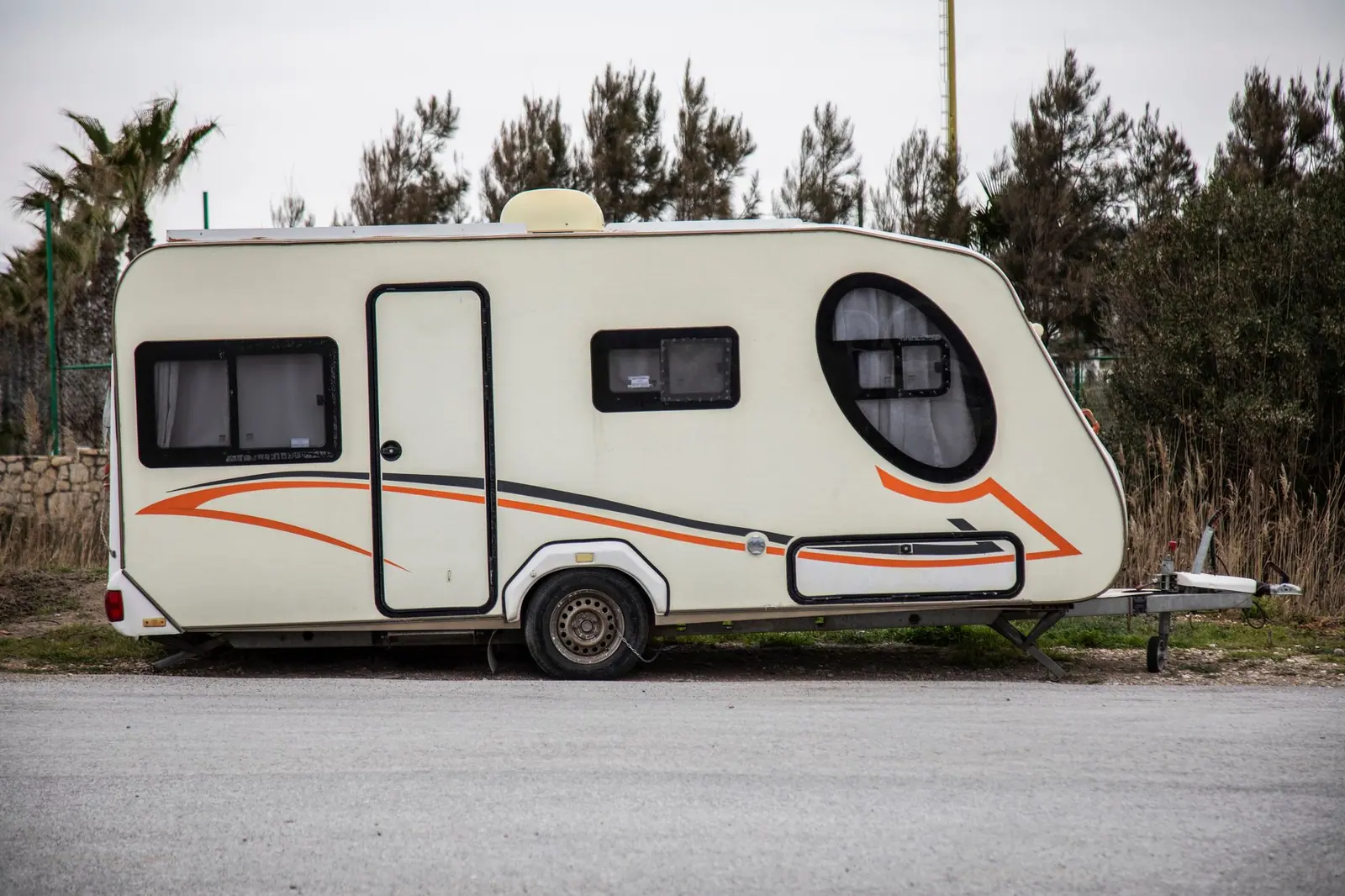
The chemistry is identical to the tank in a basement, which is why our complete water softener guide applies here too, just with smaller numbers and a manual routine in place of a control valve.
Key takeaways
- Sizing is one division: grain capacity divided by hardness in gpg equals gallons treated per cycle.
- At 10 gpg, an 8,000-grain unit covers about 800 gallons and a 16,000-grain unit about 1,600.
- Both classes listed under $300 in our August 2026 market survey; the running cost is a few dollars of salt per regeneration.
- A portable is real ion exchange, so measured hardness actually drops, unlike any salt-free travel descaler.
- Frozen wet resin is damaged resin, which is the single most common way a portable dies in its first season.
What Does a Portable Water Softener Actually Do?#
It runs the same ion exchange as a full-size unit, and that matters: measured hardness genuinely drops at the outlet. Water passes through a tank of resin beads that swap dissolved calcium and magnesium, the minerals that make water hard, for sodium. Soap lathers again, and scale stops building.
What changes is everything around the resin. A portable unit shrinks the tank to fit an RV storage bay, replaces plumbing connections with garden-hose fittings, and deletes the electronics: no control valve, no drain line, no power cord. The trade is regeneration. A home softener rinses and recharges its own resin automatically on a schedule. A portable regenerates when you pour salt through it by hand.
Why bother in an RV at all? Because campground water changes with every hookup, and much of RV country has the worst water in the United States. Per USGS classification, water above 7 grains per gallon (121 mg/L) is hard, and above roughly 10.5 gpg it is very hard. The Southwest, Texas and the Plains states sit heavily in those bands: our state data puts Arizona at roughly 7 to 20.5 gpg and Texas at 5.8 to 23.4 gpg, with San Antonio's own utility publishing 15 to 20 gpg. Scale from one bad month of hookups ends up in your water heater, your fixtures and your kettle, and RV plumbing is small enough that the damage shows up faster than in a house. If you are not sure what to look for, our list of the signs of hard water in a home is written for fixtures rather than lab reports.
What Size Portable Water Softener Do You Need?#
A softener's grain rating is the total amount of hardness it can capture before the resin is exhausted and needs regeneration. Sizing is one division, and you can do it at the spigot.
| Capacity class | At 5 gpg | At 10 gpg | At 20 gpg |
|---|---|---|---|
| 8,000 grains | ~1,600 gallons | ~800 gallons | ~400 gallons |
| 16,000 grains | ~3,200 gallons | ~1,600 gallons | ~800 gallons |
One brand, On The Go, dominates this category, and its core lineup maps directly onto these two classes. We do not yet track dated prices and verified specs for individual portable models the way we do for full-size home systems, so use the capacity class as your framework and confirm the grain rating, fittings and current price on the exact listing you buy.
8,000-grain class
- About 800 gallons per cycle at 10 gpg
- Fits a cramped storage bay and lifts easily when wet
- Right for weekenders, solo travelers and couples in small rigs
- Weekly salt sessions if you park a month in very hard water
16,000-grain class
- About 1,600 gallons per cycle at 10 gpg
- Two weeks to a month between regenerations for most crews
- Right for full-timers, families and residential-style RV plumbing
- Heavier when wet, and it needs a real bay to live in
Bottom line
Nobody ever wishes they had bought the smaller softener. Go 16,000 grains unless the bay or your back says otherwise.
The same capacity logic drives home softener sizing, just with bigger numbers and daily household usage in the formula. If you also need to size a unit for a house, our home softener sizing guide walks the full calculation and the sizing calculator runs it for you.
How Do You Hook Up a Portable Softener at a Campground?#
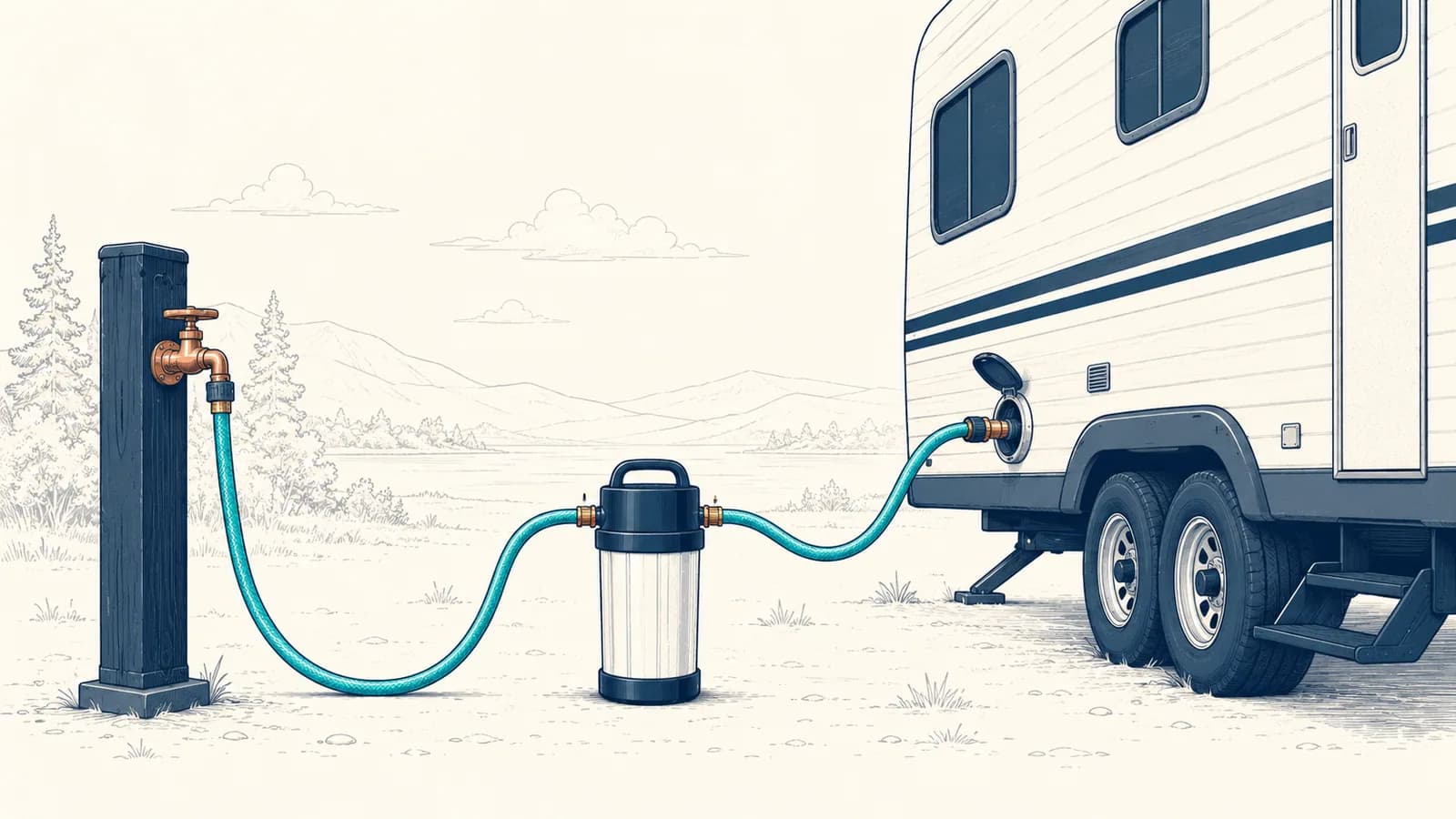
The working order at the spigot matters more than most listings admit, because two of the four pieces exist to protect the softener itself.
The hookup order at the post
Pressure regulator first
Campground pressure is unpredictable and occasionally brutal. The regulator protects everything downstream of it, including the softener housing.Sediment filter before the softener
Grit and rust shorten resin life. A basic inline filter is cheap insurance on a resin bed you cannot replace on the road.Softener next
Strapped or set where it cannot tip. A full portable is heavy and top-heavy, and a fall breaks fittings before it breaks anything else.Drinking-water hose to the RV inlet
Use a hose rated for potable water on the outlet side, not a garden hose. You are about to drink everything that touches it.
First hookup at a new site, run a hardness test strip on the spigot water before connecting. It takes seconds, tells you whether the softener is even needed at this stop, and gives you the gpg number that predicts when the next regeneration is due. Between trips, our state hardness lookup is a decent way to plan a route's water in advance.
How Do You Regenerate a Portable Softener on the Road?#
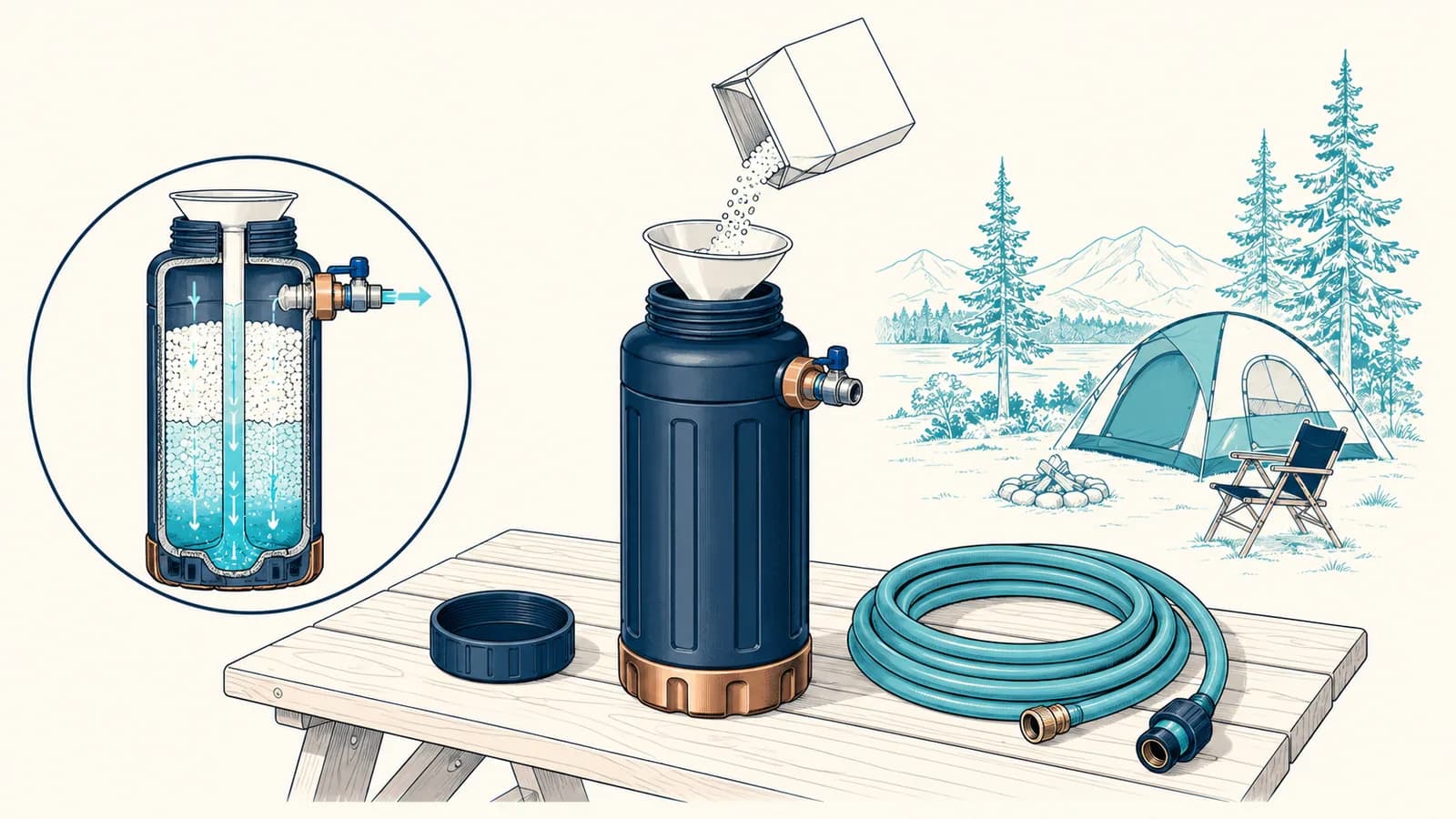
Regeneration is the maintenance ritual that keeps a portable alive, it takes well under an hour, and it needs no tools and no power. The order is what matters.
- Disconnect the unit and relieve pressure.
- Open the fill cap and pour in the salt dose from your manual. Many portable designs regenerate with ordinary plain salt poured straight into the tank; others specify softener salt. Follow the manual, not the forum post.
- Let the brine sit, then run a slow rinse through the unit until the outlet water no longer tastes salty.
- Reconnect and test the outlet with a hardness strip to confirm the resin recharged.
Regeneration, one full cycle
- Backwashto drainFlow reverses and runs up through the bed, lifting the resin, flushing out grit and iron, and unpacking a bed that has compacted under months of downward flow.
- Brine draw and slow rinseto drainThe valve pulls brine out of the salt tank and moves it slowly through the resin. Sodium floods the exchange sites, the captured calcium and magnesium are pushed off and leave with the waste water.
- Rapid rinseto drainA fast downflow clears the last of the brine and settles the bed back into place, so the first glass after a cycle does not taste of salt.
- Refillto brine tankFresh water flows back into the brine tank and starts dissolving salt for the next cycle. The softener returns to service, recharged.
The four phases and their order are the industry-standard ion-exchange cycle, not a vendor claim. A portable unit compresses them: you pour the salt dose from the manual straight into the tank, let the brine soak, then rinse until the outlet no longer tastes salty. Same chemistry, no timer and no backwash.
Salt choice questions (plain salt, pellets, crystals, potassium) come up constantly for home units too, and the trade-offs are the same chemistry: our salt buying guide covers what actually matters.
How Much Does a Portable Water Softener Cost?#
Under $300 for either capacity class. In our August 2026 market survey, mainstream 8,000-grain and 16,000-grain portable units both listed below that line, with the smaller class meaningfully cheaper. Running cost is salt, which is a few dollars per regeneration at most, plus test strips. There is no electricity, no drain, no filter subscription.
Under $300
For context, a full-size home softener runs $1,000 to $3,000 professionally installed per Angi and HomeGuide 2026 figures, before dealer markups. A portable is not a substitute for that, but for protecting one RV from campground water, it is the cheapest real softening you can buy. The full price landscape for home units, from big-box DIY to dealer quotes, is broken down in how much a water softener costs.
What Should You Check Before You Buy?#
The portable market is full of thin listings, and five checks separate a usable unit from a plastic tank with a number printed on it.
Verify before paying
6 itemsWhat you hear
This travel descaler softens water with no salt, ever.
What the numbers say
If it never needs salt, it is not exchanging ions and your hardness number will not move. Conditioners and magnetic descalers manage scale at best; independent WateReuse Research Foundation testing put electromagnetic devices around 50 percent scale reduction against more than 88 percent for template assisted crystallization, and neither removes hardness.
The full argument, and where a conditioner genuinely is the right buy, is in our salt against salt-free breakdown.
When Is a Portable Softener the Wrong Tool?#
Three cases where the honest answer is to skip the portable entirely.
Your rig does not really move. A park-model RV or a trailer on a permanent pad is a small house, and a portable becomes a lifetime subscription to manual regenerations. A full-size softener with automatic regeneration is the correct tool, costs less per grain of capacity, and never asks you to lift it. For a stationary setup on hard city water, this is the class of unit to look at instead:
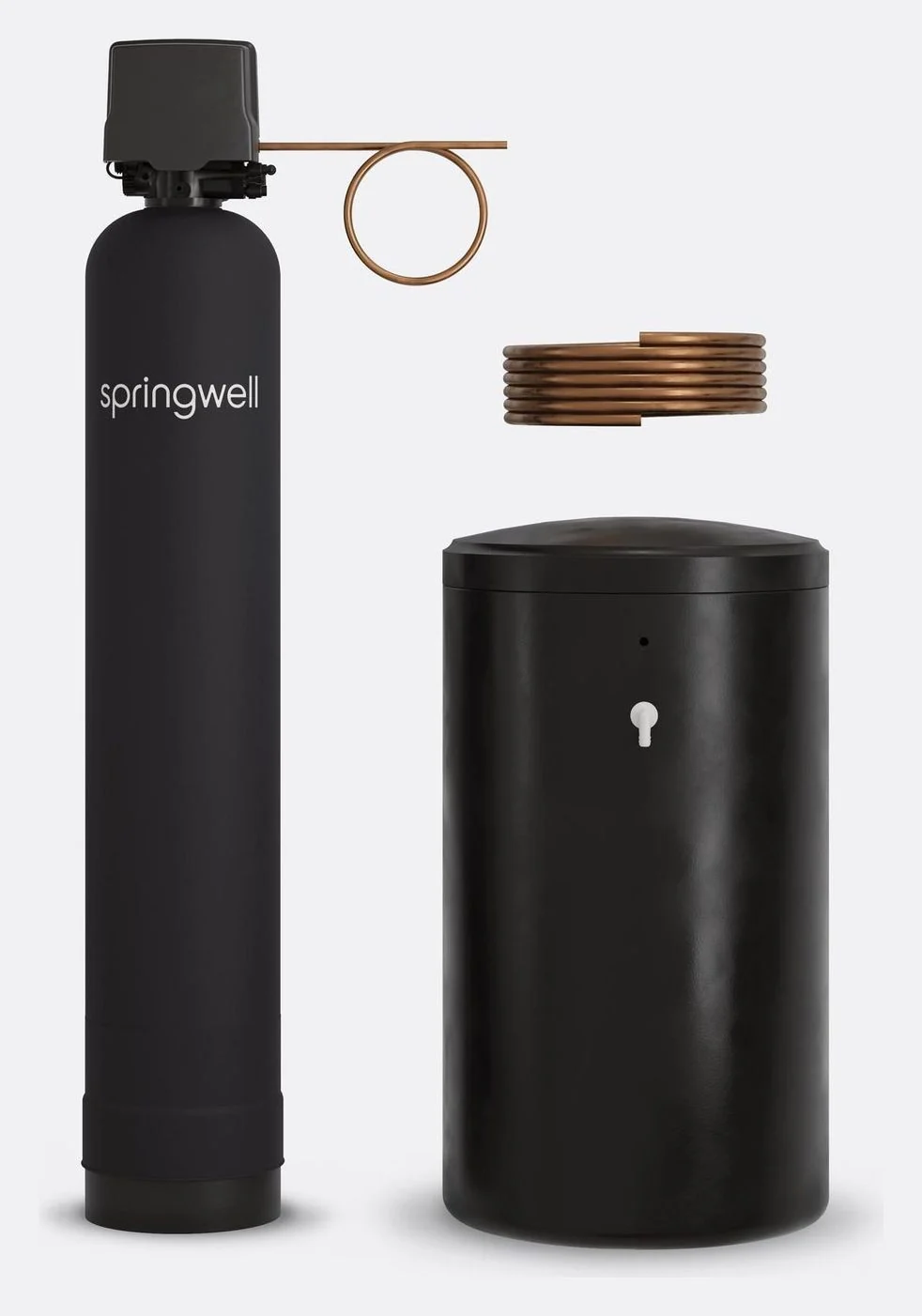
SpringWell
SpringWell SS1 Salt Based Water Softener
Best for: Homes with 1 to 3 bathrooms on hard city water that want true ion-exchange softening at a factory-direct price
- Grain capacity
- 32,000
- Service flow
- 11 GPM
- Bathrooms
- 1 to 3
- Tank
- 9" × 48" (57" with head)
- Connection
- 1"
- Brine tank
- 18" × 33" round (~200 lb salt)
Your regular hookup is an iron-heavy well. Portables publish no iron ratings, and iron fouls resin permanently. Well water with iron or sulfur needs dedicated treatment ahead of any softener, which is a different purchase entirely.
You actually want filtration. A softener removes hardness minerals. It does not remove chlorine, taste, odor or sediment. Those jobs belong to a filter, which is why serious home setups pair the two; the same logic in RV form is a sediment filter plus a softener on the same hose run.
Which Portable Water Softener Should You Buy?#
Buy in the 16,000-grain class unless storage space or lifting weight forces you smaller. It halves the regeneration chore for a modest price difference, and capacity you do not use costs nothing. Choose the 8,000-grain class for weekend trips, small rigs and solo travel. Whatever you buy, order hardness test strips in the same cart, test every new hookup, and regenerate by the gallons math above rather than waiting for spots on the dishes.
If the rig has quietly become a stationary home, stop hauling salt by hand and size a full-size system for the pad instead. Sizing a unit for an actual house next? The hardness and household quiz covers hardness, household and budget in about six questions.
Frequently asked questions
What size portable water softener do I need for an RV?
A 16,000-grain unit is the right default for most RVs. At 10 grains per gallon of hardness it treats roughly 1,600 gallons between regenerations, which covers weeks of typical RV use. An 8,000-grain unit treats about half that and fits weekenders, solo travelers and small rigs with tight storage bays.
How do you regenerate a portable water softener?
Manually. You disconnect the unit, pour the salt dose specified in your manual directly into the tank (many portable designs use ordinary plain salt), then run a slow rinse until the water no longer tastes salty. The process typically takes well under an hour and needs no electricity or drain line.
Can I use a portable water softener for a house?
Only as a stopgap. Portable units are sized for a hose connection and low flow, so a full household will exhaust the resin quickly and the manual regenerations become a chore. A stationary home is better served by a full-size softener sized to your hardness and household, which is what our sizing guide covers.
Do portable water softeners remove iron?
They are not designed for it. Ion-exchange resin can pick up small amounts of dissolved iron, but iron fouls resin over time and portable units publish no iron ratings. If your regular hookup is an iron-heavy well, you need dedicated iron treatment ahead of any softener.
Keep reading
Not sure what you need?
Answer 5 questions, get the right system for your water.
City or well, budget, household size, our quiz matches your answers against every system we track.