Well Water Smells Like Rotten Eggs? Causes and Fixes
A rotten egg smell in well water is hydrogen sulfide. Find the source with a hot and cold sniff test, then match the fix to it: anode rod, shock chlorination or a filter.
By Home Water Lab TeamUpdated Prices verified Oct 7, 2026
This page contains affiliate links; buying through them costs you nothing extra.
A rotten egg smell in well water is hydrogen sulfide gas, and you can usually find where it comes from in ten minutes with your nose and three taps. The source decides the fix: a water heater anode, sulfur bacteria in the well or pipes, or gas dissolved in the groundwater itself. It is rarely a health threat, but a smell is one of the triggers for testing a private well, which is where our complete guide to treating a private well starts.
The short answer
as of Oct 19, 2026Why does my well water smell like rotten eggs?
The smell is hydrogen sulfide, produced by sulfur bacteria or by natural reactions with soil and rock. Find the source first: if only the hot water smells, it's the water heater's anode rod. If the smell fades after the tap runs a few minutes, it's sulfur bacteria in the well or plumbing, and shock chlorination is the fix. If it stays, the gas is in the groundwater and you need a filter sized on a lab result: activated carbon under 1 mg/L, an oxidizing filter or chlorination above.

Key takeaways
- Most people can smell hydrogen sulfide well below 0.5 mg/L, so a strong smell can mean a small amount (Penn State Extension).
- The smell rarely reflects the sanitary quality of the water, but MDH still advises a coliform and nitrate test.
- A hot-only smell points to the water heater's magnesium anode; an aluminum anode is the usual fix.
- Activated carbon handles under 1 mg/L; above that, oxidizing filters, aeration or chlorination take over.
- Shock chlorination kills sulfur bacteria, but Penn State warns the smell often comes back.
What Causes the Rotten Egg Smell in Well Water?#
Hydrogen sulfide gas. The Minnesota Department of Health names four origins: natural decay and reactions with soil and rock, sulfur bacteria living in the groundwater, the well or the plumbing, bacteria or chemical reactions inside the water heater, and, rarely, pollution (page updated Oct 18, 2024).
Geology matters. Penn State Extension says the problem is most common in wells drilled into acidic bedrock such as shale and sandstone, where low-oxygen water lets sulfate-reducing bacteria thrive (updated Dec 10, 2024).
< 0.5 mg/L
That threshold is why the smell feels out of proportion. Your nose picks up very small amounts, so the strength of the smell tells you little about the dose. Only a test does.
Why Does My Well Water Smell Like Sulfur? Find the Source#
Let the water sit unused for a few hours, ideally overnight, then smell the taps in this order. The Minnesota Department of Health gives these checks, and each one rules a source in or out.
Run the water unused for a few hours first
as of Oct 19, 2026- Water heaterA magnesium anode rod can turn sulfate into hydrogen sulfide, and warm tanks let sulfur bacteria live. MDH and Penn State both point to the anode; swapping it for an aluminum one is the usual fix.
- The softenerIf faucets plumbed around the softener do not smell and the rest do, MDH says the softener is the likely source. Disinfect it following the installer's or manufacturer's instructions.
- Sulfur bacteriaA smell that clears once the water runs points to sulfur bacteria in the well or the plumbing. Shock chlorination kills them, though Penn State warns the odor often returns.
- The groundwaterA steady smell means the hydrogen sulfide is in the aquifer. That calls for a treatment system sized on a hydrogen sulfide test, or a new well in a different formation.
Order of checks from the Minnesota Department of Health, Hydrogen Sulfide and Sulfur Bacteria in Well Water (updated Oct 18, 2024); anode and shock chlorination notes from Penn State Extension (updated Dec 10, 2024). Both read Oct 19, 2026.
The third and fourth checks are the ones people skip. A smell that fades after the tap runs a few minutes is living in the well or the pipes, where it can be killed. A smell that never fades is dissolved in the aquifer and will keep arriving until something removes it.
Why Does Only My Hot Water Smell Like Rotten Eggs?#
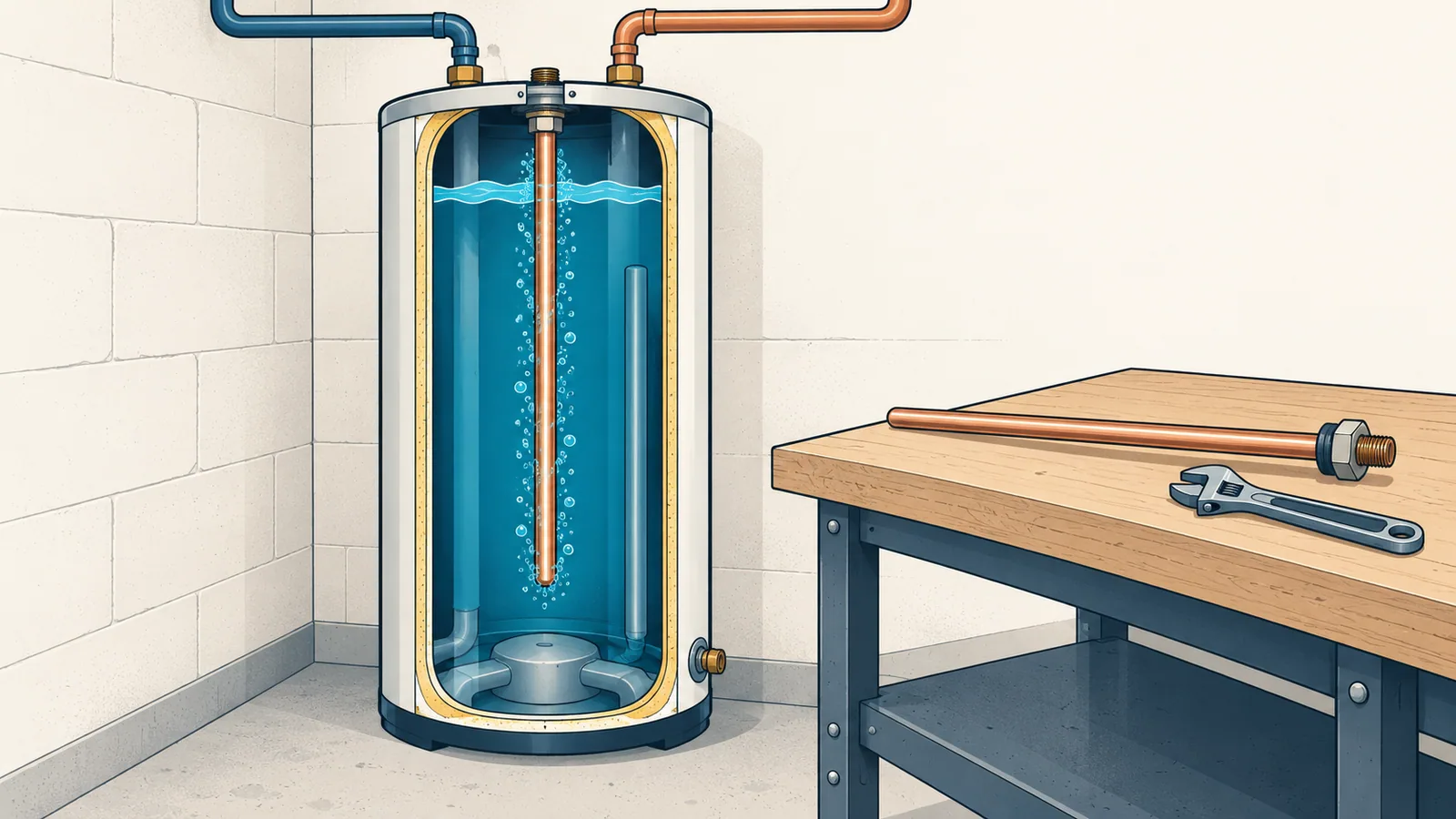
Because of the water heater. Penn State Extension explains that a magnesium anode rod can reduce sulfates to hydrogen sulfide, and MDH adds that warm tanks let sulfur bacteria survive.
The fix is a different anode, not no anode. Penn State says removing the magnesium rod can stop the odor but may increase corrosion and void the warranty, while an aluminum anode should remove the odor and keep protecting the tank. MDH's alternatives are disinfecting and flushing the heater with a chlorine bleach solution, or raising it to 160°F for several hours, flushing it, then turning the thermostat back down to avoid scalding.
Is Sulfur Water Bad for You?#
Usually not. The Minnesota Department of Health says sulfur bacteria are not harmful and that, in most cases, the smell does not relate to the sanitary quality of the water. Penn State notes there is no drinking water standard for hydrogen sulfide, because water becomes unpleasant long before it reaches harmful levels.
Two cautions sit underneath that. The gas itself is the hazard where it collects: MDH warns it can build up in well pits, basements and well houses, and that only well professionals with proper safety precautions should go into them. And because the smell can rarely come from sewage, MDH advises a test for coliform bacteria and nitrate. Our rundown of the tests a private well needs lists what else to add to that panel.
What you hear
If the water smells like sulfur, the well is full of sewage.
What the numbers say
In most cases the smell has nothing to do with sewage. MDH links it to sulfur bacteria and natural reactions with soil and rock, and keeps sewage as a rare cause, which is why a coliform test still belongs in the follow-up.
How to Get Rid of Sulfur Smell in Well Water#
Treat the source the sniff test found, then size any equipment on a hydrogen sulfide result. Penn State warns that hydrogen sulfide escapes from a sample, so the test has to be run in the home or the sample chemically stabilized before it ships to a lab.
Sulfur bacteria in the well or plumbing: shock chlorination#
Shock chlorination kills the bacteria. UGA Extension's method uses unscented household bleach at 3 pints per 100 gallons of water in the well, doubled for a severe odor. You let the water stand at least 8 hours, 12 to 24 being better, then run every tap until the chlorine smell is gone, sending no more than 100 gallons of treated water to a septic system (UGA, Oct 24, 2007).
Working out the bleach dose (UGA Extension's arithmetic)
Find the water column
Subtract the depth to water from the total depth of the well. The well log or your driller has both numbers.Convert to gallons
Multiply that depth by 0.65 for a 4-inch well or 1.47 for a 6-inch well, then add 100 gallons for the pressure tank and water heater.Dose the bleach
Use 3 pints of unscented bleach per 100 gallons, or double it for a severe odor, and circulate it back down the well with a garden hose.Wait, then flush
Run each cold tap until you smell chlorine, leave the system at least 8 hours, then flush outdoors first, keeping the septic system under 100 gallons.
Expect it to be temporary. Penn State calls shock chlorination a fix that kills the bacteria while the odor usually returns quickly, and MDH says heavy sulfur bacteria may need pre-treatment by a licensed well contractor first.
Hydrogen sulfide in the groundwater: a treatment system#
The level on your test picks the method, and the two extension services draw the lines slightly differently.
| Hydrogen sulfide on your test | Method | What the sources say |
|---|---|---|
| Under about 1 mg/L | Activated carbon | MDH and Penn State; Penn State sizes a whole-house unit at about 1.0 to 1.5 cubic feet of carbon |
| Up to about 2 to 3 mg/L | Oxidizing filter (manganese greensand) | Penn State; MDH puts the same filters at up to about 6 mg/L |
| Up to about 2 mg/L | Aeration | Penn State; leaves sulfur particles to filter and calls for disinfection afterward |
| Above about 6 mg/L | Continuous chlorination or potassium permanganate, then filtration | Penn State; at least 20 and 15 minutes of contact time |
| Any level | Hydrogen peroxide or ozone, then filtration | Penn State and MDH list both, without a range |
The greensand line is the one the sources disagree on, 2 to 3 mg/L at Penn State against about 6 at MDH, so treat a result in that gap as a conversation with the seller rather than a sure fit. What each of those stages adds to a well budget is laid out in our cost breakdown for well water treatment.
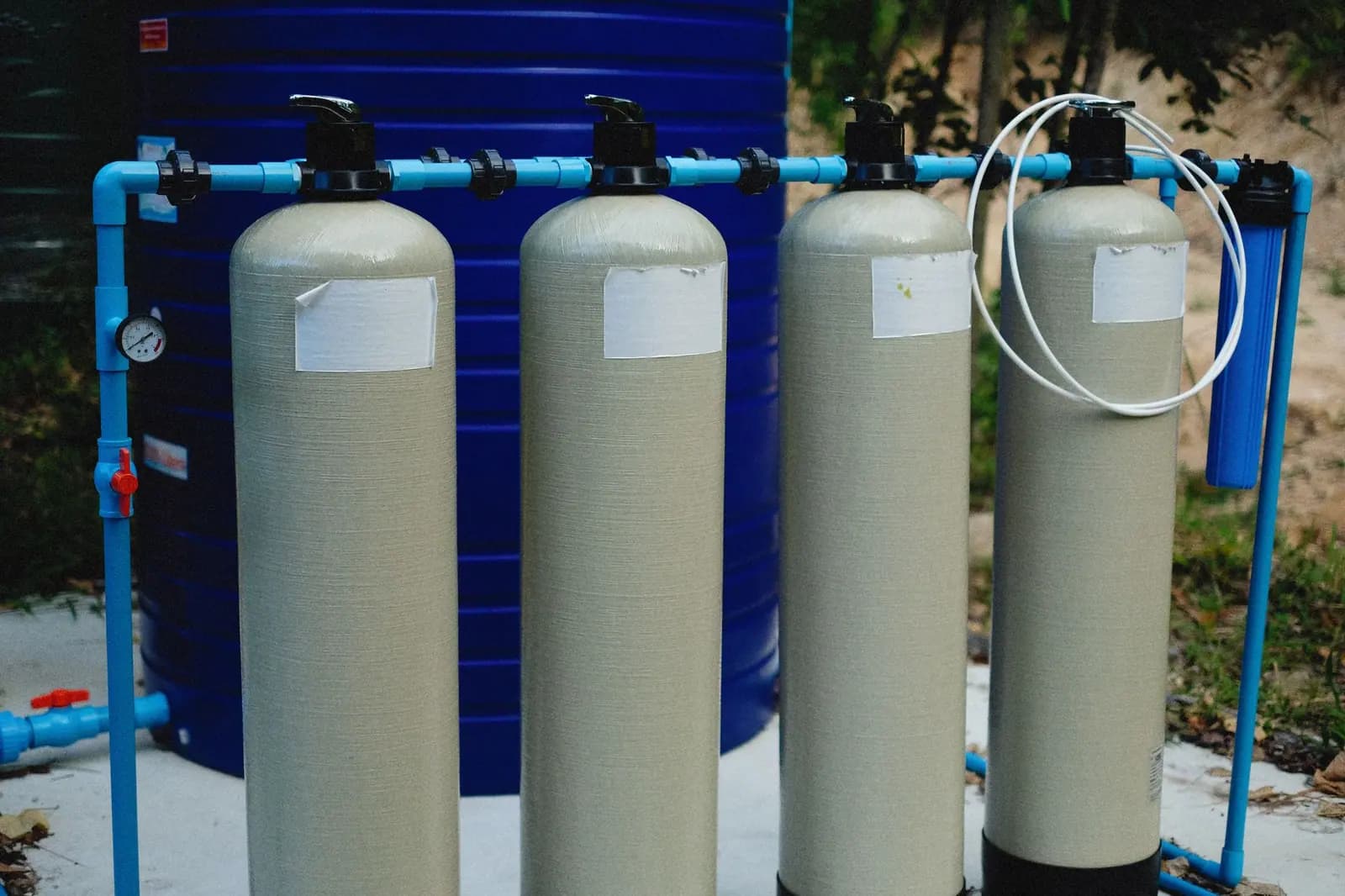
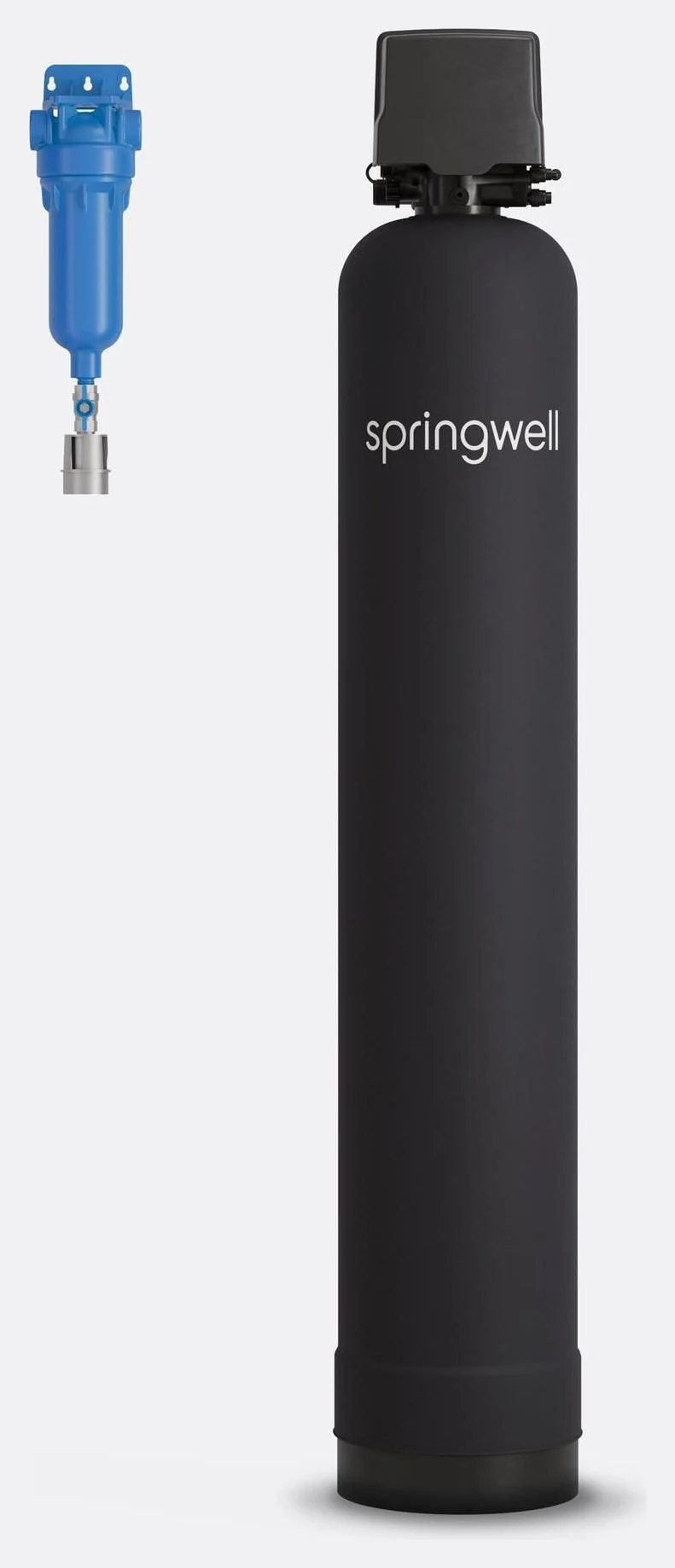
Most house-sized systems are oxidizing filters. The SpringWell WS1 uses an air pocket over a greensand bed and is rated for up to 8 ppm hydrogen sulfide, alongside 7 ppm iron and 1 ppm manganese, on SpringWell's page read Oct 19, 2026. The full test of that system is our hands-on SpringWell WS1 review.
SpringWell
SpringWell WS1 Whole House Well Water Filter
Best for: Well-water homes with light-to-moderate iron, sulfur or manganese that want a chemical-free, no-consumable setup
- Technology
- Air Injection Oxidation (AIO), single tank, chemical-free
- Flow rate
- 12 GPM
- Iron rating
- 7 ppm
- Manganese rating
- 1 ppm
- Sulfur (H2S) rating
- 8 ppm
- Media
- Greensand fusion, 10+ year life
Past those ratings, peroxide injection takes over. The chart below lines up the published ceilings of four well systems; our iron filter rankings for private wells explain when each one is the right call.
Rated ceilings, in ppm
as of Oct 12, 2026- SpringWell WS1air injectionAir pocket over a greensand fusion bed, nightly backwash, nothing to refill. $2,100 on Nov 2, 2026 ($2,231.25 on Oct 12). Ratings from SpringWell's product page.
- Flexx inFusionperoxideUS Water Systems' entry peroxide-injection system on a ceramic disc valve. $2,595 for the 10 GPM size on Oct 12, 2026. Note the lower manganese ceiling.
- Katalox AIO buildair injectionA Fleck 2510AIO valve on Katalox Light media, as sold by Mid Atlantic Water, a Fleck installer, from $2,095 (page updated Oct 2, 2026).
- Matrixx inFusionperoxideUS Water Systems' peroxide injection ahead of catalytic carbon, also aimed at iron and sulfur bacteria. $3,294.95 for the 10 GPM size on Oct 12, 2026.
Bars are each seller's published rating, scaled within each panel, not measured performance. Dashed line: the SpringWell WS1's ceiling. Sources: springwellwater.com and uswatersystems.com product pages read Oct 12, 2026; midatlanticwater.net SpringWell review, updated Oct 2, 2026.
Does Sulfur Water Come With Iron?#
Often. Penn State lists iron among the things that clog ion exchange treatment for sulfur, and the black or yellow greasy stains hydrogen sulfide leaves can sit next to the orange stains of iron. The same oxidizing filter usually handles both, which is why its ratings list them side by side.
If your test also shows iron, read five ways to remove iron from well water, by ppm before buying, and check for slime: sulfur bacteria produce one that MDH says helps iron bacteria grow, which the rust filter guide's section on iron bacteria covers. Hard water on top of both changes the order of equipment, as our softeners matched to iron and sulfur wells explain, and our channel walks through that combination.
MDH page updated Oct 18, 2024; Penn State Extension page updated Dec 10, 2024; UGA Field Report published Oct 24, 2007; SpringWell WS1 page read Oct 19, 2026; system ceilings read Oct 12, 2026. All read Oct 19, 2026 unless noted. We did not test any well for this page.
More rotten egg smell questions
Why does my water smell like sulfur when I first turn it on?
Water that has sat in the pipes or the heater gives off the most gas. If the smell fades after a few minutes of running, the Minnesota Department of Health points to sulfur bacteria in the well or plumbing; if it stays, to hydrogen sulfide in the groundwater.
Can a carbon filter remove sulfur smell?
At low levels. The Minnesota Department of Health and Penn State Extension both put activated carbon at under about 1 mg/L of hydrogen sulfide, and Penn State sizes a whole-house unit at roughly 1.0 to 1.5 cubic feet of carbon.
Does shock chlorination get rid of sulfur smell for good?
Rarely. It kills sulfur bacteria in the well and plumbing, but Penn State Extension says the odor usually returns quickly. A recurring smell calls for a treatment system sized on a hydrogen sulfide test.
How do I test for hydrogen sulfide?
Ask a certified lab for a hydrogen sulfide test and follow its sampling sheet closely. Penn State Extension says the test must be done in the home, or the sample chemically stabilized before it ships, because the gas escapes.
Frequently asked questions
Is it safe to drink well water that smells like rotten eggs?
Usually the smell itself is not the danger. The Minnesota Department of Health says that in most cases the rotten egg smell does not relate to the sanitary quality of the water, and that the sulfur bacteria behind it are not harmful. In rare cases the gas comes from sewage or other pollution, so MDH advises testing for coliform bacteria and nitrate to be safe.
Why does my well water smell like sulfur all of a sudden?
A new smell usually means something changed in the well, the plumbing or the water heater, where sulfur bacteria can take hold. Run the Minnesota Department of Health's check: smell the hot and cold taps after a few hours of no use. Only hot means the water heater; a smell that fades after a few minutes of running points to bacteria; a steady smell points to the groundwater. The CDC also lists a change in smell as a reason to test the well.
How do I get rid of the rotten egg smell in my well water?
Match the fix to the source. A water heater smell usually goes with an aluminum anode rod in place of the magnesium one. Sulfur bacteria in the well or plumbing are killed by shock chlorination, though Penn State warns the odor often returns. Hydrogen sulfide in the groundwater needs a treatment system sized on a hydrogen sulfide test: activated carbon below about 1 mg/L, an oxidizing filter or continuous chlorination above it.
Can I still shower if my water smells like rotten eggs?
Neither the Minnesota Department of Health nor Penn State Extension warns against bathing in it, and Penn State says the odor warns of the gas long before it reaches harmful levels. The gas MDH does warn about is the one that collects in enclosed spaces such as well pits, basements and well houses: only a well professional with safety precautions should go into those.
Will a water softener remove the sulfur smell?
Not reliably. Penn State Extension lists ion exchange as a method, but warns that iron and suspended solids clog it, and notes that softeners can occasionally promote the bacteria that make the gas. The Minnesota Department of Health includes the softener in its list of places to check when the smell starts.
Should I call a plumber if my water smells like rotten eggs?
Run the hot and cold sniff test first, because it tells you who to call. A hot-only smell is a water heater job a plumber can do. A smell from both taps points to the well or the groundwater, where a licensed well contractor and a certified lab test are the right next steps.
Keep reading

Not sure what you need?
Answer 5 questions, get the right system for your water.
City or well, budget, household size, our quiz matches your answers against every system we track.