How to Remove Hard Water Stains from Every Surface
Remove hard water stains with a 50/50 white vinegar and water mix, rinse and dry. Faucets, toilets, glass, tile and dishes, plus the surfaces acid damages.
By Home Water Lab TeamUpdated Prices verified Oct 7, 2026
This page contains affiliate links; buying through them costs you nothing extra.
Hard water stains come off with a mild acid: a 50/50 mix of white vinegar and water, left on long enough to dissolve the mineral, then rinsed and dried. That's the method Moen and Kohler both give for their faucets, and it works on most fixtures in the house. The exceptions matter as much as the method, because the same vinegar damages cement grout and natural stone. And if the stains keep returning, the cause is your water, which is the bigger story of what hard water does to a home.
The short answer
as of Oct 12, 2026How do you remove hard water stains?
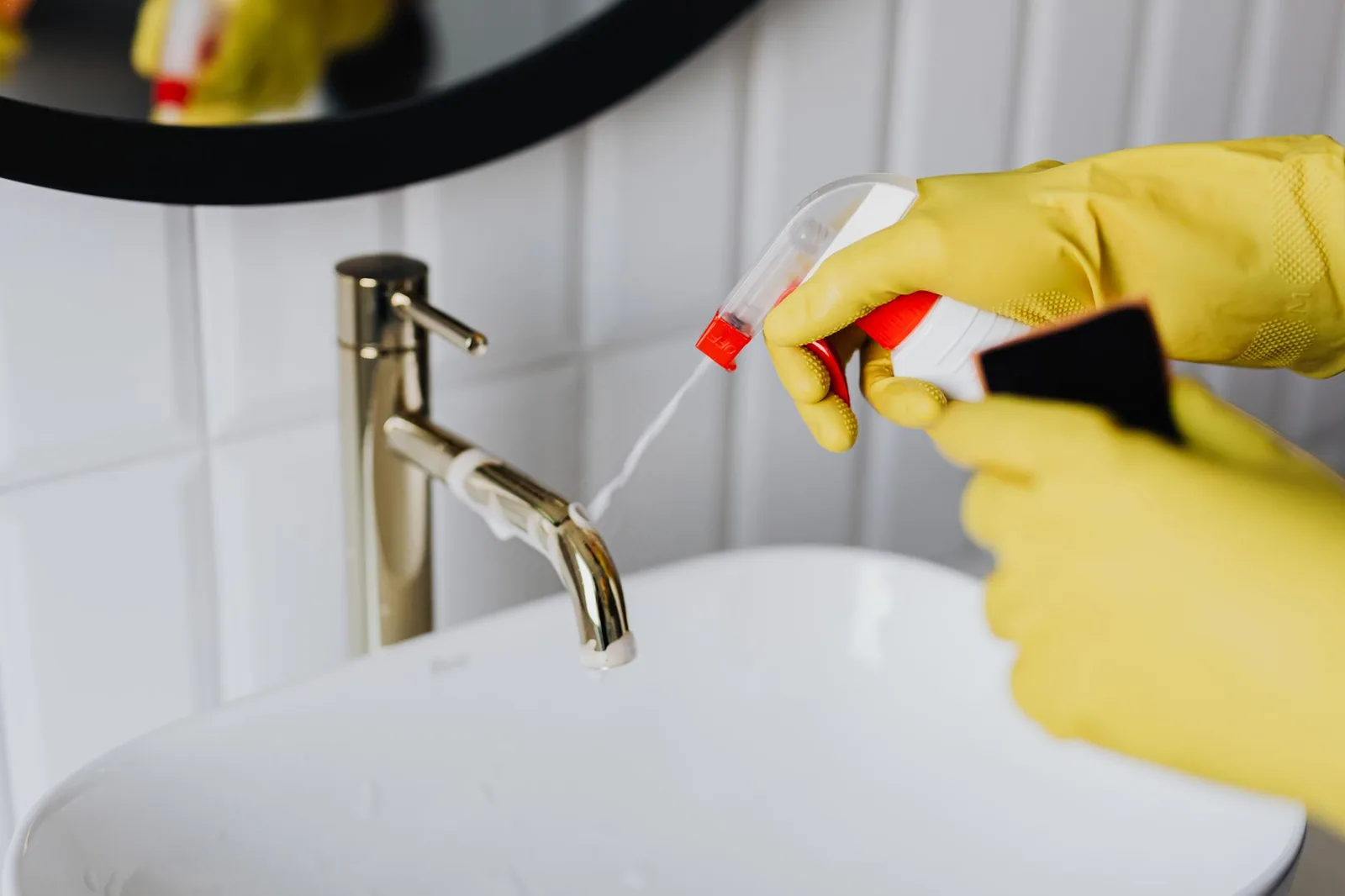
Soak the stain in 50/50 white vinegar and water, the mix Moen and Kohler recommend for faucets. Kohler wraps a towel soaked in it around the fixture for 5 to 10 minutes, then you wipe, rinse and dry. For thick scale, a calcium and lime remover such as CLR goes on for no more than 2 minutes, per its label. Never use acids on marble, natural stone or cement grout, and never mix any acid with bleach: it releases chlorine gas.
Key takeaways
- 50/50 white vinegar and water is the faucet makers' own method: Moen and Kohler both print it.
- Commercial lime removers work faster but are stricter: CLR caps contact at 2 minutes and excludes natural stone, brass and copper.
- Cement grout and marble take no acid at all, per MAPEI, the Tile Council of North America and the Natural Stone Institute.
- Orange or black marks are iron (EPA secondary standard 0.3 mg/L) or manganese (0.05 mg/L), a different problem with a different fix.
- The USGS calls water hard above 120 mg/L. At that level, stains come back until the water itself changes.
What Are Hard Water Stains?#
White, chalky crust or cloudy film left where hard water dries. The USGS describes calcium carbonate deposits forming wherever hard water is heated, a reaction between soap and calcium that leaves soap scum, and the "spots or film" on glasses after a dishwasher run, which it calls "not dangerous, but unsightly."
You'll find them in predictable places: the base of a faucet, the shower glass, the waterline in a toilet bowl, the grout lines in a shower, and the glasses on the top rack. Our checklist of the household signs that point to hard water walks through the rest.
Color tells you whether it's hardness at all. White or gray is calcium and magnesium. Reddish or orange staining is iron, which the EPA's secondary standard flags at 0.3 mg/L, and black or brown staining is manganese, flagged at 0.05 mg/L. Those come from the water source, usually a private well, and no amount of vinegar fixes them for long; the well water treatment options mapped by symptom start there.
What Removes Hard Water Stains?#
An acid, because the stain is a mineral that acids dissolve. White vinegar is the gentle one, citric acid is another weak option, and commercial calcium and lime removers are the strong end. Which one a surface can take is the whole skill.
Six surfaces, two acids
- Faucetsvinegar okMoen and Kohler both give a 50/50 mix of white vinegar and water, then a rinse and a dry. CLR lists chrome as safe, but Moen tells owners of several finishes to avoid lime scale removers, and CLR's own label excludes brass, copper and nickel.
- Shower glasswith careKohler and Sterling list specific glass cleaners and say not to let any cleaner sit and soak. DreamLine bans acids on the metal hardware and warns that hard water left to dry can etch the glass itself.
- Toilet bowlvinegar okKohler says most toilet bowl cleaners do not harm vitreous china, and many of them are acids by Washington State's own list. Its toilet guides rule out abrasive cleaners and in-tank cleaners. CLR lists porcelain as safe.
- Tile and groutno acidMAPEI says never to use vinegar for routine tile and grout cleaning, since even diluted it can damage cement grout. The Tile Council of North America explains why: cement is alkaline and dissolves in acid.
- Marble, stoneno acidAcids dull or etch marble and limestone, per the Natural Stone Institute, and CLR's label excludes all natural stone, cultured marble included. The Institute says to buff water spots with dry 0000 steel wool and clean with a neutral cleaner or mild dish soap.
- Glasswarevinegar okWhirlpool's manual says to soak a cloudy glass in white vinegar for 5 minutes: if the haze lifts it was hard water, if not it is etching, which is permanent.
Solid dot: the maker or trade body says yes. Ring with an exclamation mark: conditions apply, read the row. Ring with a cross: the maker or trade body says no. Ring with a bar: not a use case. From Moen, Kohler, Sterling, DreamLine, CLR, MAPEI, Whirlpool, the Tile Council of North America and the Natural Stone Institute, all read Oct 12, 2026. Never mix any acid with bleach.
Commercial removers deserve their own rules. CLR's directions say to mix it with equal parts warm water in a ventilated room, leave it on for no longer than 2 minutes, and rinse with cold water. Its label lists chrome, fiberglass, porcelain and stainless steel as suitable, and rules out natural stone, brass, copper, aluminum, galvanized metal and painted, coated or sealed surfaces. CLR also says it's EPA Safer Choice recognized. That's a statement about ingredients, not permission to skip the label.
How Do You Remove Hard Water Stains from Faucets?#
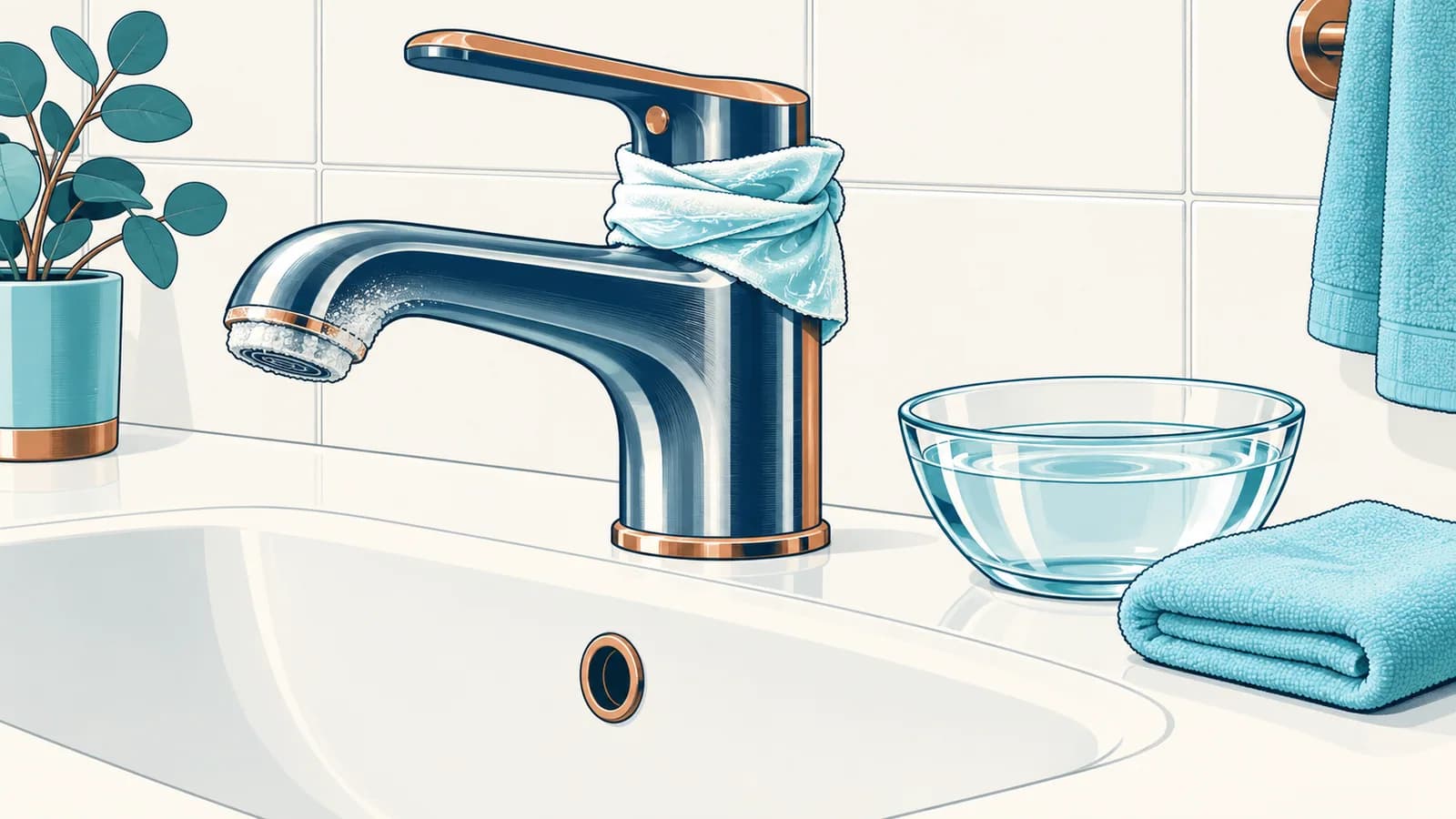
With a towel soaked in 50/50 white vinegar and water, wrapped around the fixture. Kohler's support page gives five to ten minutes; Moen says to use the mix "for a limited amount of time," then rinse and dry with a soft cloth.
Kohler's towel wrap, step by step
Mix the solution
Equal parts white vinegar and warm water, the ratio both Kohler and Moen give.Wrap the fixture
Soak a towel in the mix and wrap it around the crusted part, the handle base or the spout.Wait five to ten minutes
That's Kohler's timing. Longer isn't better on a plated finish, which Moen asks you to expose only briefly.Wipe with something soft
A cloth or soft sponge lifts the softened mineral. Skip steel wool and abrasive pads unless your finish's maker allows them.Rinse and dry
Clear water, then a dry cloth, as Moen's care page asks. Drying is what slows the next ring.
Check the finish before going stronger. Moen tells owners of several finishes, including its Spot Resist ones, to avoid lime scale removers, and CLR's own label excludes brass, copper and nickel. Stainless steel is on CLR's list of suitable surfaces, so a stainless sink or faucet can take the stronger product when vinegar stalls. For crusted aerators and shower heads, our shower filter guide's descaling steps cover the bag soak.
How Do You Remove Hard Water Stains from a Toilet?#
With a toilet bowl cleaner and a long-handled brush, used often. Kohler's toilet guides say most bowl cleaners don't harm vitreous china, and to use one at least once a week in a hard water area. Its guides also ask you to keep the rim holes clean so the bowl still flushes properly.
Two things are off the list in Kohler's guides: abrasive cleaners, and in-tank cleaners, whose chlorine can damage the parts inside the tank. A pumice stone is the classic forum answer for the ring at the waterline. It's also an abrasive, so we'd follow the maker and try a bowl cleaner first.
What About Shower Glass?#
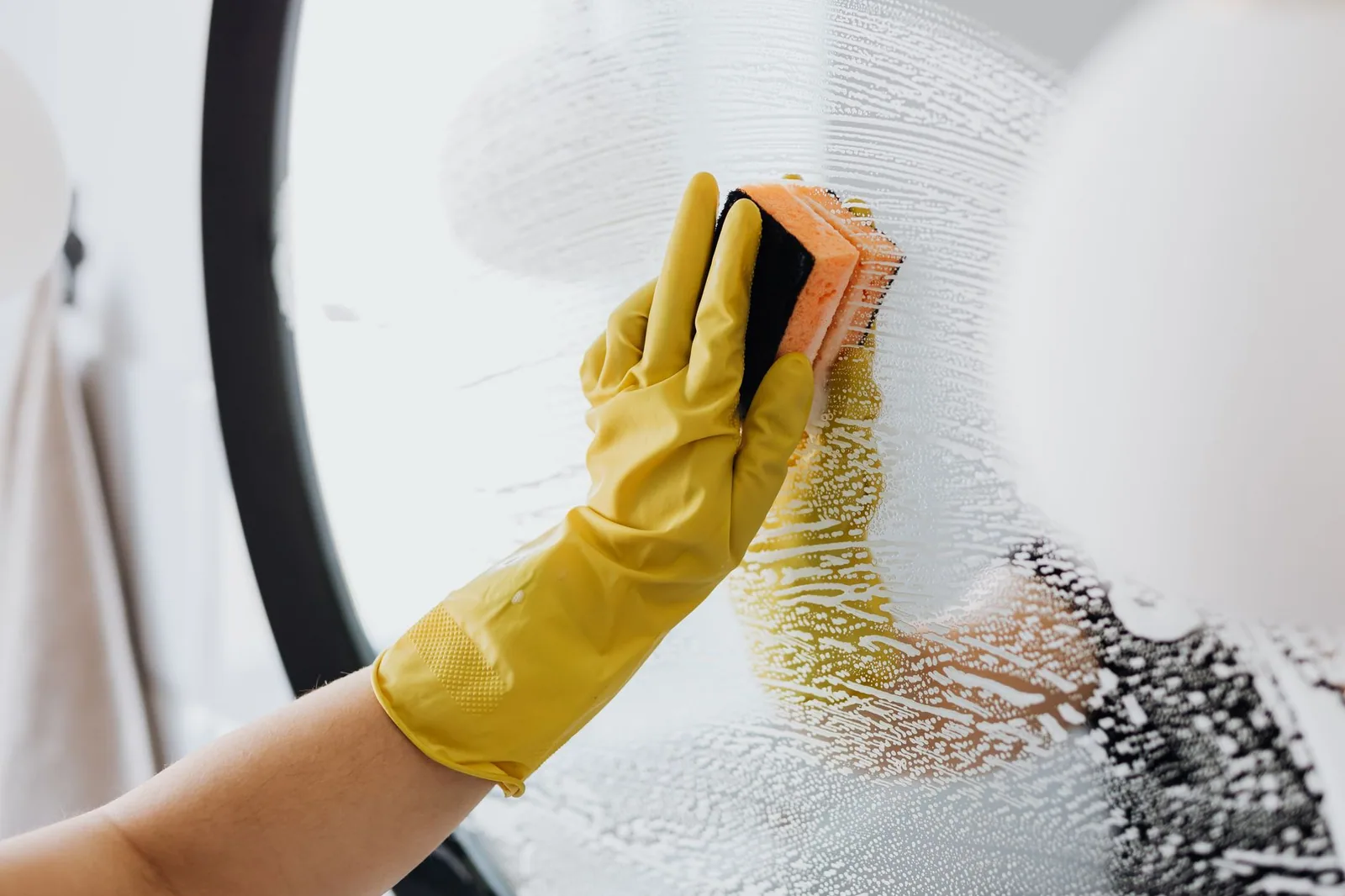
Mostly by not letting them form. Kohler, Sterling and DreamLine all tell owners to squeegee or wipe the glass after every shower, and DreamLine warns that hard water left to dry "can etch the surface of the glass over time." Etching is permanent, which makes the 30-second squeegee the cheapest thing on this page.
For buildup that's already there, read your door's care guide before any acid goes on. Kohler and Sterling list specific glass cleaners, ask you not to let any cleaner sit and soak, and rule out abrasives. DreamLine bans acids on the metal hardware. So a vinegar mix that's fine on the glass still has to stay off the frame. Doors that have already filmed over, and the razor blade question, get the full treatment in our step-by-step guide to hard water stains on glass shower doors.
How Do You Remove Hard Water Spots from Glasses and Dishes?#
Test one glass first. Whirlpool's dishwasher manual says to soak a cloudy glass in white vinegar for 5 minutes: if the haze disappears, it was hard water, and if it doesn't, it's etching, which is permanent damage to the glass.
If it was hard water, Whirlpool's fix is a vinegar rinse. Take out all silverware and metal items, put 2 cups of white vinegar in a glass measuring cup on the lower rack, and run a Normal cycle with heated drying off and no detergent. For glasses already filmed, its glassware guide soaks them fully in vinegar for 15 minutes, then washes them by hand. Adding rinse aid and matching detergent to your water's hardness, per the same manual, keeps the film from coming straight back.
Where Should You Never Use Vinegar?#
On cement grout and on marble or other natural stone. These are the two places where the internet's favorite cleaner does lasting harm.
What you hear
Vinegar is a gentle, natural cleaner, so it's safe on every bathroom surface.
What the numbers say
MAPEI says never to use acidic cleaners such as vinegar for routine tile and grout cleaning, because even diluted vinegar can damage cement-based grout. The Natural Stone Institute says acids etch marble and limestone, and CLR's label excludes all natural stone, cultured marble included.
The Tile Council of North America explains the grout problem in one line of chemistry: cement is alkaline, and acids dissolve it. It suggests an alkaline cleaner for grout instead. On stone, the Natural Stone Institute recommends a neutral cleaner, a stone soap or a mild dish soap, rinsed and dried, and for water spots and rings it says to buff with dry 0000 steel wool rather than reach for an acid. It also warns that many rust removers and toilet bowl cleaners contain traces of hydrofluoric acid, which attacks every stone, granite and quartzite included. If you're not sure whether a counter is marble or quartzite, Use Natural Stone notes that marble etches visibly under vinegar or lemon juice while true quartzite doesn't, though strong acids like rust removers can etch even granite and quartzite.
Does Dawn and Vinegar Remove Hard Water Stains?#
The vinegar does the dissolving. Dish soap is the forum addition, mixed in so the solution clings to vertical glass and cuts the soap film sitting on top of the mineral. We found no maker's guidance on the mix, so the surface rules above still apply, and it never goes near bleach.
Why Do Hard Water Stains Keep Coming Back?#
Because every gallon brings more calcium and magnesium. The USGS classes water above 120 mg/L as hard and above 180 mg/L as very hard, and at those levels a cleaned fixture starts filming again within days. Cleaning removes the stain you have. It does nothing about the next one.
Prevention buys time: squeegee the shower, wipe the faucet dry, and use rinse aid. To know how hard your water actually is, the test kits we compared for an honest gpg number or your state's typical hardness readings come first, and the grains-per-gallon explainer turns the number into a decision.
The only fix that stops new stains is removing the minerals before they reach the tap, which is what an ion-exchange softener does. A salt-free conditioner reduces scale inside pipes but leaves the spotting, and a shower filter doesn't touch hardness at all. Six hard water fixes ranked from $20 to a full softener lays out the ladder, and how ion-exchange softeners work and who needs one explains the machine.
SpringWell
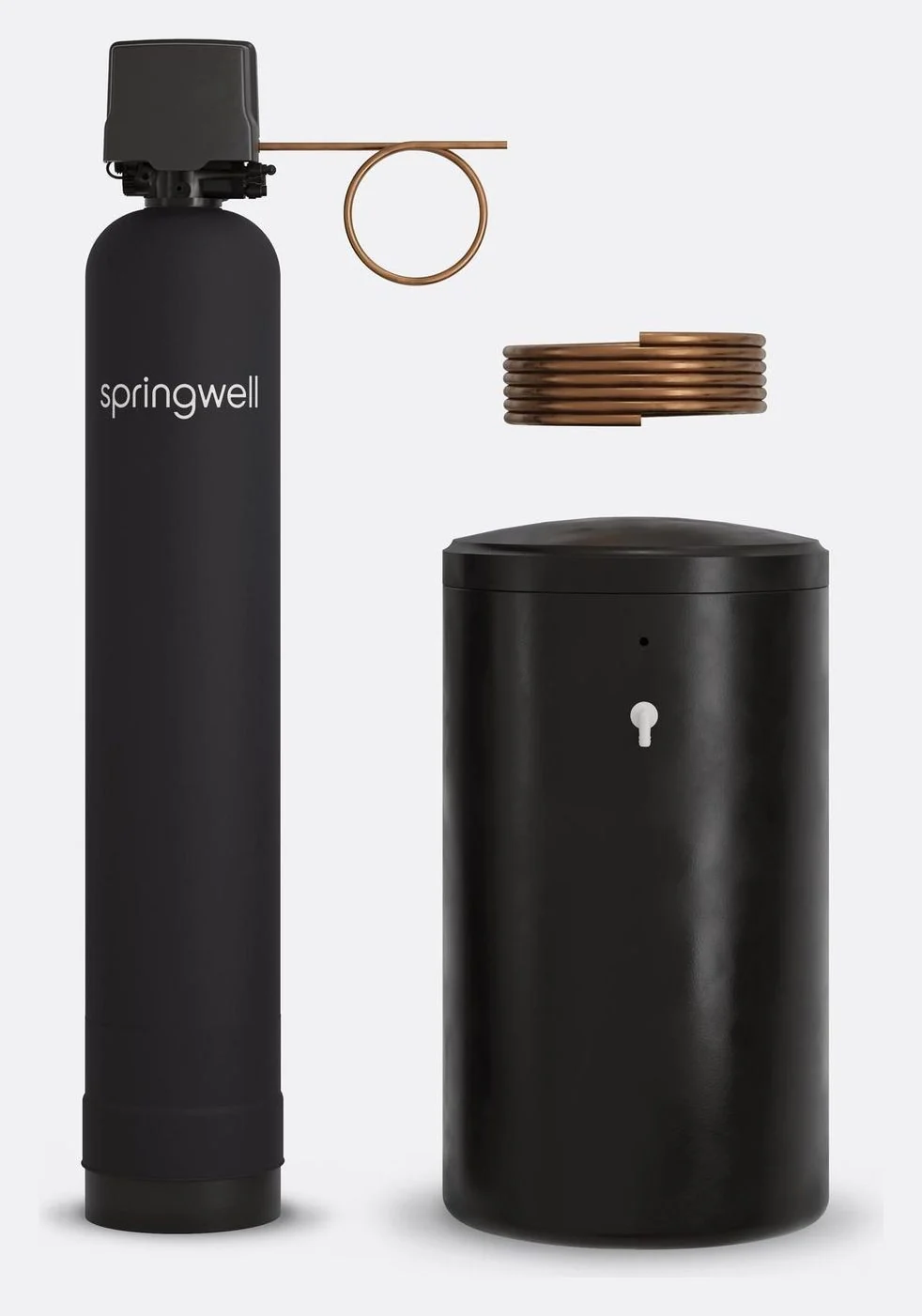
SpringWell SS1 Salt Based Water Softener
Best for: Homes with 1 to 3 bathrooms on hard city water that want true ion-exchange softening at a factory-direct price
- Grain capacity
- 32,000
- Service flow
- 11 GPM
- Bathrooms
- 1 to 3
- Tank
- 9" × 48" (57" with head)
- Connection
- 1"
- Brine tank
- 18" × 33" round (~200 lb salt)
The SpringWell SS1 was $1,512 on Nov 2, 2026 ($1,890 list) under a 20%-off banner, rated for 1 to 3 bathrooms. It's a 32,000-grain softener with a Bluetooth head; its electronic head carries 5 years of warranty against lifetime on the tank and valve, and returns cost a restocking fee. Our full review of the SS1's specs and trade-offs goes further, and the bags worth buying to keep it fed cover the salt.
Methods and limits are quoted from each manufacturer's care pages, manuals and labels, and from the trade bodies named, all read Oct 12, 2026. The USGS hardness page is dated Aug 24, 2026 and the EPA standards page was updated May 26, 2026. The SpringWell price is from its own store. We did not lab-test any cleaner; where a maker's guide is silent, as on vinegar and dish soap mixes, we say so.
Hard water stain questions people ask
What do hard water stains look like?
White or gray chalky crust on faucets and drains, a cloudy film on glass and dishes, and a ring at the toilet waterline. Orange or reddish marks are iron and black or brown ones are manganese, which come from the water source and need a different fix.
How do you remove hard water stains from stainless steel?
Start with the 50/50 white vinegar and water mix faucet makers give, then rinse and dry. If that stalls, CLR lists stainless steel among its suitable surfaces, mixed half and half with warm water and left on no more than 2 minutes. Dry the surface afterwards so new spots don't form.
How long should vinegar sit on hard water stains?
Kohler's method for a faucet is a towel soaked in 50/50 vinegar and water, left for five to ten minutes. Moen asks for a limited time on plated finishes. For cloudy glassware, Whirlpool soaks the glass in straight vinegar for 15 minutes.
Are hard water stains harmful?
No. The USGS calls hard water residue not dangerous, but unsightly. The cost is cleaning time and wear on fixtures and appliances, not a health risk.
Does a water softener remove existing hard water stains?
No. A softener stops new mineral deposits by removing calcium and magnesium from the water, but the crust already on a faucet or glass still has to be cleaned off once. After that, the stains stop coming back.
Frequently asked questions
How do you remove hard water stains?
Dissolve them with a mild acid. Moen and Kohler both give a 50/50 mix of white vinegar and water for faucets; Kohler's method is a towel soaked in that mix and wrapped around the fixture for five to ten minutes, then a wipe, a rinse and a dry. For heavy buildup, a calcium and lime remover such as CLR works faster, but its own label limits contact to 2 minutes and rules out natural stone, brass and copper.
What is the best hard water stain remover?
For most fixtures, white vinegar diluted 50/50 with water, the mix faucet makers Moen and Kohler give in their own care pages. A commercial calcium and lime remover is the step up for thick scale on chrome, porcelain, fiberglass or stainless steel, which CLR lists as suitable. On marble, natural stone or cement grout, skip acids entirely and use a neutral or alkaline cleaner.
How do you get rid of hard water stains for good?
Only by changing the water. Wiping fixtures dry and squeegeeing the shower slow the stains down, but the calcium and magnesium keep arriving with every gallon. An ion-exchange water softener removes those minerals before they reach the tap, which is why it's the one fix that stops new stains rather than cleaning old ones.
Does vinegar damage grout or stone?
It can. MAPEI warns that even diluted vinegar can damage cement-based grout over time, and the Tile Council of North America explains that cement is alkaline and dissolves in acid. The Natural Stone Institute says acids etch marble and limestone. Use a pH-neutral or alkaline cleaner on those surfaces instead.
Can you mix vinegar and bleach to clean hard water stains?
Never. The Washington State Department of Health warns that mixing chlorine bleach with an acid gives off chlorine gas, and it lists vinegar, toilet bowl cleaners, rust removers and some dishwasher rinses among those acids. Use one product, rinse it away completely, and keep the room ventilated.
Keep reading


Not sure what you need?
Answer 5 questions, get the right system for your water.
City or well, budget, household size, our quiz matches your answers against every system we track.