Best Hard Water Test Kits 2026 (Strips vs Digital vs Lab)
The best hard water test kit is a titration kit: the Hanna HI38033 reads to 1 gpg, $28.99 in Oct 2026. Strips give a range; a TDS meter misses hardness.
By Home Water Lab TeamUpdated Prices verified Oct 7, 2026
This page contains affiliate links; buying through them costs you nothing extra.
The best hard water test kit for most homes is a titration kit, because it is the only home test that turns hardness into a number fine enough to program a softener. The Hanna HI38033 reads 0 to 30 grains per gallon in 1 gpg steps for $28.99 (read Oct 5, 2026), while strips give a color band and a digital TDS meter doesn't measure hardness at all. That number is the first step in our complete guide to hard water, and everything after it, from softener size to salt use, is computed from it.
The short answer
as of Oct 5, 2026What is the best hard water test kit?
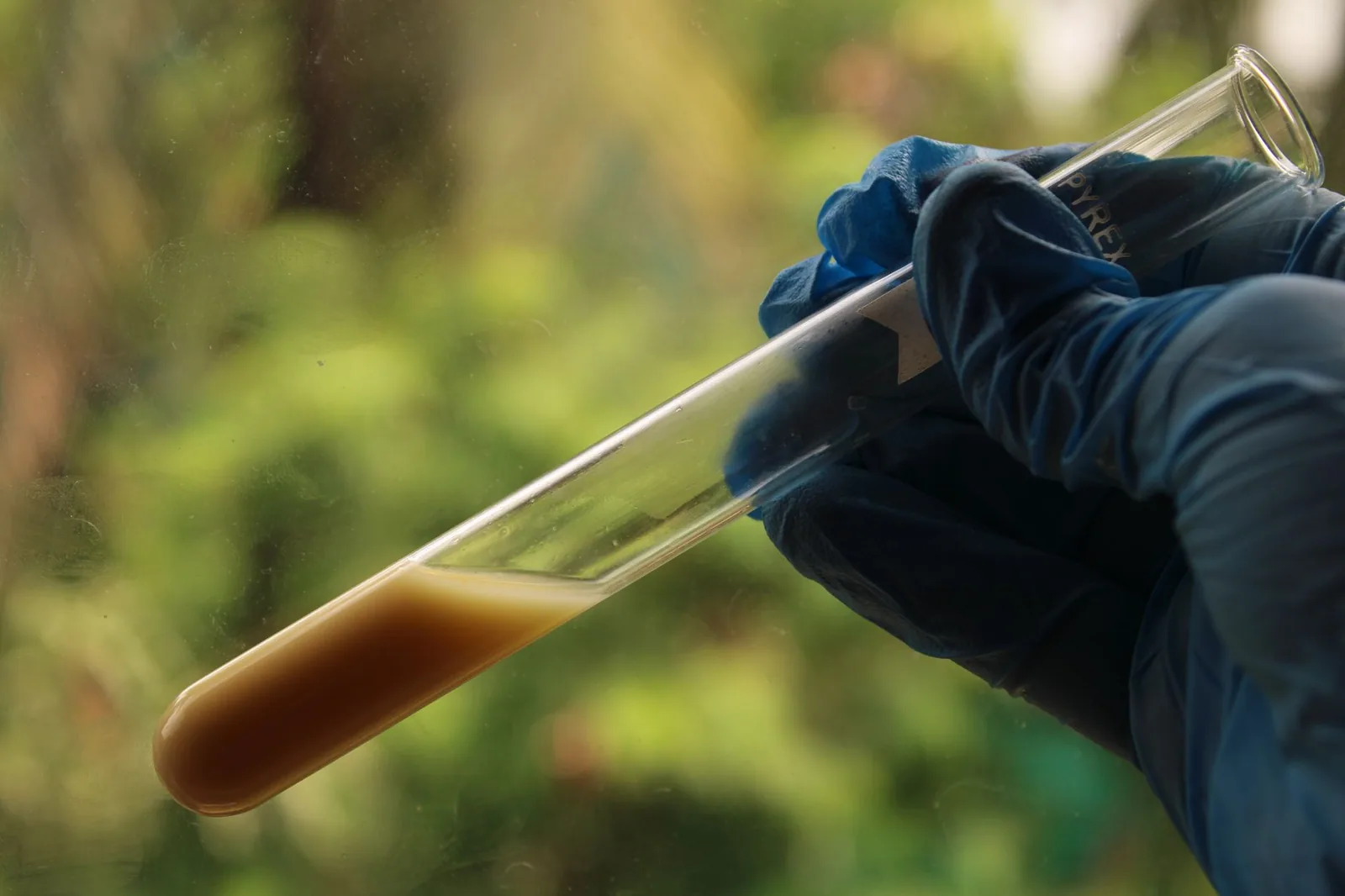
A titration kit, the drop-by-drop color test. The Hanna HI38033 reads total hardness from 0 to 30 gpg in 1 gpg steps, about 100 tests for $28.99 on Oct 5, 2026, the same method as the Hach 5-B. Strips such as Varify ($12.97) or WaterWorks ($10.49) give a color band for a quick check. A TDS meter cannot tell you your hardness, and a private well needs a certified lab panel.
Key takeaways
- Titration reads hardness to 1 gpg: the Hanna HI38033 costs $28.99 for about 100 tests (Oct 5, 2026).
- Strips read in color bands, and the WaterWorks chart jumps from 250 to 425 ppm, about 10 gpg, in a single step.
- A TDS meter is calibrated on salt water (342 ppm NaCl on the HM Digital TDS-3) and cannot separate calcium from sodium.
- After a salt softener, hardness falls toward zero while TDS stays about the same, so only a hardness test proves the softener works.
- A private well needs a lab, because the EPA's yearly well test goes far beyond hardness; Tap Score's well panel was $209 on Oct 5, 2026.
| Rank | Test | Type | Price (Oct 5, 2026) | What it reads | Wins at |
|---|---|---|---|---|---|
| 1 | Hanna HI38033 | Titration | $28.99, about 100 tests | 0 to 30 gpg in 1 gpg steps | Best overall |
| 2 | Varify Water Hardness Test Kit | Strips | $12.97 | 0 to 425 ppm, color bands | Best quick check |
| 3 | WaterWorks Total Hardness | Strips | $10.49, 50 tests | Eight color blocks, 0 to 1,000 ppm | Best for very hard water |
| 4 | Tap Score Essential Well Water Test | Certified lab | $209 | Hardness plus 53 other analytes | Best for private wells |
| Skip | Any TDS meter | Digital | Not compared | Total dissolved solids | Not a hardness test |
We did not bench-test these kits. The ranking rests on what each maker publishes about method and resolution, read on Oct 5, 2026, and on one plain question: does the result come out as a number a softener can use?
Are Home Hard Water Test Kits Accurate?#
Accurate enough, if the method matches the job. A titration kit reads in 1 gpg steps, which is the unit a softener's control head is programmed in. A strip names the band you are in and nothing finer, and a TDS meter answers a different question entirely. Before buying anything, the free ways to test hardness at home, soap bottle first tell you whether a kit is worth it.
Four tests, four questions
- Test stripa rangeReads total hardness as a color band. The WaterWorks chart steps from 120 to 180 to 250 to 425 ppm, so a strip tells you which band you are in, not where inside it.
- Drop titrationthe home standardCounts drops of titrant until the sample turns blue. Hach rates its 5-B kit at 1 drop = 1 gpg and Hanna rates the HI38033 in 1 gpg steps: a number you can program a softener with.
- TDS meternot a hardness testMeasures conductivity and converts it as if every dissolved ion were sodium chloride (HM Digital calibrates its TDS-3 on a 342 ppm NaCl solution). Calcium, magnesium and sodium all land in the same number.
- Certified labthe only full answerMeasures calcium and magnesium separately, then reports hardness in mg/L and gpg alongside iron, manganese, nitrate and bacteria, on a panel that lists them. The EPA's annual well test list is total coliform, nitrates, TDS and pH.
Solid dot: answers it. Half dot: answers it as a range only. Ring with a bar: cannot answer it. Column heads, left to right: total hardness (calcium plus magnesium), a reading precise to 1 grain per gallon, total dissolved solids, and a health panel (bacteria, nitrate, metals). Sources: Hach, Hanna Instruments, Industrial Test Systems, HM Digital and Tap Score product pages, and the EPA private well testing page, all read Oct 5, 2026.
The gap comes from how each test reads. Strips and titration kits both rely on a color change, but a strip shows that color once against a printed chart, while a titration kit keeps adding reagent until the sample flips from red to blue, and the amount it took is the answer.
Best Overall: Hanna HI38033 Titration Kit#
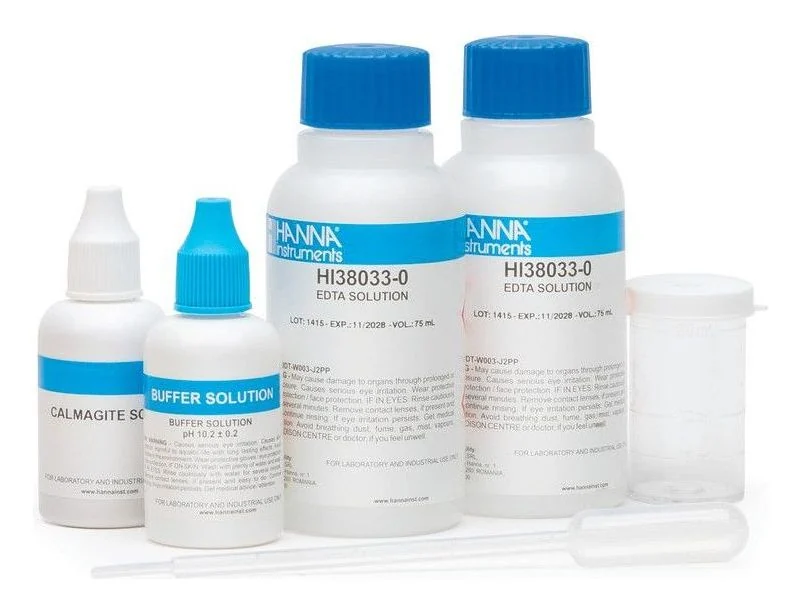
Hanna Instruments
Hanna Instruments HI38033 Total Hardness Test Kit
Best for: A hardness number precise enough to size and program a softener
- Method
- EDTA titration, color indicator
- Range
- 0 to 30 gpg
- Smallest step
- 1 gpg
- Tests per kit
- About 100
- Refill
- HI38033-100, $24.99 per 100 tests (Oct 5, 2026)
The HI38033 is built for exactly this job. It reports total hardness as calcium carbonate directly in grains per gallon, from 0 to 30 gpg, with a smallest increment of 1 gpg. Hanna rates it at about 100 tests for $28.99, so a reading costs roughly 29 cents, and the HI38033-100 refill brings that to 25 cents ($24.99 per 100 tests, Oct 5, 2026).
What we like
- Reads in 1 gpg steps, the unit a softener is programmed in
- About 100 tests per kit, roughly 29 cents a reading
- Refill reagents sold separately at $24.99 per 100 tests
- Every reagent carries an expiration date and lot number
What to watch
- Slower than a strip, and the color change takes a careful eye
- Range stops at 30 gpg, short of the hardest wells
- Reads hardness only: no iron, nitrate or bacteria
- No warranty term published on the product page at our Oct 5, 2026 reading
It is slower than a strip, and judging the color flip takes good light. The range stops at 30 gpg, about 513 mg/L, so the hardest wells need a higher-range test or a lab. Hanna publishes no warranty term on the product page.
The classic alternative is the Hach 5-B (catalog 145300). Hach's product page describes drop-count titration over 1 to 30 gpg with a simple rule, "1 drop = 1 gpg", and about 100 tests per kit. Same method, same resolution. Hach shows "Contact Us" where a price would be, so we can't date one and it gets no card here. LaMotte's 4482-LI-02 dropper kit works the same way (50 tests at 20 gpg) and also lists no price.
Softener owners can look at the Hanna HI3812 ($39.99 on Oct 5, 2026): its low range of 0.0 to 30.0 mg/L in 0.3 mg/L steps confirms softened water really reads near zero, but its high range stops at 300 mg/L, about 17.5 gpg, so it's the wrong kit for raw well water.
Best Quick Check: Varify Hardness Test Strips#
Varify
Varify Water Hardness Test Kit (0 to 425 ppm strips)
Best for: A 30-second yes-or-no hardness check, and spot checks after a softener install
- Method
- Dip strip, color chart
- Range
- 0 to 425 ppm (about 0 to 25 gpg)
- Read time
- 30 seconds
- Strips
- 150 per the title, 50 per the page FAQ
- Guarantee
- 60-day no-hassle guarantee
Dip, remove, wait 30 seconds, match the color. It's the fastest hardness answer you can buy, at $12.97 on Varify's own store (Oct 5, 2026), covering 0 to 425 ppm. That ceiling is about 25 gpg, so very hard water simply runs off the top of the chart.
Two things on the page made us cautious. Varify titles the kit 150 strips while the FAQ on the same page says 50, so count the box. And it promises "lab-grade accuracy" without publishing the color steps of its chart, the steps that decide how finely a strip can read. Use it for the first yes-or-no question and for spot checks, not to program a softener.
Best Strips for Very Hard Water: WaterWorks Total Hardness#
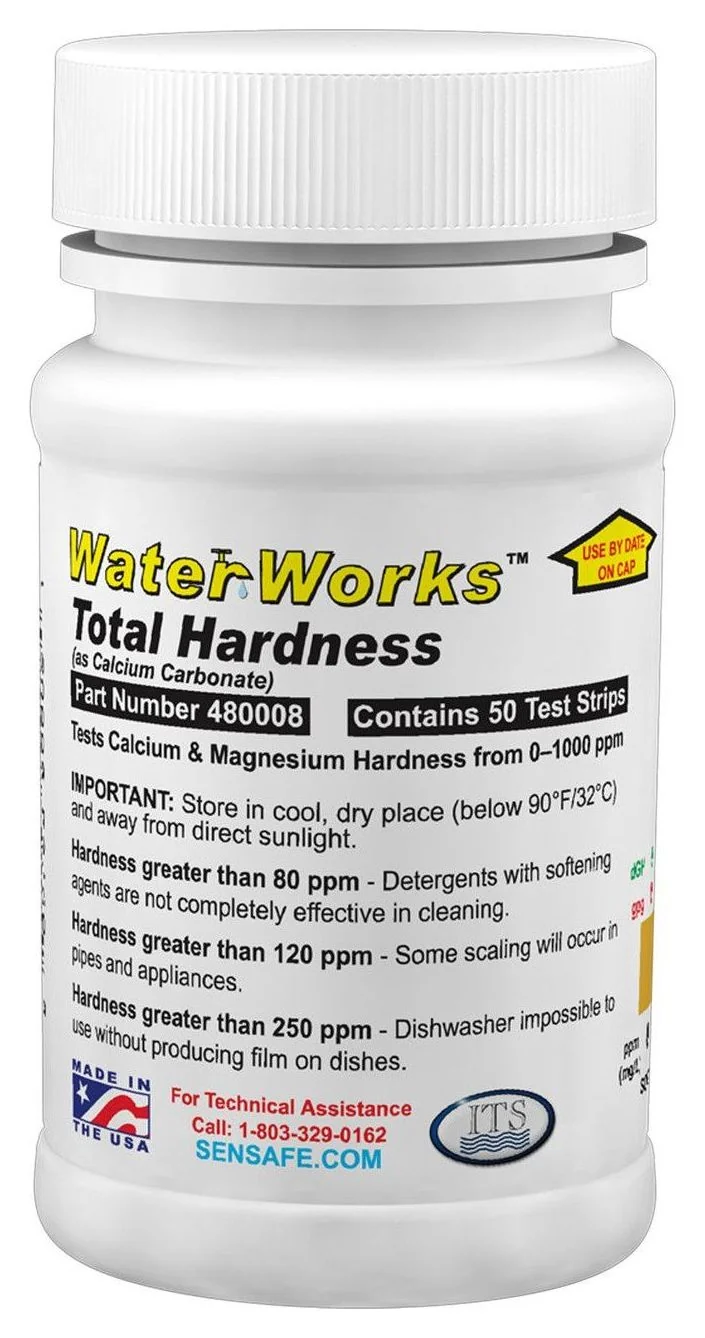
Industrial Test Systems
Industrial Test Systems WaterWorks Total Hardness Test Strips
Best for: Very hard city or well water that runs off the top of a 425 ppm chart
- Method
- Dip strip, color chart
- Color blocks
- 0, 40, 80, 120, 180, 250, 425, 1,000 ppm
- Top of range
- 1,000 ppm (about 58 gpg)
- Tests
- 50 per bottle
- Part number
- 480008
Industrial Test Systems publishes what Varify does not: the exact color blocks. The WaterWorks strip reads 0, 40, 80, 120, 180, 250, 425 and 1,000 ppm, which reaches about 58 gpg and covers the hardest wells. A bottle of 50 tests costs $10.49 (Oct 5, 2026), about 21 cents a reading.
That published chart is also the clearest picture of what any strip can and cannot do. Between the 250 and 425 blocks there is nothing, so water anywhere from 14.6 to 24.9 gpg gives the same answer.
USGS hardness bands
- Soft, 0 to 60 ppm0 to 3.5 gpg. No scale problem. A softener solves nothing here.
- Moderately hard, 61 to 120 ppm3.6 to 7.0 gpg. Spotting and light scale. Treatment is optional, not urgent.
- Hard, 121 to 180 ppm7.1 to 10.5 gpg. Scale in the water heater, soap that will not lather, film on the glassware.
- Very hard, over 180 ppmOver 10.5 gpg. Appliance territory: scale builds fast in anything that heats water, and it shortens the life of the thing doing the heating.
USGS classification of hardness as calcium carbonate, where 1 grain per gallon = 17.1 mg/L. The marked window is the gap between the 250 and 425 ppm color blocks on the WaterWorks Total Hardness chart, read Oct 5, 2026.
That window matters the moment the number goes into a softener. On the site's standard sizing formula (people x 75 gallons a day x gpg x 7 days), a family of four at 14.6 gpg loads 30,660 grains a week, and at 24.9 gpg the load is 52,290 grains, about 70% more. Program a softener at the low end of that strip reading and it runs out of soft water before it regenerates. Both the grain-capacity formula and our softener capacity calculator assume a measured number, not a band.
JNW Direct sells a 150-strip total hardness kit as well. Its own site sends buyers to Amazon and lists neither a price nor a range, so it gets a mention here rather than a card.
Does a TDS Meter Measure Water Hardness?#
No. A TDS meter measures how well the water conducts electricity and converts that into parts per million as if every dissolved ion were table salt. Calcium, magnesium, sodium, chloride and sulfate all land in one figure, and the meter has no way to pull them apart.
What you hear
A digital water tester tells you exactly how hard your water is.
What the numbers say
The digital pens that turn up in hard water shopping results read total dissolved solids. The HM Digital TDS-3 is factory calibrated on a 342 ppm sodium chloride solution and converts conductivity with a salt factor of 0.5. When a salt softener swaps calcium and magnesium for sodium, the TDS reading stays about the same while a hardness test drops toward zero.
Crystal Quest, a water filtration manufacturer, puts it in one line: "Hardness is a subset of TDS, not a synonym for it." Its explanation of the softener case is why a TDS meter is useless for checking one: "Different mineral, same total dissolved amount." The EPA's secondary guideline for TDS, 500 mg/L, is an aesthetic marker, and it lists hardness as one possible effect next to staining and a salty taste.
The meter still has a job on reverse osmosis systems, where the membrane exists to lower dissolved solids. For hardness, leave it in the drawer. The same logic explains why a conditioner never moves the test result: it changes how the minerals behave, not how much of them the water carries.
When Do You Need a Lab Test Instead?#
On a private well, start with a lab. The EPA advises testing a private well every year for total coliform bacteria, nitrates, total dissolved solids and pH, at a laboratory certified for drinking water, and notes that local health departments may run that test for free. No home hardness kit touches bacteria or nitrate. The rest of a well owner's test plan, from the extra tests a stain or a smell calls for to bottling a bacteria sample, is in our complete well water testing walkthrough.
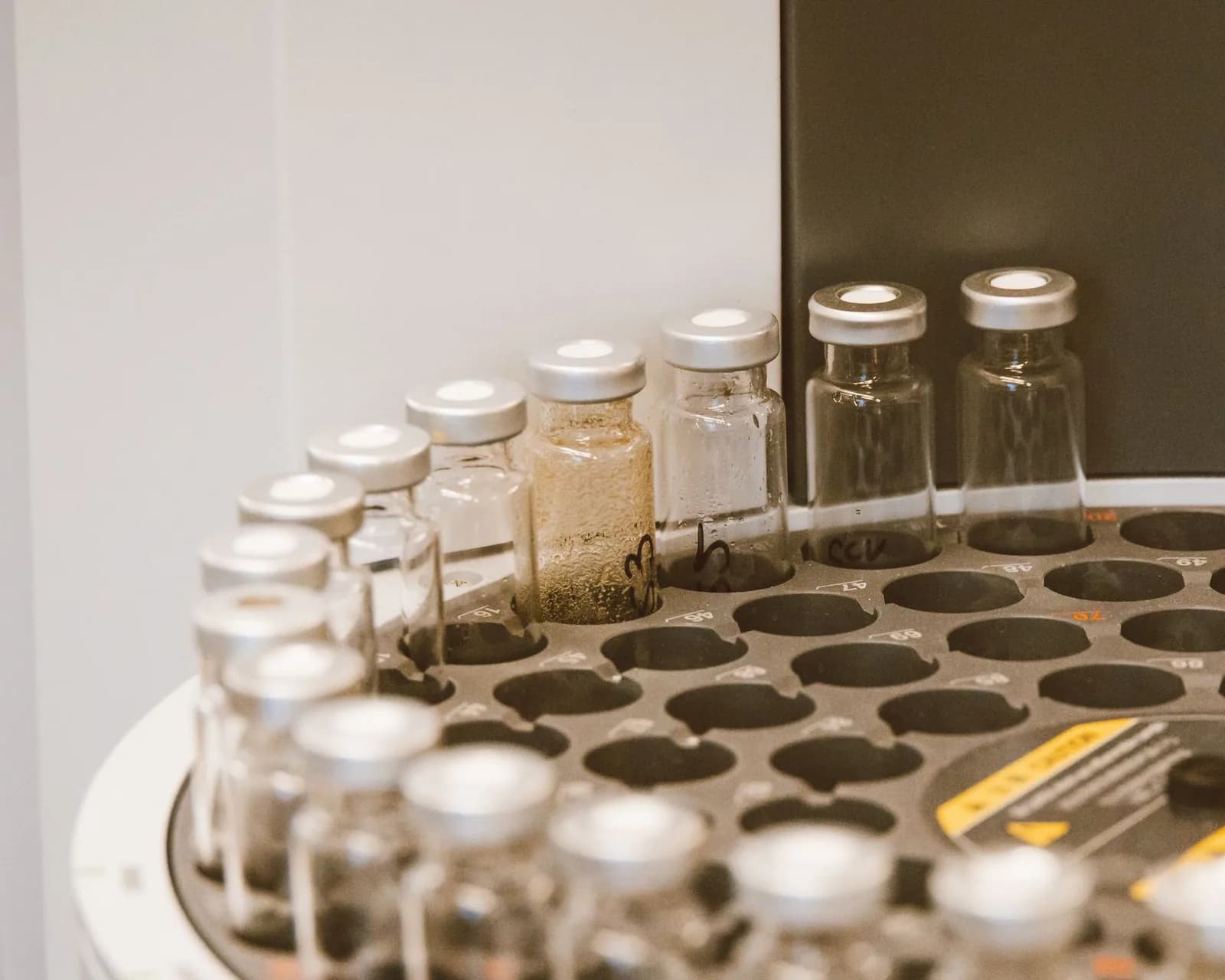
A lab also answers the question that changes softener sizing on a well, which is iron. The industry rule adds 3 gpg of compensated hardness for every 1 ppm of dissolved iron, and none of the hardness kits above report iron. Tap Score's mail-in Essential Well Water Test was $209 on Oct 5, 2026 (listed against $235), covering 54 analytes with hardness, calcium, magnesium, sodium, iron, manganese, nitrate, E. coli and total coliform among them, with about 5 business days at the lab.
With the panel in hand, our walkthrough for treating a private well, step by step puts the equipment in order, and softeners built for iron-bearing wells are ranked on their own page. City water rarely needs this spend. Your utility's annual Consumer Confidence Report often lists hardness, and a strip or a titration kit confirms it at your own tap. The same report is where a city household starts on safety rather than scale, as our guide to whether your city's tap water is safe to drink explains.
How Do You Test Water Hardness at Home?#
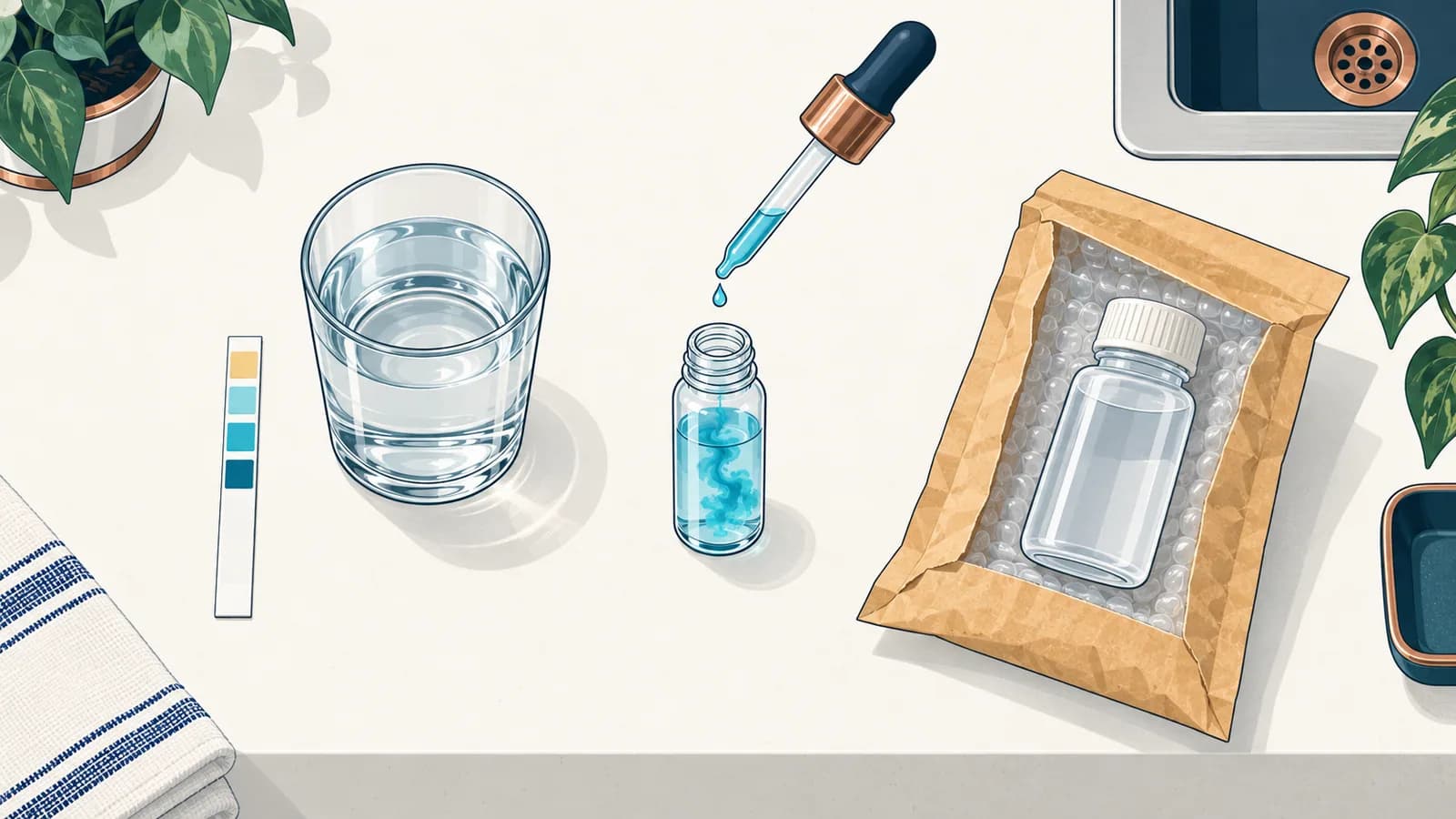
Take the sample from the right tap, follow the kit's own instructions exactly, and write the result down in gpg. Most bad readings start with the sample, not the chemistry.
A clean hardness reading
Pick an untreated tap
Use an outside spigot or a cold tap ahead of any softener. A tap after a working softener reads near zero and says nothing about the incoming water.Start with a clean container
Varify's instructions begin there. Fill it from the tap you chose.Follow the timing exactly
Varify says to dip, remove immediately and read after 30 seconds. On a titration kit, add reagent drop by drop and stop when red turns blue.Convert and record
Divide a ppm or mg/L result by 17.1 to get gpg. Note the date and which tap you used.Retest on a schedule
Once a softener is in, a quarterly check at an inside tap proves it is still working.
That quarterly reading belongs in your softener upkeep routine. Still at the "is it even hard?" stage? Crusted aerators, spotted glasses and the rest are covered in our symptom-by-symptom rundown, and in the video below.
Video coming soon
We cover this topic on the Home Water Lab channel.
What Should Your Number Be?#
Below about 3.5 gpg there is nothing worth treating. Above 7 gpg, the USGS line for hard water at 121 mg/L, the case for equipment starts to build, and the band between is a comfort call. The full scale and the unit conversion are laid out in what grains per gallon and ppm actually measure.
Our state-by-state hardness ranges are a starting point, and in a state like Texas, where the typical range runs well into the very hard band, a strip with a 425 ppm ceiling may have nowhere to put your water. Once you have a number, six fixes, priced from cheapest up shows what it buys you, and our system matcher quiz turns the reading, your water source and your budget into a shortlist.
Which Hard Water Test Kit Should You Buy?#
Prices and specifications read on Oct 5, 2026. Hach, LaMotte, JNW Direct and HM Digital publish no price on their own pages, so none is quoted for them. Hardness bands from the USGS Water Science School, with 1 gpg = 17.1 mg/L as calcium carbonate. Sizing arithmetic is ours.
Hard water testing questions people actually search
How do you test water hardness at home?
Fill a clean container from an untreated cold tap, then either dip a hardness strip and match its color after the time on the label (30 seconds for Varify), or run a titration kit and add reagent until the sample turns from red to blue. On the Hach 5-B, each drop of titrant equals 1 grain per gallon, so the count is the answer.
Can you use Dawn to test for hard water?
Only as a rough hint. The EPA lists soap that will not lather among the clues to hardness, so a bottle of tap water shaken with a little soap can point to a problem, but it gives no number and the result depends on the soap. A strip kit costs about $10 to $13 (Oct 5, 2026 prices) and gives at least a band you can act on.
Is there a digital water hardness tester?
Not in the sense most listings mean. The digital pens that turn up in hard water shopping results are TDS meters, which cannot isolate calcium and magnesium. Photometers that read hardness chemistry exist as service tools: the Industrial Test Systems eXact Micro 7+ lists calcium hardness among its modes and cost $314.99 on Oct 5, 2026. A titration kit gives a home a better hardness number for less than a tenth of that.
How do you test well water for hardness?
With a panel from a laboratory certified for drinking water, because a well needs more than a hardness figure: the EPA advises a yearly test for total coliform bacteria, nitrates, TDS and pH, and dissolved iron changes softener sizing by 3 gpg per ppm. Between lab tests, a home titration kit tracks hardness well.
Frequently asked questions
Are home hard water test kits accurate?
Accurate enough when the method fits the job. A titration kit reports total hardness to 1 grain per gallon, the precision a softener is programmed in: Hach rates its 5-B kit at 1 drop = 1 gpg. Test strips read a color band instead, and on the WaterWorks chart one band runs from 250 to 425 ppm, roughly 14.6 to 24.9 gpg. Brand claims of lab-grade strip accuracy are marketing copy, not published measurements.
Does a TDS meter measure water hardness?
No. A TDS meter measures electrical conductivity and converts it to ppm as if everything dissolved were sodium chloride; the HM Digital TDS-3 is factory calibrated on a 342 ppm salt solution. Calcium and sodium count toward the same number, so the reading cannot isolate hardness, and after a salt softener the TDS figure stays about the same while hardness drops toward zero.
Can I get a free hard water test kit?
The test itself is sometimes free. City customers can find hardness in the utility's annual Consumer Confidence Report or ask the utility directly. The EPA notes that local health departments may test private wells for free. Dealers such as Culligan advertise a free water consultation, which is a sales visit. Otherwise a strip kit costs about $10 to $13: WaterWorks $10.49 and Varify $12.97 on Oct 5, 2026.
How much does a hard water test kit cost?
On manufacturer prices read Oct 5, 2026: $10.49 for a 50-test bottle of WaterWorks strips, $12.97 for a Varify strip kit, $28.99 for the Hanna HI38033 titration kit with about 100 tests, and $209 for a Tap Score Essential Well Water lab panel. Per reading, the Hanna kit works out near 29 cents and the WaterWorks strips near 21 cents.
Keep reading
Not sure what you need?
Answer 5 questions, get the right system for your water.
City or well, budget, household size, our quiz matches your answers against every system we track.