Whole House Water Conditioner: How to Choose One That Actually Works
How to choose a whole house water conditioner: which technology holds up in testing, the water limits makers print, sizing by flow, and the proof to ask for.
By Home Water Lab TeamUpdated Prices verified Oct 7, 2026
This page contains affiliate links; buying through them costs you nothing extra.
A whole house water conditioner that works is a media tank whose published water limits your own test fits inside, sized for your home's flow, and backed by a scale test you can actually read. Most bad purchases in this category fail on the second point: the buyer never compares the maker's iron, pH and hardness limits with their water.
This guide is the selection method. For what conditioners are and the chemistry behind them, start with our salt-free water softener hub; for a ranked shortlist, see the best water conditioners. Here we cover how to tell a good fit from an expensive mistake before you order.
The short answer
as of Oct 26, 2026How do you choose a whole house water conditioner that actually works?
Four checks, in order. Confirm scale is the problem, because a conditioner does not soften. Choose a media tank, since template assisted crystallization cut scale by more than 88% in the WateReuse 08-06 study against about 50% for electronic units. Hold your water test against the maker's limits: on Oct 26, 2026, Aquasana's SimplySoft required hardness below 15 gpg, pH below 8.3 and iron under 0.3 ppm, while SpringWell's FutureSoft allowed zero iron. Then size it by flow, not by bathrooms alone.
Key takeaways
- Template assisted crystallization reduced scale formation by more than 88% under the DVGW-W512 protocol; electronic units managed about 50%.
- Aquasana SimplySoft limits on Oct 26, 2026: hardness below 15 gpg, pH below 8.3, iron below 0.3 ppm, alkalinity under 250 mg/L.
- SpringWell FutureSoft limits the same day: pH 7.0 to 9.5, zero iron and zero manganese, and a hardness maximum of 75 or 81 gpg depending on the page.
- Flow decides size: SimplySoft is rated 7.0 gpm, the FutureSoft FS1 12 gpm, FS4 15 gpm and FS+ 20 gpm.
- None of the three makers we read names a DVGW, NSF, IAPMO or WQA certification on its conditioner page.
Is a Whole House Water Conditioner the Right Fix?#
Only if scale is what you want gone. A conditioner leaves calcium and magnesium in the water, so it protects heaters, kettles and shower heads but does nothing for spotted glasses, stiff towels or weak lather.
Test before deciding. A hardness reading tells you whether a conditioner is even in range, and our guide to testing water hardness at home covers strips, drops and labs. If the household complaint list mentions laundry or soap, read the conditioner versus softener comparison first, because the answer is probably ion exchange, and our best whole house water softeners list is where that path continues.
Which Technology Actually Works: TAC, NAC, SCM or Magnetic?#
Media tanks that crystallize hardness are the only type with a strong independent number behind them. Plug-in electronic boxes come second at roughly half the effect, and static magnets have no number at all from the main study.
| Technology | How it is sold | Independent scale result |
|---|---|---|
| TAC (template assisted crystallization) | SpringWell FutureSoft, Kind's salt-free stage | More than 88% less scale (WateReuse 08-06) |
| SCM (Aquasana's Scale Control Media) | Aquasana SimplySoft | Aquasana says "independently tested"; no published figure on its page |
| NAC (nucleation assisted crystallization) | Ceramic media sold under names such as Filtersorb | Not part of the WateReuse study |
| Electronic or electromagnetic | Plug-in descalers such as the iSpring ED2000 | About 50% less scale (WateReuse 08-06) |
| Static magnets | Clamp-on magnets | Not part of the WateReuse study |
NAC is the label to read carefully. A distributor that sells it describes a ceramic media bed that turns dissolved hardness into insoluble microscopic crystals, which is the same family as TAC, but no NAC product was in the study the industry quotes. For the plug-in end of the market, our verdict on whether electronic descalers work goes through that 50% figure in detail.
88%+
Will a Water Conditioner Work With My Water?#
Only inside the limits its maker prints, and those limits vary more than the marketing does. The two brand-name systems we read on Oct 26, 2026 accept very different water.
What the maker says it accepts
as of Oct 26, 2026- SimplySoftHardness ceiling: below 15 · pH window: below 8.3 · Iron ceiling: below 0.3
- FutureSoftHardness ceiling: 75 max · pH window: 7.0 to 9.5 · Iron ceiling: 0, none allowed
Limits as published on aquasana.com and springwellwater.com, read Oct 26, 2026. SpringWell's FutureSoft page lists a 75 gpg hardness maximum; its filter and FutureSoft combo page lists 81 gpg the same day, so the bar uses the lower figure. Aquasana also requires alkalinity under 250 mg/L, not drawn.
The SimplySoft's 15 gpg ceiling rules it out for very hard water, while the FutureSoft takes far harder water but tolerates no iron or manganese at all, plus a free chlorine maximum of 3 ppm. That last pair is why most private wells need iron removal before any conditioner, and our full FutureSoft review lists the rest of SpringWell's conditions.
What Size Whole House Water Conditioner Do I Need?#
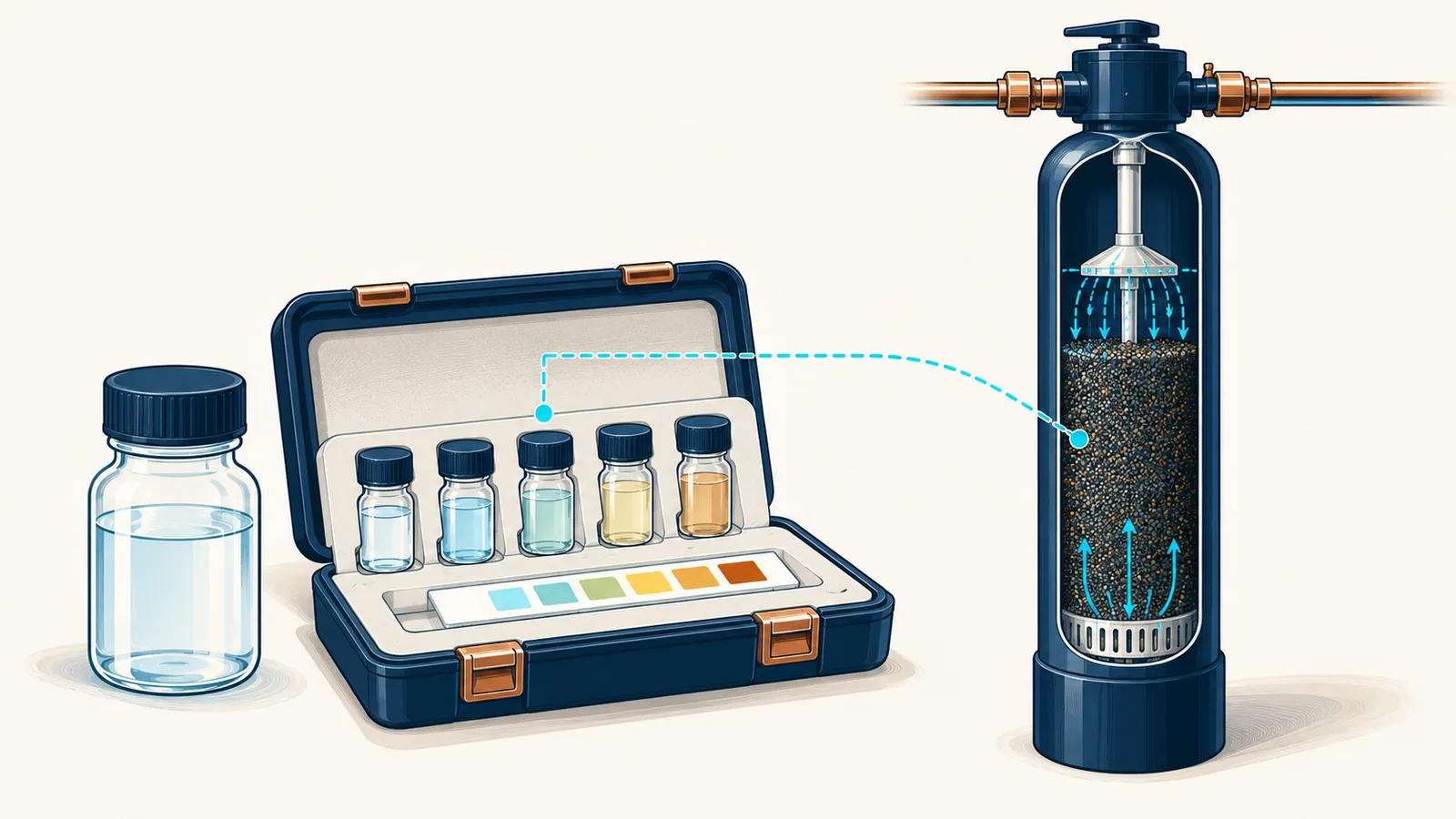
Size by peak flow, then check bathrooms. When three showers and a washer run at once, the tank is asked to treat more water than on an average minute, and the maker's rated figure is the one to plan around.
Aquasana SimplySoft
- 7.0 gpm rated, 15.3 gpm peak
- One size
- 1,000,000 gallons or 10 years of media
- Best fit: smaller homes on moderate hardness
SpringWell FutureSoft
- FS1 12 gpm for 1 to 3 bathrooms
- FS4 15 gpm for 4 to 6, FS+ 20 gpm for 7 or more
- Media life: 5+ years or never replaced, per two SpringWell pages
- Best fit: larger homes and harder city water
The sizing call
If more than two showers can run at once, the SimplySoft's 7.0 gpm rating is the number that worries us, not its price.
Is There a Certification That Proves a Conditioner Works?#
There is a test protocol, DVGW-W512, and that is what the WateReuse researchers used. None of the conditioner pages we read on Oct 26, 2026 from Aquasana, SpringWell or Kind names DVGW, NSF, IAPMO or WQA certification for the scale-control stage.
Kind advertises "NSF certified parts" for the E-3000, which covers components rather than scale performance. Aquasana writes that the SimplySoft is "independently tested" without publishing the result on the page. Ask any seller for the test report, the protocol and the water it was tested on; a company that has DVGW-W512 data will send it.
Red Flags When Shopping for a Saltless Water Conditioner#
Most of the warning signs are in the wording. These are the ones we check on every product page.
Walk away, or ask harder questions, when you see
6 itemsThat fifth item comes up in dealer quotes more than anywhere else. Our page on the Culligan salt-free conditioner shows how one brand uses the word for both machines.
Which Whole House Water Conditioners Are Worth a Look?#
Three systems clear the checks above, each for a different home. Prices were read at the makers' sites on Oct 26, 2026; the best salt-free water softener ranking goes deeper on each.
SpringWell
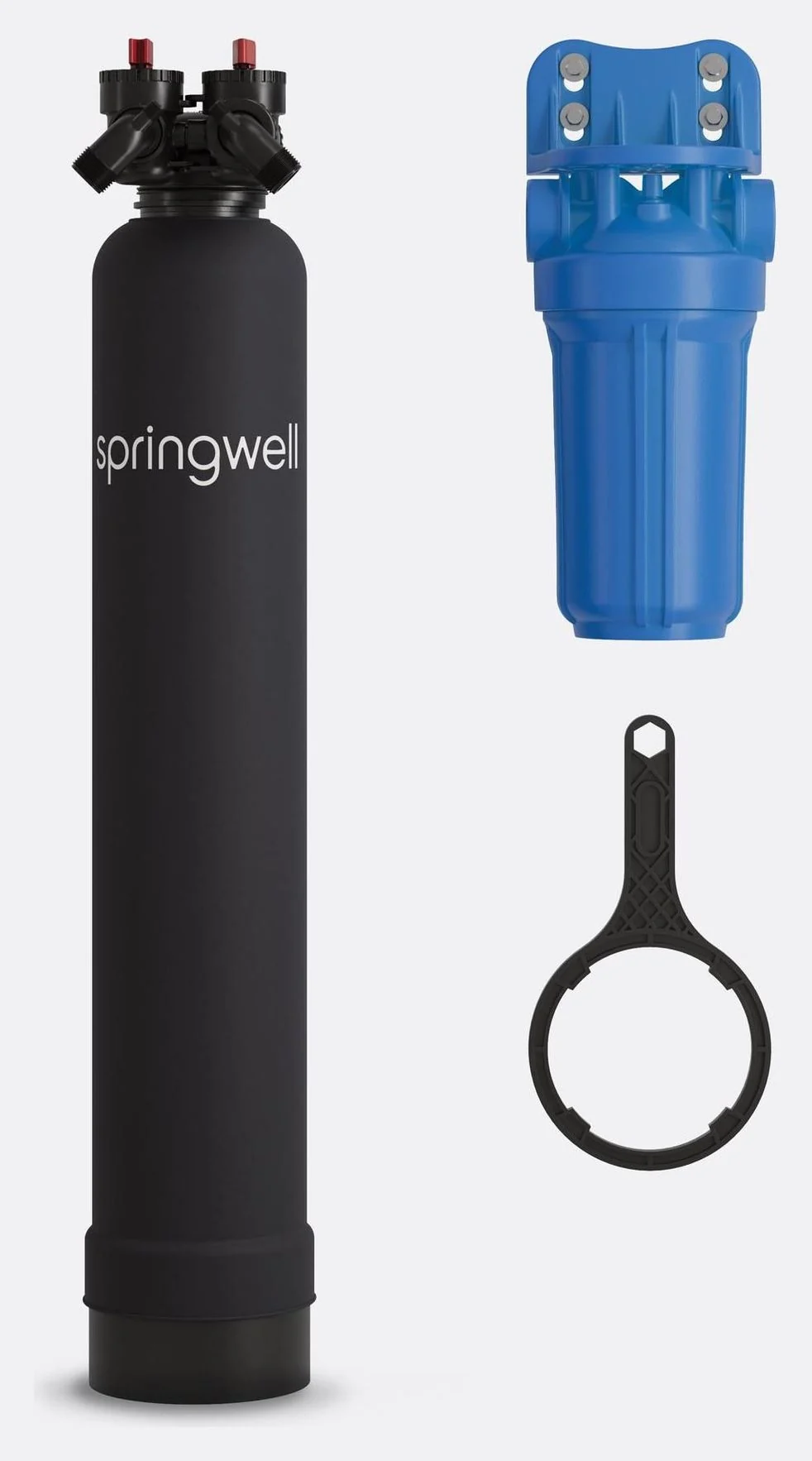
SpringWell FutureSoft FS1 Salt-Free Water Conditioner
Best for: City-water homes that want scale prevention without salt, a drain or electricity, not for anyone expecting soft-feeling water
- Technology
- TAC (Template Assisted Crystallization)
- Flow rate
- 12 GPM
- Bathrooms
- 1 to 3
- Tank
- 6" × 35"
- Max hardness
- 75 GPG (product page, Oct 26, 2026; 81 on the combo page)
- Scale prevention
- Up to 95% (manufacturer claim)
Aquasana
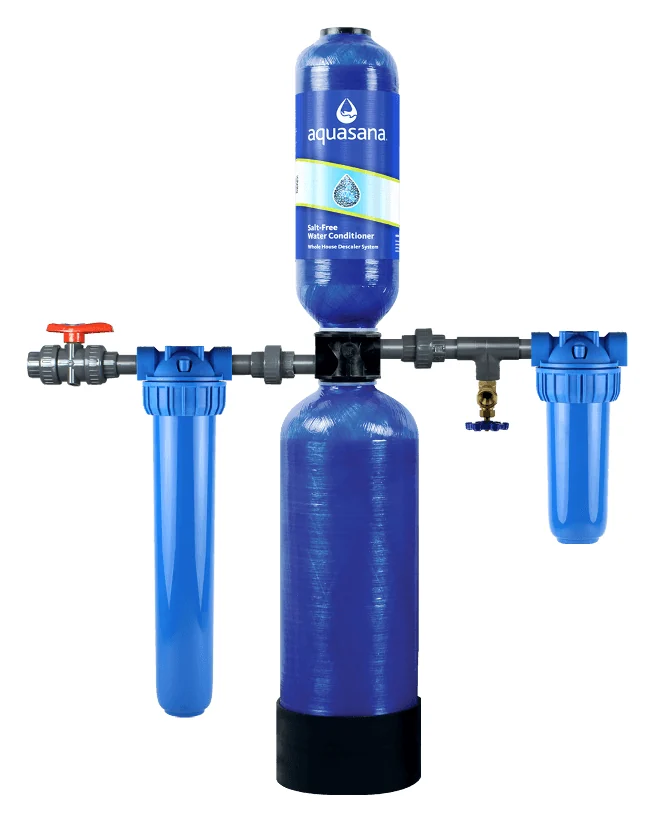
Aquasana SimplySoft Salt-Free Water Conditioner
Best for: City-water homes that want low-cost scale control without salt, and understand it is not a softener
- Technology
- SCM (Scale Control Media)
- Capacity
- 1,000,000 gallons / 10 years
- Flow rate
- 7.0 GPM nominal / 15.3 GPM peak
- Operation
- No salt, no electricity, no drain, no backflush
Kind Water Systems
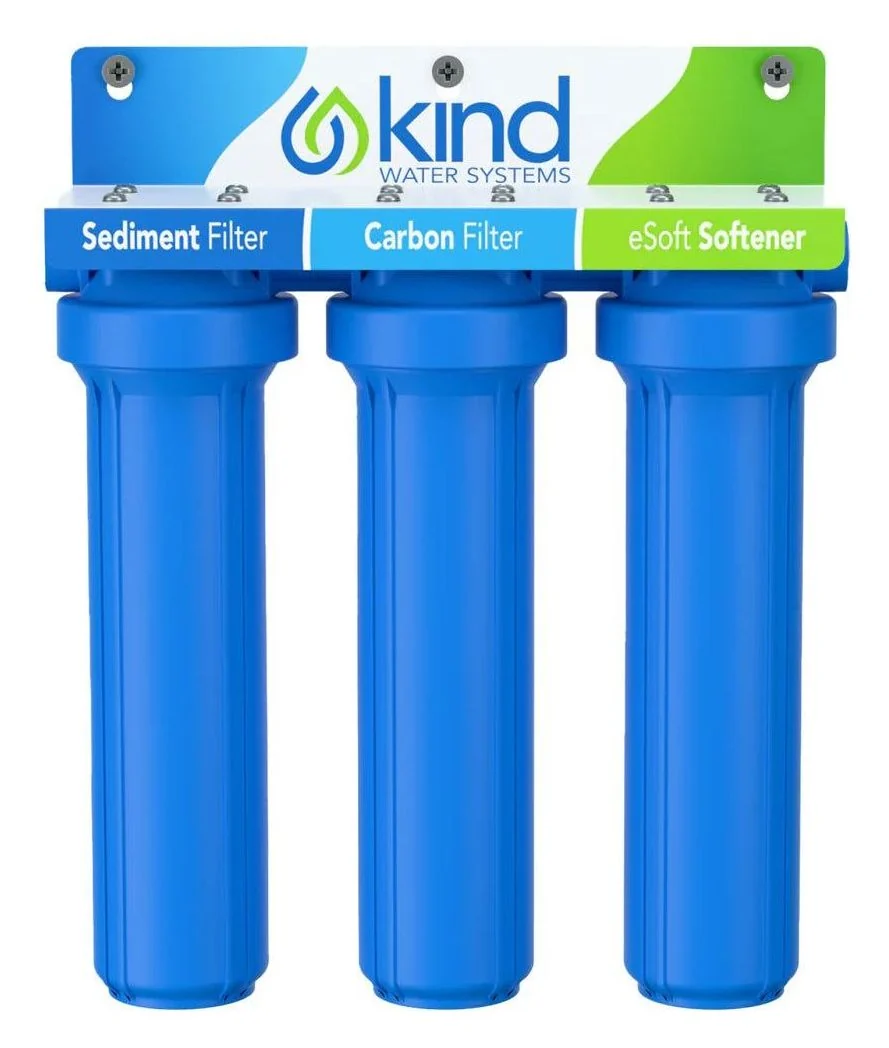
Kind E-3000 Whole House Salt-Free Softener + Filter Combo
Best for: HOA/eco-constrained homes (salt-softener bans in CA/TX) that want filtration plus scale control in one pass
- Type
- Whole-house filter + TAC salt-free conditioner combo (best seller)
- Technology
- TAC, no electricity, no wastewater, no salt
- Maintenance
- Yearly cartridge replacement (~15 minutes)
The SimplySoft was $879 on sale on Oct 26, 2026 and $1,758 at list on Nov 2, so against the $1,785 FutureSoft (Nov 9, 2026) it is $906 cheaper on a banner day and $27 cheaper at list. That is why the choice should rest on your water and your flow. The water conditioner cost breakdown adds installation and ten years of running costs, and our SpringWell lineup ranking shows where the FutureSoft sits in that catalog.
Whole house water conditioners, answered
What is the best whole house water conditioner?
The one whose published limits your water fits inside. On Oct 26, 2026, Aquasana's SimplySoft accepted water below 15 gpg, pH below 8.3 and iron under 0.3 ppm, while SpringWell's FutureSoft accepted far harder water but no iron at all. Check those numbers against your test, then compare price and flow.
How does a salt free water conditioner work?
Template assisted crystallization passes water through media that turns dissolved calcium into microscopic crystals. They stay suspended and wash through instead of bonding to pipes and heaters. Nothing is removed, so hardness reads the same. In the WateReuse 08-06 study, TAC reduced scale formation by more than 88%.
Is a salt free water softener better?
Better at one job, worse at the rest. A conditioner prevents scale with no salt, drain, power or wastewater. A salt softener removes hardness, which also fixes spotting, laundry and lather. If scale is the only complaint, or brine discharge is restricted where you live, the conditioner is the better buy.
Do saltless water conditioners work?
Media-tank conditioners do, for scale. Under the German DVGW-W512 protocol, the WateReuse study measured more than 88% less scale for template assisted crystallization and about 50% for electromagnetic and electrically induced precipitation units. None of them softens water.
How much does a whole house water conditioning system cost?
Aquasana SimplySoft $879 on sale (Oct 26, 2026) and $1,758 at list (Nov 2), SpringWell FutureSoft FS1 $1,785 (Nov 9), Kind E-3000 filter and conditioner $2,094.10 (Oct 26). Installation is extra. Plug-in electronic units cost far less and measured about half the scale reduction.
What are the disadvantages of a water conditioner?
It does not soften water, so spotting and soap problems stay. A test strip cannot confirm it works, since hardness is unchanged. And each system only works inside its maker's published limits for iron, pH and hardness.
Limits, prices and certification wording read at each maker's site on the date shown. Where SpringWell's own pages disagree, both figures are reported and the chart uses the lower one.
Frequently asked questions
What is the best whole house water conditioner?
The one whose published limits your water fits inside. On Oct 26, 2026, Aquasana's SimplySoft accepted water below 15 grains per gallon, pH below 8.3 and iron under 0.3 ppm, while SpringWell's FutureSoft accepted far harder water but no iron at all. Check those numbers against your test first, then compare price and flow. Our ranked list of water conditioners does the product comparison.
How does a salt free water conditioner work?
The mainstream type, template assisted crystallization, passes water through a bed of media that turns dissolved calcium into microscopic crystals. The crystals stay suspended and wash through instead of bonding to pipes and heating elements. Nothing is removed, so a hardness test reads the same before and after. In the WateReuse 08-06 study, TAC reduced scale formation by more than 88%.
Is a salt free water softener better?
Better at one job, worse at the rest. A salt-free conditioner prevents scale with no salt, no drain, no power and no wastewater. A salt softener removes hardness, which also fixes spotting, stiff laundry and poor lather. If scale is your only complaint, or brine discharge is restricted where you live, the conditioner is the better buy.
Do saltless water conditioners work?
Media-tank conditioners do, for scale. The WateReuse Research Foundation tested salt-free devices under the German DVGW-W512 protocol and measured more than 88% less scale for template assisted crystallization, against about 50% for electromagnetic and electrically induced precipitation units. None of them softens water.
How much does a whole house water conditioning system cost?
On Oct 26, 2026, the Aquasana SimplySoft was $879 on sale ($1,758 at list, which it was back to on Nov 2) and the Kind E-3000 filter and conditioner combo was $2,094.10; the SpringWell FutureSoft FS1 was $1,785 on Nov 9, 2026. Installation is extra. Plug-in electronic units cost far less and measured about half the scale reduction in independent testing.
What are the disadvantages of a water conditioner?
It does not soften water, so spotting and soap problems stay. You cannot check it with a test strip, since hardness is unchanged. And each system only works inside the water limits its maker publishes: iron, pH and hardness outside those windows can stop it working and, on some brands, affect the warranty.
Keep reading
Electronic Water Descalers: Scam or Legit? (What Independent Tests Found)
Read the guide
Water Conditioner vs Water Softener: The Difference That Costs You Money
Read the head-to-head
Culligan Salt-Free Water Conditioner (2026): Price, How It Works, and the DTC Alternative
Read the cost breakdownNot sure what you need?
Answer 5 questions, get the right system for your water.
City or well, budget, household size, our quiz matches your answers against every system we track.