Water Conditioner vs Water Softener: The Difference That Costs You Money
Water conditioner vs water softener: a softener removes hardness, a conditioner only cuts scale. How to tell which one a quote is selling, and what it costs.
By Home Water Lab TeamUpdated Prices verified Oct 7, 2026
This page contains affiliate links; buying through them costs you nothing extra.
A water softener removes hardness; a water conditioner leaves it in the water and only stops most of it from turning into scale. That one difference decides which machine fixes your complaint, and buying the wrong one is the expensive mistake this page exists to prevent. The full case for and against conditioners lives on our complete guide to salt-free systems, and the ion exchange side is laid out in the guide to how salt softeners work. Here, the two go head to head on what each one fixes, what a quote really means by the word, and what you pay.
The short answer
as of Oct 19, 2026Water conditioner vs water softener: which one do you need?
Buy a water softener if you want soft water: no spotting, softer laundry, normal lather and a hardness reading near zero. Only ion exchange removes calcium and magnesium. Buy a salt-free conditioner if scale on the water heater and fixtures is the entire problem, or if brine discharge is restricted where you live. Template assisted crystallization cut scale by more than 88 percent in the WateReuse 08-06 study, yet the water tests just as hard afterwards. Prices sit close: SpringWell's SS1 softener read $1,606.50 and its FutureSoft FS1 conditioner $1,785 on Nov 9, 2026.
Key takeaways
- A softener lowers the hardness reading to near zero; a conditioner leaves it exactly where it was.
- TAC conditioners cut scale by more than 88% in the WateReuse 08-06 study; plug-in descalers measured about 50%.
- Only a softener fixes spotting, stiff laundry and weak lather. Both protect the water heater from scale.
- On Nov 9, 2026, SpringWell's SS1 softener read $1,606.50 and its FS1 conditioner $1,785: close on the sticker.
- A softener costs $60 to $190 a year to run in salt, water and power; a TAC tank costs about nothing.
What Is the Difference Between a Water Softener and a Water Conditioner?#
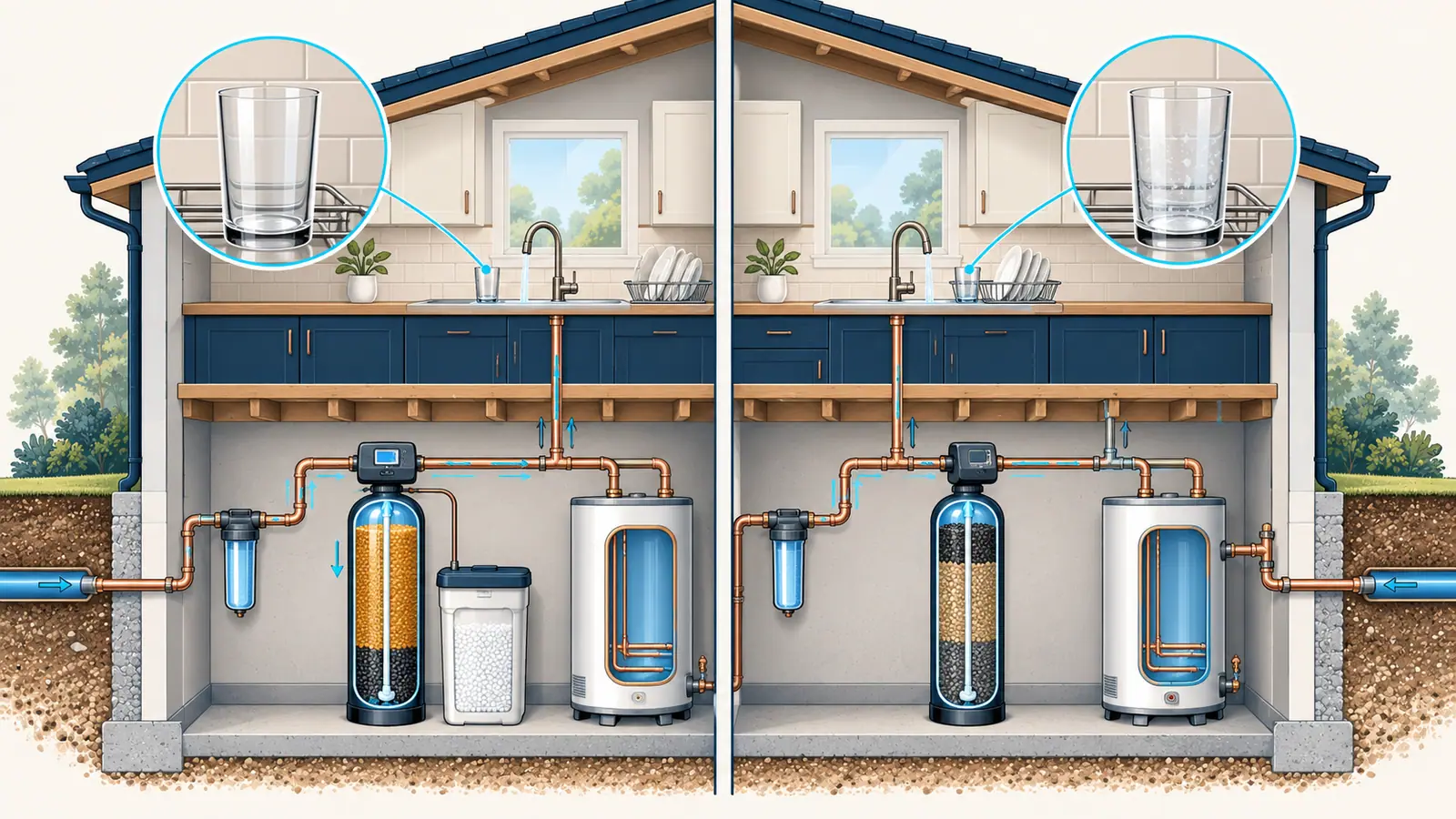
A softener takes hardness out; a conditioner changes how it behaves. Put a test strip under the tap after each machine and only the softener changes the reading.
Inside a softener, hard water runs through resin beads loaded with sodium. Calcium and magnesium stick to the beads and sodium goes into the water instead, until the resin is full and the unit rinses it with brine. That's why it needs salt, a drain and an outlet. A salt-free conditioner, usually a tank of template assisted crystallization (TAC) media, turns dissolved calcium into microscopic crystals that ride through the pipes instead of bonding to them. Nothing is removed, so there's nothing to regenerate.
| What you notice | Water softener | Water conditioner (TAC) |
|---|---|---|
| Scale in the water heater and on fixtures | Stops it | Cuts it by more than 88% (WateReuse 08-06) |
| Spots on glassware and shower glass | Stops them | Stay. Aquasana says calcium spots can still form where water dries |
| Stiff, dull laundry | Fixed | Unchanged |
| Soap and shampoo lather | Restored | Unchanged |
| Hardness reading on a test strip | Near zero | Same as before |
| Salt, drain line, electricity | All three | None |
The last row of that table is the trap. Because a conditioner leaves no number you can check at home, you can't verify one with a strip the way you can a softener; our guide to testing water hardness at home explains what a strip can and can't tell you.
Which Is Better, a Water Conditioner or a Water Softener?#
The better machine is the one that fixes your complaint. If you can name the symptom, the choice takes ten seconds.
Buy the softener if any of these is on your list
5 itemsIf none of those apply and your problem is scale on the water heater, the kettle and the shower head, a conditioner does that job without salt. It also wins outright where the law decides: California's AB 1366 (2009) lets local agencies restrict self-regenerating softeners that discharge brine. The salt-based versus salt-free duel walks the full decision tree, profile by profile, and the seven signs of hard water help you name the symptom before you shop.
Why Do Dealers Call a Water Softener a Conditioner?#
Because the word sells. "Conditioner" has no technical definition, so it lands on four different machines, and one of them is a plain salt softener.
What you hear
If the quote says water conditioner, it can't be a salt system.
What the numbers say
Culligan's own page for its Aquasential Smart High Efficiency softener lists a lifetime warranty on the 'Quadra-Hull conditioner tank' and one year on the 'Entire conditioner', on a machine whose same warranty list covers a salt storage container and a brine valve. The word told you nothing; the salt did.
Read the quote, name the machine
- Salt softenerremoves hardnessIon exchange, whatever the brochure calls it. Culligan's own softener page warranties the "conditioner tank" on a machine with a brine valve.
- Electronic descalerabout 50% less scaleElectromagnetic or electrically induced treatment, measured at about 50 percent scale reduction in the WateReuse 08-06 study. Hardness unchanged.
- Carbon filterno effect on scaleA filter wearing the word. Carbon reduces chlorine and improves taste; it does nothing to calcium, magnesium or scale.
- TAC conditioner88%+ less scaleA tank of template media, no salt, no drain, no power. More than 88 percent scale reduction in the same study, with the hardness reading left exactly where it was.
Scale figures: WateReuse Research Foundation project 08-06, Peter Fox, Arizona State University, 2014. The Culligan warranty wording was read on culligan.com on Oct 5, 2026. Only ion exchange lowers the grains per gallon reading on a test strip.
Run any quote through those three questions before you compare prices. A salt softener quoted as a conditioner is still a softener, and a dealer-installed Culligan salt-free unit ran $3,000 to $3,500 per Modernize's Culligan cost page (updated Aug 21, 2026). Our Culligan salt-free conditioner breakdown shows where that money goes, and the line-by-line quote decoder handles the rest of the paperwork.
Does a Water Conditioner Fix Hard Water?#
It fixes scale, which is one part of hard water. It doesn't soften anything, and the makers say so in print.
SpringWell writes that its FutureSoft "won't make water feel slick or stop spotting the way salt does." Aquasana's FAQ answers its own question, "Will the system reduce hardness or TDS levels?", with a flat "No." What a TAC tank does well is measurable, though:
88%+
That gap matters if the conditioner you're offered is a plug-in box rather than a tank. Our verdict on whether electronic water descalers work covers the 50 percent family in detail, and the four machines sold under the conditioner name are decoded in our guide.
What Does Each One Cost to Buy and Run?#
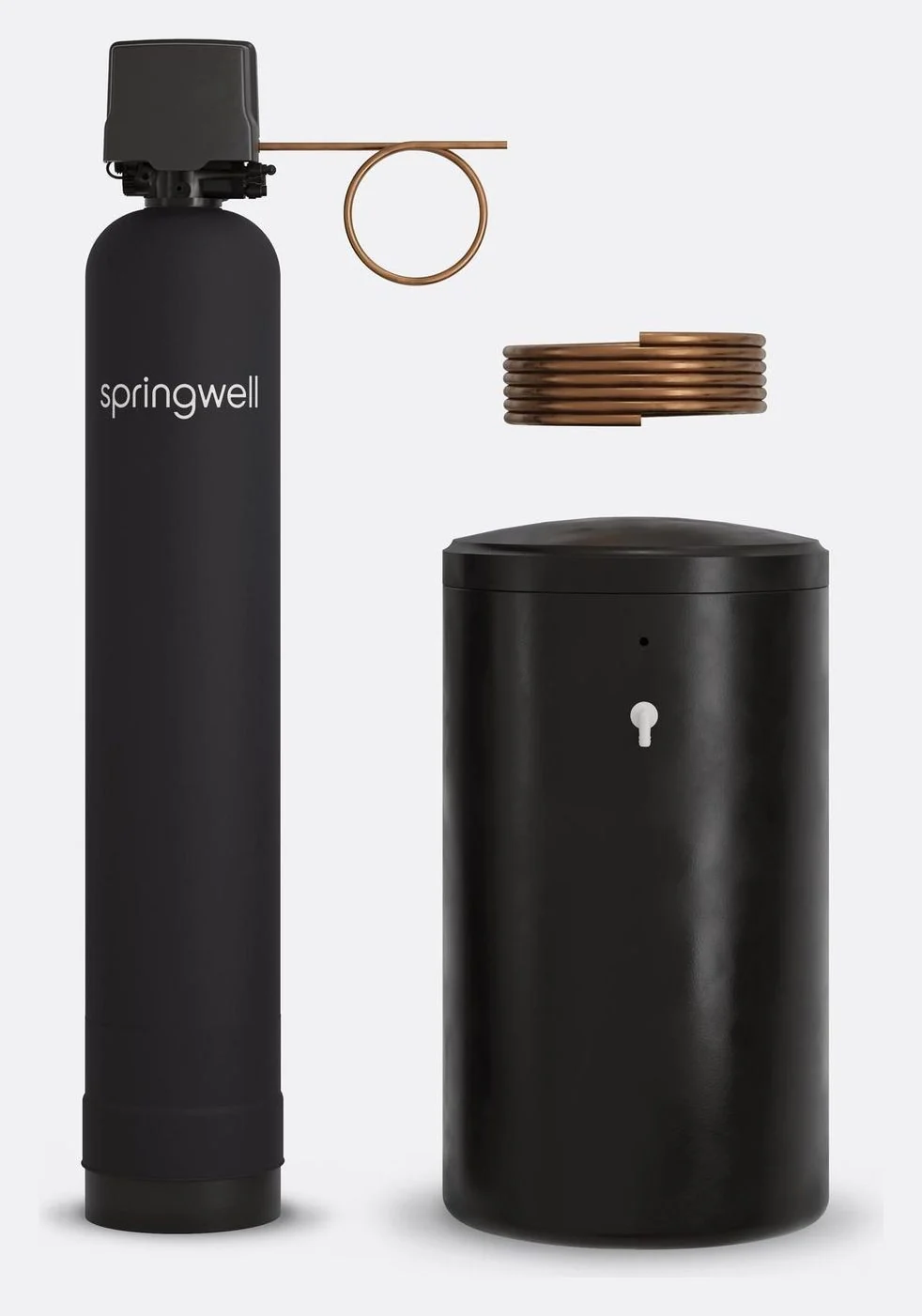
On the sticker they're close; the softener costs more every year after that. Both prices below were read on SpringWell's own site on Oct 19, 2026.
SpringWell
SpringWell SS1 Salt Based Water Softener
Best for: Homes with 1 to 3 bathrooms on hard city water that want true ion-exchange softening at a factory-direct price
- Grain capacity
- 32,000
- Service flow
- 11 GPM
- Bathrooms
- 1 to 3
- Tank
- 9" × 48" (57" with head)
- Connection
- 1"
- Brine tank
- 18" × 33" round (~200 lb salt)
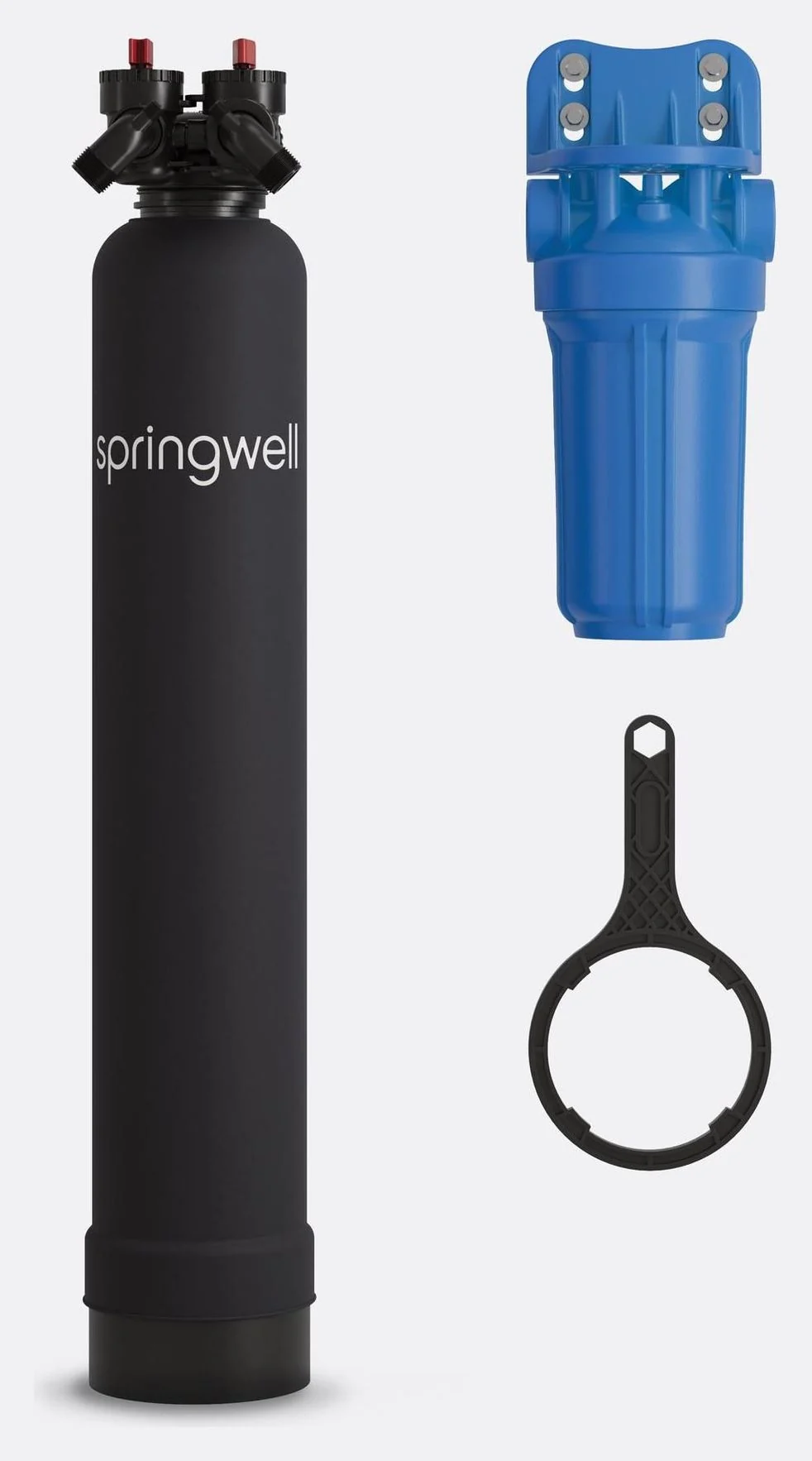
SpringWell
SpringWell FutureSoft FS1 Salt-Free Water Conditioner
Best for: City-water homes that want scale prevention without salt, a drain or electricity, not for anyone expecting soft-feeling water
- Technology
- TAC (Template Assisted Crystallization)
- Flow rate
- 12 GPM
- Bathrooms
- 1 to 3
- Tank
- 6" × 35"
- Max hardness
- 75 GPG (product page, Oct 26, 2026; 81 on the combo page)
- Scale prevention
- Up to 95% (manufacturer claim)
The money you really lose is not on either line. It's the conditioner bought to stop spotting, which never will, or the softener bought at dealer prices because a quote called it a conditioner. The 10-year water conditioner cost has the conditioner arithmetic in full.
When Is a Water Conditioner the Right Call?#
When scale is the only enemy and soft water was never the goal. Three situations make it the clear pick: brine discharge is restricted where you live, there's no drain within reach of the main line, or you're on treated city water and nobody in the house has mentioned spots or lather.
On a well, it usually isn't. SpringWell's FutureSoft sheet asks for 0 ppm iron, 0 ppm manganese and no hydrogen sulfide, which most untreated wells fail. For everything else, our ranking of the best water conditioners by problem and the FutureSoft FS1 review are the next reads. If the checklist above sent you to salt instead, start with the SS1 softener review or the best water softeners shortlist.
Water conditioner vs water softener, answered
Which is better, a water conditioner or a water softener?
A softener, if spotting, stiff laundry, weak lather or a hardness test strip is your complaint, because ion exchange is the only home technology that removes calcium and magnesium. A conditioner is the better buy when scale on the water heater and fixtures is the whole problem, when your district restricts brine discharge, or when there's no drain near the install point.
What is the difference between a water softener and a water conditioner?
A softener removes hardness minerals by ion exchange, so a test strip reads near zero afterwards. A salt-free conditioner leaves the minerals in and changes how they crystallize, so less scale sticks while the hardness reading stays the same. Dealers blur the line by calling some salt softeners conditioners.
Does a water conditioner fix hard water?
It fixes scale. In the WateReuse Research Foundation study led by Peter Fox at Arizona State University (2014), template assisted crystallization cut scale formation by more than 88 percent. The water still tests exactly as hard, and SpringWell says its FutureSoft won't make water feel slick or stop spotting the way salt does.
Is a water conditioner cheaper than a water softener?
Not up front. On Nov 9, 2026, SpringWell's SS1 softener read $1,606.50 and its FutureSoft FS1 conditioner $1,785, and HomeGuide's 2026 installed ranges are $1,200 to $3,800 for a softener against $1,500 to $4,500 for salt-free. The conditioner wins on running costs, since it uses no salt, no regeneration water and no power.
Can a water conditioner and a water softener be used together?
There's rarely a reason to. Once a softener has removed the calcium and magnesium, a scale conditioner downstream has nothing left to work on. The pairing that does make sense is a whole-house carbon filter for chlorine with either one, which is how SpringWell and Kind sell their combo systems.
Frequently asked questions
Which is better, a water conditioner or a water softener?
A softener, if spotting, stiff laundry, weak lather or the number on a hardness test strip is your complaint, because ion exchange is the only home technology that removes calcium and magnesium. A conditioner is the better buy when scale on the water heater and fixtures is the whole problem, when your district restricts brine discharge, or when there's no drain near the install point.
What is the difference between a water softener and a water conditioner?
A water softener removes hardness minerals by ion exchange, so a test strip reads near zero afterwards. A salt-free water conditioner leaves the minerals in the water and changes how they crystallize, so less scale sticks to pipes and heaters while the hardness reading stays the same. Dealers blur the line by calling some salt softeners conditioners.
Does a water conditioner fix hard water?
It fixes one symptom of hard water, scale. In the WateReuse Research Foundation study led by Peter Fox at Arizona State University (2014), template assisted crystallization cut scale formation by more than 88 percent. The water still tests exactly as hard, and SpringWell says its own FutureSoft won't make water feel slick or stop spotting the way salt does.
Is a water conditioner cheaper than a water softener?
Not up front. On Nov 9, 2026, SpringWell's SS1 softener read $1,606.50 and its FutureSoft FS1 conditioner $1,785, and HomeGuide's 2026 installed ranges are $1,200 to $3,800 for a softener against $1,500 to $4,500 for salt-free. The conditioner wins on running costs, since it uses no salt, no regeneration water and no power.
Can a water conditioner and a water softener be used together?
There's rarely a reason to. Once a softener has removed the calcium and magnesium, a scale conditioner downstream has nothing left to work on. The combination that does make sense is a whole-house carbon filter for chlorine paired with either one, which is how SpringWell and Kind sell their combo systems.
Keep reading
Electronic Water Descalers: Scam or Legit? (What Independent Tests Found)
Read the guide
Culligan Salt-Free Water Conditioner (2026): Price, How It Works, and the DTC Alternative
Read the cost breakdown
Best Water Conditioner 2026: Top Whole-House Systems Compared
Read the buyer's guideNot sure what you need?
Answer 5 questions, get the right system for your water.
City or well, budget, household size, our quiz matches your answers against every system we track.