Best Salt for Water Softeners 2026 (Pellets, Crystals and Iron-Fighting Formulas)
The best salt for most softeners is evaporated pellets, $8.76 to $8.99 a 40 lb bag on Oct 12, 2026. Picks for iron, low sodium and budget, bag by bag.
By Home Water Lab TeamUpdated Prices verified Oct 7, 2026
For almost every softener, the best salt is a bag of evaporated pellets. Diamond Crystal Bright & Soft ($8.99) and Morton Clean and Protect ($8.76) were the two 40 lb bags we priced at Menards online on Oct 12, 2026, and either one is the right default. The other bags on this page each answer a narrower problem: iron in the water, a sodium restriction, or a tight budget. Salt is the one thing a softener keeps asking you to buy, and it's only one slice of what hard water does to a home and how to stop it.
The short answer
as of Oct 12, 2026Which salt should you buy for your water softener?
Evaporated salt pellets. Diamond Crystal Bright & Soft prints a typical purity of 99.8% and cost $8.99 for 40 lb; Morton Clean and Protect, formulated to reduce bridging and mushing, cost $8.76. Pick an iron-fighting pellet for light iron on a well, solar crystals ($8.25 for 50 lb) for the cheapest pound, and potassium chloride ($39.99 for 40 lb) only for a sodium restriction. Prices from Menards online, Oct 12, 2026, before a mail-in rebate.
Key takeaways
- Pellets by default: Diamond Crystal Bright & Soft lists typical 99.8% purity, the highest figure printed on any bag we compared.
- Solar crystals were the cheapest pound on Oct 12, 2026: $8.25 for 50 lb, about 16.5 cents a pound against 21.9 to 22.5 cents for pellets.
- A year of salt at Morton's one-bag-a-month rule runs $79.20 to $118.56 for sodium chloride, and $479.88 in potassium chloride.
- Iron formulas help with light iron only. Morton's tenfold iron claim comes from its own internal testing, and no maker publishes a ppm limit.
- Morton says to keep the tank at least half full and add about one 40 lb bag a month.
| Pick | Bag | Form | Price (Oct 12, 2026) | Choose it if |
|---|---|---|---|---|
| Best overall | Diamond Crystal Bright & Soft | Pellets, 40 lb | $8.99 | You want the purest bag with a published number |
| Best value pellet | Morton Clean and Protect | Pellets, 40 lb | $8.76 | Your tank bridges or mushes and you want the cheapest pellet |
| Best for light iron | Diamond Crystal Iron Fighter | Pellets, 40 lb | $8.99 | Your well leaves faint orange marks and tests low for iron |
| Iron runner-up | Morton Clean and Protect Plus Rust Defense | Pellets, 40 lb | $9.88 | You want the only quantified iron claim, the maker's own |
| Cheapest per pound | Diamond Crystal Solar Naturals | Crystals, 50 lb | $8.25 | Small household, light salt use, tight budget |
| Sodium-free | Diamond Crystal Potassium Chloride | KCl, 40 lb | $39.99 | A doctor has told someone at home to watch sodium |
All prices are Menards online "Everyday Low Price" readings before an 11% mail-in rebate that ran through Oct 18, 2026. Menards is a Midwest chain, so treat them as one store's shelf, not a national price. Other stores will differ by a dollar or two either way.
Which Salt Is Best for a Water Softener?#
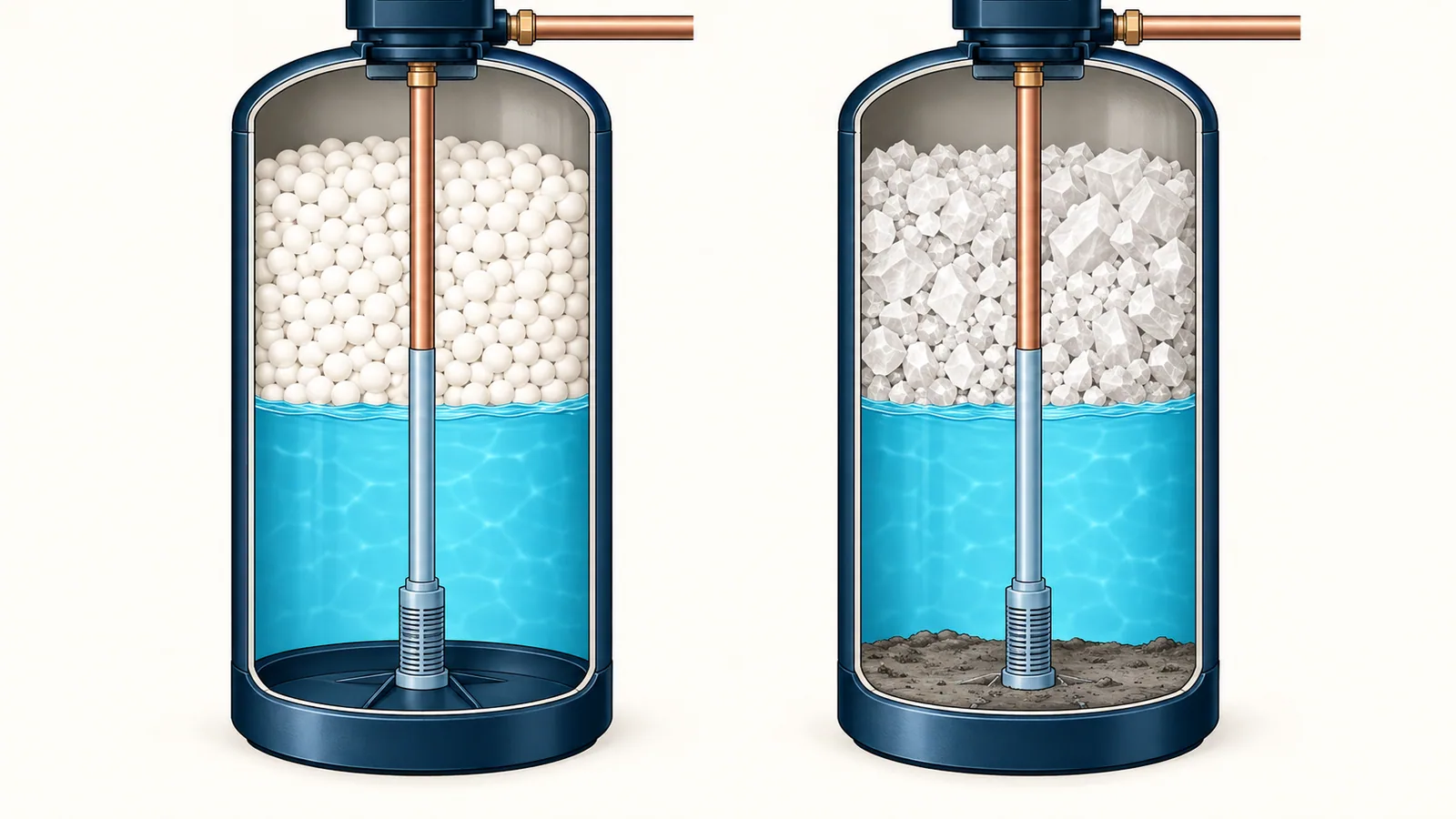
Evaporated pellets, from either of the two brands on every shelf. That's the whole decision for most homes. All softener salt regenerates the resin the same way; what changes from bag to bag is the insoluble residue that stays behind, and pellets carry the least of it. That residue is what turns into sludge and blocked brine draws.
The guide on how pellets, crystals and block salt differ chemically covers the five forms in depth. This page is the shopping list that follows from it: which bag, at what price, for which water.
480 lb of salt, one year
as of Oct 12, 2026- Solar Naturals, Diamond Crystal, 50 lb$8.25 for 50 lb, the cheapest pound we read. Typical 99.6% pure and certified to NSF/ANSI/CAN 60 on Diamond Crystal's page.
- Clean and Protect, Morton pellets, 40 lb$8.76 for 40 lb. Formulated against bridging and mushing; Morton publishes no purity figure for it.
- Bright & Soft, Diamond Crystal, 40 lb$8.99 for 40 lb. Typical 99.8% pure, the highest purity printed on any bag here.
- Iron Fighter, Diamond Crystal, 40 lb$8.99 for 40 lb, the same shelf price as plain pellets. An FDA-approved additive against rust stains, per the maker.
- Rust Defense, Morton pellets, 40 lb$9.88 for 40 lb. Morton claims ten times more iron removed than plain salt per regeneration, from its own internal testing.
- Potassium chloride, Diamond Crystal, 40 lb$39.99 for 40 lb, about four and a half times a bag of plain pellets. The sodium-free route, for the households that need it.
Menards online shelf prices read Oct 12, 2026, before an 11% mail-in rebate, tax and delivery. 480 lb a year is Morton's own refill rule (two 40 lb bags every two months for pellets, one bag a month for potassium chloride), applied to every bag so the bars compare price per pound. Equal weight is not equal softening: potassium chloride may need a different dose, set by your softener's manual.
One honest caveat about the chart. Equal weight isn't the same thing as equal softening, and nothing we read says a pound of potassium chloride regenerates as much resin as a pound of salt. Your softener's manual sets the dose.
Pellets or Crystals: Which Is Best for a Water Softener?#
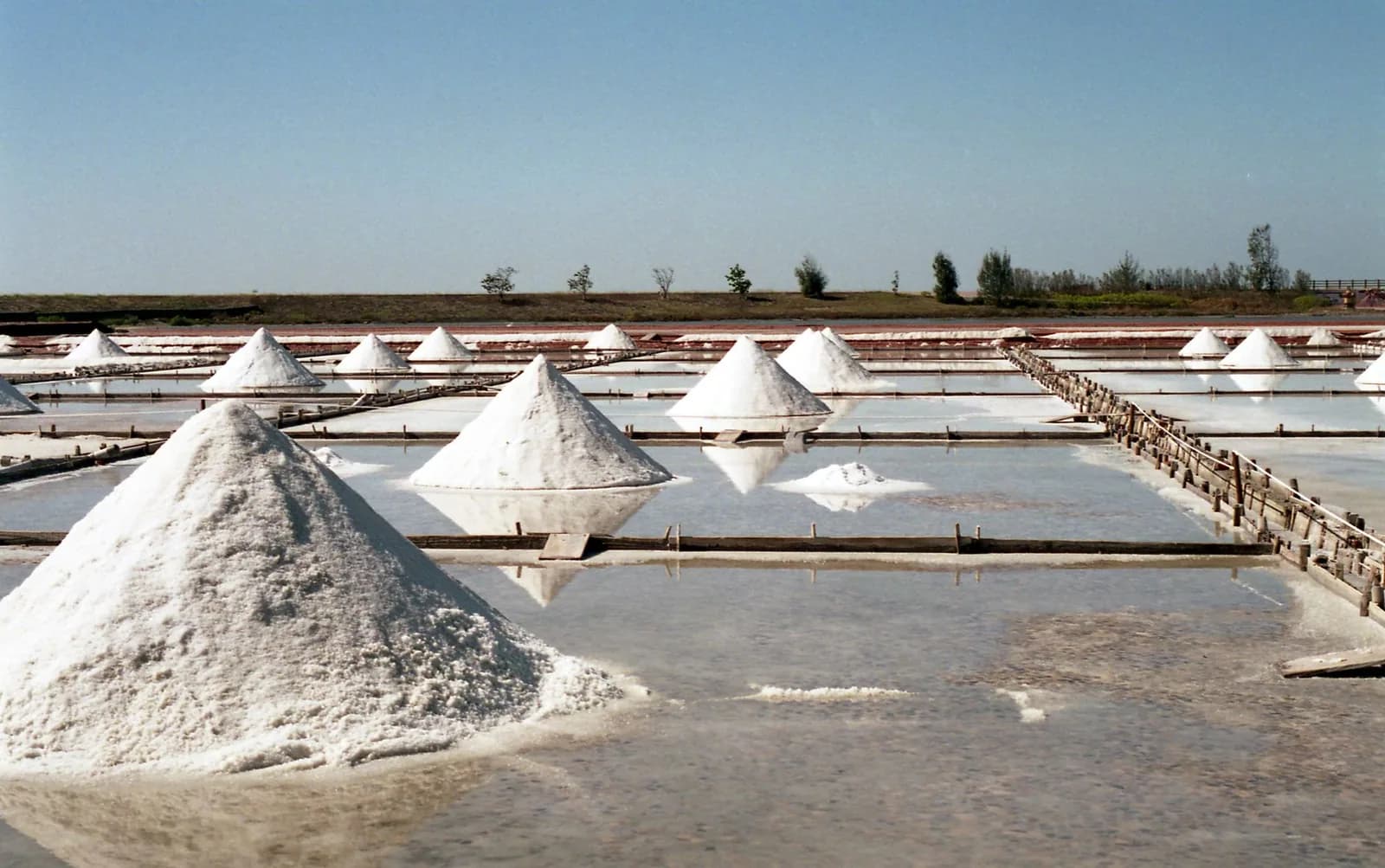
Pellets for most homes. Crystals for a small household chasing the lowest price. The purity gap is real but small: 99.8% typical for Diamond Crystal's pellets against 99.6% for its solar crystals, per its own pages read Oct 12, 2026.
Evaporated pellets
- Typical 99.8% pure (Diamond Crystal Bright & Soft)
- Both big brands formulate them against bridging and mushing
- $8.76 to $8.99 for 40 lb, about 22 cents a pound
- Diamond Crystal recommends them for most water softeners
Solar crystals
- Typical 99.6% pure, with low insoluble content (Solar Naturals)
- Made with sun, wind and time, in Diamond Crystal's words
- $8.25 for 50 lb, about 16.5 cents a pound
- Diamond Crystal recommends them for all water softeners
Our call
Pellets in a busy household, where the extra residue adds up month after month. Crystals in a couple's home with modest water use, where the cheaper pound is the bigger number.
Two things can tip it. Some softeners are fussy about form, so read the manual before buying a pallet of anything. And block salt only goes in systems built for blocks, which is a manual question rather than a quality one.
What Is the Best Water Softener Salt for Well Water?#
On a well with a little iron, an iron-fighting pellet. On a well with real iron, a filter. The bag can help resin cope with traces of iron. It can't stand in for treatment.
0.3 mg/L
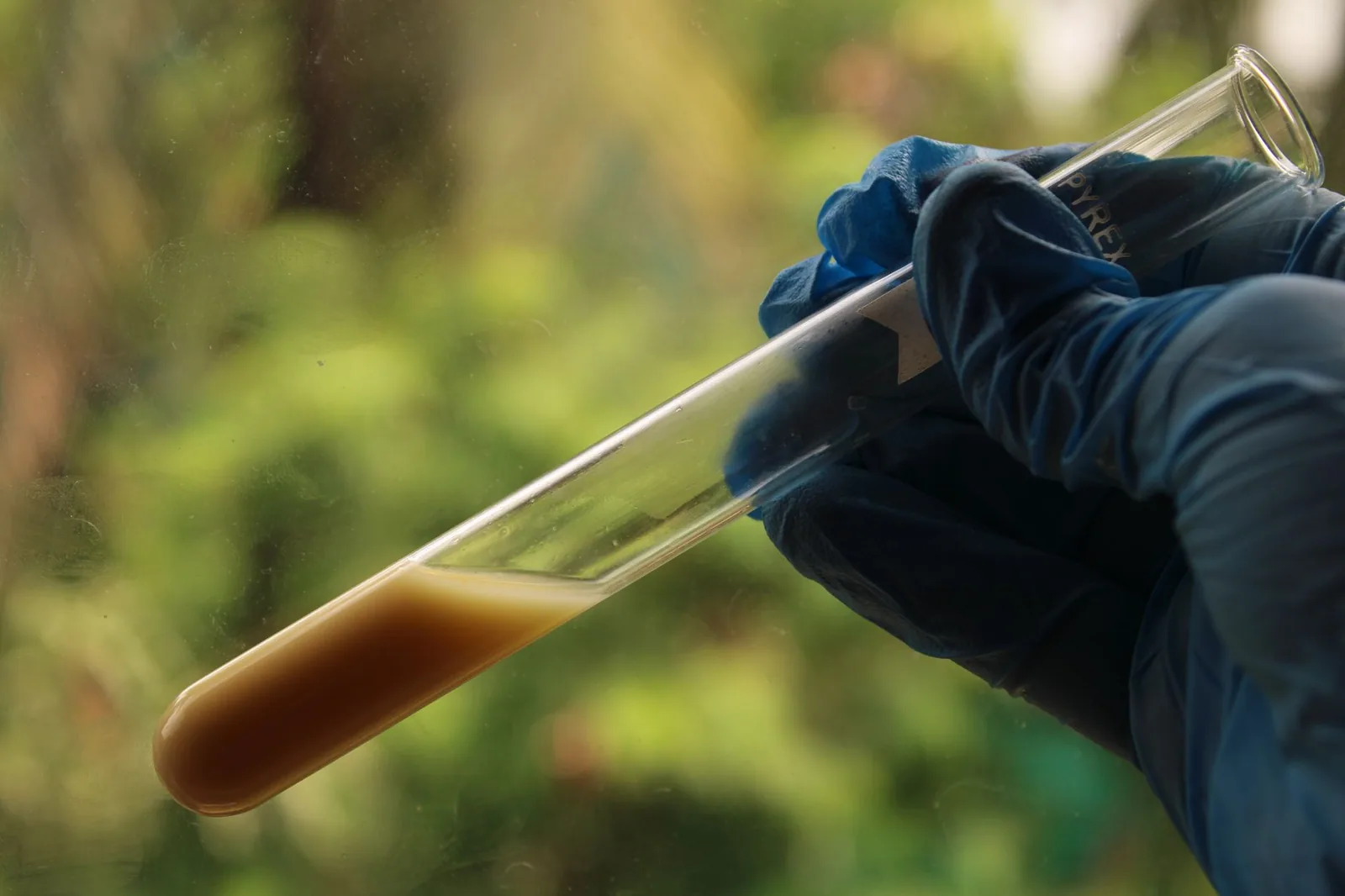
Test first. Neither Morton nor Diamond Crystal publishes an iron limit for its iron formula, so the ppm figure on your water report decides which side of the line you're on. Above that standard, a dedicated iron filter belongs ahead of the softener; our ranking of iron filters for well water prices them, and the softeners built to sit behind an iron filter complete the setup. If the water itself comes out orange, look at the rust filters that stop orange water before it reaches the softener.
What you hear
Iron-fighting salt removes iron from well water.
What the numbers say
It helps the softener resin shed the iron it catches. Morton says its Rust Defense pellets remove 10 times more iron than plain salt per regeneration, a figure from its own internal testing. Neither brand publishes a maximum iron level, and the Minnesota Department of Health only says some softeners can remove iron fully or partially.
Between bags, a resin cleaner sold under names like Rust Out or Iron Out is the other half of iron maintenance. It goes into the brine well, on the label's schedule, and it's covered with the monthly salt check and yearly brine tank clean.
Is Potassium Chloride Better Than Salt for a Water Softener?#
Only for a household that needs less sodium in its water. Potassium chloride regenerates the same resin, and Morton sells its version as 99% sodium-free. It cost $39.99 for 40 lb at Menards on Oct 12, 2026, against $8.76 to $8.99 for sodium pellets.
The Minnesota Department of Health puts it plainly: a softener running on sodium chloride raises the sodium in the water you drink, and potassium chloride is the alternative. The same fact sheet suggests keeping one unsoftened tap for drinking and cooking, and asking a doctor if anyone at home has high blood pressure. For many homes that unsoftened tap, or a reverse osmosis tap for drinking and cooking water, costs less over a few years than switching the whole softener.
If brine discharge is restricted where you live, the real comparison isn't salt against potassium. It's softening against a conditioner that needs no salt at all, and the case for skipping salt entirely runs that argument.
The Best Water Softener Salt, Bag by Bag#
Six bags, chosen on what each maker publishes and what each cost on the same day at the same store. Where a maker prints a number we quote it, and where it prints only an adjective, like the "high-purity" Morton uses for its Pure and Natural crystals, we say so and move on, because an adjective can't be compared with a percentage on the next shelf. We didn't run these salts through a test softener. Nothing below claims a lab result.
Best Overall: Diamond Crystal Bright & Soft Pellets#
The only bag here with a purity figure printed on its own page: typical 99.8% pure. Diamond Crystal formulates the pellets against mushing and bridging, sells them in 40 and 50 lb bags, and recommends them for most water softeners. At $8.99 for 40 lb on Oct 12, 2026, it costs 23 cents more than Morton's pellet.
That 23 cents buys a number. Morton's Clean and Protect page makes no purity claim at all, which doesn't make it dirtier, only harder to compare.
Best Value Pellet: Morton Clean and Protect#
$8.76 for 40 lb, the cheapest pellet we priced, also sold in 25 and 44 lb bags. Morton says it's specially formulated to reduce bridging and mushing and to keep resin tanks clean. Its instruction on the bag page is simple: keep the tank at least half full and add two bags every two months.
One detail belongs on the label and isn't. Morton's FAQ says Clean and Protect and Rust Defense contain additives, which are normally rinsed out during regeneration. If someone at home wants a bag with none, Morton itself points to its Pure and Natural crystals or its potassium chloride. Pure and Natural cost $9.59 for 40 lb at Ace Hardware on Sep 7, 2026; we couldn't read a price for it on Oct 12.
Best for Light Iron: Diamond Crystal Iron Fighter#
Formulated "for water with high iron content," typical 99.6% pure, and certified to NSF/ANSI/CAN 60, the drinking water treatment chemicals standard. Diamond Crystal says an FDA-approved additive helps prevent rust stains on laundry, fixtures, sinks and tubs. It cost $8.99 for 40 lb, exactly the price of its plain pellets.
At no premium over plain pellets, it's the obvious bag for a well that leaves faint orange marks on the tub or the laundry but tests low enough that the resin, helped along by a cleaner every few months, can keep up without a filter in front of it. Morton's alternative, Clean and Protect Plus Rust Defense at $9.88, carries the only quantified claim in this category: 10 times more iron removed per regeneration than plain salt, from Morton's internal testing. Neither maker names an upper iron limit.
Cheapest per Pound: Diamond Crystal Solar Naturals Crystals#
$8.25 for 50 lb, about 16.5 cents a pound, typical 99.6% pure and certified to NSF/ANSI/CAN 60. Diamond Crystal describes "low insoluble content" and recommends them for all water softeners. For a household that refills a few times a year, that's around a quarter off the pellet price for a purity gap of 0.2 percentage points.
The trade-off is the residue that a bigger household builds up faster. When the bottom of the tank starts to mush, the symptom-by-symptom repair guide covers bridges and sludge alike.
Sodium-Free: Diamond Crystal Potassium Chloride#
$39.99 for 40 lb. Buy it for a medical reason. Morton's equivalent is marketed as 99% sodium-free, cost $44.99 at Ace Hardware on Sep 7, 2026, and asks for one bag a month. Neither page we read gives a valve setting, so check your softener's manual for a potassium setting before the first bag goes in.
Video coming soon
We cover this topic on the Home Water Lab channel.
How Much Salt Should Be in a Water Softener?#
At least half full, per Morton, and above the water line. Morton's pellet and crystal pages say to add two bags every two months; its potassium page says one bag a month. Both work out to roughly a bag a month.
Before the next bag goes in
6 itemsMorton states that all of its softening salts are safe for septic systems, citing an EPA fact sheet built on NSF and University of Wisconsin studies. None of this salt is food, though: Morton says its water softening products shouldn't be eaten or used for canning.
Forty pounds is heavy. Some dealers deliver, and what dealers charge to bring salt to the door sets out the published fees, while our look at which salt brands Costco carries covers warehouse buying. Over a decade, salt is one line among several in the full cost of owning a softener.
Purity figures, certifications and claims are quoted from each maker's own product pages, read Oct 12, 2026. Prices are Menards online shelf prices read the same day, before an 11% mail-in rebate valid through Oct 18, 2026, tax and delivery; the Ace Hardware prices for Morton Pure and Natural and Morton potassium chloride date from Sep 7, 2026. Annual costs are our arithmetic on Morton's refill instructions. We did not test these salts in a softener.
Water softener salt questions people ask
Does the brand of water softener salt matter?
Less than the form. Morton and Diamond Crystal both sell pellets, crystals, iron formulas and potassium chloride, and both formulate their pellets against bridging and mushing. Diamond Crystal publishes purity figures for its pellets and crystals and Morton doesn't, which is the main reason our top pick is a Diamond Crystal bag.
Is water softener salt edible?
No. Morton says its water softening products should not be used for eating or canning. They're made for brine tanks, and some formulas contain additives that are normally rinsed out of the softener during regeneration.
Can you mix water softener salt brands or types?
Morton's FAQ, at our Sep 7, 2026 reading, called its softening products compatible with one another. The cleaner habit is to let the tank run down before changing type, so you can see how the new salt behaves. Before moving to potassium chloride, check your manual for a separate setting.
How often should you add salt to a water softener?
Morton's pages say two 40 lb bags of pellets or crystals every two months, or one bag of potassium chloride a month, keeping the tank at least half full. Hard water and a large household push that up, so check monthly and let your own refill rhythm set the schedule.
Does iron-fighting salt replace an iron filter?
No. It helps the resin release iron it has caught, and neither Morton nor Diamond Crystal publishes an iron limit for its iron formula. Above the EPA's 0.3 mg/L secondary standard, plan on a dedicated iron filter ahead of the softener.
Frequently asked questions
What is the best salt for a water softener?
Evaporated salt pellets for almost every modern softener. Diamond Crystal Bright & Soft prints a typical purity of 99.8% on its page and cost $8.99 for 40 lb at Menards online on Oct 12, 2026; Morton Clean and Protect, formulated against bridging and mushing, cost $8.76 the same day. Switch to an iron formula for light iron, and to potassium chloride only for a sodium reason.
Are pellets or crystals better for a water softener?
Pellets, unless the price gap is real and your household is small. Diamond Crystal lists its Bright & Soft pellets at typical 99.8% purity and its Solar Naturals crystals at 99.6%, and the crystals were the cheaper pound on Oct 12, 2026: $8.25 for 50 lb against $8.99 for 40 lb of pellets. Both soften the same way; the difference is what settles in the brine tank over months.
What is the best water softener salt for well water?
On a well with light iron, an iron-fighting pellet such as Diamond Crystal Iron Fighter or Morton Clean and Protect Plus Rust Defense. Neither maker publishes an iron limit in ppm, so test first: the EPA's secondary standard for iron is 0.3 mg/L, and a well well above it needs an iron filter ahead of the softener, not a different bag.
How much salt should be in a water softener?
Morton's own instruction is to keep the brine tank at least half full, and to add two 40 lb bags of pellets every two months, or one bag of potassium chloride a month. Keep the salt above the water line and check it monthly; a level that never moves points to a salt bridge rather than a thrifty softener.
Is water softener salt safe for septic systems?
Morton states that all of its water softening products are safe for septic systems, citing an EPA fact sheet that summarizes NSF and University of Wisconsin studies. Those studies found softener discharge did not harm the bacteria a septic tank relies on. Check your local rules too, since some districts restrict brine discharge for other reasons.
Keep reading
Not sure what you need?
Answer 5 questions, get the right system for your water.
City or well, budget, household size, our quiz matches your answers against every system we track.